
[Ebunge Transparency Disclosure]
This technical guide is not marketing copy. It is compiled by the Ebunge Engineering Team based on 15+ years of onsite installation data across 2,000+ office zoning projects worldwide. Our goal is to help architects and contractors avoid the acoustic failures and structural risks common in modern open-plan reconfigurations.
How to Select Operable Walls for Modern Flexible Offices?
Modern office environments are increasingly moving away from static layouts toward dynamic, activity-based workspaces. Selecting the right operable walls is the critical link in this transformation, determining whether a space can effectively balance collaborative energy with focused privacy.
For modern flexible offices, the ideal operable wall system must achieve a minimum of STC 45 for meeting privacy, utilize a top-hung aluminum track to eliminate floor hazards, and offer customized finishes that integrate with corporate branding. The selection process must prioritize acoustic seal integrity, ceiling load-bearing capacity, and long-term operational ease.
At EBUNGE, we have specialized in manufacturing these systems for over 15 years. This guide provides a technical roadmap for professionals to specify, install, and maintain movable partition walls that deliver lasting value to commercial office projects.
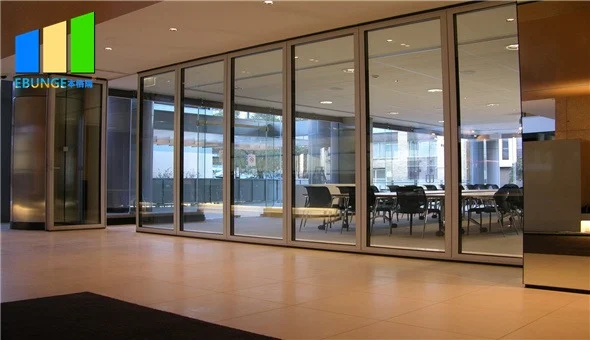
Why is Acoustic Privacy the Biggest Failure in Modern Office Zoning?
The primary reason for “dissatisfaction” in newly zoned offices is acoustic leakage. Many contractors assume that simply installing a “movable wall” solves the problem, but they overlook the flanking paths where sound actually travels.
Acoustic privacy fails when sound bypasses the partition through the ceiling plenum, HVAC ducts, or imperfectly sealed floor junctions. In an office setting, a 5dB difference in performance can be the gap between a confidential board meeting and an unintentional public broadcast.
🛠 Engineer’s Log: The “Slab-to-Slab” Rule
In a recent project for a tech firm in Singapore, the client complained about “thin walls.” Our audit found the panels were perfect (STC 50), but the sound was leaking through the 600mm gap above the false ceiling. We always advise contractors to install an acoustic baffle between the structural slab and the track. Without this, the STC 50 wall performs like an STC 30 curtain.
Which Operable Wall System Balances Aesthetics and STC?
Selecting a system involves matching the room height and acoustic goals with the correct series. For standard office ceilings (under 4 meters), the Series 65 or 85 is often sufficient. For larger town-hall spaces, the Series 100 becomes essential.
The Series 85 is the “sweet spot” for most office applications, offering a 45-50dB rating in a sleek 85mm profile. However, if the finish requires heavy soft-wrapping or specialized glass inserts, the structural frame must be upgraded to accommodate the weight without sagging.
| Office Space Type | Recommended STC | Recommended Series | Primary Benefit |
|---|---|---|---|
| Small Meeting Rooms | 32 – 40 dB | Series 65 | Cost-effective zoning |
| Standard Conference Rooms | 45 – 50 dB | Series 85 | Balanced privacy and profile |
| Executive Boardrooms | 50 – 53 dB | Series 100 | Maximum confidential security |
| Multi-purpose Training Halls | 45 – 55 dB | Ultra-High System | Large scale versatility |
How Does the Track and Roller System Impact Operational Safety?
The “spine” of any operable wall is the track. In an office where staff members—not specialized facility managers—may operate the walls, ease of use and safety are paramount.
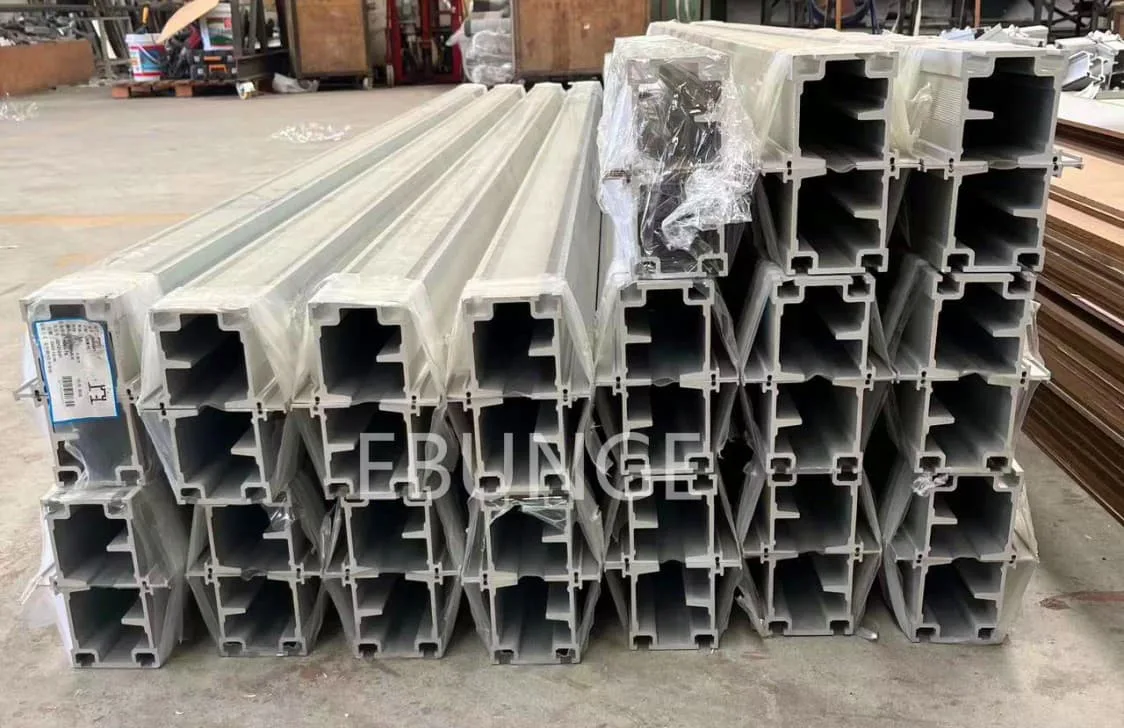
Top-hung systems using high-strength anodized aluminum tracks are standard for offices. They eliminate floor tracks, which are trip hazards and catch office debris. Precision-engineered rollers ensure that even heavy glass-combination panels glide into position with minimal force.
What Installation Details Often Void the Warranty of Operable Partitions?
As a manufacturer, we emphasize that 50% of a partition’s performance is the installation. Common shortcuts taken by general contractors can lead to premature mechanical failure or acoustic “short-circuiting.”
Ignoring floor variance (greater than 5mm) and improper leveling of the track are the two leading causes of mechanical wear. Retractable seals are designed to compensate for gaps, but they cannot fix a structurally bowed track or a sloped floor without placing undue stress on the internal mechanisms.
Office Maintenance Quick Checklist
- Monthly: Inspect mechanical top and bottom seals for full extension.
- Quarterly: Clean visible debris from track channels to prevent roller flat-spots.
- Annually: Professional inspection of track connections and support brackets.
FAQ About Modern Office Operable Walls
1. Can the finish match our existing office design?
The operation of our partition system is engineered for near-silent performance, utilizing precision-machined **anodized track corrosion resistance** components and high-strength polymer wheels. To ensure long-term durability and smooth movement, we use Japanese-made ball bearings that minimize friction even under heavy loads. This architectural-grade tracking system allows for effortless reconfiguration of spaces without the disruptive metallic noise common in lower-quality alternatives.
2. Do we need a floor track?
Yes, achieving total acoustic separation is possible through our multi-layered panel construction featuring **100kg/m3 density mineral wool** and internal steel damping plates. Our patented mechanical systems apply a **25kg seal pressure** at both the floor and ceiling junctions to hermetically block sound bypass. For maximum performance, we also recommend installing a **ceiling plenum sound baffle** above the track to prevent flank transmission through the void above the suspended ceiling.
3. How long does it take for an employee to set up a meeting room?
Absolutely, our systems are designed to integrate seamlessly with high-end interior aesthetics while maintaining rigorous engineering standards. The panels are custom-manufactured with hidden vertical aluminum profiles and can be finished in a variety of materials including acoustic fabric, wood veneer, or leather. Every component, from the visible surface to the internal mechanical seals, is built to provide both a luxurious visual impact and superior acoustic isolation.
4. Are these walls fire-rated for high-rise buildings?
The operation of our partition system is engineered for near-silent performance, utilizing precision-machined **anodized track corrosion resistance** components and high-strength polymer wheels. To ensure long-term durability and smooth movement, we use Japanese-made ball bearings that minimize friction even under heavy loads. This architectural-grade tracking system allows for effortless reconfiguration of spaces without the disruptive metallic noise common in lower-quality alternatives.
5. What is the typical lead time for a custom office project?
Yes, achieving total acoustic separation is possible through our multi-layered panel construction featuring **100kg/m3 density mineral wool** and internal steel damping plates. Our patented mechanical systems apply a **25kg seal pressure** at both the floor and ceiling junctions to hermetically block sound bypass. For maximum performance, we also recommend installing a **ceiling plenum sound baffle** above the track to prevent flank transmission through the void above the suspended ceiling.
What Information is Required for a Technical Office Partition Proposal?
To help our engineering team provide a precise layout and quotation, please prepare the following data:
| Information Needed | Specific Detail | Why It Matters |
|---|---|---|
| Opening Dimensions | Width and clear height | Calculates panel quantity and track load |
| Ceiling Structure | Concrete slab, steel, or beam | Confirms the suspension safety factor |
| Privacy Requirement | Desired STC (e.g. 45dB) | Determines panel internal structure |
| Surface Finish | Fabric, Melamine, Whiteboard | Affects interior design and budget |
| Stacking Area | Side, central, or hidden pocket | Determines the track branching layout |
Request a Technical Quotation
To provide an accurate factory-direct quote and track layout design, please provide the following project details:
1. Opening Width, 2. Opening Height, 3. Ceiling/Beam Structure, 4. Required STC Rating, 5. Surface Finish, 6. Stacking Direction, 7. Layout Drawing/Project Location.
At EBUNGE, we recommend Series 85 for most office projects (up to 6m) and Series 100 for high-load ballroom environments.