
[Ebunge Transparency Disclosure]
Technical comparison is the foundation of a successful space division project. This guide is compiled by the Ebunge R&D team to help distributors and contractors select the most cost-effective system based on actual height, weight, and acoustic requirements, rather than marketing slogans.
When selecting a movable partition wall system, the choice between Series 65, 85, and 100 determines the long-term success of the project. Each system is engineered for specific structural environments, and choosing the wrong one can lead to operational failure or wasted budget. This guide breaks down the technical differences across every critical dimension.
For most commercial projects, the choice depends on the “Three H’s”: Height, Heavy-duty needs, and Hertz (Acoustic goals). Series 65 is ideal for standard meeting rooms under 3.5m; Series 85 offers the best balance of cost and performance up to 6m; and Series 100 is the technical requirement for grand ballrooms exceeding 10m in height or 50dB in sound insulation.
At EBUNGE, we have spent 15+ years manufacturing and testing these series across thousands of global projects. Understanding the internal mechanics of each system is the first step toward a high-performance space zoning solution.
What are the Core Technical Specifications of EBUNGE Series?
The numbering of the series (65, 85, 100) refers to the nominal thickness of the partition panel. While it may seem like a minor difference, each 15-20mm increment significantly alters the structural capacity and sound dampening potential of the system.
Thickness is not just about aesthetics; it is about “Mass.” A thicker panel allows for more layers of high-density rock wool, internal steel plates, and longer-travel mechanical seals. A Series 100 panel provides twice the acoustic volume of a Series 65, making it suitable for environments where absolute speech privacy is required.
| Series Name | Panel Thickness | Max Height Limit | Sound Rating (STC) |
|---|---|---|---|
| Series 65 | 65mm | 3.5 Meters | 32 – 40 dB |
| Series 85 | 85mm | 6.0 Meters | 38 – 50 dB |
| Series 100 | 100mm | 12.0 Meters | 45 – 53 dB |
| Ultra-High | 125mm | 17.0+ Meters | 50 – 55 dB |
Which System Provides the Best ROI for Hotel and Office Projects?
For most commercial interiors, the Series 85 is considered the “versatile workhorse.” It offers a substantial upgrade in sound insulation over the 65 while remaining more cost-effective than the 100.
ROI is calculated by balancing initial material cost against operational durability. In an office environment with 3-meter ceilings, a Series 85 provides 45dB—more than enough for confident meetings—without requiring the heavy structural steel headers needed for the Series 100 system.
🛠 Engineer’s Log: The Weight Factor
We often see contractors specify Series 100 for small meeting rooms thinking “more is better.” However, a single Series 100 panel can weigh 400kg. If your ceiling beams were only designed for a 65mm system (approx 200kg), you risk structural sagging. Always consult our engineering team for a load-bearing audit before upgrading your series.

How Does the Internal Construction Differ Across Series?
While the exterior finish may look identical, the “engine” of an operable wall system varies significantly between models. This is where the real value is hidden.
Internal construction differences involve the density of the acoustic core and the strength of the aluminum frame. Series 65 typically uses an L-type frame, while Series 85 and 100 utilize heavy-duty tongue-and-groove profiles with deep-set magnetic strips or triple-layered EPDM rubber seals for maximum acoustic closure.
| Component | Series 65/85 Spec | Series 100/Ultra Spec |
|---|---|---|
| Acoustic Core | 60-80kg/m³ Rock Wool | 100kg/m³ High-Density Core |
| Roller System | Nylon/Standard Steel | Heavy-duty Precision Bearings |
| Frame Alloy | 6063-T5 Aluminum | 6063-T6 Structural Grade |
| Seal Travel | Up to 20mm | Up to 25-30mm (Extended) |

Which Track System is Required for Each Series?
A common mistake in the partition industry is assuming a single track fits all panels. The track must be engineered to match the panel’s dead weight and the frequency of operation.
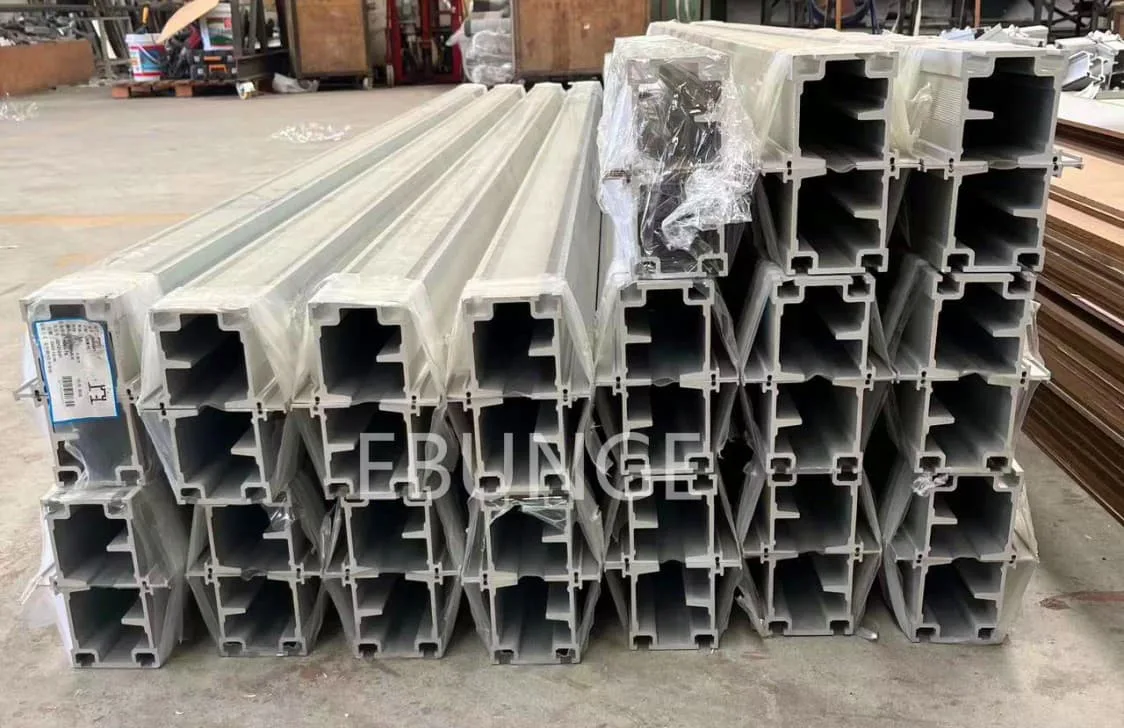
Each series utilizes a specific track profile. Series 65 often runs on our Lightweight Track; Series 85 on the Medium Track; and Series 100/Ultra-High must use the Heavy-Duty Anodized Track with steel-reinforced junction points. Using a lightweight track for a 100mm panel will lead to sagging and roller failure within 12 months.
FAQ About EBUNGE Partition Series
1. Can I use Series 65 for a 5-meter high room?
No. We strictly limit Series 65 to 3.5 meters. At 5 meters, the panel will lack the necessary rigidity, causing it to vibrate and potentially derail. For 5-meter spans, Series 85 or 100 is mandatory.
2. Is the acoustic performance difference noticeable between 85 and 100?
Yes. A difference of 3-5dB is very noticeable to the human ear. If you are separating a classroom from a library, the 85 is fine. If you are separating two wedding parties, the 100 is the minimum requirement.
3. Do all series support the same finishes?
Yes. All EBUNGE systems can be finished with fabric, leather, melamine, veneer, or even customized whiteboard surfaces. The choice of finish does not affect the series selection, though it may affect the final weight calculation.
4. Are there automatic options for these series?
We offer semi-automatic systems (electric seals) primarily for the 85 and 100 series. Fully automatic tracked systems are available for specialized high-budget projects.
5. Which series is easiest for hotel staff to move?
The 65 is the lightest, but our 100 series uses multi-wheel precision rollers that make even 500kg panels easy to glide. Eases of operation depends more on track maintenance than panel weight.
What Information is Needed for a Series Recommendation?
To help our engineering team determine which series is right for your project, please provide the following details:
| Selection Factor | Data Needed | Why It Matters |
|---|---|---|
| Ceiling Height | Clear height from floor to beam | Determines structural rigidity needs |
| Acoustic Target | Target STC (e.g. 45dB) | Defines the thickness of insulation |
| Operation Frequency | Daily/Weekly usage | Determines track and roller durability |
| Finish Material | Fabric, Melamine, PU, etc. | Calculates total structural load |
Not Sure Which Series to Choose?
Send us your project drawings and height measurements. EBUNGE engineers will provide a free technical comparison and a factory-direct quotation tailored to your specific space.