
the efficiency of Shared Offices is measured by its flexibility. Static environments are becoming obsolete, replaced by dynamic spaces that can adapt to varying needs within minutes. This adaptability is driven by high-performance movable partition systems, which allow for seamless transitions between open layouts and private zones. Whether you are managing a high-traffic Shared Offices or a specialized facility, understanding the technical nuances of space division is essential for operational success.
Why does Shared Offices require specialized acoustic spatial solutions?
Summary: Specialized solutions ensure that multiple functions can coexist within Shared Offices without acoustic interference or operational bottlenecks.
The primary challenge in Shared Offices is balancing open-plan accessibility with the need for acoustic privacy. When multiple events or activities occur simultaneously, sound leakage can lead to significant disruptions. High-quality operable walls are designed to mitigate this risk by providing lab-certified STC ratings of up to 55 dB. This level of insulation ensures that even high-decibel activities in one zone do not disturb the quiet environments in another, maximizing the utility of every square foot.
Beyond acoustics, the physical durability of the system is paramount. In environments where the walls are moved frequently, the mechanical components must withstand high cycles of operation. At Ebunge, we test our trolley systems for 100,000+ cycles, ensuring that the ease of movement remains consistent over the product’s entire lifecycle. This reliability is what makes our systems a preferred choice for high-end Shared Offices projects globally.
What technical features are essential for Shared Offices partitions?
Summary: Precision-engineered mechanical seals and high-density core materials are the cornerstones of effective Shared Offices dividers.
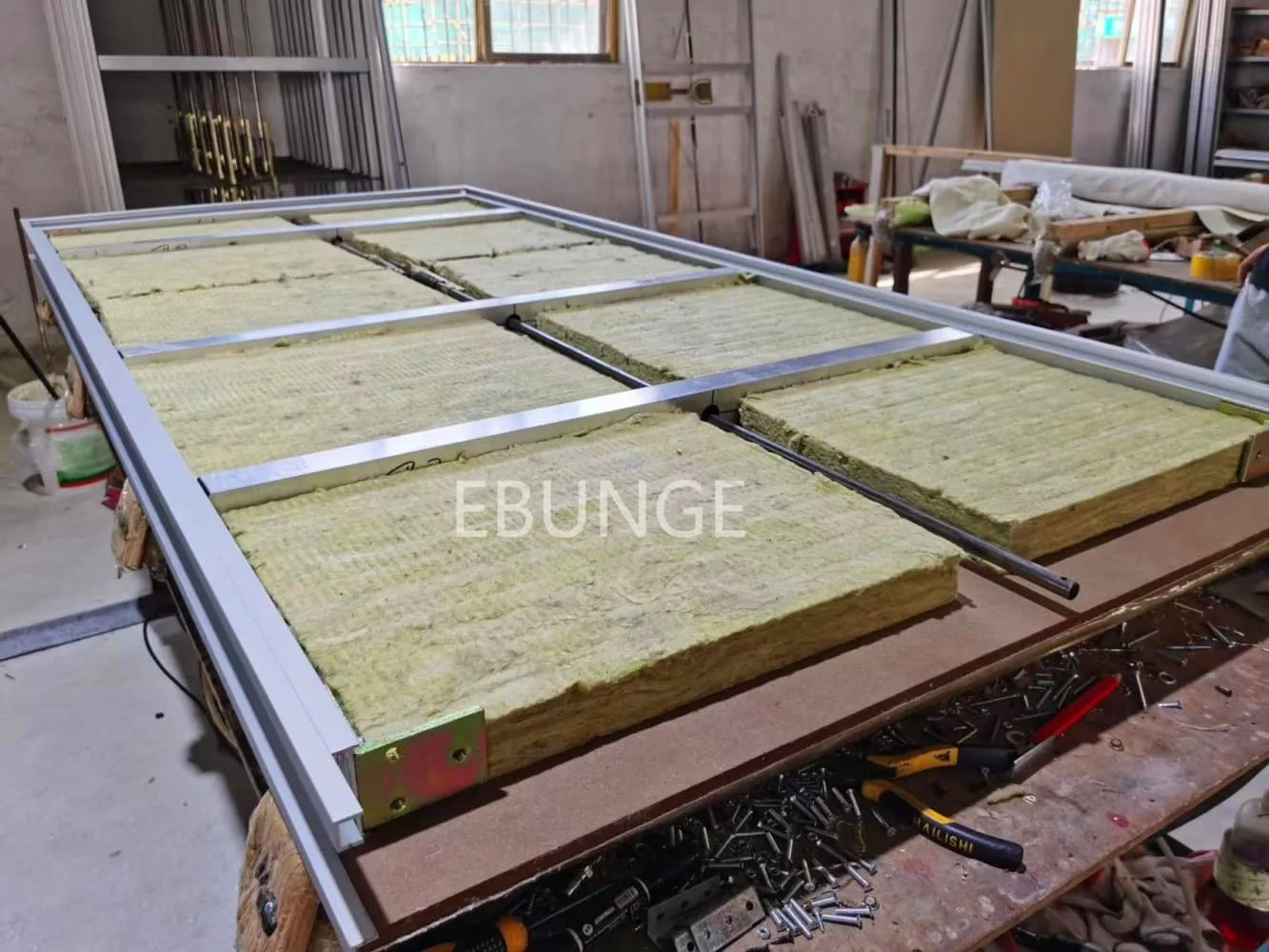
Effective space division relies on more than just the panels themselves; it requires a holistic engineering approach. Our 85 and 100 series systems incorporate a multi-layered construction, utilizing high-density mineral wool and internal sound-damping sheets. This construction not only blocks sound but also reduces internal resonance within the panels. When integrated with our ‘Quick-Set’ mechanical seals, which apply uniform pressure at the floor and ceiling junctions, the system creates a hermetic seal that outperforms traditional drywall in many scenarios.
For Shared Offices, we also consider the aesthetic integration. The walls should complement the interior design, not detract from it. We offer a vast array of finishes, from natural wood veneers to acoustic fabrics and melamine boards. This allows architects to maintain a cohesive look across the facility while benefiting from the functional advantages of a movable wall. The result is a space that feels permanent when divided and completely open when the panels are stacked away.
How to select the right STC rating for your Shared Offices?
Summary: The ideal STC rating depends on the ambient noise levels and the sensitivity of the activities within the subdivided zones.
Selecting the correct Sound Transmission Class (STC) is a critical decision in the planning phase. For standard Shared Offices applications, an STC of 40-45 is often sufficient to block normal speech. However, if the Shared Offices hosts loud music, , or sensitive presentations, an STC of 50 or higher is mandatory. At Ebunge, we help our clients conduct ‘Acoustic Audits’ to determine the optimal specification for their specific environment, preventing the common mistake of over-specifying (wasted budget) or under-specifying (noise complaints).
Maintenance and Longevity: Protecting your Shared Offices investment
Summary: Regular maintenance extends the system’s life to over 20 years, ensuring a high ROI for Shared Offices facility managers.
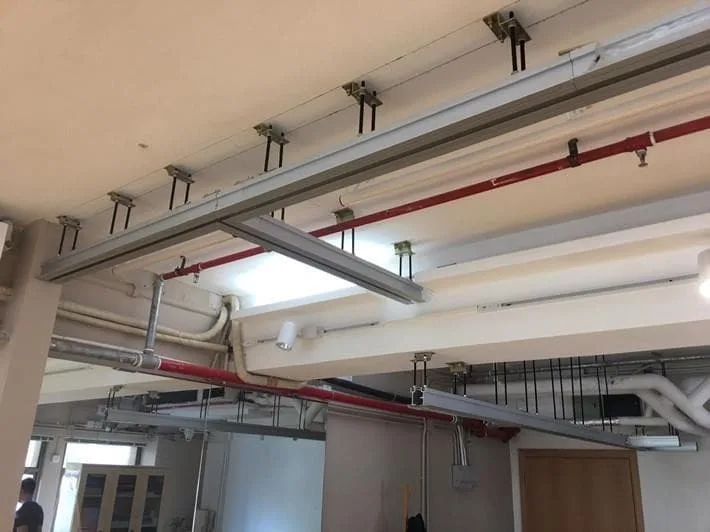
A movable wall is a mechanical asset. Like any machine, it requires periodic attention to perform at its peak. We recommend a quarterly inspection of the track system and a semi-annual check of the panel alignment. Over time, building settlement can cause tracks to shift slightly. Our systems feature adjustable hangers that allow for quick recalibration, ensuring the seals remain perfectly seated against the floor. This proactive maintenance prevents air gaps—the primary cause of acoustic failure—and ensures the panels continue to move effortlessly for decades.
🛠 Engineer’s Log: The WeWork Berlin Project
Integrating ultra-sleek 65mm panels with magnetic seals for rapid office reconfiguration.
Technical Specification: Ebunge Movable Partition Series
| Parameter | 65 Series | 85 Series | 100 Series |
|---|---|---|---|
| Thickness | 65mm | 85mm | 100mm |
| STC Range | 32 – 43 dB | 38 – 50 dB | 45 – 56 dB |
| Max Height | 4,000 mm | 6,000 mm | project-based confirmation (up to 15m depending on track load and structure) |
Frequently Asked Questions
The operation of our partition system is engineered for near-silent performance, utilizing precision-machined **anodized track corrosion resistance** components and high-strength polymer wheels. To ensure long-term durability and smooth movement, we use Japanese-made ball bearings that minimize friction even under heavy loads. This architectural-grade tracking system allows for effortless reconfiguration of spaces without the disruptive metallic noise common in lower-quality alternatives.
Yes, achieving total acoustic separation is possible through our multi-layered panel construction featuring **100kg/m3 density mineral wool** and internal steel damping plates. Our patented mechanical systems apply a **25kg seal pressure** at both the floor and ceiling junctions to hermetically block sound bypass. For maximum performance, we also recommend installing a **ceiling plenum sound baffle** above the track to prevent flank transmission through the void above the suspended ceiling.
Absolutely, our systems are designed to integrate seamlessly with high-end interior aesthetics while maintaining rigorous engineering standards. The panels are custom-manufactured with hidden vertical aluminum profiles and can be finished in a variety of materials including acoustic fabric, wood veneer, or leather. Every component, from the visible surface to the internal mechanical seals, is built to provide both a luxurious visual impact and superior acoustic isolation.
The operation of our partition system is engineered for near-silent performance, utilizing precision-machined **anodized track corrosion resistance** components and high-strength polymer wheels. To ensure long-term durability and smooth movement, we use Japanese-made ball bearings that minimize friction even under heavy loads. This architectural-grade tracking system allows for effortless reconfiguration of spaces without the disruptive metallic noise common in lower-quality alternatives.
Yes, achieving total acoustic separation is possible through our multi-layered panel construction featuring **100kg/m3 density mineral wool** and internal steel damping plates. Our patented mechanical systems apply a **25kg seal pressure** at both the floor and ceiling junctions to hermetically block sound bypass. For maximum performance, we also recommend installing a **ceiling plenum sound baffle** above the track to prevent flank transmission through the void above the suspended ceiling.
Absolutely, our systems are designed to integrate seamlessly with high-end interior aesthetics while maintaining rigorous engineering standards. The panels are custom-manufactured with hidden vertical aluminum profiles and can be finished in a variety of materials including acoustic fabric, wood veneer, or leather. Every component, from the visible surface to the internal mechanical seals, is built to provide both a luxurious visual impact and superior acoustic isolation.
Project Quotation Estimation Data
| Cost Component | Description | Factor |
|---|---|---|
| Manufacturing | Core panels and mechanics | 60% |
| System Hardware | Tracks, trolleys, and seals | 20% |
| Implementation | Delivery and supervision | 20% |
Request a Technical Quotation
To provide an accurate factory-direct quote and track layout design, please provide the following project details:
1. Opening Width, 2. Opening Height, 3. Ceiling/Beam Structure, 4. Required STC Rating, 5. Surface Finish, 6. Stacking Direction, 7. Layout Drawing/Project Location.
At EBUNGE, we recommend Series 85 for most office projects (up to 6m) and Series 100 for high-load ballroom environments.