
When specifying folding partitions for schools, the school hall presents a unique set of challenges: high acoustic demands, heavy daily use, and the need for flexible space division without compromising safety or aesthetics. For building material distributors, understanding these application-specific requirements is crucial to guiding clients toward the right movable partition wall system. This article focuses on the practical aspects of selecting and implementing folding partitions in school halls, addressing buyer concerns such as acoustic insulation, durability, ease of operation, and compliance, all while ensuring your quotation process is smooth and your clients’ projects succeed.
Direct answer: For school hall applications, folding partitions for schools should be specified based on the hall’s opening size, acoustic target (e.g., Rw 45-50 dB), and traffic level. Prioritize a top-hung track system without floor rail for unobstructed flooring and easy cleaning, ensure the partition’s panels are impact-resistant for high-traffic areas, and verify compliance with local building codes. Always request drawings and technical specifications from the supplier to confirm exact dimensions and performance.
Why School Halls Demand Specialized Partition Solutions
School halls are multi-functional spaces: they host assemblies, examinations, performances, sports activities, and community events. Unlike office meeting rooms, school halls see intense usage patterns—constant opening and closing, occasional impact from equipment or students, and a need for quick reconfiguration. A standard movable partition wall may not suffice. The folding partitions for schools must be able to withstand frequent operation without compromising on acoustic separation, especially when used for exams or performances where sound isolation is critical.
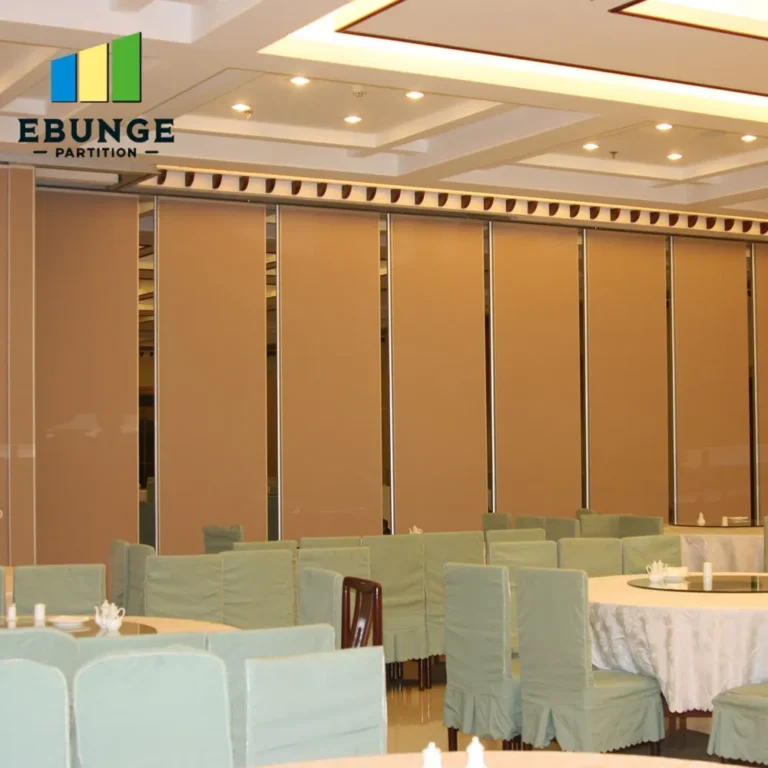
Need help turning the folding partitions for schools requirements into a practical project layout?
Key Buyer Concerns Addressed for School Hall Projects
When advising clients, buyers must address several technical and logistical concerns to ensure the chosen operable wall system meets expectations. Here are the primary considerations:
Acoustic Insulation Performance
Acoustic performance is often the top priority. The partition must provide sufficient sound reduction to allow parallel activities without disturbance. For school halls, an acoustic rating of at least Rw 45 dB is common, but the exact requirement depends on the adjacent spaces and the level of privacy needed. Always clarify the acoustic target with the end-user and request acoustic test data from the supplier to verify performance.
Durability in High-Traffic Areas
School halls are subject to rough use. Panels should have impact-resistant surfaces, such as laminate or steel facings, and hardware that can handle frequent operation. Look for systems with reinforced hinges and trolleys that are designed for heavy-duty cycles.
Ease of Operation
Teachers and staff need to operate the partition quickly and safely. A top-hung track system allows smooth gliding without floor rails, reducing trip hazards and easing cleaning. Consider partitions with a simple folding mechanism that can be operated by one person.
Installation Complexity
Installation should be planned to minimize disruption to school activities. Choose a supplier that offers installation guidance and can work with the project timeline. Prefabricated panels can reduce on-site work.
Maintenance Requirements
Low maintenance is essential. Top-hung systems with sealed tracks and self-lubricating trolleys reduce upkeep. Regular inspections can extend the life of the partition.
Compliance with Building Codes
Ensure the partition system meets local fire safety, accessibility, and structural standards. The supplier should provide documentation of compliance.
Lead Time and Warranty
Lead times can affect project schedules. Confirm the expected delivery time and warranty coverage, including after-sales support for repairs or replacement parts.
Technical Specifications: What to Specify in Your Quotation Request
To get an accurate quotation, provide the supplier with detailed information:
- Opening size (width, height, and depth of the opening)
- Architectural drawings (floor plans and elevations)
- Acoustic target (in dB)
- Finish preference (e.g., laminate, veneer, steel)
- Project location (for site-specific requirements)
- Any special requirements like pass doors, glazing, or tackable surfaces
This information helps the supplier design a system that fits perfectly and performs as expected.
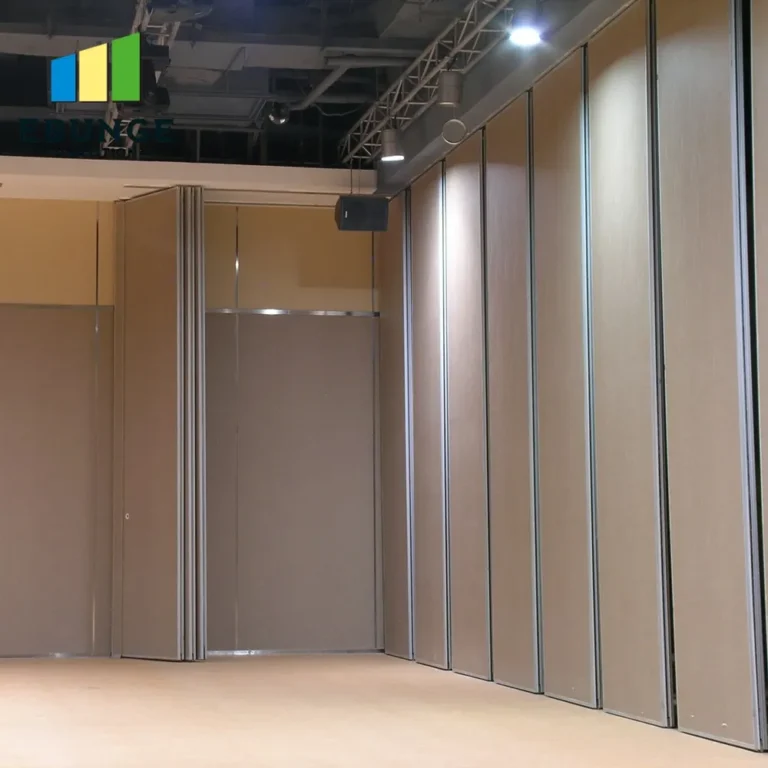
Top-Hung Track System: The Preferred Choice for School Halls
For school halls, a top-hung track system is often the best option. Unlike floor-supported systems, top-hung partitions are suspended from an overhead track, leaving the floor clear. This offers several benefits:
- No floor rail to collect dirt or trip over
- Easier cleaning and maintenance
- Flexibility to install on uneven floors
- Cleaner aesthetic
However, the building structure must support the weight of the partition. Ensure the ceiling or roof structure is engineered to handle the load.
Acoustic Partition Solutions: Balancing Performance and Practicality
Acoustic performance is not just about the partition itself; it also depends on perimeter sealing. For school halls, consider partitions with automatic drop seals at the bottom and compression seals at the sides to minimize sound leakage. The acoustic rating of the partition should be verified with test data, and the installation must be precise to achieve the rated performance.
Share the opening, drawings, finish direction, and privacy target for a project-specific review.
Custom Movable Wall Options for School Halls
Every school hall is unique. Customization may be needed to accommodate irregular openings, integrate with existing architecture, or provide specific features like tackable surfaces for presentations or whiteboard panels. A reputable supplier can offer custom sizes, finishes, and configurations.
Case Study: A Typical School Hall Project (Without Specifics)
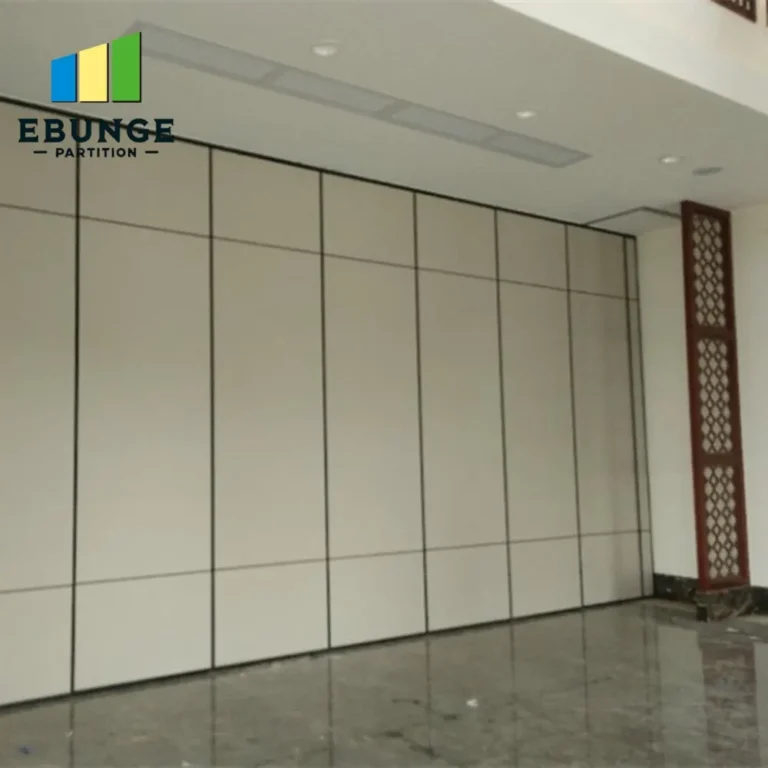
Consider a school hall with an opening of 12 meters wide by 4 meters high, requiring an acoustic rating of Rw 45 dB. The partition must be operable daily and include a pass door for access. A top-hung system with laminate panels and automatic drop seals would be suitable. The supplier would provide detailed drawings and a quotation based on these specifications. The installation would be coordinated with the school’s schedule to minimize disruption.
Checklist for Selecting Folding Partitions for Schools
Use this checklist when evaluating options:
| Consideration | Questions to Ask | Why It Matters |
|---|---|---|
| Acoustic Performance | What is the Rw rating? Is it tested? | Ensures sound separation for exams or events. |
| Durability | What materials are used for panels and hardware? | Withstands heavy use and impact. |
| Operation | How easy is it to open and close? | Staff must operate it quickly and safely. |
| Maintenance | What is the recommended maintenance schedule? | Low maintenance reduces lifecycle costs. |
| Compliance | Does it meet local building codes? | Avoids legal issues and ensures safety. |
| Lead Time | What is the delivery time? | Affects project schedule. |
| Warranty | What does the warranty cover? | Protects your investment. |
Conclusion: Making the Right Choice for Your School Hall Project
Selecting folding partitions for schools for a school hall requires careful consideration of acoustic, durability, and operational factors. By focusing on these aspects and working with a knowledgeable supplier, you can ensure a successful installation that meets the needs of the school and its users. For more guidance, explore our resources on movable partition walls and applications.
Frequently Asked Questions
What is the typical acoustic rating needed for a school hall partition?
The required acoustic rating depends on the activities and the desired level of privacy. For most school halls, an Rw of 45-50 dB is common, but it’s best to specify the exact target based on the project’s acoustic requirements.
Can folding partitions be installed without a floor rail?
Yes, top-hung track systems operate without a floor rail, providing a clear floor surface. This is often preferred in schools for safety and ease of cleaning.
How do I ensure the partition meets building codes?
Ask the supplier for documentation of compliance with relevant fire, safety, and accessibility standards. Also, ensure the installation is performed by qualified professionals.
What maintenance is required for folding partitions?
Regular inspection of tracks, trolleys, and seals is recommended. Some systems require periodic lubrication. Ask the supplier for a maintenance guide.
Can I get a custom-sized partition for an unusual opening?
Yes, most manufacturers offer custom sizes and configurations. Provide detailed drawings and specifications to get an accurate quote.
How long does installation typically take?
Installation time varies based on the size and complexity. A simple partition may take a few days, while larger projects may take longer. Plan accordingly.
For more information on movable partition walls and their applications, visit our movable partition wall page or browse our blog. If you have a specific project, contact us for expert advice.
Send the opening size and drawings to discuss a differentiated folding partitions for schools solution.