
When planning an office meeting room, the choice of acoustic separation can determine whether a space supports focused work or becomes a source of distraction. For office renovation companies, the decision to specify mobile acoustic partitions is not just about aesthetics—it is about delivering sound privacy, flexibility, and long-term value. This article explains why mobile acoustic partitions are a practical answer for meeting rooms, what to evaluate before purchase, and how to prepare for a successful project.
Direct answer: Mobile acoustic partitions are ideal for office meeting rooms when you need flexible space division without permanent construction, require sound privacy for confidential discussions, and want a system that can be reconfigured as your team evolves. They are particularly effective when installed with a top-hung track system, which eliminates floor rails and allows for easy operation while maintaining acoustic performance.
Why Choose Mobile Acoustic Partitions for Meeting Rooms?
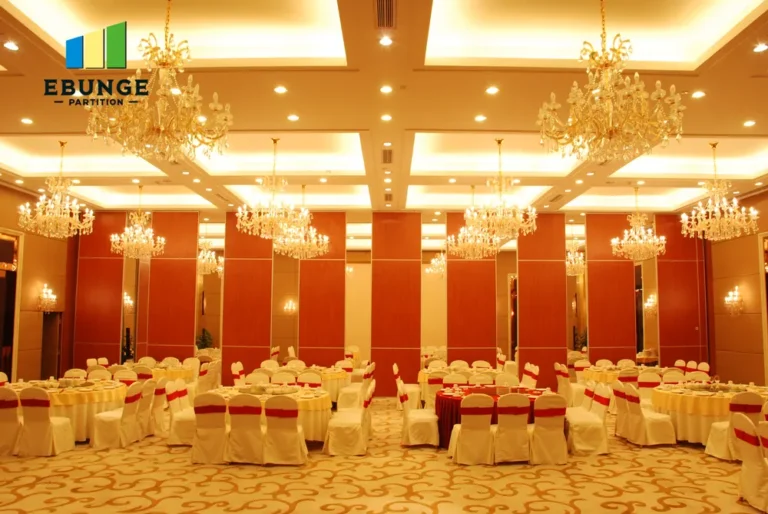
Office meeting rooms serve multiple purposes: brainstorming sessions, client presentations, private calls, and collaborative workshops. The acoustic environment directly impacts productivity and confidentiality. Mobile acoustic partitions offer a balance between openness and privacy, allowing you to adapt the space quickly. Unlike permanent walls, they can be moved to create larger areas for events or subdivided for smaller teams. This flexibility is crucial for modern offices that need to respond to changing headcounts and work styles.
From a buyer’s perspective, the decision often comes down to three factors: acoustic performance, ease of operation, and installation impact. Mobile acoustic partitions address all three. They provide a movable partition wall that can be deployed in minutes, without the mess of drywall or the disruption of construction. For renovation projects, this means less downtime and faster occupancy.
Need help turning the mobile acoustic partitions requirements into a practical project layout?
Acoustic Performance: What to Look For
Sound privacy is the primary concern for meeting rooms. The acoustic effectiveness of a partition is measured by its Sound Transmission Class (STC) rating, which indicates how much sound is blocked. For confidential conversations, an STC of 40-45 is typically sufficient, while higher ratings (50+) are needed for music or heavy machinery noise. However, the actual performance depends on the entire system, including seals, glazing, and the surrounding structure. A partition is only as good as its weakest point—gaps at the top, bottom, or sides can compromise acoustic integrity.
When evaluating acoustic partition solutions, ask for detailed specifications and test data. Ensure the system includes perimeter seals that compress against the floor, ceiling, and walls to minimize sound leakage. Also, consider the type of glazing if you plan to include windows—double glazing with different glass thicknesses improves sound insulation.
Ease of Operation: Manual vs. Automated
Meeting rooms are used frequently, so the partition should be easy to operate. Manual systems can be moved with a simple handle, but they require physical effort. Automated systems, powered by motors, offer push-button operation, which is ideal for larger panels or for users with limited mobility. However, automation adds complexity and cost. Assess the frequency of movement and the user profile. For a small meeting room, a manual movable partition wall may be sufficient, but for a large conference area, an operable wall system with motorized panels could be worth the investment.
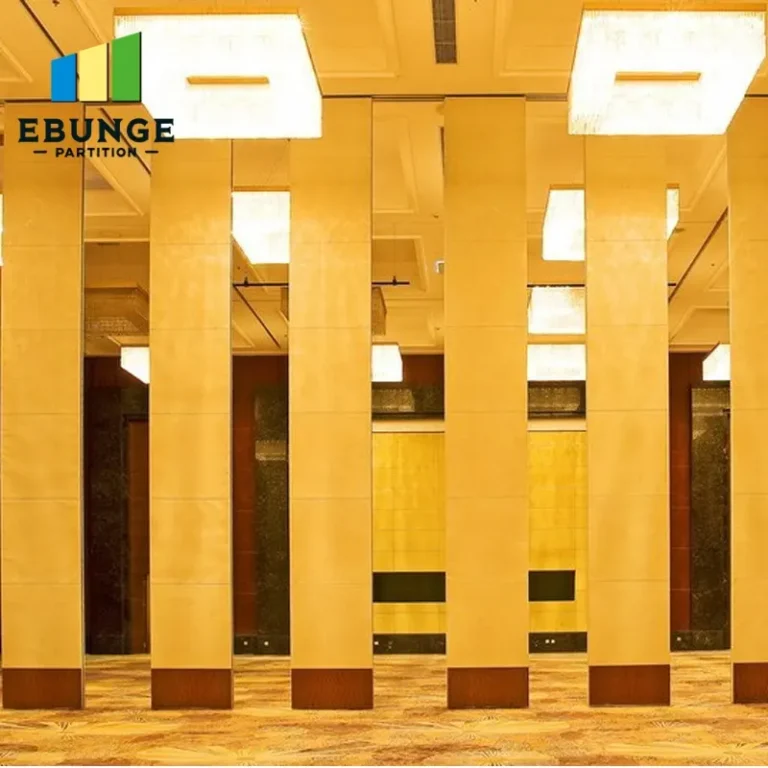
Another consideration is the top-hung track system. This design suspends the partition from an overhead track, eliminating the need for a floor rail. This not only improves safety and accessibility but also makes cleaning easier and reduces trip hazards. The track should be sturdy and engineered for smooth rolling, even when panels are stacked.
Installation Disruption: Minimizing Downtime
Renovation projects are time-sensitive. The installation of mobile acoustic partitions should not cause excessive disruption. Unlike permanent walls, which require framing, drywall, and painting, partitions are typically installed in a matter of days. The process involves mounting the track, hanging the panels, and adjusting the seals. Choose a supplier that provides professional installation and coordinates with your project schedule. Ask about the number of installers and the estimated time for your specific configuration.
Also, consider the impact on other trades. If you are renovating an entire floor, the partition installation should be sequenced to avoid conflicts with electrical, HVAC, or ceiling work. A reputable supplier will offer guidance on integration.
Durability and Maintenance: Long-Term Value
Office environments are demanding. Partitions must withstand frequent use, impacts from carts, and general wear. Look for panels with robust construction—steel or aluminum frames, high-density cores, and durable surface materials. The finish should be scratch-resistant and easy to clean. Some suppliers offer replaceable skins, allowing you to update the aesthetics without replacing the entire panel.
Maintenance is straightforward: regular cleaning of the track and seals, and occasional lubrication of moving parts. The absence of floor rails reduces maintenance points. Ensure that the supplier provides clear care instructions and that spare parts are readily available.
Aesthetic Flexibility: Matching Your Design Vision
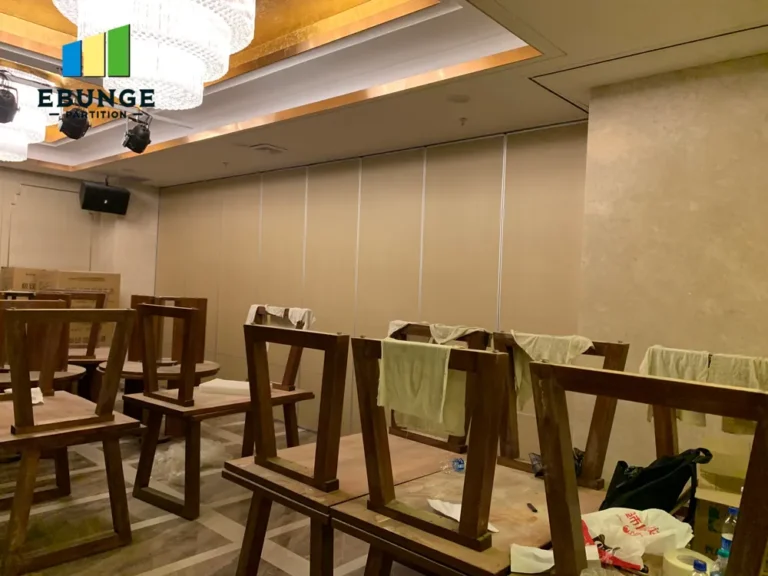
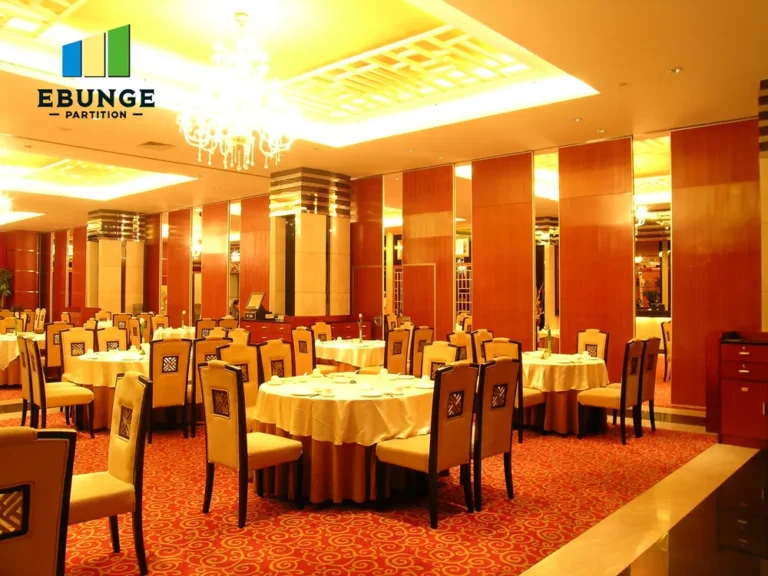
Meeting rooms are often visible to clients and staff, so the partition should complement your interior design. Mobile acoustic partitions come in a variety of finishes, including laminates, veneers, fabrics, and even writable surfaces. You can also choose the glass type, from clear to frosted or tinted, to control light and privacy. Custom movable walls can be tailored to your exact dimensions and design preferences, ensuring a seamless integration with your office aesthetic.
Share the opening, drawings, finish direction, and privacy target for a project-specific review.
Cost-Effectiveness: Beyond the Initial Price
While the upfront cost of mobile acoustic partitions may be higher than a drywall wall, they offer savings over time. They are reusable—if you relocate, the partition can be dismantled and reinstalled in a new space. They also reduce the need for multiple permanent rooms, as one flexible space can serve many purposes. Additionally, the installation is faster, reducing labor costs and downtime. When comparing quotes, consider the total cost of ownership, including maintenance and potential reconfiguration.
To help you evaluate, here is a quick checklist:
| Feature | Why It Matters | Questions to Ask |
|---|---|---|
| Acoustic rating (STC) | Determines sound privacy level | What is the STC? Is it tested in a real-world installation? |
| Seal system | Prevents sound leakage | Are seals automatic? How are they adjusted? |
| Track type | Affects operation and floor safety | Is it top-hung? Is a floor rail required? |
| Operation | Ease of use | Is it manual or automated? How many people are needed to move it? |
| Installation time | Minimizes disruption | How long does installation take? How many installers? |
| Finish options | Matches design | What finishes are available? Can I get custom colors? |
| Warranty | Protects your investment | What does the warranty cover? How long is it? |
Compliance with Building Regulations
Office renovations must comply with local building codes, including fire safety, accessibility, and acoustics. Mobile acoustic partitions should meet fire resistance ratings if required, and the track system should be installed to support the weight safely. Accessibility is another factor—ensure that the partition does not create barriers for people with disabilities. Your supplier should provide documentation of compliance, such as fire test certificates, and offer guidance on meeting regulations.
Lead Time and Warranty: Planning Your Project
Lead time is critical for renovation schedules. Custom movable walls may require several weeks for manufacturing, especially if finishes are bespoke. Plan ahead and order early. Also, review the warranty terms carefully. A typical warranty covers mechanical components for 5-10 years, but the duration and coverage vary. Ask about what is excluded, such as wear and tear on seals or finishes.
Preparing for a Successful Inquiry
To get accurate quotes and recommendations, you need to provide specific information to the supplier. This includes the opening size (width and height), the number of panels, the acoustic target (STC), the desired finish, and the project location (for installation logistics). If you have architectural drawings, share them. This will help the supplier design a system that fits your space and meets your performance requirements.
When you contact a mobile acoustic partitions supplier, be ready to discuss your timeline and budget. A reputable supplier will ask about your needs and offer solutions that balance performance and cost. They should also provide detailed specifications and a clear quotation.
Conclusion
Mobile acoustic partitions are a strategic choice for office meeting rooms when flexibility, sound privacy, and minimal disruption are priorities. They offer a reusable, adjustable solution that can adapt to your business. By understanding the technical aspects—acoustic performance, operation, installation, durability, and compliance—you can make an informed decision. For more insights, explore our movable partition wall resources, and when you’re ready to discuss your project, contact us with your details. Our team is ready to assist you with drawings, specifications, and installation guidance.
Frequently Asked Questions
What is the typical STC rating for mobile acoustic partitions?
STC ratings vary by product and configuration. For office meeting rooms, a rating of 40-45 is common, but higher ratings are available. Always request test data for the specific system you are considering.
Can mobile acoustic partitions be installed without a floor rail?
Yes, many systems use a top-hung track that supports the panel weight from above, eliminating the need for a floor rail. This improves safety and accessibility.
How long does installation take?
Installation time depends on the size and complexity of the system. A typical meeting room partition can be installed in 1-3 days, but custom projects may take longer. Ask your supplier for a timeline.
Are mobile acoustic partitions compliant with fire regulations?
Many partitions are available with fire-resistant materials and can meet building codes. Ensure the supplier provides fire test certificates and that the installation complies with local regulations.
Can the partitions be customized to match my office design?
Yes, most suppliers offer a range of finishes, including laminates, veneers, and fabrics. Some allow custom colors or patterns. Discuss your design preferences with the supplier.
What maintenance is required?
Regular cleaning of the track and panels, and occasional lubrication of moving parts, are typically sufficient. No floor rail means fewer parts to maintain.
For further reading, visit our blog for more insights on acoustic solutions, or browse our Acoustic Partition Solutions category to see related topics.
Send the opening size and drawings to discuss a differentiated mobile acoustic partitions solution.