
When you are specifying folding partitions for schools, the decision rarely comes down to a single product specification. As a building material distributor, you need to translate a school’s operational needs into a movable partition wall that meets acoustic targets, complies with building codes, and arrives on schedule. This project-case guide focuses on the practical steps for selecting an operable wall system for a school hall, from initial inquiry to quotation readiness. We will cover technical requirements, customization options, and the critical questions to ask your supplier, ensuring you avoid costly mistakes. Whether you are managing a new build or a refurbishment, understanding how to evaluate folding partitions for schools is essential for your project’s success.
Direct answer: For a school hall, the right folding partitions for schools depend on acoustic insulation (typically 40-50 dB for music or exam spaces), compliance with local building codes (e.g., fire ratings, accessibility), ease of operation (manual vs. motorized), and customization to fit the hall’s dimensions and finishes. A top-hung track system without a floor rail is often preferred for flexibility and safety. To get an accurate quotation, you must provide the opening size, ceiling height, acoustic target, finish preference, and project location.
Folding Partitions For Schools: Understanding the School Hall Environment
School halls are multi-purpose spaces, hosting assemblies, exams, sports, and performances. This versatility demands a movable partition wall that can quickly divide or open the space. Unlike office partitions, school partitions must withstand heavy use and occasional impacts. Consider the daily traffic: trolleys carrying sports equipment, students moving chairs, and stage setups. Therefore, durability and ease of operation are non-negotiable. Additionally, schools often have specific time windows for installation, such as during summer breaks. This influences your delivery timeline and installation planning. As a distributor, you must align these operational realities with the technical capabilities of the operable wall system.
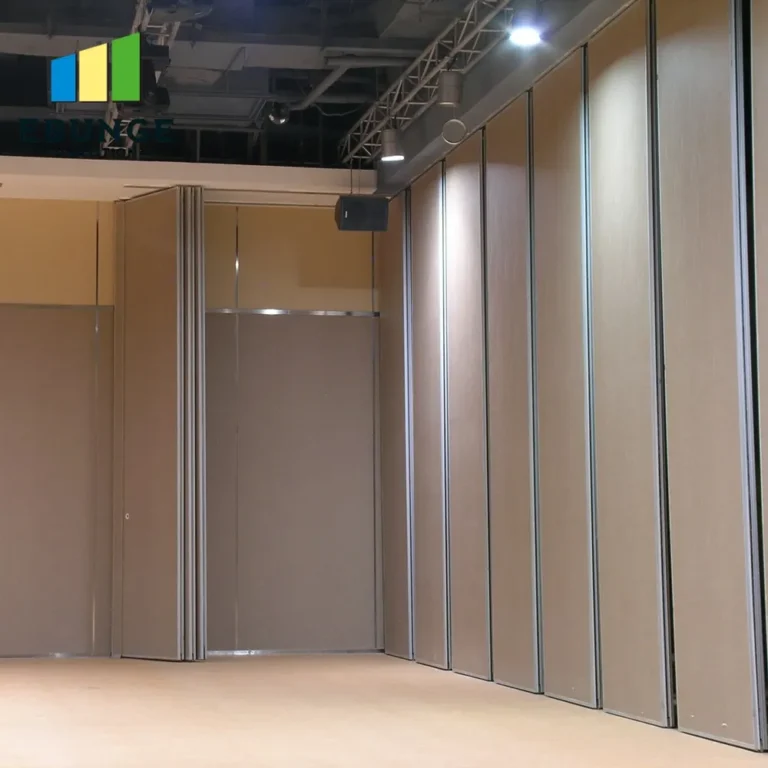
Need help turning the folding partitions for schools requirements into a practical project layout?
Key Technical Requirements for School Partitions
Before requesting a quote, you need to gather specific technical data. The first is the acoustic insulation rating. For a school hall, the required sound reduction depends on the activities. For example, dividing a music room from a classroom may require a higher rating (e.g., 50 dB) than separating two general-purpose areas (e.g., 40 dB). Confirm the target with the school’s acoustic consultant. Second, fire safety: local building codes may mandate a fire-resistance rating (e.g., 30 or 60 minutes). Third, the stack capacity: how many panels can be stacked at the side without obstructing exits or storage. Fourth, the top-hung track system: this is our standard because it avoids floor tracks, which can be a trip hazard and collect dirt. Ensure the ceiling structure can support the weight of the partition. Finally, consider the operation: manual folding is cost-effective, but motorized operation may be necessary for large or heavy panels, or for users with limited mobility. These factors directly affect the design and cost.
Acoustic Performance: What to Specify
Acoustic performance is often the most critical requirement for folding partitions for schools. The decibel (dB) rating indicates how much sound is reduced across the partition. For a school hall, a rating of 45 dB is common, but for music rooms or exam halls, 50 dB may be required. However, the partition’s performance is only as good as the seals around it. Ensure the supplier provides a complete sealing system, including perimeter seals and bottom drop seals, to prevent sound leakage. When requesting a quotation, specify the acoustic target and the type of activities on either side. For example, if one side is a gymnasium and the other a classroom, you may need a higher rating. Remember that the actual performance depends on the installation quality and the surrounding structure. Therefore, ask the supplier for a detailed installation specification and any third-party test reports.
Compliance with Building Codes and Accessibility
Every country and region has specific building codes that govern fire safety, accessibility, and structural integrity. For a school hall, the movable partition wall must not compromise the means of egress. For example, the partition should not block fire exits or reduce the width of corridors. Additionally, accessibility standards (such as the ADA in the US or equivalent) may require that the partition operation is easy for people with disabilities. This could mean motorized operation or manual handles at accessible heights. The partition’s materials must also meet fire-resistance standards, and the track system must be securely fixed to the building structure. As a distributor, you must verify that the supplier’s product complies with the relevant codes in the project’s location. Do not assume that a product certified in one country is acceptable in another. Ask for certificates and declarations of performance.
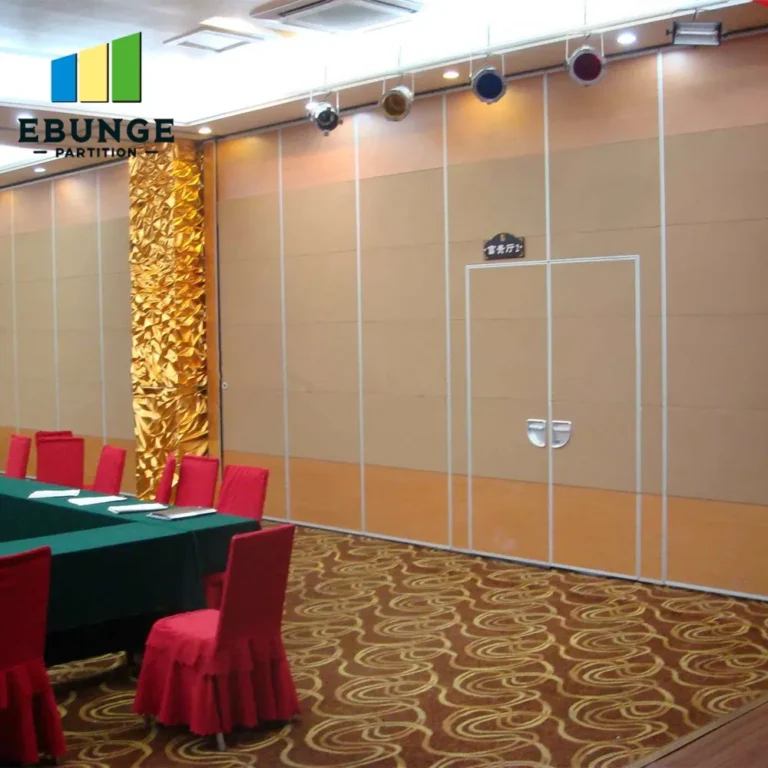
Customization: Finishes, Sizes, and Configurations
School halls are not standard sizes. Therefore, custom movable walls are often necessary. Customization includes the panel width, height, and the number of panels. For example, a hall may have a large opening that requires panels to stack into a recess or along a curved wall. The finish is also important: schools often prefer durable, low-maintenance surfaces like laminate or vinyl, which can be customized with colors or patterns. Some schools may want a write-on surface for teaching, or a tackboard for notices. Ensure the supplier offers a range of finishes and can match your samples. Additionally, consider the configuration: do you need a single partition or a series of partitions to divide a long hall into multiple rooms? The track layout, whether straight or curved, affects the design. Provide the supplier with detailed drawings or dimensions to get an accurate quotation.
Operational Considerations: Ease of Use and Safety
The partition should be easy to operate for school staff, including non-technical personnel. Manual folding partitions are typically equipped with a handle and a locking mechanism. For heavy panels, a gear-driven system can reduce the effort. Ensure the operation is smooth and safe, with no risk of trapping fingers. Safety features such as pinch guards and soft-close mechanisms are important in a school environment. Additionally, consider the storage of the partition when open: does it stack neatly against the wall without protruding into the hall? A top-hung track system without floor rail allows for a clear floor, which is safer and easier to clean. When evaluating a supplier, ask for a demonstration or installation references. Also, consider the maintenance: regular checking of track and seals is necessary, and the supplier should provide guidance.
Share the opening, drawings, finish direction, and privacy target for a project-specific review.
Supplier Selection: Beyond the Quotation
As a distributor, your relationship with the supplier is crucial. Look for a manufacturer that offers project coordination, from initial consultation to installation support. They should be able to provide drawings, technical data, and installation manuals. Delivery timelines are critical for school projects; confirm the lead time and the supplier’s ability to meet your schedule. Also, inquire about the warranty and after-sales service. A typical warranty might cover parts and labor for a certain period, but ensure you understand the terms. The supplier should also offer spare parts availability. Moreover, they should be willing to provide references from similar school projects. When comparing quotations, do not only compare prices; consider the total cost of ownership, including maintenance and potential downtime. A slightly higher upfront cost may be justified by better durability and support.
Practical Checklist for Your Quotation Request
To ensure a smooth quotation process, use this checklist:
- Opening size (width, height, and depth) with drawings if possible.
- Acoustic target (dB rating) and whether it is for music, exams, or general use.
- Fire-resistance requirement (e.g., 30 or 60 minutes) based on local codes.
- Number of panels and stacking direction (left, right, or both).
- Finish preference (laminate, vinyl, write-on, tackboard) and color samples.
- Operation method (manual, gear, or motorized) and any accessibility needs.
- Ceiling structure details (type, load capacity) for track installation.
- Project location and expected delivery date.
- Installation requirements (who installs, timeline, site access).
- Warranty expectations and after-sales support.
By providing this information upfront, you reduce the risk of delays and budget overruns. A reputable supplier will use this to offer a tailored solution.
Comparing Movable Partition Options
When evaluating different systems, consider a comparison table:
| Feature | Top-Hung Track (Recommended) | Floor-Mounted Track |
|---|---|---|
| Floor obstruction | None | Yes (trip hazard) |
| Cleaning | Easier | Harder |
| Structural support | Requires strong ceiling | Uses floor support |
| Flexibility | Can be curved | Usually straight |
| Acoustic sealing | Bottom drop seal | Floor seal |
For school halls, a top-hung system is often preferred due to safety and flexibility. However, the choice depends on the building’s structure.
Conclusion: Preparing for a Successful Project
Selecting folding partitions for schools is a process that requires careful planning and communication. By focusing on acoustic performance, compliance, customization, and supplier support, you can ensure that the operable wall system meets the school’s needs and your project’s budget. Remember to gather all necessary information before requesting a quotation, and do not hesitate to ask suppliers for technical details and references. A well-chosen movable partition wall will enhance the functionality of the school hall for years to come. For further guidance, explore our resources on movable partition walls and project cases. If you have specific questions, contact our team for personalized support.
Frequently Asked Questions
What is the typical acoustic rating for folding partitions in a school hall?
Typically, a rating of 40-45 dB is sufficient for general use, but for music or exam rooms, 50 dB or higher may be required. Always confirm the target with an acoustic consultant.
Can folding partitions be customized to fit irregular ceiling shapes?
Yes, many manufacturers offer custom track layouts, including curved tracks, to accommodate non-standard ceiling shapes. Provide detailed drawings to the supplier.
Are motorized folding partitions available for school halls?
Yes, motorized systems are available and can be beneficial for large or heavy panels, or for ease of use. Discuss your needs with the supplier.
What maintenance do folding partitions require?
Regular maintenance includes checking the track, seals, and moving parts. The supplier should provide a maintenance guide and offer after-sales service.
How long does delivery typically take for custom folding partitions?
Delivery times vary based on customization and the manufacturer’s schedule. It is crucial to confirm the lead time with the supplier and plan accordingly, especially for school projects with fixed deadlines.
What information do I need to provide for a quotation?
You need to provide the opening size, ceiling height, acoustic target, finish preference, operation method, project location, and any relevant drawings. This ensures an accurate quote.
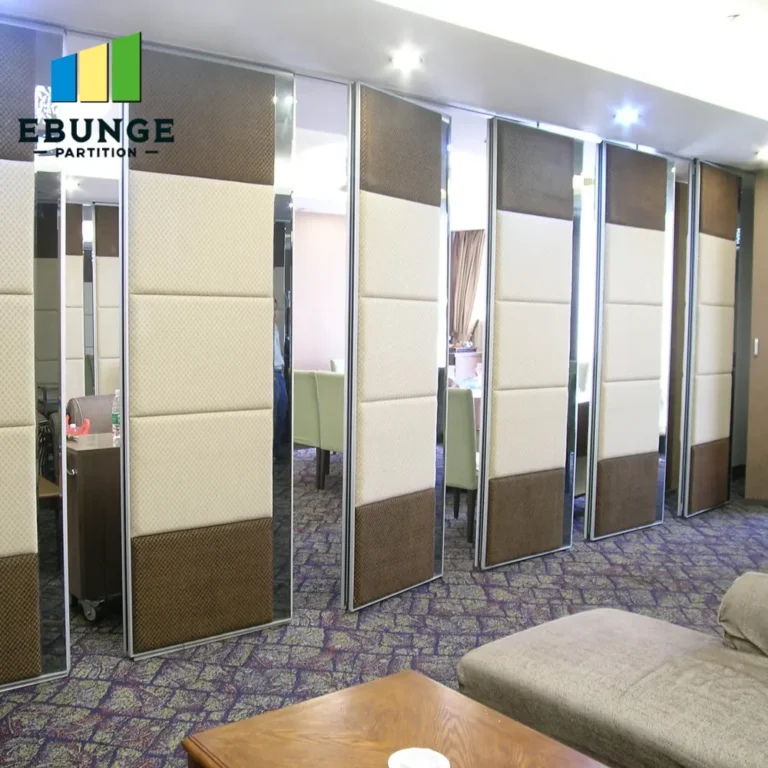
For further details on movable partition walls, visit our movable partition wall page. Explore our blogs for technical insights, or review project cases for inspiration. If you have specific requirements, contact us for expert guidance.
For this buyer review, folding partitions for schools should be checked against the confirmed opening, drawings, operating plan, and project specification.
Send the opening size and drawings to discuss a differentiated folding partitions for schools solution.