
When planning a gymnasium renovation or new build, the cost of a movable wall is often the first question. But as a trading company sourcing for a client, you need more than a ballpark figure. You need a quotation-ready breakdown that protects your margin and your reputation. This guide focuses on the real cost drivers behind a movable wall for gymnasium projects, helping you ask the right questions, avoid hidden expenses, and make a confident decision.
Direct answer: The cost of a movable wall for a gymnasium typically ranges from $100 to $300 per square meter, but this is only a starting point. The final price depends on opening size, acoustic target, finish preference, structural drawings, and factory-direct support. To get an accurate quote, you must provide detailed project specs. Without them, any estimate is guesswork.
Why a Movable Wall for Gymnasium Needs a Detailed Cost Breakdown
Gymnasiums are high-traffic, multi-purpose spaces. A movable wall must withstand constant use, meet acoustic standards, and integrate with existing structures. Unlike a simple office partition, a gymnasium partition wall system involves engineering, safety, and performance considerations that directly affect cost. As a trading company, your role is to bridge the gap between the client’s needs and the factory’s capabilities. A detailed cost breakdown helps you identify where value is added and where you can negotiate.
Need help turning the movable wall requirements into a practical project layout?
Key Cost Drivers: Opening Size and Configuration
The first factor that determines cost is the opening size. Larger openings require more panels, heavier tracks, and stronger hardware. But it’s not just about width and height. The configuration matters: do you need a straight run, a curved track, or a multi-fold system? Each adds complexity and cost. For example, a simple two-panel movable wall for a small gym might be relatively inexpensive, but a 20-meter-long partition that stacks into a pocket requires precision engineering and more materials.
Acoustic Performance: What You Pay For
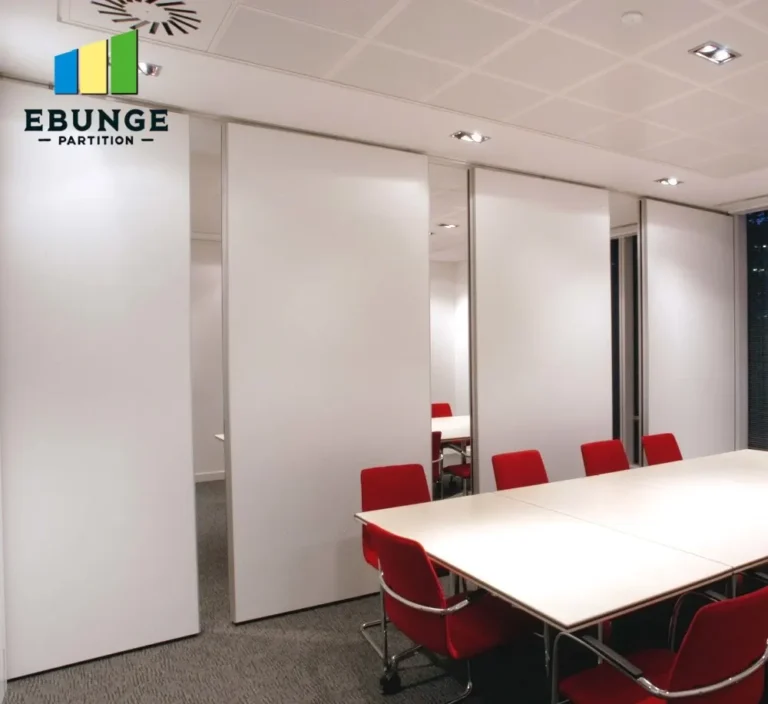
Acoustic performance is a major cost driver. A gymnasium often needs to host simultaneous activities, so sound insulation is critical. Acoustic partitions are rated by Sound Transmission Class (STC) or weighted sound reduction index (Rw). Higher ratings mean better soundproofing but also higher costs due to denser cores, double seals, and specialized edge details. You must know the target acoustic rating before requesting a quote. Without it, the factory cannot provide accurate pricing.
Finish and Material Choices
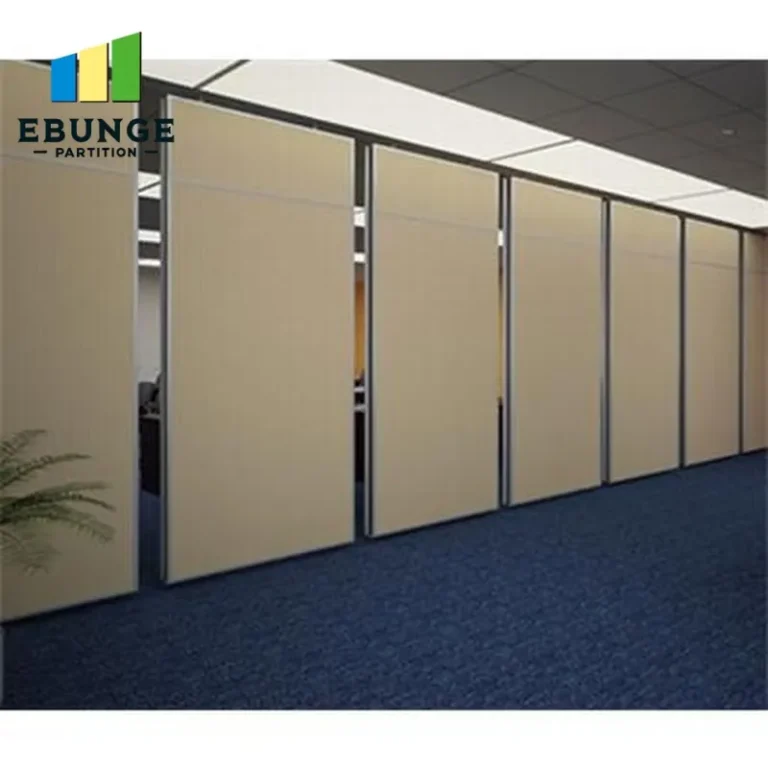
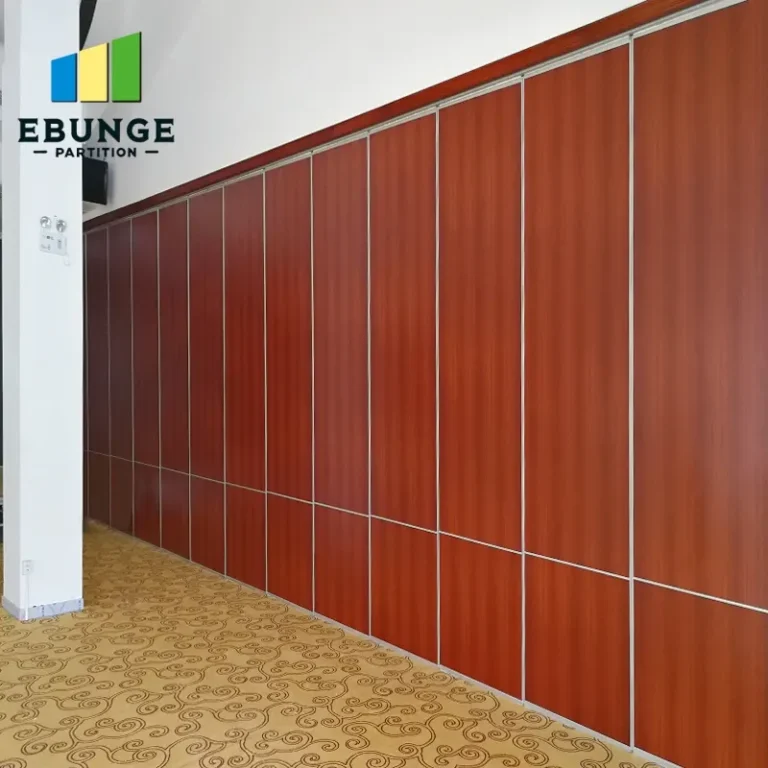
The finish of the movable wall affects both aesthetics and price. Options range from basic painted surfaces to high-pressure laminate (HPL), veneer, or even tackable surfaces for sports facilities. Each material has a different cost per square meter. Also consider the track system: top-hung tracks without floor rails are standard in our EBUNGE system, which simplifies installation and reduces floor maintenance. However, the track length, type of suspension, and number of trolleys all influence the quote.
The Importance of Drawings and Site Conditions
Accurate drawings are essential. The factory needs to know the exact opening dimensions, ceiling height, structural support points, and any obstacles like ducts or beams. If the site has uneven floors or non-standard ceiling heights, custom engineering is required, which increases cost. Provide architectural and structural drawings to get a precise quotation. This also helps identify potential compatibility issues early, saving time and money.
Factory Direct vs. Trader: Real Cost Impact
As a trading company, you might be tempted to source from a middleman, but buying directly from a factory like ours can reduce costs by 10-20% and give you better control over quality and lead times. When you work with a factory directly, you get access to engineering support, customization options, and transparent pricing. You also avoid the markups that come with multiple intermediaries. But beware of factories that are not transparent about their capabilities. Always verify their production capacity and request samples.
Installation and Logistics: Budget for the Full Scope
The cost of the movable wall itself is only part of the total investment. Installation is a significant expense, especially if the site requires special equipment or if the installation is complex. Logistics, including transportation and customs, also add up. As a trading company, you need to factor in these costs when preparing a quotation for your client. Some factories offer installation guidance or even on-site supervision, which can reduce installation errors and rework.
Warranty and After-Sales Support
Warranty coverage is a cost consideration that is often overlooked. A longer warranty might come with a higher upfront price, but it protects you and your client from future repair costs. Check what the warranty covers: parts, labor, or both? Also, understand the after-sales support process. A factory that provides responsive support and readily available spare parts adds value that can justify a higher price.
Share the opening, drawings, finish direction, and privacy target for a project-specific review.
Lead Time and Project Scheduling
Lead time impacts your project timeline and costs. If you need the movable wall urgently, you may have to pay extra for expedited production or shipping. Conversely, longer lead times might allow for better pricing but could delay your project. Discuss your schedule with the factory early. A reliable factory will give you a realistic lead time and stick to it, helping you manage your client’s expectations.
Return on Investment: Beyond the Initial Cost
When evaluating the cost of a movable wall, consider the return on investment (ROI). A high-quality partition can increase the usable space of a gymnasium, allowing for multiple activities simultaneously. This can lead to higher revenue or better utilization of the facility. Durability is also key: a wall that lasts 20 years with minimal maintenance is more cost-effective than a cheaper wall that needs frequent repairs. Our EBUNGE system uses top-hung tracks without floor rails, which reduces wear and tear and simplifies cleaning.
Compatibility with Existing Structure
Before installing a movable wall, assess the building’s structural capacity. The track and panels add significant weight to the ceiling and walls. If the structure is not designed to support this load, you may need to reinforce it, which adds cost. A factory can provide load calculations and installation recommendations based on your drawings. This is a critical step to avoid safety issues and costly modifications later.
Checklist for Quotation Readiness
To get an accurate quote, prepare the following information:
- Exact opening dimensions (width x height x depth)
- Acoustic target (STC/Rw rating)
- Finish preference (paint, laminate, veneer, etc.)
- Architectural and structural drawings
- Number of panels and stacking configuration
- Site conditions (floor flatness, ceiling type)
- Delivery location and installation requirements
Comparison of Movable Wall Options
| Feature | Basic Movable Wall | Acoustic Movable Wall | High-Performance Movable Wall |
|---|---|---|---|
| Acoustic Rating | Low (e.g., Rw 30) | Medium (e.g., Rw 40) | High (e.g., Rw 50+) |
| Finish Options | Standard paint | Laminate or veneer | Custom finishes, tackable |
| Track System | Top-hung or floor rail | Top-hung only | Top-hung with advanced seals |
| Durability | Standard | Reinforced for high traffic | Heavy-duty for sports facilities |
| Warranty | 1-2 years | 3-5 years | 5+ years |
| Cost per sqm | $100-150 | $150-250 | $250-350+ |
Note: These are indicative ranges; actual costs depend on specific project requirements.
Frequently Asked Questions
How much does a movable wall for a gymnasium cost?
The cost varies widely based on size, acoustic rating, finish, and site conditions. A typical range is $100 to $300 per square meter, but this is a rough estimate. To get an accurate quote, provide detailed specifications to the factory.
What is the difference between a movable wall and an operable wall?
Movable wall and operable wall are often used interchangeably. Both refer to partition walls that can be moved to divide or open up a space. The key is the mechanism: top-hung systems without floor rails are common in gymnasiums because they are easier to maintain.
Can a movable wall achieve high acoustic performance?
Yes, with proper design and materials, movable walls can achieve high STC ratings. However, the acoustic performance depends on the seals, panel construction, and installation quality. Always specify your acoustic target to the factory.
How long does it take to produce and install a movable wall?
Lead time typically ranges from 6 to 12 weeks, depending on the complexity and the factory’s workload. Installation may take a few days to a week. Discuss your timeline with the factory to ensure they can meet your schedule.
What warranty should I expect?
Warranties vary by manufacturer. Some offer 1-2 years, while others provide up to 5 years or more. Make sure to understand what is covered and for how long. A longer warranty may be worth the extra cost.
Conclusion: Make Your Movable Wall Project a Success
Understanding the cost of a movable wall for gymnasium projects is about more than just the price tag. It’s about preparing a complete specification, working with a reliable factory, and planning for the full scope of the project. By focusing on opening size, acoustic target, finish preference, drawings, and factory-direct support, you can get accurate quotes and avoid costly surprises. As a trading company, your expertise in managing these details will set you apart and ensure your client’s satisfaction.
For more information on movable partition walls, explore our movable partition wall resources, or check out our movable partition cost category for further insights. If you have a project in mind, contact us to discuss your requirements and get a detailed quote.
Send the opening size and drawings to discuss a differentiated movable wall solution.