
Quick answer: weight track interface risk
Review focus: weight track interface risk.
Weight track interface risk bidder tender submission review is where procurement teams decide how much a bidder’s overhead route, support assumptions and parking strategy should influence the award. Movable partition panels are individually movable, suspended from a top track, cross the opening without a floor track, and park at a planned stacking position. That simple description hides the interface that most often creates cost and programme surprises: the connection between the track, the building structure and the geometry of every movement path.
This article offers a scoring framework, not a performance verdict. Every recommendation should be bound to maintained product facts, visible evidence limits and project-specific drawing review. Confirm support, acoustic and dimensional requirements with qualified project specialists before relying on any tender statement.
Why the Track Interface Deserves Its Own Risk Line
Project review term: weight track interface risk.
Most tender evaluations separate product, price and programme. Track interface risk cuts across all three. The exact route, junction arrangement, continuous overhead path and parking position must be confirmed from the coordinated project drawings. Those gaps are not cosmetic; they determine whether the installed system can actually move as drawn.
Because panels are top-hung and cross the opening without a floor track, the overhead route carries the movement logic. Straight, turning and stacking routes are reviewed from the layout. If a bidder’s submission does not show how those routes connect, the evaluation team cannot tell whether the proposal is buildable as priced.
What the interface includes
Treat the interface as the set of conditions where the partition meets the building: the overhead route, the supporting structure, the opening geometry, the parking zone and the adjacent finishes. Each is a coordination item, not a product claim.
What it does not include
Do not score hidden performance. Visible references can support layout discussion but do not verify hidden construction or performance. Those require matching project evidence and confirmation.
A Weighted Scoring Model for Bid Review
Coordination scope: weight track interface risk.
Use a transparent weighting so bidders understand what evidence matters. The percentages below are a starting structure for discussion, not a mandated rule; adjust them to project priorities and record the rationale.
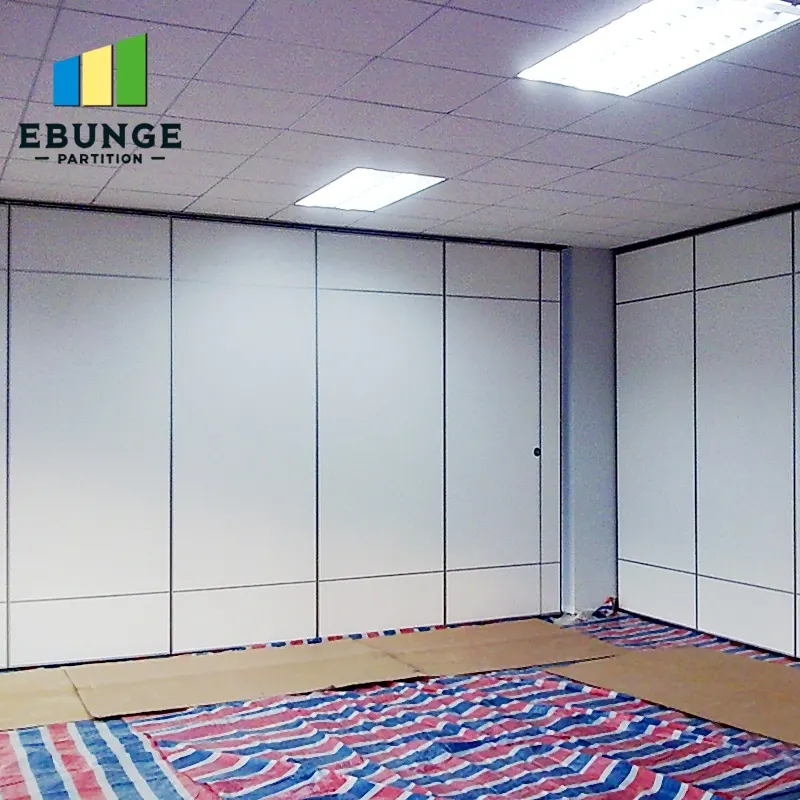
| Risk area | Suggested weight | Evidence to request |
|---|---|---|
| Overhead route continuity | High | Layout showing straight, turning and stacking routes |
| Support interface coordination | High | Structural coordination notes and drawing references |
| Parking position feasibility | Medium | Stacking zone dimensions and clearance review |
| Finish and pass-door scope | Medium | Finish schedule and pass-door requirement notes |
| Documentation completeness | Medium | Drawing register, revision control and clarification log |
Weighting is only useful if the evaluation team applies it consistently. Score each area against the evidence actually submitted, not against assumptions about what the bidder probably intended.
Reading the Overhead Route in a Bid
Checklist focus: weight track interface risk.
The overhead route is the path the panels follow from the open position to the parking position. It must be continuous and connected.
Straight runs
Check that the drawing shows the full opening and the relationship between the track and adjacent walls or columns. The suitability of each route and parking arrangement depends on the approved layout, circulation, ceiling interfaces and operating sequence.
Stacking and parking
Parking style is customized to the customer layout and project requirements and may support compact stacking when the coordinated design permits it. The bid should identify the planned stacking position and show that the zone is available.
Support Interface: The Question Bidders Often Leave Open
Review focus: weight track interface risk.
Top-hung panels transfer load to the overhead structure. The tender should state who is responsible for confirming that the supporting structure is suitable, and what information the bidder needs from the project team to complete that review.
Do not accept a generic statement that support is “standard” or “typical.” Support conditions are project-specific. Ask for the coordination path: which drawings, which responsible party and which clarification route will resolve open items before fabrication.
Evidence note
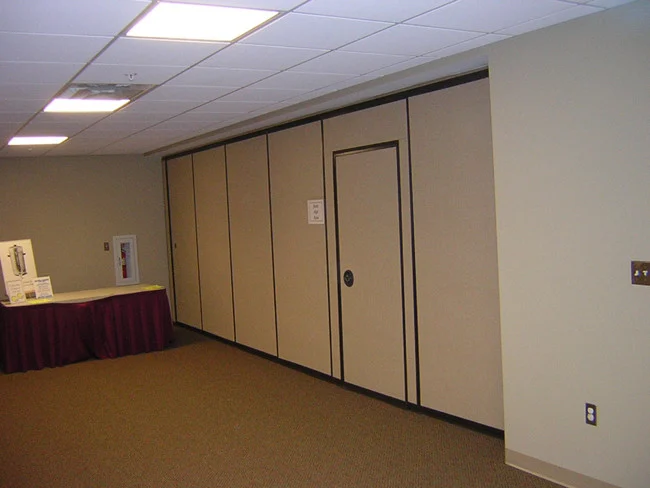
Visible geometry, finishes and photographs do not prove structural capacity, acoustic performance or installation outcomes. Treat them as coordination inputs, not as verified results. Confirm project-specific support, acoustic and dimensional requirements with qualified specialists.
Scoring the Bidder’s Documentation Quality
Project review term: weight track interface risk.
Documentation quality is a leading indicator of interface risk.
- Check that the drawing set covers the full movement route, not only the closed partition line.
- Confirm that the parking position is shown and dimensioned.
- Verify that finish options are listed against the approved schedule.
- Confirm whether pass-door requirements are addressed.
- Review the clarification log for unresolved support or dimensional questions.
- Score documentation completeness separately from price.
This sequence keeps the review evidence-bounded. It also gives bidders a fair signal about what a complete submission looks like.
Finish, Pass-Door and Scope Boundaries
Coordination scope: weight track interface risk.
Confirmed finish options include laminate, melamine, fabric, leather, glass and other approved surfaces. The tender should map finishes to the schedule and note any areas where the selection is still open.
Pass-door requirements and project documentation can be discussed as part of the bid clarification process. If a pass door is required, the bid should state how it is coordinated with the panel layout and the movement route. Do not infer door performance or acoustic outcomes from a finish selection.
Running the Evaluation Without Overreach
Keep the evaluation focused on what the bidder has actually submitted. Where evidence is missing, record it as an open item rather than filling the gap with an assumption.
- Separate product description from interface coordination.
- Score route continuity, support coordination and parking feasibility independently.
- Require clarification where the movement path is not continuous.
- Record unresolved items in a clarification log with owners and dates.
- Confirm project-specific support, acoustic and dimensional requirements before award.
This approach protects the project from hidden assumptions and gives bidders a clear basis for revision. It also keeps the tender record defensible if the scope changes later.
Frequently Asked Questions
What is track interface risk in a movable partition tender?
It is the risk that the overhead route, supporting structure, opening geometry or parking position is not fully coordinated in the bid. Because panels are top-hung and cross the opening without a floor track, these interface items determine whether the proposed system can move as drawn.
How should I weight route continuity against price?
Weight route continuity highly when the layout includes turns or a constrained parking zone. Price is important, but an incomplete route creates clarification and redesign work that is difficult to compare fairly. Record your weighting rationale before opening bids.
Can a bidder confirm support requirements without site information?
No. Support conditions are project-specific. The bidder should state what information is needed and who is responsible for confirming the supporting structure. Treat generic support statements as open items until the project team resolves them.
Do finish options affect track interface risk?
Finish options such as laminate, melamine, fabric, leather, glass and other approved surfaces are part of the specification, but they do not by themselves resolve route or support coordination. Keep finish scoring separate from interface scoring.
How do I handle acoustic claims in a tender?
Ask for project-specific documentation and confirmation. Do not accept a generic label as proof.
What should the clarification log contain?
List each unresolved interface item, the responsible party, the drawing or document reference, and the date by which a response is needed.
Conclusion: Score the Interface, Not the Assumption
Weighting track interface risk in a bidder’s tender submission is ultimately about evidence discipline. Score what the bidder has shown: the overhead route, the support coordination path, the parking position and the documentation quality.
Review the maintained product context on our movable walls page, browse additional planning guidance in our resources section, and contact our team to discuss pass-door requirements, project documentation and drawing review for your next tender.