
Weight Track Interface Exclusions in a Tender Scoring Model
Quick answer: scoring model
Review focus: scoring model.
When a tender includes movable partitions, the weight track interface exclusions tender scoring model decides how fairly bids can be compared. The phrase points to a narrow but consequential question: which parts of the overhead track route, its interfaces and its exclusions sit inside each bidder’s scope, and how should the evaluation reward clarity rather than assume performance. This article sets out an evidence-bounded framework for procurement teams, contractors, architects and owners. It does not supply project values; it shows what to ask, what to document and where to stop.
Why track interface exclusions distort bid comparison
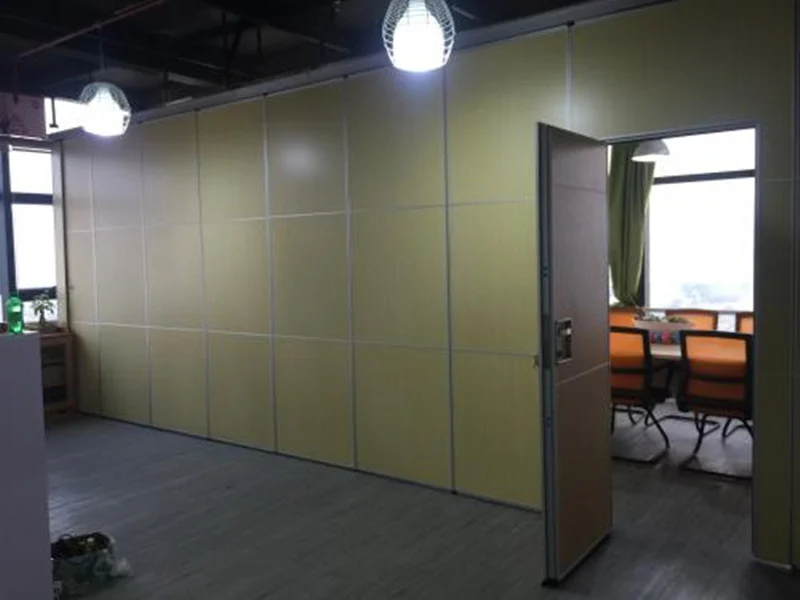
Movable wall panels are individually movable, suspended from a top track, and cross the opening without a floor track. They park at a planned stacking position. That operating concept is simple, but the boundary between partition supply and building interface is not. The suitability of each route and parking arrangement depends on the approved layout, circulation, ceiling interfaces and operating sequence. If the scoring model ignores that difference, the lowest-looking bid may simply carry the largest exclusion.
Scoring should therefore reward defined scope, not optimistic silence. The aim is not to punish exclusions but to make them visible, comparable and traceable to drawings.
Define the interface boundary before scoring begins
Before any weighting is agreed, the tender package should identify the physical interfaces around the partition line. These typically include the overhead route, the supporting structure, the parking zone and the adjacent finishes. The exact allocation of responsibility is a project decision; the scoring model should record it consistently.
Separate product scope from building scope
Product scope covers the movable panels, their top-hung suspension and the planned parking arrangement. Building scope covers whatever the project team assigns to the structure and surrounding works. The tender should state which party is responsible for each, and bidders should respond against that same list.
Require route drawings, not verbal assumptions
Straight, turning and stacking routes are reviewed from the layout. Ask each bidder to reference the drawing on which its scope is based. A route that changes direction or parks in a recessed position needs the same documented review as a straight run. Do not accept a written assurance that a route ‘works’ without the drawing it refers to.
A weighted criteria framework for evaluation
The table below is a structure, not a set of recommended percentages. Weights should reflect project priorities and be fixed before bids are opened. What matters is that every criterion is scored from submitted evidence.
| Criterion | What evaluators look for | Evidence expected |
|---|---|---|
| Scope definition | Clear statement of included and excluded interface work | Scope schedule cross-referenced to drawings |
| Route continuity | Overhead route shown as continuous and connected where movement is proposed | Marked-up layout showing straight, turning and stacking routes |
| Support coordination | Named responsibility for structural support review | Interface matrix or responsibility schedule |
| Parking provision | Stacking position identified and coordinated with adjacent works | Layout extract with parking zone indicated |
| Finish and pass-door scope | Finish options and pass-door requirements stated without inferred performance | Finish schedule and pass-door requirement note |
| Documentation quality | Assumptions, clarifications and exclusions readable and consistent | Complete tender return with a clarification log |
Score each row against the evidence actually submitted. Where a bidder has not addressed a criterion, record it as unaddressed rather than inferring a favourable answer.
Build an evidence note into every scored line
An evidence note is a short record of what supports a score. It prevents a common failure in tender review: a high mark given for a confident sentence that no drawing or schedule supports. For each criterion, note the document, page or drawing reference and the exact statement relied on.
Evidence note: score only what the bidder has submitted. Where the interface responsibility is unclear, mark the line as requiring clarification and carry it into the clarification round rather than resolving it by assumption.
If a tender refers to acoustic intent, ask for the basis of the statement and confirm project-specific requirements separately. Seals and acoustic concepts can be explained generically, but the scoring model should not award points for performance that has not been evidenced for the project.
Run a clarification round before final weightings
Most interface ambiguity can be resolved before scores are finalised. Use a short, structured clarification round so every bidder answers the same questions. This protects comparability and reduces the risk of adjusting weights after bids are visible.
- Issue a common clarification list covering route continuity, support responsibility, parking position and pass-door requirements.
- Ask each bidder to respond by drawing reference, not narrative alone.
- Record responses in the evidence note for the affected criterion.
- Re-score only the lines affected by new evidence, and log the reason.
- Confirm that no weight has changed after bid opening.
Where a response remains incomplete, the exclusion stays visible in the evaluation.
Common scoring mistakes to avoid
Several patterns recur in movable partition tenders. First, treating a low price as evidence of a complete scope. Second, awarding acoustic points for a rating quoted without context. Third, accepting a route description that omits the parking position. Fourth, allowing different bidders to answer different questions.
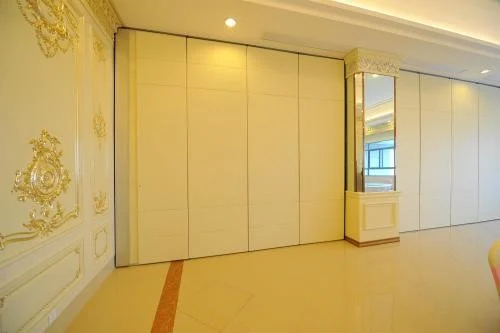
Visible references can support layout discussion but do not verify hidden construction or performance. Finish options include laminate, melamine, fabric, leather, glass and other approved surfaces, but a finish choice is not evidence of performance. Keep the scoring model tied to submitted documents and project-specific confirmation.
Documentation to request with each bid
Request a consistent document set so the evaluation has a common base. The list below is a starting point; add project-specific items where the design demands them.
- Scope schedule with inclusions and exclusions clearly separated.
- Marked-up layout showing straight, turning and stacking routes.
- Parking position and its coordination with adjacent works.
- Finish schedule using approved options only.
- Pass-door requirements and any associated coordination notes.
- Clarification log with dated responses.
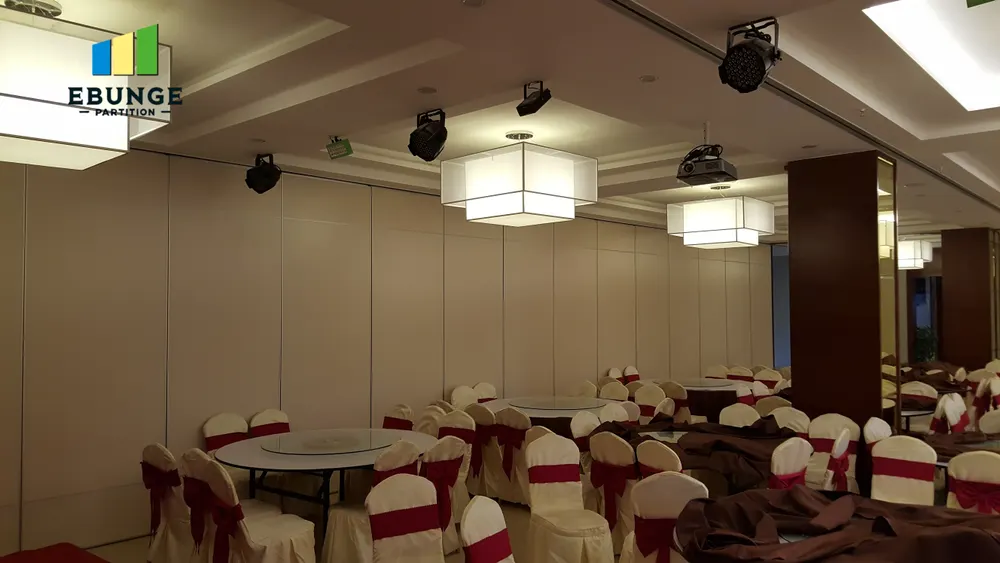
Reviewers can compare these documents side by side. The movable wall product overview provides maintained context on the top-hung, floor-track-free operating concept, while the resources section supports general planning. Neither replaces project-specific drawing review.
Frequently asked questions
What does ‘track interface exclusion’ mean in a tender?
It describes work related to the overhead track route and its connections that a bidder has placed outside its scope. The tender should state who is responsible for that work so bids can be compared on the same basis.
Should exclusions reduce a bidder’s score?
Not automatically. A clearly stated exclusion with a named responsible party can be scored fairly. The scoring problem arises when exclusions are unstated or inconsistent between bidders.
How should acoustic statements be weighted?
Weight them against the evidence submitted and the project’s confirmed requirements.
Can a movable partition route change direction?
Straight, turning and stacking routes are reviewed from the layout. Any proposed movement path requires a continuous connected overhead route and project-specific support review. The exact route, junction arrangement, continuous overhead path and parking position must be confirmed from the coordinated project drawings.
What finish information should bidders provide?
Bidders should reference approved finish options such as laminate, melamine, fabric, leather, glass or other approved surfaces.
When should weights be fixed?
Fix weights before bids are opened and record them in the tender file. Clarifications may change evidence, but changing weights after bids are visible undermines comparability.
Conclusion and next step
A defensible weight track interface exclusions tender scoring model does three things: it defines the interface boundary, it scores only submitted evidence, and it keeps exclusions visible through clarification. Applied consistently, it helps overseas contractors, architects, designers, owners and renovation teams compare bids on scope rather than assumption. Confirm project-specific support, acoustic and dimensional requirements with the relevant specialists before award.
To discuss pass-door requirements, layout review or project documentation for a movable partition package, contact the EBUNGE team with your drawings and tender questions.