
Weight Track Interface Assumptions in a Tender Scoring Model
Quick project answer
Review focus: track interface.
Most tender scores look objective because they are numeric. Yet the weight track interface assumptions tender scoring model often rests on statements nobody has checked against drawings. A bidder may describe a smooth overhead route, a convenient parking zone or a clean ceiling line, and the evaluator has no shared method for deciding how much that description should count. The result is a score that rewards confident wording rather than verifiable coordination.
This article sets out a defensible way to weight those assumptions. It does not offer a universal scoring formula, because every project has its own structure, layout and procurement rules. The exact overhead route and support arrangement must be confirmed by the responsible project team from coordinated drawings.
Why Track Interface Assumptions Attract Disproportionate Weight
The track interface sits between the partition system and the building. The suitability of each route and parking arrangement depends on the approved layout, circulation, ceiling interfaces and operating sequence. Because it crosses several packages, it is frequently described in prose rather than resolved in coordinated drawings. Prose is easy to score and hard to test.
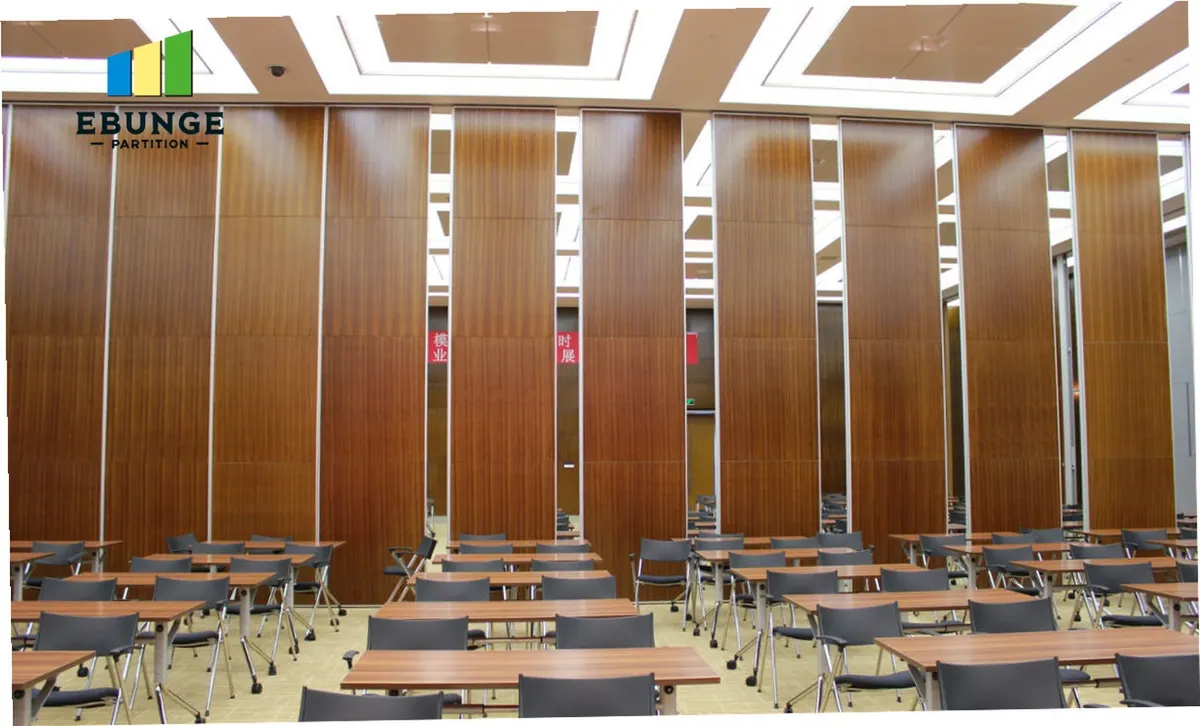
EBUNGE movable wall panels are individually movable and suspended from a top track. They cross the opening without a floor track and park at a planned stacking position. Those maintained facts describe a system type, not a project outcome. Whether a given ceiling can receive the route, or whether a stacking zone fits the room, depends on project-specific review.
Separate the system from the setting
A tender response can legitimately state that panels are top-hung and travel on an overhead route. The exact route, junction arrangement, continuous overhead path and parking position must be confirmed from the coordinated project drawings. The scoring model should treat system description and setting verification as different evidence categories.
Build an Evidence Ladder Before You Build the Matrix
Before assigning points, agree what counts as evidence. A simple ladder helps evaluators compare submissions without inventing performance. The ladder is about documentation quality, not about ranking suppliers.

| Evidence level | What it looks like | Suggested scoring treatment |
|---|---|---|
| Stated assumption | Narrative claim with no drawing or schedule reference | Low weight; flag for clarification |
| Referenced assumption | Claim tied to a drawing number, layout or specification clause | Moderate weight; verify the reference exists |
| Coordinated proposal | Route, parking and interface shown on a drawing consistent with the architectural set | Higher weight; still subject to design review |
| Confirmed requirement | Project-specific confirmation recorded by the responsible design party | Full weight within the agreed scope |
It also protects bidders who correctly identify open items instead of guessing.
Map the Route, the Support and the Parking Zone
The movement route is the first assumption to test. Straight, turning and stacking routes should be reviewed from the layout. A route that appears simple in plan may pass through a ceiling zone with different construction, or may conflict with lighting and service runs. Every proposed movement path requires a continuous connected overhead route and project-specific support review.
Questions that expose weak assumptions
- Does the submitted route follow the architectural layout without unexplained gaps or transfers?
- Is the parking position shown in plan, and does it sit within the room rather than in a circulation area?
- Are turning points described, or only the straight run?
- Does the response identify which party confirms support and ceiling interface?
- Are pass-door requirements stated where the layout needs them?
These questions do not require the evaluator to perform engineering. They simply reveal whether the bidder has engaged with the setting or repeated a generic description.
Weight the Assumption by Consequence, Not by Confidence
A frequent flaw in tender scoring is weighting by how certain a bidder sounds. If an assumption proves wrong, how much rework, delay or design change follows? That question keeps the model grounded.
- List each track interface assumption in a single register.
- Record the consequence if the assumption is incorrect.
- Assign a weight band agreed before bids are opened.
- Score the evidence level, not the tone of the response.
- Record clarification questions for every low-evidence item.
- Carry unresolved items into the pre-award review.
This sequence supports procurement and tender review coordination because it produces a traceable record. Evaluators can explain why a score was given, and bidders can see what evidence would improve a future submission.
Treat Acoustic Language Carefully in the Scoring Model
Acoustic descriptors often appear beside track interface assumptions. A tender response may reference acoustic intent, but the scoring model should not award points for an unverified performance figure.
Seals and acoustic concepts can be explained generically, yet the actual acoustic requirement belongs to the project specification and its supporting evidence. Evaluators should ask whether the response identifies the acoustic requirement, the review party and the documentation route, rather than whether it quotes an impressive number.
Evidence note: a finish sample, a photograph or a drawing does not by itself prove acoustic performance, structural capacity or cleaning compatibility. Those require matching project evidence.
Score Finishes and Pass Doors Without Overreach
Confirmed finish options include laminate, melamine, fabric, leather, glass and other approved surfaces. Does the bidder acknowledge the specified finish family, and does the response show awareness that finish choices interact with the layout and detailing?
Keep pass doors in the same register
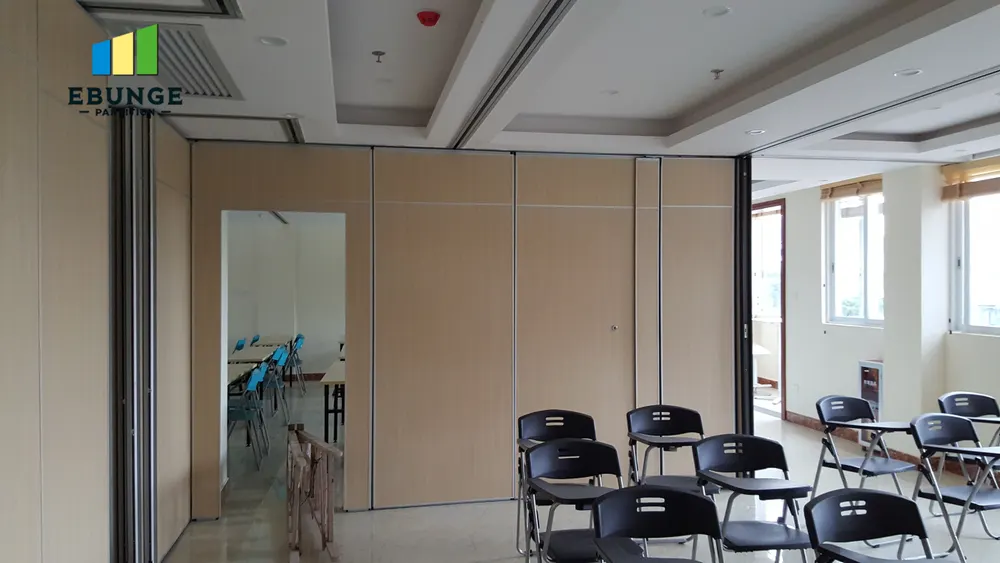
Pass-door requirements can be discussed as part of the layout review. If a pass door is needed, the tender should show where it sits in the panel run and how it relates to the movement route.
For product context, the movable wall product page describes the top-hung, floor-track-free system type. Use it to check that a bidder’s description matches the maintained product facts, not to substitute for project drawings.
Run a Pre-Award Clarification Pass
Scoring is not the end of the process. A short clarification pass converts assumptions into actions. Invite bidders to confirm route continuity, parking position, support review responsibility and any pass-door requirement. Record the answers against the same register used during scoring.
Where an item remains open, state the confirmation boundary clearly in the tender report. This is more defensible than awarding points for an assumption that no party has verified. It also gives the project team a clean handover into detailed design.
Frequently Asked Questions
What is a track interface assumption in a tender?
It is a statement about how the partition connects to the overhead route, how panels travel and where they park, made before the project-specific drawings and support review are complete.
Should a scoring model reward detailed route drawings?
Yes, provided the drawings are checked against the architectural layout. A coordinated proposal is stronger evidence than a narrative claim, but it still requires design review before it becomes a confirmed requirement.
Can acoustic ratings be scored directly from a bid?
No. Acoustic requirements should be tied to the project specification and matching evidence rather than to an unverified figure in a bid.
How should parking positions be weighted?
Weight them by consequence. A parking zone that conflicts with circulation or services carries more risk than one shown clearly within the room. The scoring model should reward a documented position, not an assumed one.
What if a bidder leaves the support review open?
That can be acceptable if the open item is clearly identified and assigned to a responsible party. Score the transparency and carry the item into pre-award clarification rather than treating silence as compliance.
Do finish options affect the track interface score?
Only indirectly. Finish selection is mainly a compliance and coordination matter.
Conclusion: Make the Model Explainable
A well-built scoring model does not pretend to resolve engineering. It separates maintained product facts from project-specific assumptions, weights those assumptions by consequence, and records what remains open.
Before you finalise the matrix, confirm the project-specific support, acoustic and dimensional requirements with the responsible design parties. If you would like to discuss pass-door requirements, layout routes or project documentation, contact the EBUNGE team with your drawings and tender questions.