
Track Zone Re-set Handover Pack Evidence
Quick project answer
When a movable wall layout changes late in a project, the handover pack becomes the record of what was actually agreed. Track zone re-set handover pack evidence should let a reader trace the original layout, the revised overhead route, the parking position and the open items that still need project-specific confirmation. Without that trail, a maintenance team or future renovation contractor has to guess which drawing governs.
This guide sets out what such a pack should contain and where the evidence stops. It applies to contractors, architects, interior designers, owners and distributors working on flexible-space projects, whether the room is a hotel function hall, a school hall, an office training room or another reconfigurable space. Named venues are examples only.
Why a Re-Set Track Zone Changes the Handover Conversation
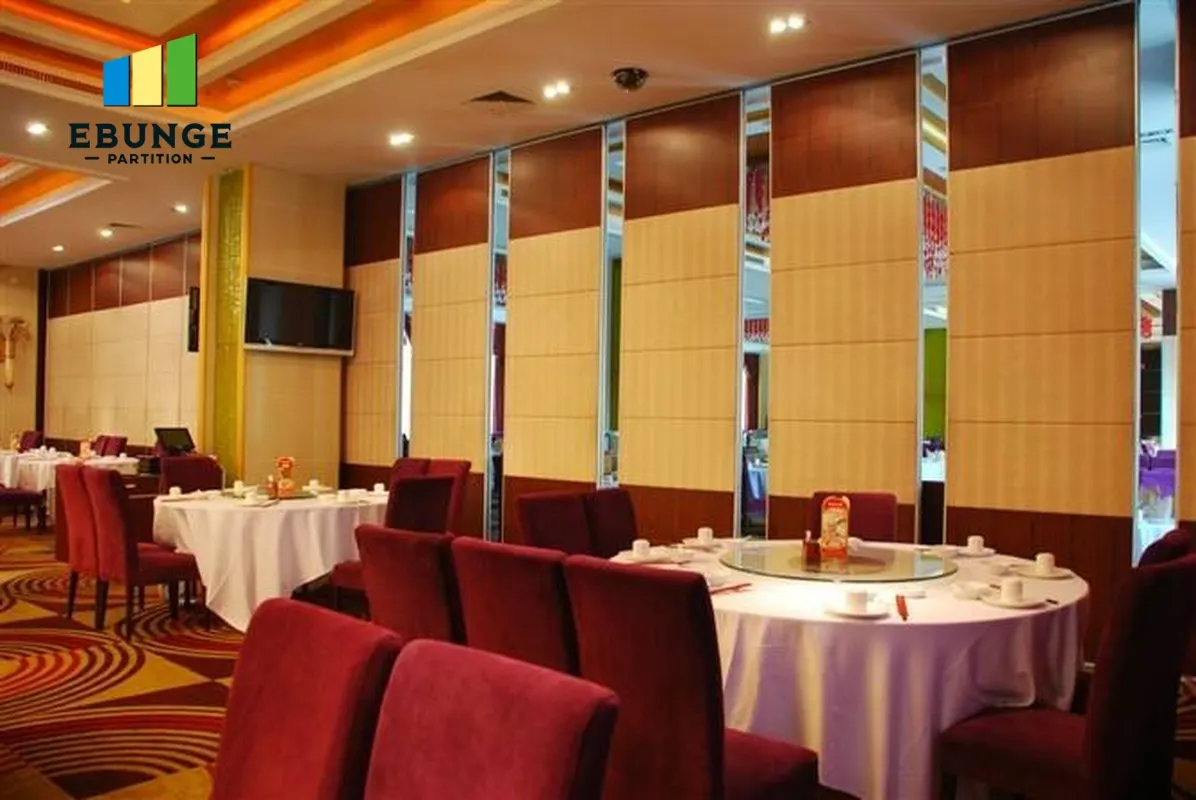
EBUNGE movable partition panels are individually movable and suspended from a top track. They cross the opening without a floor track and park at a planned stacking position. The exact route, junction arrangement, continuous overhead path and parking position must be confirmed from the coordinated project drawings.
When a track zone is re-set, that geometry moves. A pack that still describes the earlier route is not wrong history, but it is incomplete evidence. The handover pack should make clear which revision is current and what was reviewed against it.
What counts as a re-set
In documentation terms, a re-set is any recorded change to the planned overhead track zone, its turning points or its stacking position after an earlier layout was issued. The pack does not need to explain why the change happened; it needs to show what the change was and which documents reflect it.
The Core Contents of a Track Zone Re-Set Handover Pack
A useful pack is a small, cross-referenced set rather than a folder of loose files. The following items form a practical baseline, subject to each project’s own documentation requirements.
- Revision register: drawing numbers, revision codes and issue dates, with the current revision clearly marked.
- Superseded drawings: retained for traceability but visibly marked as not current.
- Route review notes: confirmation that the straight, turning and stacking routes were reviewed from the layout.
- Finish schedule: the approved surface for each panel, drawn from options such as laminate, melamine, fabric, leather, glass and other approved surfaces.
- Pass-door record: whether a pass-door requirement applies and what was agreed.
- Open-items log: anything awaiting project-specific confirmation, with an owner and a status.
Drawings before narrative
The suitability of each route and parking arrangement depends on the approved layout, circulation, ceiling interfaces and operating sequence. If a sentence in the pack conflicts with the current layout, the pack should say which one governs and who confirmed it.
Drawing and Revision Control That Survives Handover
The most common weakness in a re-set pack is ambiguity about currency. Two drawings may both look plausible, and a reader cannot tell which one the installation followed. Revision control should be explicit enough that a person unfamiliar with the project can identify the governing layout in under a minute.
A simple currency test
Ask three questions of every drawing in the pack: does it carry a revision code, is that code listed in the register as current, and does the register name the re-set track zone? If any answer is no, the drawing is reference material, not governing evidence.
Evidence note: a drawing shows intended geometry, not measured performance. Do not read acoustic, structural or durability conclusions from a line on a plan.
Route Evidence: Straight, Turning and Stacking
Because panels travel overhead, every proposed movement path requires a continuous connected overhead route and project-specific support review. The handover pack should show that this was considered for each segment of the re-set zone.
| Route segment | What the pack should show | Evidence limit |
|---|---|---|
| Straight run | Current plan with the re-set zone marked | Does not confirm support capacity |
| Turning route | Reviewed turning geometry from the layout | Does not confirm acoustic outcome |
| Stacking position | Planned parking location and clearance notes | Does not confirm structural adequacy |

Support and fixing design remain project-specific. The pack should record who reviewed them and where that review is filed, rather than implying that the layout drawing alone proves adequacy.
Finish, Pass-Door and Acoustic Statements in the Pack
List the approved surface per panel and keep the approval reference.
Where a pass-door is required, record the requirement and the agreed arrangement. Pass-door requirements and project documentation can be discussed with the supplier, but the pack should reflect what the project actually confirmed.
Handling acoustic language carefully
If acoustic requirements apply, the pack should point to the project-specific acoustic documentation rather than paraphrase a rating.
Open Items, Responsibilities and the Evidence Boundary
A credible pack names what is not yet closed. Typical open items include support review sign-off, confirmation of the final stacking position, and any acoustic or dimensional requirement still under discussion. Each item needs an owner and a status so the next reader knows who to ask.
- List each open item in plain language.
- Name the party responsible for closing it.
- Record the current status and the date it was last reviewed.
- Link the item to the drawing or document it affects.
- State clearly that unresolved items are not covered by the handover.
This is where evidence discipline matters most. A pack should not imply that a re-set zone has been verified for performance, service life or cost outcomes unless matching project evidence exists.
FAQ: Track Zone Re-Set Handover Pack Evidence
What is the minimum content of a re-set handover pack?
At minimum: a revision register, the current layout drawing showing the re-set zone, retained superseded drawings, route review notes, the finish schedule, any pass-door record and an open-items log.
Should superseded drawings be removed?
No. Keep them for traceability but mark them clearly as not current, so readers can see what changed without mistaking an old route for the governing one.
Does the pack need to state acoustic ratings?
Only where project-specific acoustic documentation exists.
Who confirms support for a re-set track zone?
That is a project-specific engineering matter. The pack should record who reviewed it and where the review is filed, rather than treating the layout drawing as proof.
Can a re-set zone include a turning route?
The pack should show that this was checked.
How should open items be recorded?
Use a short log with the item, the responsible party, the status and the linked document. State plainly that unresolved items fall outside the handover.
Conclusion and Next Steps
A good pack does not try to prove more than the project can support. It shows the current layout, traces the revisions, records the route review, lists finishes and pass-door decisions, and is honest about open items. Teams that keep that discipline give the next reader a clear starting point.
To review movable wall options for your layout, visit the movable walls product page and the resources section. When your drawings are ready, contact EBUNGE to discuss pass-door requirements, finishes and project documentation, and confirm support, acoustic and dimensional requirements for your specific project.