
Quick answer: no standing room
Review focus: no standing room.
Track void maintenance access planning no standing room is a coordination problem, not a product selection shortcut. When a top-hung movable partition runs beneath a void that no one can stand inside, the project team must decide how the track, rollers and parking zone can be reached for inspection without inventing access that the drawings do not show. EBUNGE panels are individually movable, suspended from a top track, cross the opening without a floor track, and park at a planned stacking position. Those maintained facts define the starting point; they do not answer whether a specific void is serviceable.
Why a Track Void Changes the Coordination Sequence
Project review term: no standing room.
A track void is the overhead zone that contains the support route and the moving hardware. The suitability of each route and parking arrangement depends on the approved layout, circulation, ceiling interfaces and operating sequence. If there is no standing room, the maintenance question becomes: what can be seen, reached or removed from a safe position outside the void?
This is where early planning matters. The layout review should identify straight, turning and stacking routes before finishes are fixed. A route that looks simple on a plan may pass through a zone with no practical access point. The project team should confirm project-specific support, acoustic and dimensional requirements with qualified specialists rather than infer them from a drawing alone.
What the Maintained Product Facts Do and Do Not Tell You
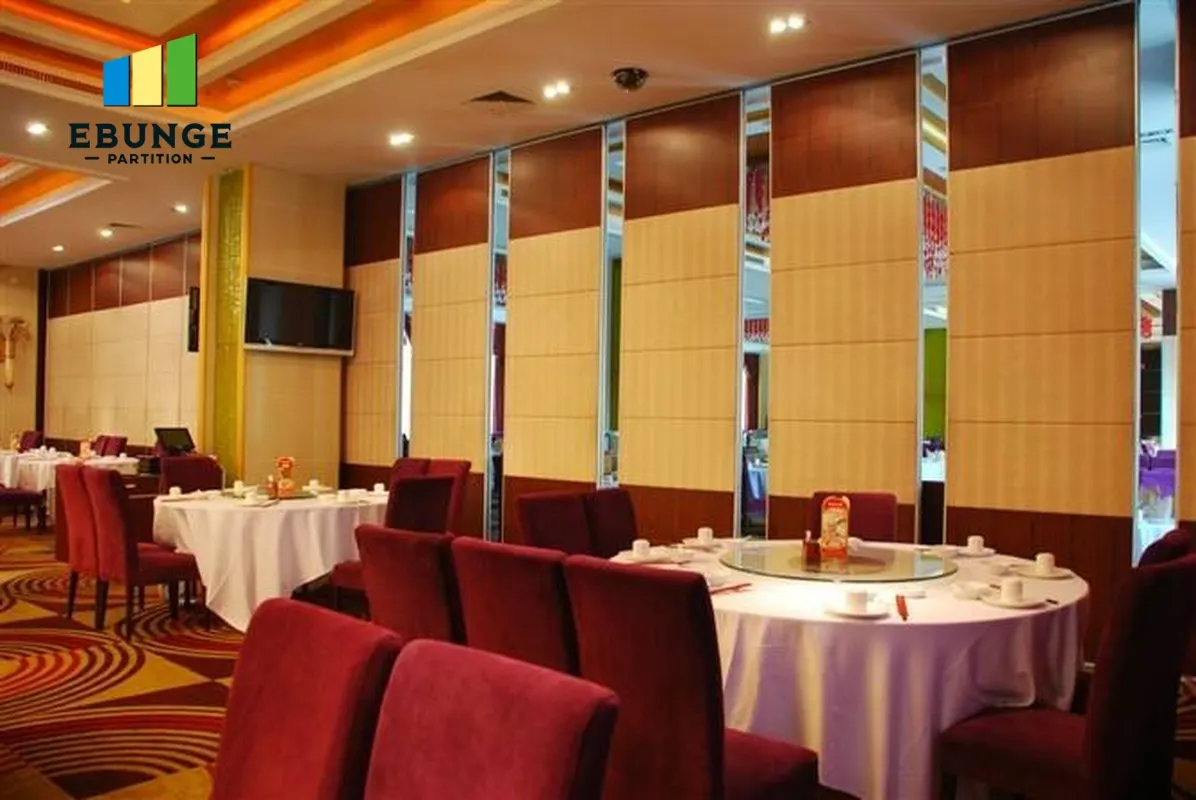
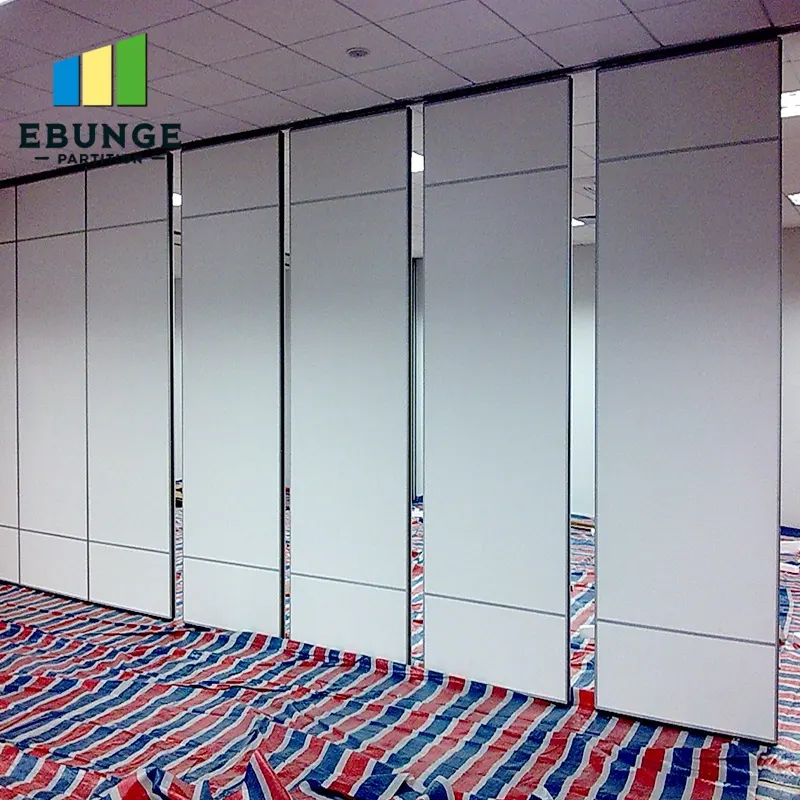
EBUNGE movable wall panels are top-hung and move without a continuous floor running track or floor hardware along the partition line. Parking style is customized to the customer layout and project requirements and may support compact stacking when the coordinated design permits it. Confirmed finish options include laminate, melamine, fabric, leather, glass and other approved surfaces. Pass-door requirements and project documentation can be discussed.
These facts describe the system concept. They do not confirm that a particular void can be serviced from a ladder, a platform, a hatch or a remote position. They do not confirm support points, loads, dimensions or inspection intervals.
Drawing Review Checklist for No-Standing-Room Voids
Use the following checklist during design coordination. It is a planning aid, not a substitute for engineering review.
- Mark the full overhead route, including straight runs, turns and the planned stacking position.
- Identify every zone where a person cannot stand upright beneath the track.
- Note visible access points such as hatches, removable panels or open soffits, and confirm whether they are actually reachable.
- Check whether the parking zone remains clear of other services and finishes.
- Confirm who will review support and fixing details, and record that responsibility in the drawing set.
- List the documents needed for fabrication and installation, and note which items remain open.
Access Strategies That Stay Within Evidence Limits
Service from the room side
Where the void has no standing room, the most common planning question is whether the track line can be observed or reached from the occupied side of the partition. This depends on ceiling height, bulkhead depth and the position of the stacking zone. The project team should confirm what is visible on the reflected ceiling plan and whether any removable finish is proposed.
Service from an adjacent space
An adjacent corridor, riser or plant room may offer a safer approach. However, a nearby space is not automatically an access route. The team must confirm that the route is continuous, that it is not blocked by other trades, and that it is documented for the owner.
Service through a planned opening
Some projects plan a hatch or removable section. This is a project-specific decision. It should be shown on the drawings, coordinated with finishes and reviewed for support implications. Do not assume that a hatch can be added later without affecting the track route or the ceiling design.
Parking and Stacking: A Maintenance Consideration
Parking style is customized to the layout. When panels stack, the stacking position becomes part of the maintenance access plan. If the stack sits under a void with no standing room, the team should confirm how the stack area can be inspected and how panels can be moved without obstruction.
Compact stacking may be possible when the coordinated design permits it, but it should not be promised as a universal outcome. The layout, support route and project requirements all influence what is feasible. Confirm the parking arrangement with the EBUNGE project team and record it in the documentation.
Evidence Notes for Specification and Submittals
Every proposed movement path requires a continuous connected overhead route and project-specific support review. Do not infer hidden acoustic, fire, durability, load or maintenance performance from a visible shape, finish or drawing.
If acoustic separation is a project requirement, it must be confirmed against the actual assembly, the surrounding construction and the project-specific test evidence.
For submittals, keep a clear boundary between maintained product facts and project-specific confirmations. The movable walls product page provides the public product context. The resources section supports general planning. Neither replaces a project drawing review.
Coordination Roles and Documentation
The architect or interior designer typically controls ceiling and finish drawings. The contractor controls site sequencing and trade coordination. The owner or operator needs a clear record of what will be accessible after handover.
EBUNGE can discuss pass-door requirements and project documentation. The project team should confirm project-specific support, acoustic and dimensional requirements before fabrication. If the void has no standing room, that confirmation should include a written description of how the track route and parking zone will be reached for inspection.
Frequently Asked Questions
What is a track void in a movable partition installation?
A track void is the overhead zone that contains the support route and moving hardware for a top-hung partition. It may be above a ceiling, behind a bulkhead or within a soffit. Its dimensions and access conditions are project-specific.
Can a movable partition work without a floor track?
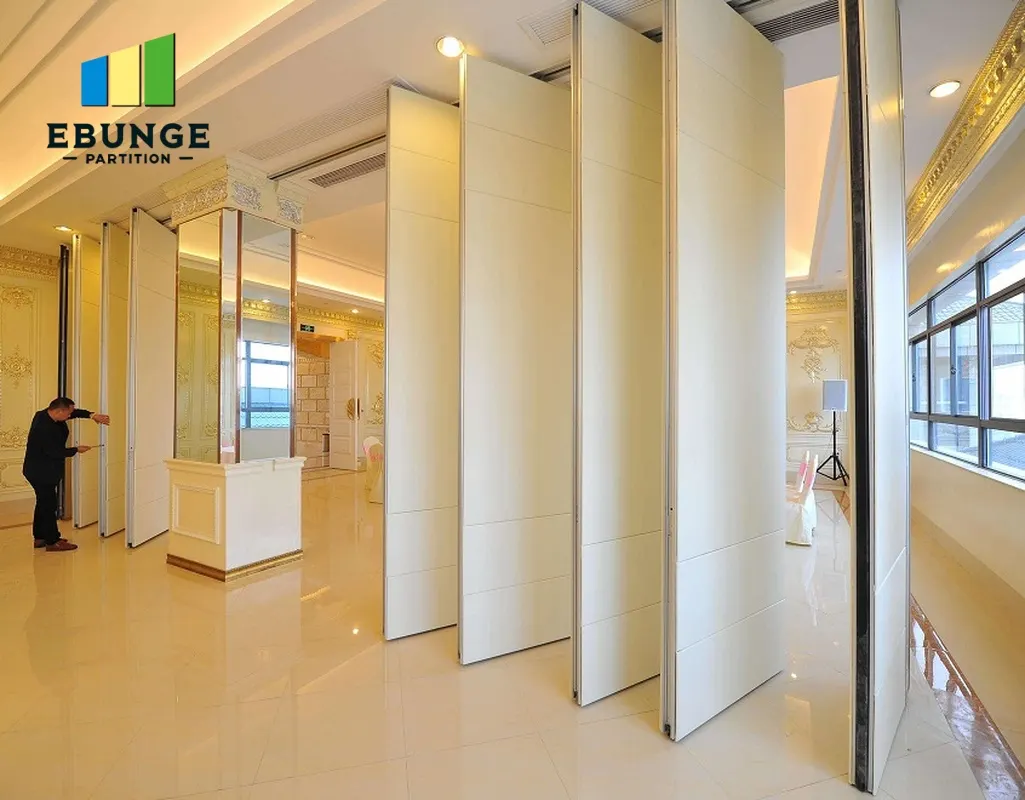
Yes. EBUNGE movable wall panels are top-hung and move without a continuous floor running track or floor hardware along the partition line. The overhead route still requires a continuous connected path and project-specific support review.
How do we plan maintenance access when no one can stand in the void?
Start with the layout drawings. Mark the full route, identify zones without standing room, and list visible access points. Then confirm with qualified specialists whether those points are reachable and safe. Do not assume that a hatch or adjacent space is usable without documentation.
Does compact stacking affect maintenance access?
Parking style is customized to the layout and project requirements. If panels stack, the stacking position should be included in the access plan. Compact stacking may be possible when the coordinated design permits it, but it should be confirmed for each project.
What documentation should be prepared for the owner?
Provide a record of the overhead route, the parking zone, any planned access points and the responsibilities for support and fixing review. Pass-door requirements and project documentation can be discussed with EBUNGE. Confirm all project-specific requirements before fabrication.
Can acoustic performance be confirmed from the drawings alone?
No. Performance depends on the actual assembly, surrounding construction and project-specific evidence. Confirm acoustic requirements with qualified specialists.
Conclusion: Plan the Access Before the Void Is Closed
When a track void has no standing room, the safest approach is to treat access as a design decision, not an afterthought. Review the straight, turning and stacking routes. Identify what can be reached and what cannot. Record the confirmations that remain open. Then coordinate with the EBUNGE project team so that support, acoustic and dimensional requirements are addressed before fabrication.
To discuss your project drawings and documentation, contact EBUNGE.