
Quick answer: track stack as-built record verification facility takeover
Review focus: track stack as-built record verification facility takeover.
Track stack as-built record verification facility takeover is the process of comparing what was installed with what was approved, documented and coordinated. For facility teams, this is not a formality. It is the moment when drawings, routes and finish schedules become the reference for future operation, maintenance and space planning. This article sets out a practical, evidence-bounded framework for that review. It does not replace project-specific engineering, acoustic or dimensional confirmation.
Why As-Built Records Matter at Takeover
Project review term: track stack as-built record verification facility takeover.
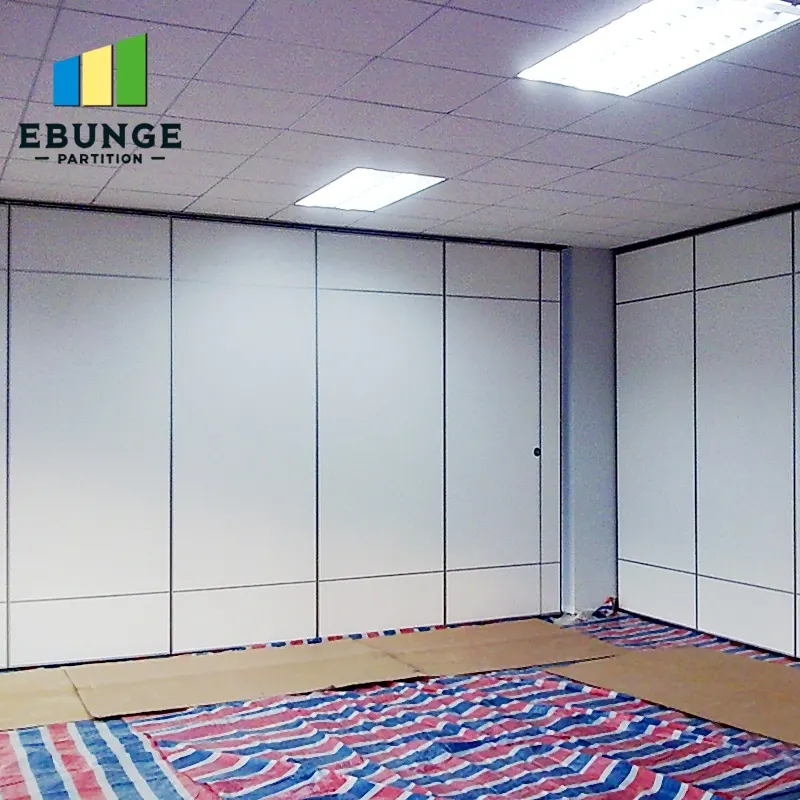
Movable wall panels are individually movable, suspended from a top track, cross the opening without a floor track, and park at a planned stacking position. Those four facts shape every as-built check. If the record does not show the overhead route, the stacking zone and the panel sequence, the facility team inherits uncertainty.
As-built records are also the baseline for future changes. A renovation, a ceiling modification or a new partition layout may interact with the existing track and support arrangement. Without a reliable record, later coordination becomes guesswork.
Core Documents to Request Before Sign-Off
Coordination scope: track stack as-built record verification facility takeover.
Start with the document set, not the hardware. The goal is to confirm that the installed condition matches an approved, coordinated design. Request the documents in writing and check that revision numbers and dates are consistent.
- Approved layout drawings showing the partition line, turning points and stacking position.
- Track and support coordination drawings, including the interface with the building structure.
- Finish schedule listing the confirmed surface for each panel or panel group.
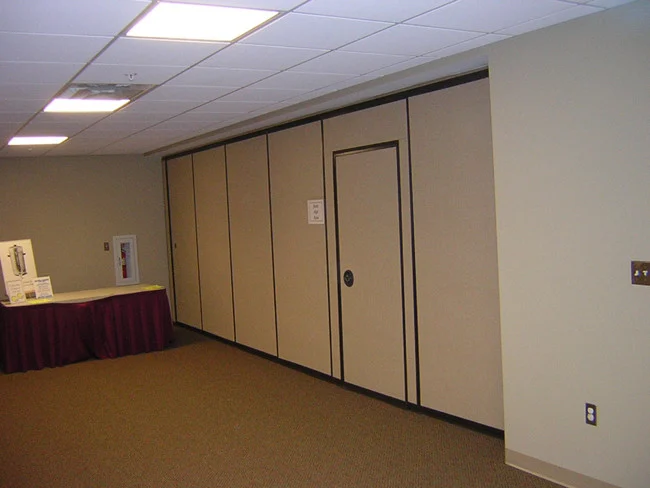
- Pass-door location and swing details, where a pass door is part of the scope.
- Handover documentation index, including any project-specific acoustic or dimensional notes.
- Inspection and completion records issued by the responsible project parties.
If a document is missing, record it as an open item. Do not infer its content from a photograph or a verbal description.
Verifying the Track Route and Stacking Zone
Checklist focus: track stack as-built record verification facility takeover.
Straight, turning and stacking routes
The as-built record should show how the panels travel from the closed position to the parking position. Straight, turning and stacking routes are reviewed from the layout. The exact route, junction arrangement, continuous overhead path and parking position must be confirmed from the coordinated project drawings.
Every proposed movement path requires a continuous connected overhead route and project-specific support review. The record should make that route visible, not implied.
Stacking position and clearance
The stacking position is planned, not improvised. Check that the as-built drawing shows the parking zone, the number of panels that park there and the clearance required for operation. Confirm that no later service installation, signage or furniture placement conflicts with that zone.
Support and interface checks
Support conditions are project-specific. The as-built record should identify the supporting structure and the coordination points reviewed by the responsible engineer. Facility teams should not accept a drawing that leaves the support interface undefined.
Panel Condition, Finish and Pass Doors
Review focus: track stack as-built record verification facility takeover.
Confirmed finish options include laminate, melamine, fabric, leather, glass and other approved surfaces. The as-built record should match the installed finish to the approved schedule. The suitability of each route and parking arrangement depends on the approved layout, circulation, ceiling interfaces and operating sequence.
Where a pass door is required, its location, swing and hardware should appear in the record. Pass-door requirements and project documentation can be discussed with the supplier during planning, but the as-built check confirms what was actually installed.
Acoustic and Dimensional Evidence Boundaries
Seals, junctions and adjacent construction all influence the result.
Evidence note: Do not derive acoustic, fire, durability, load or maintenance performance from a visible shape, finish, photograph or drawing. Confirm project-specific support, acoustic and dimensional requirements with the responsible parties.
The as-built record should state what was tested or verified for the project, by whom and under what scope. If that information is not available, mark it as an open item rather than assuming a performance level.
A Practical Takeover Verification Sequence
- Collect the approved drawing set and confirm revision control.
- Walk the installed partition line and compare it with the drawing.
- Trace the overhead route from the closed position to the stacking zone.
- Confirm the stacking position and clearance against the layout.
- Check panel finishes against the approved schedule.
- Verify pass-door location and operation where applicable.
- Review support and interface notes with the responsible engineer.
- List every discrepancy as an open item with a responsible party.
- Confirm the final handover documentation index before sign-off.
Common Gaps That Delay Facility Takeover
Most delays come from documentation gaps rather than visible defects. A finish schedule may list a surface without identifying which panels use it. A stacking zone may be shown without clearance notes.
Another common gap is the assumption that a later trade will not affect the partition. New ceiling services, lighting or signage can intrude on the overhead route or the parking zone. The as-built review should flag those interfaces before takeover.
Frequently Asked Questions
What is track stack as-built record verification facility takeover?
It is the process of comparing installed movable partition conditions with approved drawings, routes, finishes and handover documents before the facility team accepts responsibility.
Do movable partitions need a floor track?
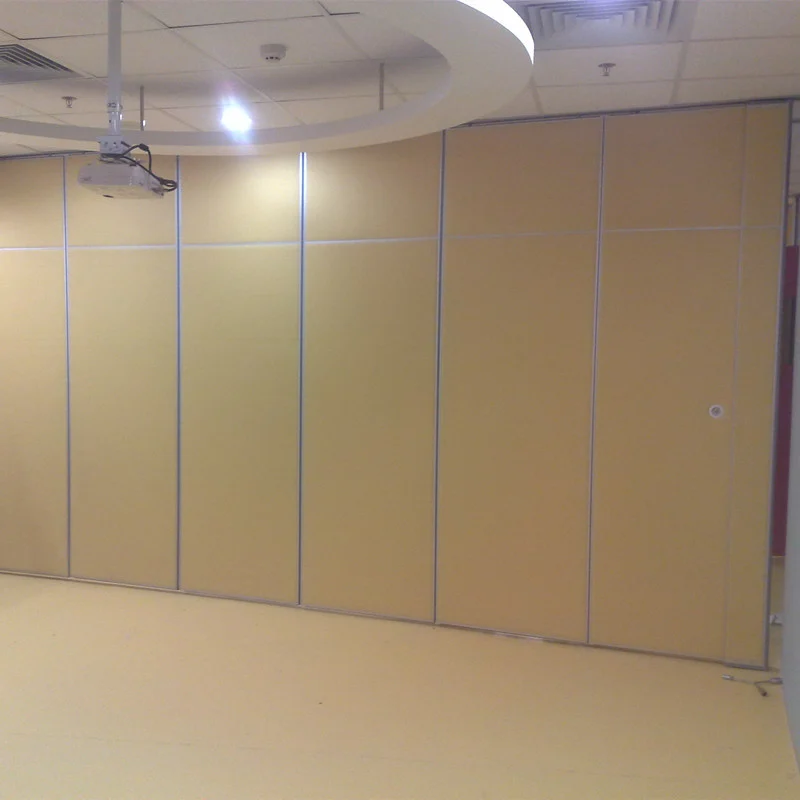
No. EBUNGE movable partition panels are top-hung and move without a continuous floor running track or floor hardware along the partition line.
Can the stacking position be changed after installation?
Parking style is customized to the customer layout and project requirements. Any change after installation should be reviewed against the as-built drawings and the supporting structure.
How should acoustic performance be documented at takeover?
The record should state what was verified for the project and by whom. Confirm project-specific acoustic requirements with the responsible parties.
What if a document is missing at handover?
Record it as an open item with a responsible party and a target date. Do not infer missing content from photographs or verbal descriptions.
Who should attend the as-built review?
The facility team, the installing contractor and the party responsible for support and interface coordination should attend. The exact attendance depends on the project delivery structure.
Conclusion and Next Steps
Track and stack as-built record verification facility takeover is an evidence exercise. The facility team should confirm that drawings, routes, stacking positions, finishes and pass doors match the approved design, and that open items are documented. Where information is missing, the correct action is to request confirmation, not to assume performance.
For product context, review the movable walls range and the project resources. To discuss pass-door requirements, documentation or project-specific coordination, contact the EBUNGE team.