
Quick answer: track servicing route ceiling void access responsibility
Review focus: track servicing route ceiling void access responsibility.
Track servicing route ceiling void access responsibility is rarely settled in one meeting. It sits between the ceiling contractor, the partition installer, the MEP team and the building operator. When a top-hung movable partition is specified, the panels travel on an overhead track and cross the opening without a floor track. That single fact changes who needs to reach the void above the ceiling, when they need to reach it, and what must be documented before the ceiling closes.
Why the Ceiling Void Becomes a Shared Responsibility
Project review term: track servicing route ceiling void access responsibility.
A top-hung system keeps the floor clear, but it places the working route above the finished ceiling line. The exact route, junction arrangement, continuous overhead path and parking position must be confirmed from the coordinated project drawings. It is a corridor of coordination.
Responsibility is often assumed rather than assigned. The ceiling contractor thinks the partition supplier owns the track zone. The partition team assumes ceiling access panels are someone else’s scope. The owner assumes the facilities team can reach everything after handover. Each assumption is reasonable in isolation and risky in combination.
What the Maintained Product Facts Actually Confirm
Coordination scope: track servicing route ceiling void access responsibility.
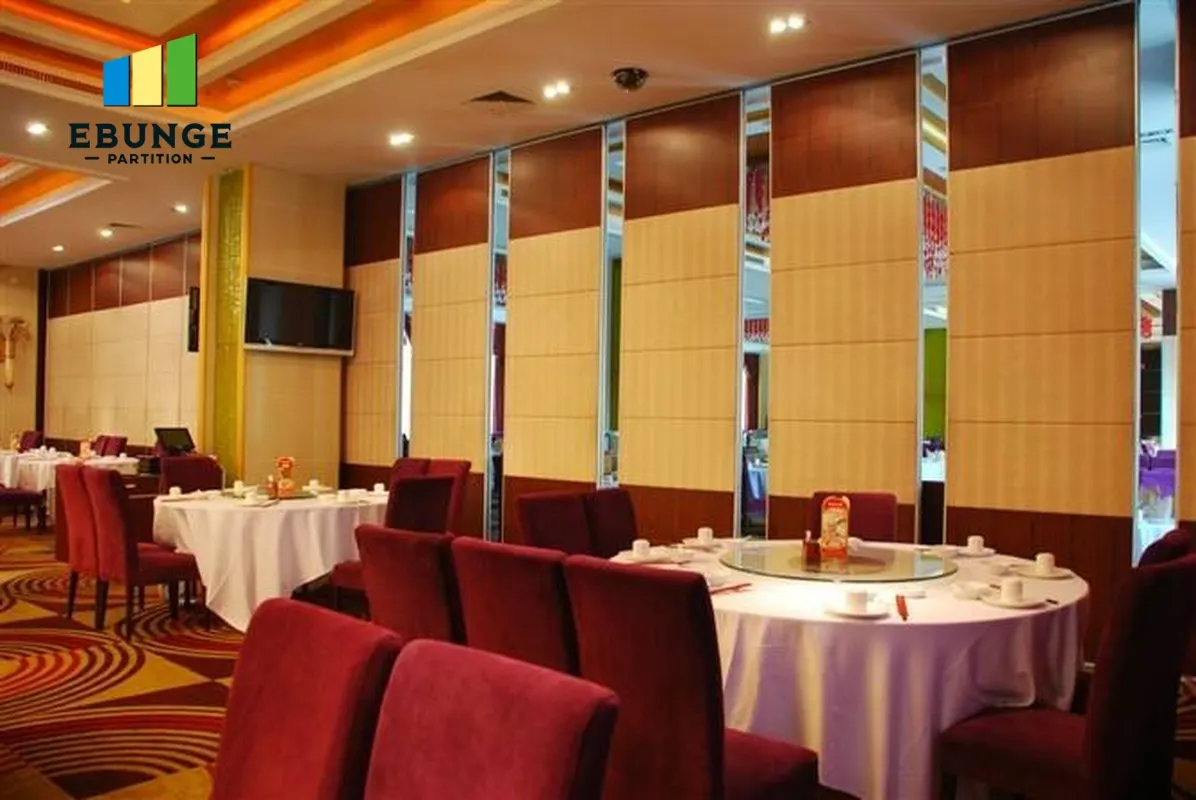
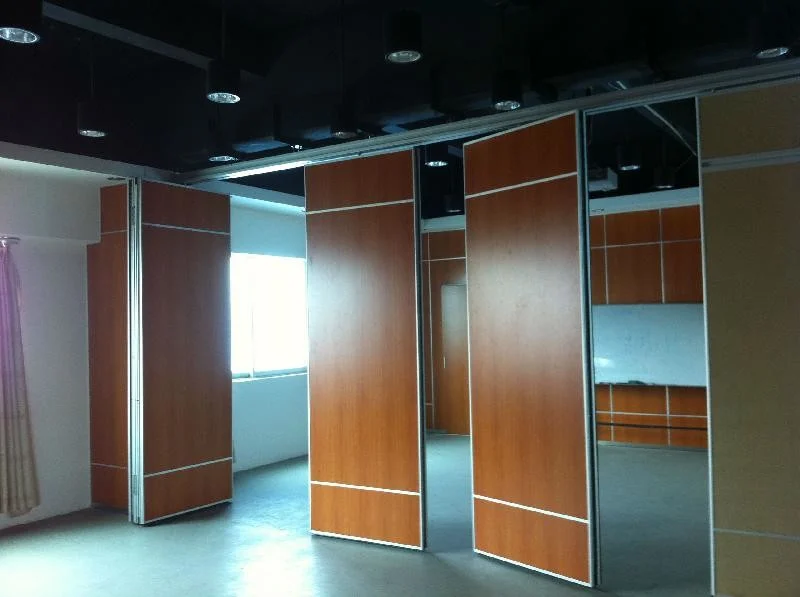
EBUNGE movable wall panels are individually movable, suspended from a top track, cross the opening without a floor track, and park at a planned stacking position. Straight, turning and stacking routes are reviewed from the layout. Confirmed finish options include laminate, melamine, fabric, leather, glass and other approved surfaces. Pass-door requirements and project documentation can be discussed.
Those facts define the physical logic of the system. They do not define who unlocks a ceiling access panel on a Tuesday morning, how a support structure is engineered for a specific building, or what acoustic result a given room will achieve. Those items require project-specific confirmation.
Who Typically Holds Which Piece of the Route
Checklist focus: track servicing route ceiling void access responsibility.
No single party owns the whole route. The useful question is which party owns which decision, and where the handover points sit.
Design and documentation parties
The architect or interior designer usually controls the reflected ceiling plan and the partition layout. The suitability of each route and parking arrangement depends on the approved layout, circulation, ceiling interfaces and operating sequence. The partition specialist reviews the movement path and parking position against the layout.
Installation and site parties
The ceiling contractor installs the ceiling system and any access provision. The partition installer sets the track and panels. The main contractor or site manager sequences both so that one trade does not close the void before the other has finished.
Operation and maintenance parties
The building operator or facilities team is usually the long-term user of the void. If their access needs are not captured during design, the finished ceiling may be technically correct and practically awkward.
A Decision Checklist for Assigning Access Responsibility
Review focus: track servicing route ceiling void access responsibility.
Use this checklist during coordination meetings. It is a planning tool, not a substitute for project-specific engineering review.
- Confirm the full movement path, including straight runs, turns and the parking position, against the approved layout.
- Identify every ceiling zone that sits above that path and note whether each zone needs an access provision.
- Agree which party installs, labels and hands over each access provision.
- Record who holds the keys, tools or permissions needed to open the void after handover.
- Confirm that services above the route do not obstruct the track zone or the parking zone.
- Document the sequence: track installation, inspection, ceiling closure, then handover.
- Confirm acoustic and dimensional requirements for the specific room with the responsible specialists.
How to Read the Drawings Without Over-Interpreting Them
Drawings show intent. A clean reflected ceiling plan can still hide a congested service zone above the track route.
What to look for
Check that the track route is drawn continuously, that turning points are shown, and that the parking position is reachable. Check that access provisions align with the route rather than sitting somewhere convenient on the plan.
What not to infer
Visible references can support layout discussion but do not verify hidden construction or performance. Do not assume that a finish sample proves cleaning compatibility or durability. Those are separate evidence questions.
Sequencing: The Most Common Source of Rework
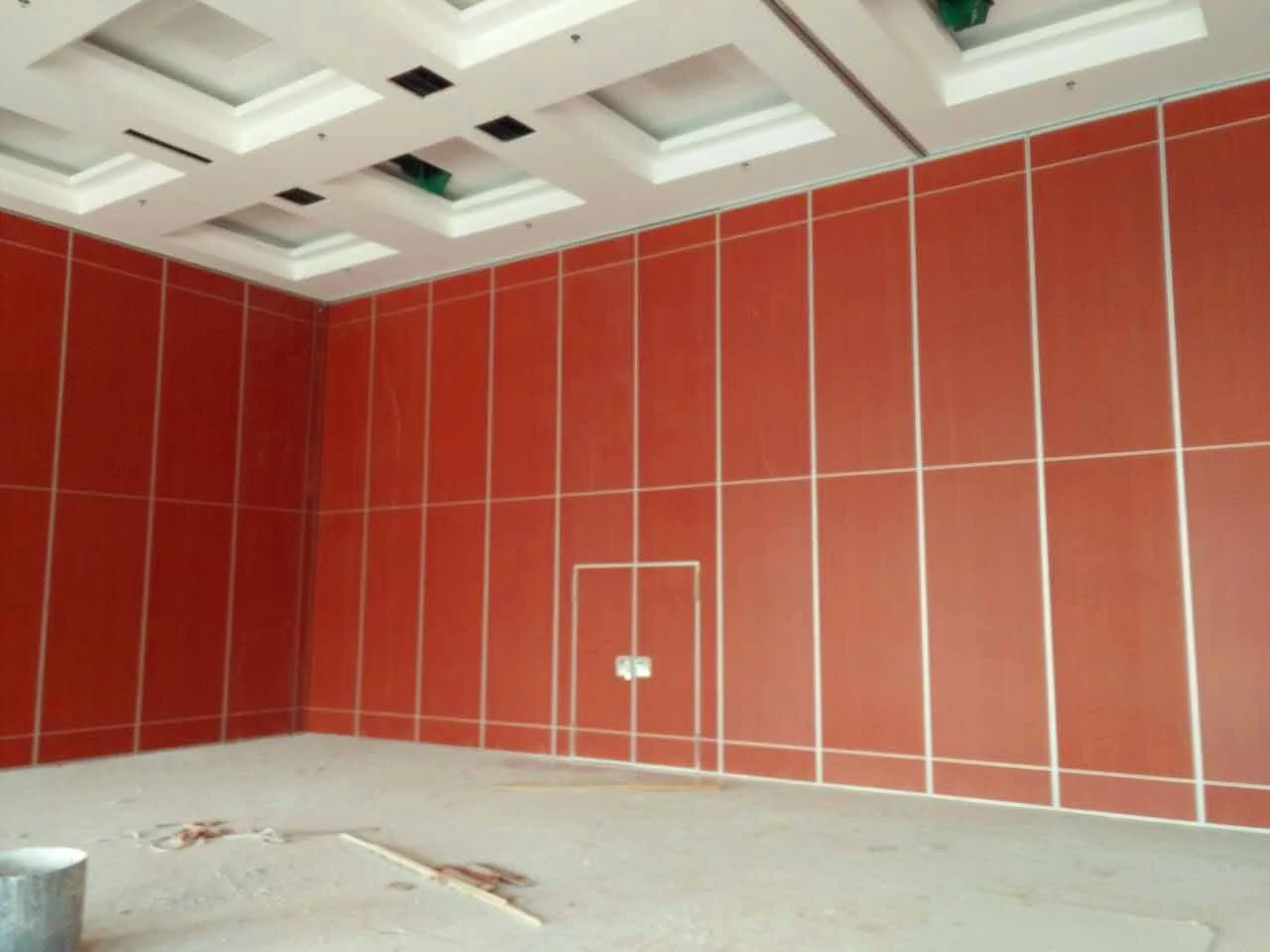
Track servicing access fails most often at the sequence boundary. If the ceiling closes before the track is inspected, the void may need to be reopened. If the track is installed before services above it are coordinated, the route may be blocked.
- Freeze the partition layout and the movement path.
- Coordinate services above the route and resolve clashes.
- Install and inspect the track zone.
- Close the ceiling and confirm access provisions remain usable.
- Hand over access permissions and documentation to the operator.
Each step needs a named owner. A sequence without owners is a schedule, not a plan.
Evidence Notes for Specification and Procurement
When the topic appears in a specification, keep the language bounded. State that the system is top-hung, that the route is reviewed from the layout, and that access responsibility is confirmed by the project team. Avoid language that promises a maintenance outcome, a service interval or a performance result.
Evidence note: acoustic ratings such as STC or Rw are single-number descriptors used in project documentation. They are not a direct count of decibels, and any project-specific acoustic requirement must be confirmed against the actual construction and room conditions.
For broader planning context, see the EBUNGE resources and the movable walls product page. Both are starting points for project-specific discussion, not substitutes for it.
Frequently Asked Questions
Who is responsible for ceiling void access above a movable partition track?
Responsibility is project-specific. It is normally assigned during coordination between the ceiling contractor, partition installer, main contractor and building operator. The important step is to name an owner for each access provision before the ceiling closes.
Does a top-hung movable partition need a floor track?
No. EBUNGE movable wall panels are suspended from a top track and cross the opening without a floor track.
Can the parking position affect access planning?
Yes. Parking style is customized to the customer layout and project requirements, and compact stacking may be possible when the coordinated design permits it. The parking zone should be reviewed alongside the access route.
What documentation should be reviewed before installation?
Review the partition layout, the reflected ceiling plan, the movement path including turns and parking, and the services coordination drawings. Project documentation requirements can be discussed with the EBUNGE team.
Can acoustic performance be confirmed from the layout alone?
No.
When should access responsibility be agreed?
As early as possible, ideally before the ceiling design is finalized.
Conclusion: Assign the Route, Then Close the Ceiling
Track servicing route ceiling void access responsibility is a coordination question before it is a construction question. Confirm the movement path, agree who owns each access provision, sequence the trades, and keep performance claims tied to project-specific evidence. That approach protects the finished ceiling and the people who will maintain it.
To discuss pass-door requirements, finish options, parking layout or project documentation for a specific scheme, contact the EBUNGE team and share your drawings for review.