
Quick answer: track interface risk
Review focus: track interface risk.
When a tender clarification changes who supplies, sets out or accepts the overhead route, the track interface risk bid clarification scope shift becomes a commercial and technical question, not just a drawing note. Movable partition panels are individually movable, suspended from a top track, cross the opening without a floor track and park at a planned stacking position. Because the panels depend on that continuous overhead route, any scope change touching the track, its support or its alignment moves risk between parties. This article offers an evidence-bounded framework for spotting that shift early and assigning it deliberately.
Why the Track Interface Sits Between Trades
Project review term: track interface risk.
The track is rarely a standalone item. The suitability of each route and parking arrangement depends on the approved layout, circulation, ceiling interfaces and operating sequence. Each of those may belong to a different package. A clarification that says “track by others” or “support by others” does not resolve the interface; it only moves the boundary.
Risk concentrates where two packages meet and neither has accepted the geometry. The exact route, junction arrangement, continuous overhead path and parking position must be confirmed from the coordinated project drawings. Every proposed movement path therefore requires a continuous connected overhead route and project-specific support review.
What a Scope Shift Actually Changes
Coordination scope: track interface risk.
A scope shift can change the party responsible for setting out the route, the party responsible for the supporting structure, or the party responsible for verifying that the finished opening matches the reviewed layout. These are different obligations and they should not be bundled into one vague line item.
Three common shift patterns
- Supply shift: the track moves from the partition package to another supplier, while alignment responsibility stays unclear.
- Support shift: the supporting structure moves to the main contractor, but the acceptance criteria for the route are not restated.
- Setting-out shift: the dimensional control moves to the site team, but the reviewed drawing set is not updated.
Each pattern changes who must confirm the interface before fabrication or installation proceeds. None of them can be resolved by a generic note in a bid clarification.
Reading the Layout Before Accepting the Shift
Checklist focus: track interface risk.
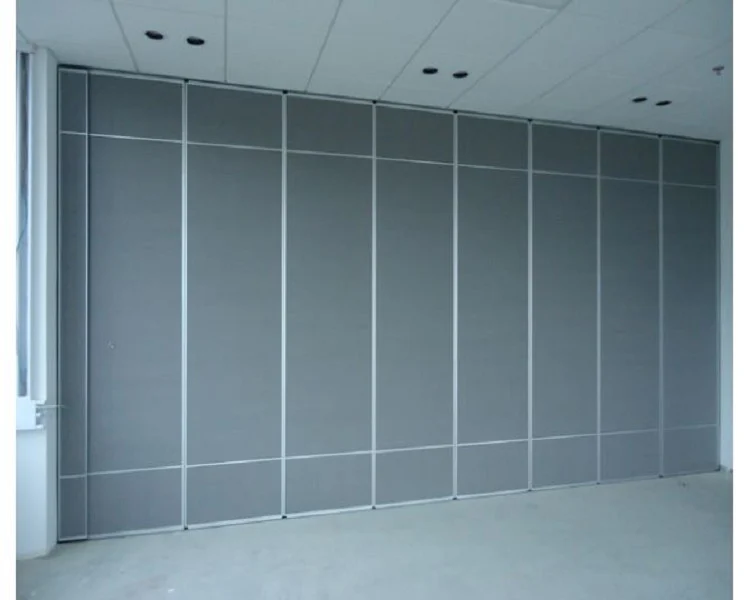
Straight, turning and stacking routes are reviewed from the layout. That review is the practical basis for deciding whether a shifted scope is workable. If the clarification changes the route, the layout evidence must change with it.
Decision checklist for the review meeting
- Does the reviewed layout still show the full movement path from opening to parking position?
- Is the overhead route continuous across every segment the panels must cross?
- Has the party responsible for the supporting structure been named in writing?
- Are the dimensional requirements for the opening and parking zone still consistent with the layout?
- Has the acoustic requirement been restated as a project-specific target rather than carried over from an earlier document?
- Is the pass-door requirement, if any, still reflected in the reviewed drawings?
Where an answer is missing, the shift has not been closed. It has only been relocated.
Evidence Boundaries When the Scope Moves
Confirmed finish options include laminate, melamine, fabric, leather, glass and other approved surfaces, but the finish is a surface decision, not proof of a performance outcome.
Visible references can support layout discussion but do not verify hidden construction or performance. Those require matching project-specific evidence. Where evidence is absent, the correct action is to state the confirmation boundary rather than infer a result.
Evidence note: STC and Rw are rating concepts used to describe acoustic performance. They are not a simple count of decibels, and no rating should be assumed from a product name, finish or drawing alone. Project-specific acoustic requirements must be confirmed against the reviewed configuration.
Assigning Responsibility Without Overclaiming
The cleanest way to absorb interface risk is to name the accepting party for each interface element and record the evidence that party will rely on. This is a documentation exercise, not a performance promise.
Numbered process for closing a shifted scope
- Restate the original scope line and the clarified scope line side by side.
- Identify which interface element moved: route, support, setting-out or acceptance.
- Confirm the reviewed layout still supports the intended straight, turning and stacking routes.
- Name the party accepting each interface element in the revised documents.
- List the project-specific evidence each party must provide before work proceeds.
- Record any item that remains unconfirmed as an open point, not as an assumed outcome.

This process keeps the shift visible. It also prevents a clarification from silently transferring a technical obligation to a party that has not accepted it.
Coordination Across Procurement and Tender Review
Procurement and Tender Review coordination should treat the track interface as a named line item with an owner. When the scope shifts, the tender review should ask whether the new owner has the information needed to price and plan the interface.
Project documentation can be discussed with the supplier to align drawings, pass-door requirements and route review.
Specification Language That Survives a Shift
A specification that survives clarification is one that describes the interface rather than assuming it. It should require a continuous connected overhead route, a reviewed layout showing movement and parking, and written acceptance of the supporting structure by the responsible party.
It should also avoid absolute statements. Without it, the specification should state the exact confirmation boundary instead.
Frequently Asked Questions
What is track interface risk in a bid clarification?
It is the risk that a clarification moves responsibility for the overhead route, its support or its setting-out without clearly naming the party that accepts it. The risk is commercial and technical at the same time.
Do movable partitions need a floor track?
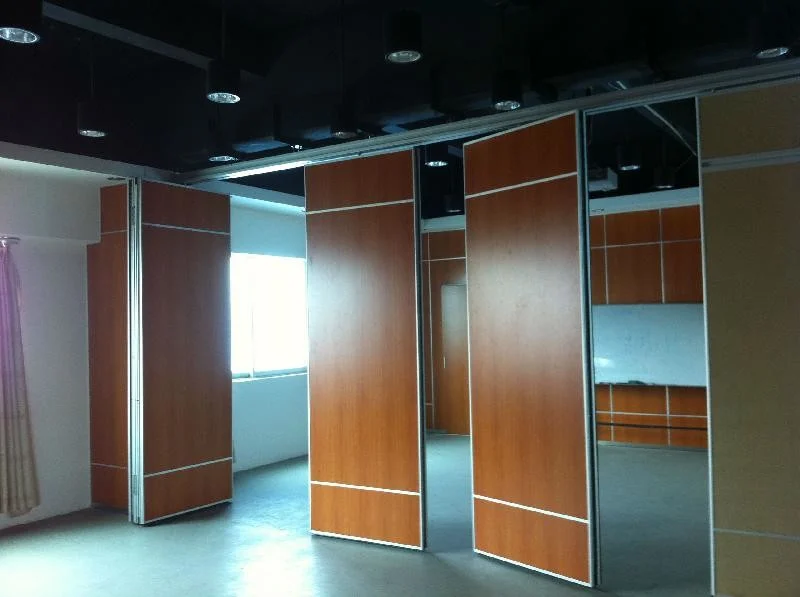
EBUNGE movable partition panels are top-hung and move without a continuous floor running track or floor hardware along the partition line. The overhead route still requires project-specific support review.
Can panels cross a gap in the overhead route?
No. Every proposed movement path requires a continuous connected overhead route. A gap in the route is a project-specific issue to resolve before installation planning proceeds.
How should parking be addressed after a scope shift?
Parking style is customized to the customer layout and project requirements and may support compact stacking when the coordinated design permits it. The reviewed layout should still show the planned stacking position.
Does a finish choice prove acoustic performance?
No. Acoustic requirements must be confirmed for the specific project.
What should be confirmed before accepting a shifted scope?
Confirm the reviewed layout, the continuous overhead route, the responsible party for support, and the project-specific acoustic and dimensional requirements. Where any item is unconfirmed, record it as an open point.
Conclusion: Make the Shift Explicit
The party that absorbs track interface risk is the party that accepts the interface in writing, with the evidence needed to support that acceptance. A bid clarification that moves scope without moving that acceptance simply hides the risk until installation. Review the layout, restate the interface, and keep every unconfirmed item visible.
The exact overhead route and support arrangement must be confirmed by the responsible project team from coordinated drawings. To discuss pass-door requirements, project documentation or a route review, contact the EBUNGE team. You can also review the movable wall product context and the project resources before your next tender review.