
Quick answer: track fixing sequence shared ceiling void ductwork
Review focus: track fixing sequence shared ceiling void ductwork.
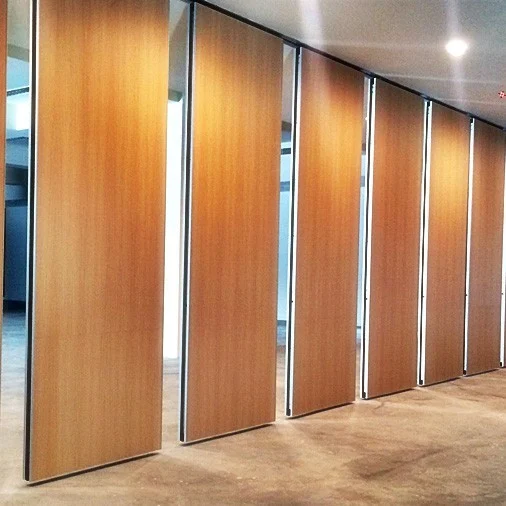
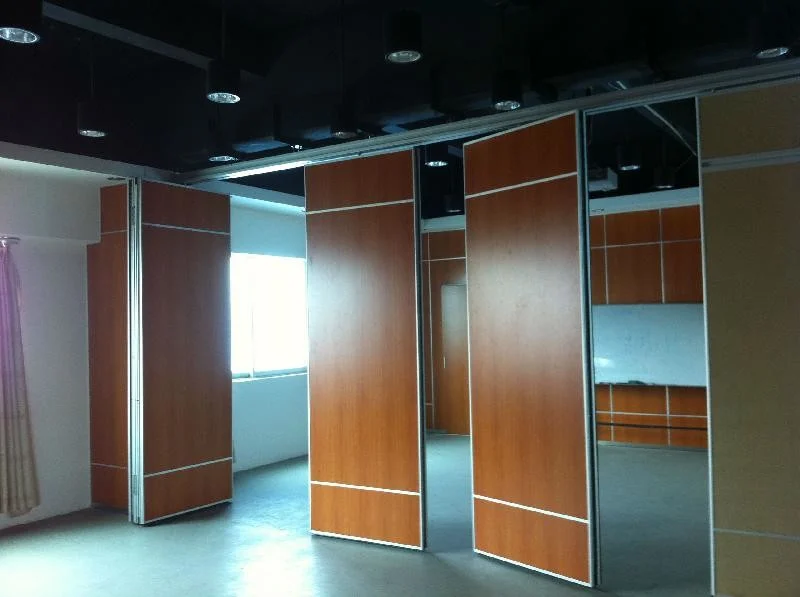
When a movable partition track must run through a ceiling void that also carries ductwork, the track fixing sequence shared ceiling void ductwork becomes a coordination problem rather than a simple installation step. The panels are individually movable, suspended from a top track, cross the opening without a floor track, and park at a planned stacking position. That operating principle is straightforward, but the overhead route is not isolated from other services. The suitability of each route and parking arrangement depends on the approved layout, circulation, ceiling interfaces and operating sequence.
This article sets out a sequence that helps contractors, architects and owners review the route before fixing begins, while keeping every performance and engineering conclusion tied to project-specific drawings and confirmed requirements.
Why the Track Route Must Be Reviewed Before Fixing
Project review term: track fixing sequence shared ceiling void ductwork.
A top-hung movable wall depends on a continuous connected overhead route. The exact route, junction arrangement, continuous overhead path and parking position must be confirmed from the coordinated project drawings. When ductwork shares the ceiling void, the route may need to turn, step or pass below a service. Each of those conditions changes what must be coordinated before the first fixing point is set.
The review is not only about the partition. It is about whether the proposed track line can be supported, whether the ductwork can remain accessible, and whether the ceiling void has enough coordinated space for both systems.
Information to Collect Before Sequencing Track Fixing
Coordination scope: track fixing sequence shared ceiling void ductwork.
Start with the current coordinated drawings, not an early architectural set. If any of these are missing, the sequence should pause at a defined hold point.
- Confirmed partition layout showing straight, turning and stacking routes.
- Ductwork sizes, routes, access and maintenance zones.
- Ceiling void depth and any known service clashes.
- Finish schedule and pass-door requirements, if applicable.
- Project-specific acoustic and dimensional requirements.
This list is a starting point. The project team should confirm which items are design responsibilities and which are installation responsibilities before work begins.
A Practical Track Fixing Sequence for Shared Voids
Checklist focus: track fixing sequence shared ceiling void ductwork.
The following numbered sequence is intended for coordination meetings. It does not replace a project-specific method statement or engineering review.
- Confirm the coordinated revision. Freeze the drawing set that will be used for the track route and ductwork layout.
- Walk the route on paper. Trace the straight, turning and stacking paths from the layout and mark every point where ductwork crosses or runs parallel.
- Identify hold points. List locations where support, access or dimensional information is unresolved.
- Review support strategy. Confirm with the responsible engineer how the track will be supported in the shared void.
- Coordinate ductwork access. Check that maintenance and inspection routes remain available after the track is fixed.
- Agree the fixing order. Decide which trades fix first and which inspections must happen before closing the ceiling.
- Record the sequence. Issue the agreed order to the installation team and keep it with the project documentation.
Each step should produce a visible record. A sequence that exists only in conversation is difficult to verify later.
Coordination Checks That Reduce Rework
Review focus: track fixing sequence shared ceiling void ductwork.
Check the route, not just the panel
The panels may be individually movable, but the route must remain continuous and connected. A route that looks acceptable on a small plan can fail when ductwork offsets are shown at full size. Review the turning and stacking positions with the same care as the main opening.
Check access before closure
Ductwork often needs inspection or maintenance access. If the track fixing sequence closes off that access, the coordination has failed even if the partition operates correctly. The team should agree how access will be maintained before ceiling closure.
Check the finish interfaces
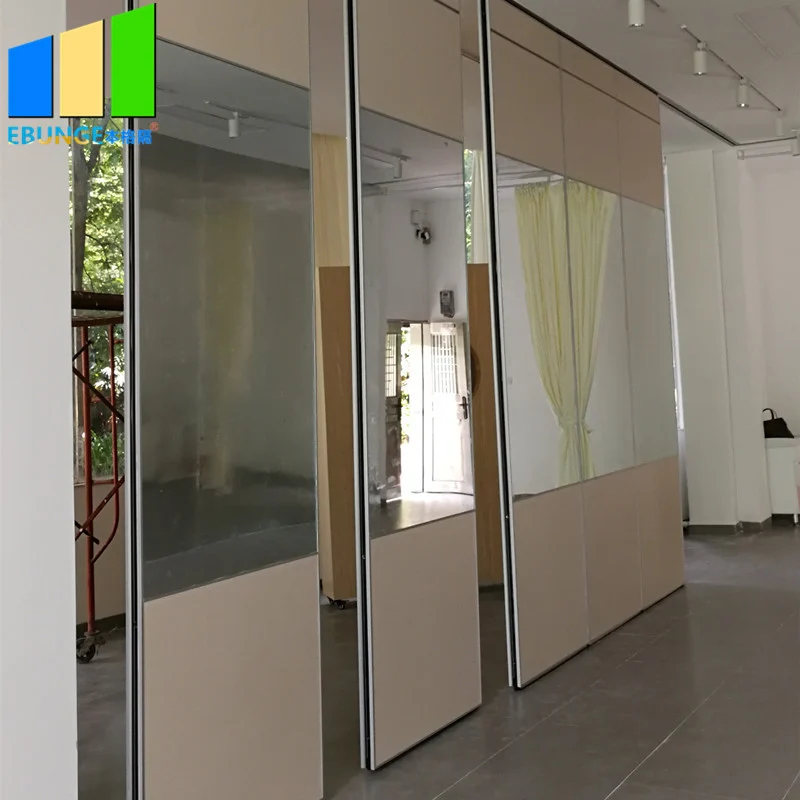
Confirmed finish options include laminate, melamine, fabric, leather, glass and other approved surfaces. These finishes affect the visible interface at the ceiling and adjacent walls, so the sequence should identify who completes each junction.
Evidence Boundaries for Acoustic and Structural Claims
Project review term: track fixing sequence shared ceiling void ductwork.
Do not treat a generic finish, a visible track profile or a shared ceiling void as evidence of acoustic, fire, structural or maintenance performance. Those conclusions require matching project-specific evidence.
The presence of a ceiling void does not confirm that a suitable support point exists. The responsible engineer should review the proposed track route and confirm the support strategy before fixing.
Documentation and Pass-Door Considerations
Pass-door requirements and project documentation can be discussed as part of the partition scope. If a pass door is planned, its position may affect the track route, the stacking position and the ceiling void coordination. Raise it early rather than treating it as a late addition.
Documentation should record the agreed sequence, the hold points, the inspection stages and the final route. This record helps the contractor, the designer and the owner understand what was coordinated and what remains subject to project-specific confirmation.
Frequently Asked Questions
Can the track be fixed before the ductwork is installed?
That depends on the coordinated sequence and the support strategy. In some projects, early fixing may be possible; in others, ductwork installation must come first. The team should confirm the order with the responsible trades and engineer.
Does a shared ceiling void change the partition operation?
The operating principle remains the same: panels are top-hung, move without a floor track and park at a planned stacking position. The exact overhead route and support arrangement must be confirmed by the responsible project team from coordinated drawings.
How do we confirm acoustic requirements?
Acoustic requirements should be confirmed with the project acoustic specialist.
What if the ductwork clashes with the track route?
The clash should be resolved in the coordinated drawings before fixing. Options may include adjusting the route, the ductwork or the support strategy, but each option requires project-specific review.
Who should attend the sequencing review?
The owner or operator may also attend if access or maintenance requirements are affected.
Can EBUNGE confirm the sequence for our project?
The EBUNGE team can discuss pass-door requirements and project documentation through the contact page.
Conclusion and Next Steps
Sequencing track fixing in a shared ceiling void is a coordination exercise. The panels themselves are top-hung and move without a floor track, but that fact does not resolve the overhead coordination.
For product context, review the movable walls range and the resources page. When the drawings are ready, contact EBUNGE to discuss pass-door requirements and project documentation.