
Quick answer: track fixing crew
Review focus: track fixing crew.
Panel handling and the operating sequence must be confirmed for the selected layout and project conditions. The track fixing crew sequencing out of order panel deliveries challenge is not simply about storing panels; it is about protecting the overhead route, keeping the stacking zone clear, and ensuring that every crew knows which work front is ready. The exact route, junction arrangement, continuous overhead path and parking position must be confirmed from the coordinated project drawings. This article offers an evidence-bounded framework for sequencing crews when deliveries do not match the planned installation order.
Why Out-of-Order Deliveries Disrupt Track Fixing
Project review term: track fixing crew.
Movable partition panels cross an opening without a floor track and park at a planned stacking position. That movement path depends on a continuous connected overhead route. If panels arrive before the track is fixed in a given zone, the crew may be tempted to stage them where they block access or interfere with the track line. The suitability of each route and parking arrangement depends on the approved layout, circulation, ceiling interfaces and operating sequence.
Track fixing crews should work from the approved layout, not from the delivery schedule alone. The layout shows straight, turning and stacking routes. The exact overhead route and support arrangement must be confirmed by the responsible project team from coordinated drawings. When deliveries arrive out of order, the sequencing plan should protect those routes first and then align panel handling with the zones that are ready.
Start With the Overhead Route, Not the Panel Stack
Coordination scope: track fixing crew.
The first sequencing decision is which track sections can be fixed and verified. A track fixing crew should not begin in a zone where the support structure is still unresolved. If a delivery contains panels for a later zone, those panels can remain in a controlled staging area while the crew completes the earlier track run.
This approach keeps the overhead route continuous and avoids temporary fixes that might later need to be removed. It also gives the site team a clear rule: no panel movement across an opening until the connected overhead route for that movement is in place and reviewed.
Decision Checklist for Daily Sequencing
- Confirm which track zones have approved support conditions for the day.
- Verify that the planned movement path has a continuous connected overhead route.
- Check that the stacking position is clear and matches the coordinated layout.
- Identify panels that can be staged without blocking track fixing or access.
- Record any delivery mismatch that affects the sequence.
- Escalate unresolved support or dimensional questions before fixing begins.
Assign Crews by Zone, Not by Delivery Ticket
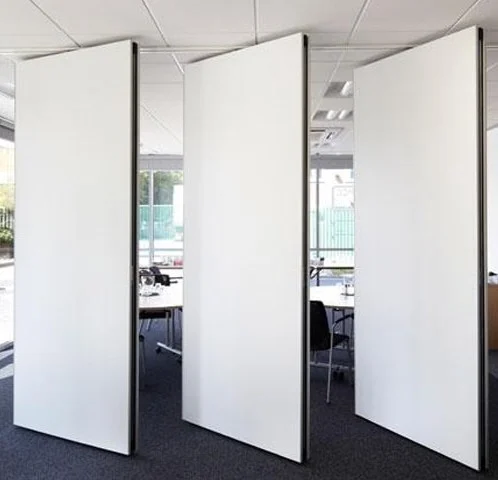
A delivery ticket tells you what arrived. It does not tell you which zone is ready for track fixing. Sequencing crews by zone helps prevent the common error of chasing panels around the site. Each zone should have a defined track run, a reviewed support condition, and a clear handover point before the next crew moves in.
Where multiple crews are working, the sequencing plan should identify which crew owns the track line and which crew owns panel handling. This separation reduces the risk of one crew undoing another crew’s work.
Numbered Process for Re-Sequencing After a Delivery Change
- Compare the actual delivery against the planned panel order.
- Mark which track zones are unaffected and can proceed.
- Identify panels that must be staged away from the track line.
- Reconfirm the straight, turning and stacking routes from the layout.
- Assign the track fixing crew to the next verified zone.
- Update the panel handling crew on the revised movement sequence.
- Document any project-specific support or dimensional items still open.
Protect the Stacking Position and Movement Path
Parking style is customized to the customer layout and project requirements. When deliveries arrive out of order, the stacking position can become a temporary storage area for the wrong panels. That can obstruct the movement path or force panels to be moved twice. The sequencing plan should keep the planned stacking position available for its intended panels.
If a panel must be staged temporarily, the site team should confirm that the temporary location does not interfere with the overhead route or the final stacking zone. Any temporary staging should be reviewed against the project layout and removed as soon as the correct zone is ready.
Compact Comparison: Delivery-Led vs. Route-Led Sequencing
| Approach | Primary Driver | Risk | Better Use |
|---|---|---|---|
| Delivery-led | Panel arrival order | Track work may start before support is ready | Small, single-zone projects with stable deliveries |
| Route-led | Approved overhead route and support review | Requires earlier layout coordination | Projects with out-of-order deliveries or multiple zones |
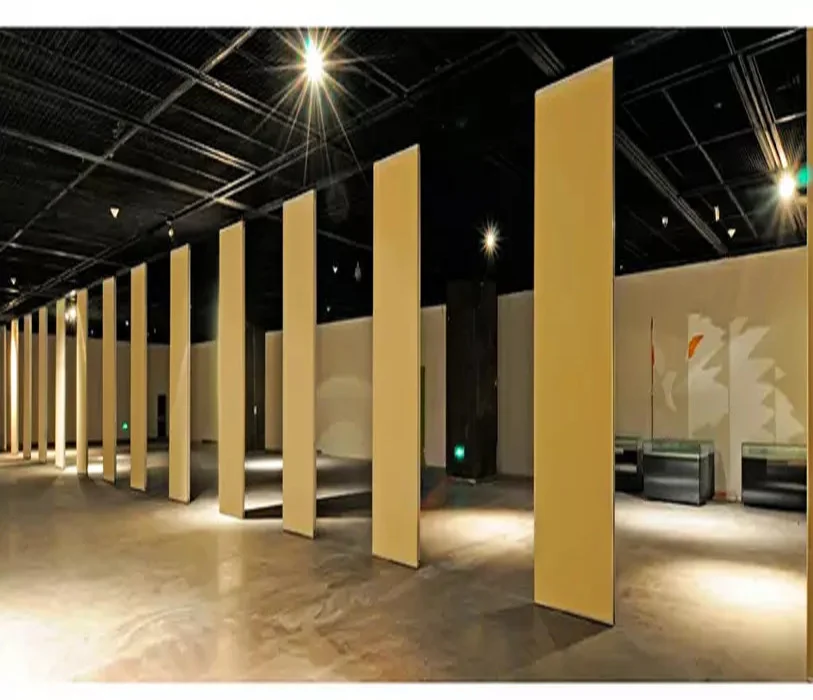
Route-led sequencing is generally more robust when deliveries are unpredictable. It keeps the track fixing crew focused on verified work fronts and prevents panel handling from setting the pace.
Coordinate Finishes, Pass-Doors and Documentation
Confirmed finish options include laminate, melamine, fabric, leather, glass and other approved surfaces. Finish selection does not change the sequencing logic, but it can affect handling and protection during staging. The site team should confirm finish protection requirements with the project specification.
Pass-door requirements and project documentation can be discussed with the supplier. If a pass-door is part of the layout, its position and interface with the track route should be reviewed before track fixing begins. Documentation should record any delivery mismatch and the agreed re-sequencing decision.
Evidence Note: What Cannot Be Inferred
Do not infer acoustic performance, structural capacity, support spacing, load limits or installation time from a delivery schedule, finish sample or drawing alone. STC and Rw are rating concepts used in project specifications; they are not a direct count of decibels and must be confirmed for the specific assembly and project conditions. Any project-specific support, acoustic and dimensional requirement should be verified before work proceeds.
Keep the Acoustic and Support Review Separate From Sequencing
Sequencing is a coordination activity. It does not replace the project-specific acoustic or support review. The track fixing crew should know which zones have completed that review and which zones are still pending. If a zone is pending, the crew should move to another verified zone rather than install a track that may need adjustment later.
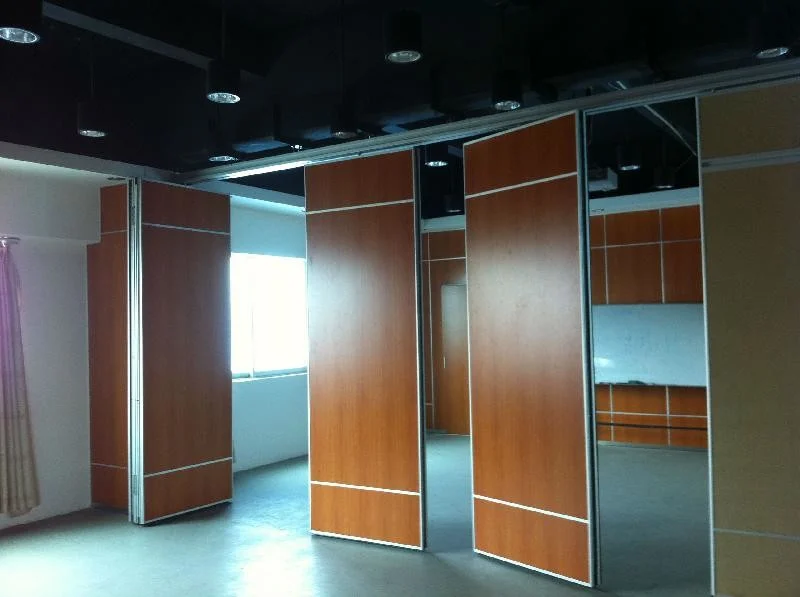
This separation helps contractors avoid the trap of treating a delivery change as a reason to skip review steps. The layout remains the reference for straight, turning and stacking routes. The review remains the gate for track fixing.
FAQ
Can track fixing start before all panels arrive?
Yes, track fixing can proceed in zones where the overhead route and support conditions have been reviewed. The sequencing plan should identify those zones and keep panel handling aligned with them.
What should happen if panels arrive for a zone that is not ready?
Those panels should be staged in a controlled area that does not block the track line or the planned stacking position. The site team should record the mismatch and re-sequence the affected work.
Does out-of-order delivery change the movement path?
No. The straight, turning and stacking routes are reviewed from the layout. Delivery order does not change the need for a continuous connected overhead route.
How should crews coordinate when multiple zones are active?
Assign ownership by zone. One crew should own the track line, and another should own panel handling. This reduces interference and makes handovers clearer.
What documentation should be updated after a delivery change?
Record the actual delivery, the affected zones, the revised sequence, and any open support or dimensional items. Project documentation can be discussed with the supplier.
Can finish selection affect sequencing?
Finish options include laminate, melamine, fabric, leather, glass and other approved surfaces. Finish protection during staging should be confirmed, but the sequencing logic remains route-led.
Conclusion and Contact CTA
Out-of-order panel deliveries are a coordination problem, not a reason to abandon the installation plan. By sequencing track fixing crews by verified zone, protecting the overhead route, and keeping the stacking position clear, contractors can maintain progress without making unsupported assumptions.
To review your layout, discuss pass-door requirements, or align project documentation, contact EBUNGE. You can also explore movable walls and visit the resources page for further planning context.