
Quick answer: track fixing crew rotation planning
Review focus: track fixing crew rotation planning.
Track fixing crew rotation planning multi-shift anchor line coordination becomes a scheduling question before it becomes an installation question. When one overhead anchor line must be worked across more than one shift, the risk is rarely the individual fixing task. The risk is lost continuity: a route that is only partly understood, a handover that omits a turning or stacking condition, or a crew change that treats the next section as identical to the last. This article sets out an evidence-bounded framework for contractors, architects and project teams. The suitability of each route and parking arrangement depends on the approved layout, circulation, ceiling interfaces and operating sequence.
Every recommendation below should be checked against the coordinated layout and confirmed for the project.
Why a Single Anchor Line Creates Shift Boundaries
Project review term: track fixing crew rotation planning.
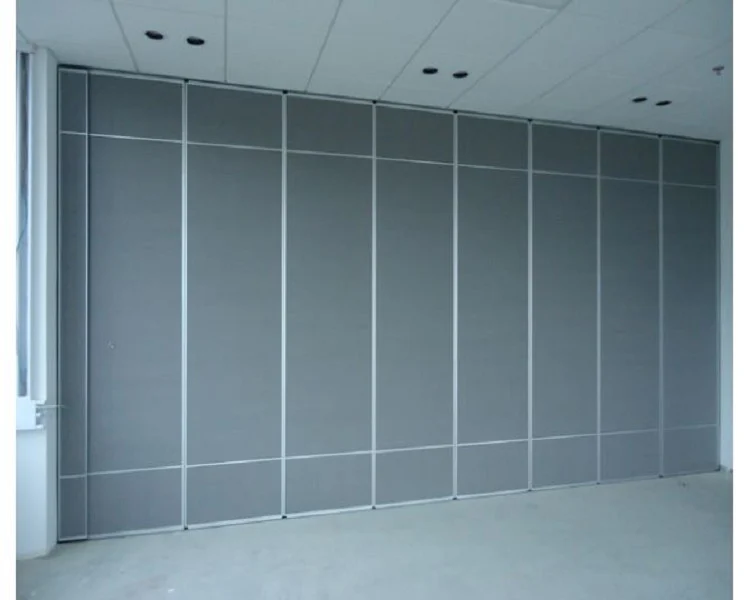
EBUNGE movable partition panels are individually movable and suspended from a top track. They cross the opening without a floor track and park at a planned stacking position. That top-hung arrangement means the overhead route is the continuous element that ties the installation together. When one anchor line spans multiple shifts, the route itself becomes the shared reference between crews.
Straight, turning and stacking routes are reviewed from the layout. A crew finishing a shift may have completed a straight run but not the turning condition that follows. The next crew may begin at a point that looks similar but belongs to a different route segment. Treating the anchor line as a single continuous system, rather than a series of independent fixings, is the first planning decision.
Information That Must Travel Between Shifts
Coordination scope: track fixing crew rotation planning.
Handover quality determines whether rotation planning works. The information that travels between shifts should be the same information the layout review produced, not a verbal summary at the gate.
Minimum handover set
- Current anchor line status: which route segments are complete, in progress or not started.
- Route geometry notes: straight, turning and stacking conditions already reviewed from the layout.
- Open questions: any point where the drawing and the site condition do not yet match.
- Access and protection status: what is clear, what is blocked and what must remain undisturbed.
- Named contact for the next shift and the person authorised to confirm a change.
This list is a coordination tool, not a substitute for project documentation. Where the layout shows a turning or stacking route, the handover should reference that drawing directly rather than describe it from memory.
Rotation Patterns and Their Trade-Offs
Checklist focus: track fixing crew rotation planning.
There is no single correct rotation pattern. The choice depends on the route, the access sequence and how much continuity the project can maintain between shifts. The comparison below is a planning aid only; it does not imply a recommended crew size, duration or output.
| Rotation pattern | Continuity strength | Main planning risk |
|---|---|---|
| Same crew, extended coverage | High, because the same people hold the route context | Fatigue and handover-free assumptions can hide drift |
| Overlapping shifts | Moderate to high, if overlap is used for walk-through | Overlap time may be consumed by logistics rather than review |
| Clean shift change | Depends entirely on written handover | Route context is lost if notes are incomplete |
| Split by route segment | Good where segments are clearly defined | Boundary between segments must be unambiguous |
Whichever pattern is used, the anchor line should not be treated as interchangeable between crews unless the route logic has been explicitly transferred. Confirm the pattern against the project programme and the coordinated layout.
Layout Review Before the First Shift
Review focus: track fixing crew rotation planning.
Track fixing crew rotation planning multi-shift anchor line coordination depends on a layout review that happens before work starts. The review should establish the full route, including straight runs, turning conditions and the planned stacking position. It should also identify where the overhead route is continuous and where project-specific support review is still required.
Do not infer support capacity, fixing spacing or load behaviour from a drawing symbol or a visible finish. Those are project-specific engineering matters.
Questions to resolve before rotation begins

- Which route segments are clearly defined, and which still need clarification?
- Where does the anchor line cross a shift boundary, and who owns that transition?
- What is the agreed handover format, and where is it stored?
- Which changes require written confirmation before the next shift proceeds?
- How will the stacking position be protected during the rotation period?
Evidence Boundaries for Multi-Shift Claims
Multi-shift planning often attracts claims that are not supported by the available evidence. Visible references can support layout discussion but do not verify hidden construction or performance.
Evidence note: statements about support, acoustic behaviour, dimensions, loads or completion status require project-specific confirmation. A visible track, finish or drawing does not by itself prove any of those outcomes.
Confirmed finish options include laminate, melamine, fabric, leather, glass and other approved surfaces. Pass-door requirements and project documentation can be discussed with the project team.
Coordinating Trades Around the Anchor Line
The anchor line rarely belongs to one trade alone. Ceiling services, lighting, fire-related elements and other overhead work may share the same zone. Rotation planning should therefore include a coordination check before each shift, not only at the start of the installation.
Where another trade needs access to the same overhead zone, the handover should record what has been agreed and what remains open. This is a scheduling and communication control, not a performance claim. Confirm responsibilities with the project manager and the relevant trade before the next shift begins.
Documentation and Change Control
Change control is what keeps a multi-shift anchor line coherent. Any deviation from the reviewed layout should be recorded, dated and attributed. The next shift should not proceed on an unconfirmed verbal change, particularly where a turning or stacking route is affected.

Project documentation can be discussed with EBUNGE for the relevant configuration. The purpose is to align the reviewed layout with what is being installed, not to substitute for the project’s own engineering and site approvals.
Frequently Asked Questions
What is track fixing crew rotation planning multi-shift anchor line coordination?
It is the planning process for handing over work on one continuous overhead anchor line between different shifts. It covers route continuity, handover information, change control and layout review so that each crew works from the same coordinated reference.
Can any crew continue the anchor line from where the previous shift stopped?
Only if the handover transfers the route context, including straight, turning and stacking conditions reviewed from the layout. A crew should not assume the next section is identical to the last without confirming the drawing and the site condition.
Does a top-hung movable partition need a floor track?
EBUNGE movable partition panels are suspended from a top track and cross the opening without a floor track. The panels park at a planned stacking position. The exact overhead route and support arrangement must be confirmed by the responsible project team from coordinated drawings.
Can acoustic performance be confirmed from the layout alone?
No. Acoustic behaviour is project-specific and requires matching documentation.
What should be included in a shift handover record?
A useful record includes route status, geometry notes, open questions, access and protection status, and the named contact authorised to confirm changes. It should reference the reviewed layout rather than rely on memory.
How should finish selection affect rotation planning?
Finish selection is separate from route continuity. Confirmed options include laminate, melamine, fabric, leather, glass and other approved surfaces.
Conclusion and Next Step
The exact route, junction arrangement, continuous overhead path and parking position must be confirmed from the coordinated project drawings. Review the route, define the handover, control changes and keep the next shift aligned with the coordinated drawing.
To discuss pass-door requirements, project documentation or the layout review for your configuration, contact the EBUNGE team. You can also review the movable partition wall product page and the resources section for further planning context.