
Quick answer: track fixing crew
Review focus: track fixing crew.
Track fixing crew first week site planning is not a schedule exercise alone. It is a drawing-led coordination process that decides what the crew can safely begin, what must wait for confirmation, and which site conditions need to be verified before any top track is fixed. For overseas contractors, architects and renovation teams, the first week sets the rhythm for the whole movable partition installation. This guide keeps every recommendation inside confirmed product facts and project-specific review boundaries.
Start With the Confirmed Product Logic
Project review term: track fixing crew.
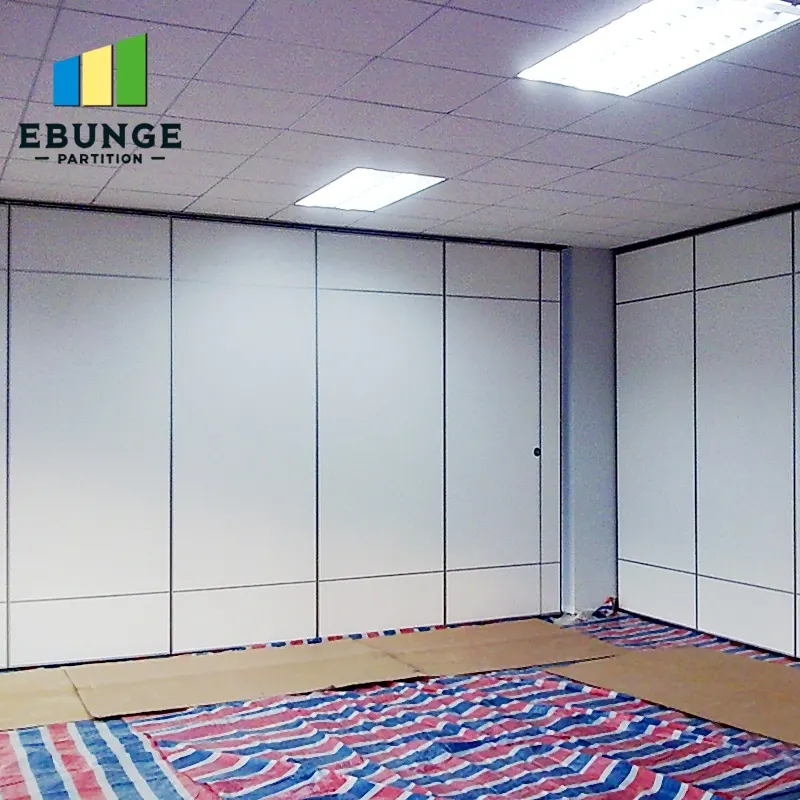
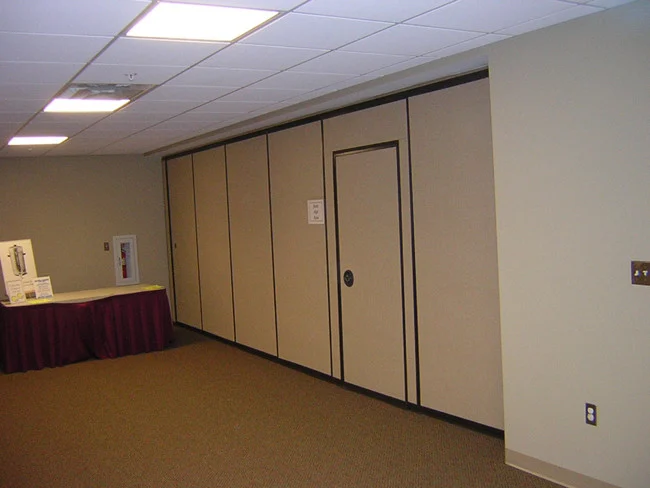
EBUNGE movable wall panels are individually movable and suspended from a top track. They cross the opening without a floor track and park at a planned stacking position. That single fact shapes the first week: the crew is working overhead, not along the floor. Straight, turning and stacking routes are reviewed from the layout, so the drawing set must show how panels travel from closed position to parked position.
Before the crew arrives, confirm that the project drawings identify the track route, the turning points and the intended stacking area. If any of those are missing or marked as indicative, treat them as open items rather than instructions. The first week should begin with a drawing review, not with drilling.
What the First Week Should Actually Cover
Coordination scope: track fixing crew.
A useful first week has three workstreams running in parallel: document control, site verification and crew orientation. Document control confirms which drawing revision is current. Site verification checks that the opening, overhead route and stacking zone match that revision. Crew orientation explains the sequence and the stop points where work must pause for confirmation.
This is also the week to agree how pass-door requirements and project documentation will be handled. Those items can be discussed with the EBUNGE team, but they should be resolved against the specific project rather than assumed from a generic example.
A simple first-week sequence
- Hold a drawing review with the site manager and the crew lead.
- Walk the straight, turning and stacking routes together.
- Mark any route that is not continuously connected overhead.
- Confirm the stacking position and its clearance from other trades.
- Record open items before track fixing begins.
- Agree the daily check-in for drawing revisions and site changes.
Route Review: Straight, Turning and Stacking
Checklist focus: track fixing crew.
The route review is the highest-value activity of the week. The exact route, junction arrangement, continuous overhead path and parking position must be confirmed from the coordinated project drawings. The crew should trace each route physically, not only on paper, and note where the overhead path is interrupted by structure, services or a change in ceiling condition.
Every proposed movement path requires a continuous connected overhead route and project-specific support review. The suitability of each route and parking arrangement depends on the approved layout, circulation, ceiling interfaces and operating sequence.
Evidence note
Visible shape, finish or drawing geometry does not prove acoustic, fire, load or durability performance. Those characteristics require matching project evidence and confirmation. Treat any unverified route or support condition as an open item, not a hidden assumption.
Support and Fixing: Confirm, Do Not Infer
Track fixing depends on the supporting structure above the opening. The first week should confirm who has reviewed that structure and what the approved drawings say about fixing positions. Do not infer support capacity, fixing spacing or load paths from a photograph, a previous project or a generic detail.
Where the support condition is unclear, the correct action is to pause and request confirmation. This protects the crew, the opening and the subsequent panel installation.
Finish, Pass-Door and Documentation Coordination
Confirmed finish options include laminate, melamine, fabric, leather, glass and other approved surfaces. Finish selection affects handling and protection during the first week, so the crew should know which panels are on site and how they are stored.
Pass-door requirements and project documentation can be discussed with EBUNGE. The first week is a good time to align the documentation set, the inspection points and the handover expectations. Keep this coordination factual: what is confirmed, what is pending, and who owns each item.
First-week decision checklist
- Is the current drawing revision identified and available on site?
- Are straight, turning and stacking routes marked and walkable?
- Is the overhead route continuously connected for every proposed path?
- Is the stacking position agreed and clear of other trades?
- Are support and fixing conditions confirmed against project drawings?
- Are pass-door and documentation items assigned to a named owner?
- Is there a daily check-in for changes and queries?
Acoustic Concepts Without Overclaiming
The first week should confirm which acoustic requirement applies to the project and what evidence supports it.
Confirm the project-specific acoustic requirement with the responsible designer or consultant before treating any target as achieved.
Coordination With Other Trades
Track fixing rarely happens in isolation. Ceiling, electrical, HVAC and finishing trades may all occupy the same overhead zone. The first week should establish a coordination rhythm so that the track route is not blocked or altered after fixing begins.
Use the drawing review to identify shared zones and agree who works where and when. If another trade changes a condition that affects the route, the crew should record it and pause until the change is reviewed. This is a planning control, not a performance claim.
FAQ
What should be confirmed before the track fixing crew starts?
Confirm the current drawing revision, the straight, turning and stacking routes, the stacking position, and the support and fixing conditions shown on the approved project drawings.
Do movable partitions need a floor track?
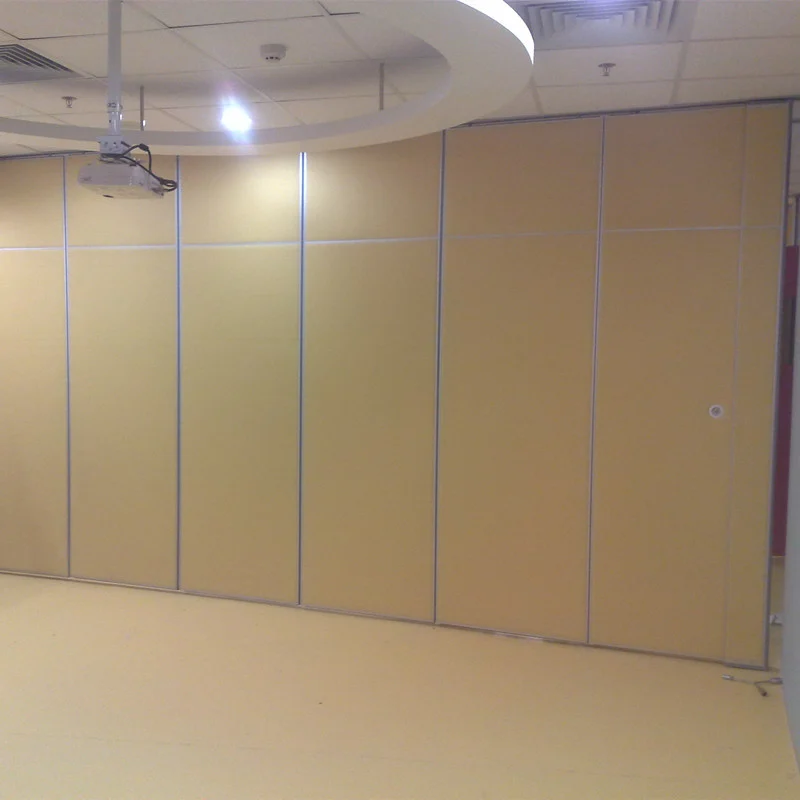
EBUNGE movable wall panels are top-hung and move without a continuous floor running track or floor hardware along the partition line. The overhead route still requires project-specific support review.
Can panels travel across an untracked gap?
No. Every proposed movement path requires a continuous connected overhead route and project-specific support review. Do not infer a route from a partial drawing.
How should acoustic requirements be handled in week one?
Identify the project-specific acoustic requirement and the evidence that supports it.
What finish information is useful on site?
Confirmed finish options include laminate, melamine, fabric, leather, glass and other approved surfaces. Use the finish schedule for handling and protection, not as evidence of performance.
When should the crew pause work?
Pause when the route is not continuously connected, when support conditions are unclear, or when a drawing revision changes the agreed scope. Record the query and wait for confirmation.
Conclusion and Next Step
A well-planned first week gives the track fixing crew a clear, evidence-bounded start. Review the drawings, walk the routes, confirm support and stacking, and keep acoustic and dimensional questions tied to project-specific confirmation. This approach reduces rework and keeps coordination honest.
To discuss your project documentation, pass-door requirements or route review, contact the EBUNGE team. You can also review the movable wall product range and the project resources before the crew mobilises.