
Quick project answer
Review focus: track fixing assumption.
When you open a bidder’s priced schedule for a movable partition package, the line items may look tidy. But the priced schedule track fixing assumption review partition tender process is where hidden assumptions about the top track, support conditions and movement routes become visible. The suitability of each route and parking arrangement depends on the approved layout, circulation, ceiling interfaces and operating sequence.
Why Track Fixing Assumptions Matter in a Priced Schedule
Project review term: track fixing assumption.
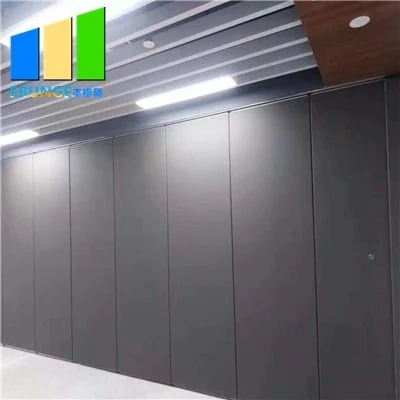
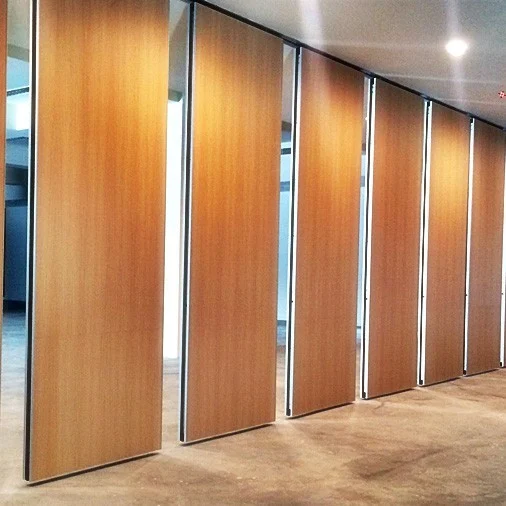
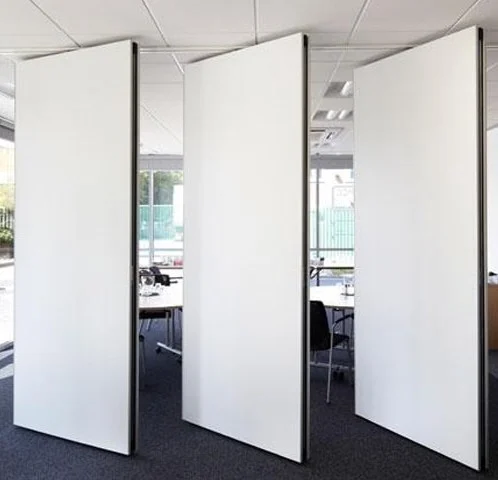
Movable wall panels are individually movable, suspended from a top track, cross the opening without a floor track, and park at a planned stacking position. That operating concept depends on a continuous overhead route and project-specific support. If a bidder’s priced schedule does not state how the track is fixed, what support is assumed, or how the route is coordinated, the price may be based on a different scope than the one you intend to buy.
This is not about finding a single correct number. It is about making assumptions visible so that commercial comparison and technical review can happen together. A priced schedule that omits track fixing assumptions is not necessarily wrong, but it is incomplete for tender evaluation.
What a Priced Schedule Can and Cannot Tell You
Coordination scope: track fixing assumption.
A priced schedule is a commercial document. It can show line items, quantities, unit rates and exclusions. The exact overhead route and support arrangement must be confirmed by the responsible project team from coordinated drawings. Treat the schedule as a prompt for questions, not as a substitute for drawing review.
For example, a line item for ‘track supply and fix’ may assume a specific substrate, a continuous support member or a particular coordination sequence. None of those assumptions are visible in the price alone. The review process should surface them before award.
A Practical Review Sequence for Tender Teams
Checklist focus: track fixing assumption.
Use a repeatable sequence so that every bidder is asked the same clarifying questions. The goal is to compare like with like, not to force a single technical solution.
- Check the drawing set referenced. Confirm which layout, elevation and reflected ceiling plan the bidder priced against.
- Locate the track line. Verify that the proposed route is continuous and connected where panels must travel.
- Identify support assumptions.
- Review parking and stacking. Confirm the planned stacking position and whether the layout allows the intended parking arrangement.
- Check interface items.
- Compare exclusions. Put each bidder’s exclusions side by side before comparing totals.
- Request written clarification. Ask bidders to confirm assumptions in writing so they can be reviewed consistently.
Reading Track Fixing Language in a Priced Schedule
Review focus: track fixing assumption.
Track fixing language is often brief. The review should translate each phrase into a clear responsibility.
Common phrases and what to clarify
- ‘Track fixed to structure’ — clarify which structure, what condition it is in, and who confirms suitability.
- ‘
- ‘Continuous track’ — confirm the route is connected across the full movement path, including turns and stacking areas.
- ‘Allowance for fixing’ — ask what the allowance covers and whether it is based on a reviewed support condition.
- ‘
These clarifications do not require the bidder to invent performance data. They simply make the scope readable.
Coordination Questions for Design and Construction Teams
Project review term: track fixing assumption.
Track fixing sits at the boundary between the partition package and the base build. A priced schedule review should trigger a short coordination check.
Questions to route to the right party
- Has the structural engineer reviewed the proposed track support locations?
- Does the ceiling or soffit design allow the track route to remain continuous?
- Are there services, lights or diffusers that conflict with the track line or stacking position?
- Has the parking position been coordinated with adjacent doors, furniture or circulation?
- Are pass-door requirements and project documentation discussed with the supplier?
These questions are project-specific. They should be answered from the actual drawings and specifications, not from a generic product description.
Evidence Boundaries When Comparing Bidders
It is tempting to treat a detailed priced schedule as proof of technical quality. It is not. A schedule can be detailed and still rest on assumptions that do not match the project. Equally, a brief schedule may be based on a thorough review that is simply not written down.
Keep the comparison within evidence boundaries. If a bidder claims a performance level, ask for the supporting project documentation. If the claim cannot be supported, treat it as an open item rather than a differentiator.
Evidence note: A priced schedule is a commercial offer. Technical suitability, support conditions and acoustic requirements must be confirmed against project-specific drawings and specifications before award.
How Finish and Application Examples Fit the Review
Confirmed finish options include laminate, melamine, fabric, leather, glass and other approved surfaces. A finish shown in a photograph or sample is not evidence of a application reference or a measured result.
Named venues and room types are examples only. Movable partitions can be considered wherever flexible spatial division, combination or reconfiguration is required. The review should focus on the project’s own layout, movement routes and support conditions.
FAQ: Track Fixing Assumptions in Partition Tenders
What is a track fixing assumption in a priced schedule?
It is the bidder’s stated or implied basis for how the top track will be supported and fixed. It may appear as a line item, a note or an exclusion. If it is not written down, it should be clarified before comparison.
Can I compare bidder prices without reviewing track fixing?
You can compare numbers, but the comparison may not be meaningful. Different track fixing assumptions can change scope, coordination responsibility and risk. Review assumptions first, then compare.
Does a continuous floor track appear in these systems?
No. EBUNGE movable wall panels are top-hung and move without a continuous floor running track or floor hardware along the partition line. The movement path still requires a continuous connected overhead route and project-specific support review.
How should acoustic performance be treated in the review?
Project-specific acoustic requirements must be confirmed with the supplier and the design team.
What should I ask a bidder to clarify in writing?
Ask for the drawing set referenced, the assumed support condition, the track route, the parking position, exclusions, and any interface items. Written clarification keeps the comparison consistent.
Can pass doors be included in the scope?
Pass-door requirements and project documentation can be discussed with the supplier. Confirm the specific location, operation and coordination with the surrounding layout.
Conclusion: Make Assumptions Visible Before Award
Reading a bidder’s track fixing assumptions is a coordination exercise, not a hunt for the lowest number. A priced schedule becomes more useful when it is paired with drawing review, written clarifications and a clear understanding of who carries each interface. Keep every recommendation tied to maintained product facts, visible evidence limits and project-specific drawing review.
Before award, confirm project-specific support, acoustic and dimensional requirements with the supplier and the design team. If you need to discuss a project, contact EBUNGE to review your layout and tender questions. You can also explore movable walls and our resources for further planning context.