
Quick answer: priced schedule omission
Review focus: priced schedule omission.
A priced schedule omission rarely appears from nowhere. When a movable partition line disappears from a priced schedule, the fastest way to understand why is to perform a partition tender priced schedule omission query log trace: compare the current priced schedule against the tender query log, the drawing issue register and the clarification responses. This article gives an evidence-bounded method for that trace. It does not assume a cause, a cost outcome or a performance result. Every conclusion should be confirmed against the project documents and the project-specific requirements.
Why the Query Log Is the First Place to Look
Project review term: priced schedule omission.
The tender query log records questions raised during the tender period and the answers issued. The suitability of each route and parking arrangement depends on the approved layout, circulation, ceiling interfaces and operating sequence. That makes it more useful than a single email thread.
Treat the log as an index, not as proof. An entry may show that a question was asked, but it may not show how the answer was later interpreted in the priced schedule. The trace works only when the log, the drawings and the priced schedule are read together.
A Six-Step Trace Process
Coordination scope: priced schedule omission.
- Freeze the versions. Record the exact revision of the priced schedule, the query log, the drawing set and the specification you are comparing.
- Locate the missing line. Identify the schedule row, room or package where the movable partition item should appear.
- Search the log by topic. Look for entries about the partition package, the room name, the opening, the stacking position or the finish.
- Match answers to schedule changes. Check whether a clarification response corresponds to a later schedule revision.
- Check the drawing route. Confirm whether the straight, turning and stacking routes were shown and reviewed in the layout.
- Record the gap. State what is evidenced, what is missing and what must be confirmed before pricing is finalised.
What the Query Log Can and Cannot Prove
Checklist focus: priced schedule omission.
A query log can show that a topic was raised and that a response was issued. It can also show the date and the referenced document. It cannot, by itself, prove that a contractor priced the item correctly, that a supplier included every accessory, or that a later verbal instruction was captured.

This is why the trace should end with a written gap statement rather than a blame statement. The goal is to restore a complete, comparable scope description so that the next priced schedule can be reviewed on the same basis.
Evidence Note: Keep the Boundary Visible
Do not infer acoustic, fire, structural, maintenance or commercial performance from a schedule line, a finish name or a drawing shape. Those topics require project-specific confirmation and matching evidence. If the documents do not contain that evidence, mark the item as unconfirmed rather than filling the gap with an assumption.
Checklist for Reviewing a Suspected Omission
- Is the movable partition item present in the specification but absent from the priced schedule?
- Does the query log contain a related question, and is the answer referenced to a drawing or specification revision?
- Was the opening width, height or route changed after the original query?
- Was a pass-door requirement discussed and then omitted from the schedule?
- Were finish options such as laminate, melamine, fabric, leather or glass listed in one document but not another?
- Is the parking or stacking position shown on the reviewed layout?
- Is there a written record of who confirmed the final scope?
Comparing Document Sources During the Trace
| Source | Useful for | Limitation |
|---|---|---|
| Tender query log | Dates, questions and issued answers | May not show how an answer was priced |
| Priced schedule | Current scope and line items | May omit items removed by an earlier revision |
| Drawing set | Routes, openings and stacking positions | Requires project-specific support and dimensional review |
| Specification | Finish and documentation requirements | Does not confirm acoustic or structural performance by itself |
How Movable Partition Facts Fit the Trace
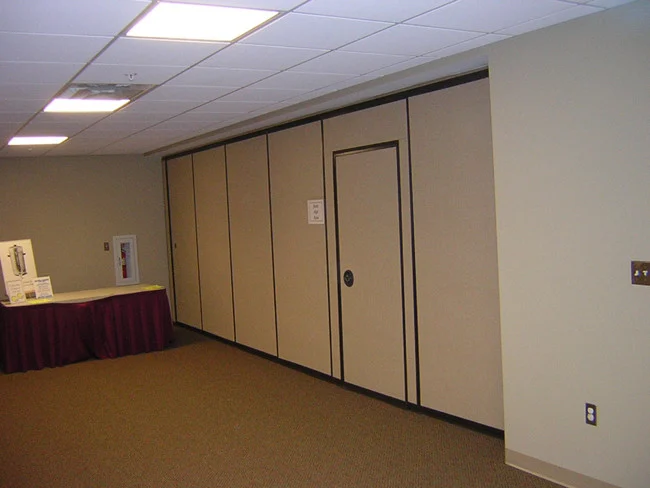
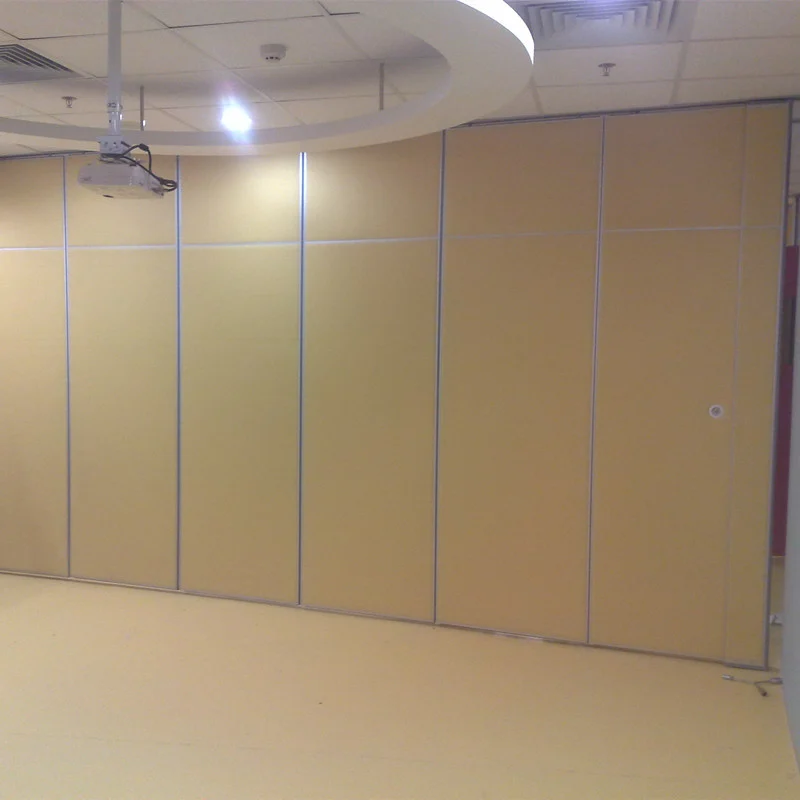
EBUNGE movable wall panels are individually movable, suspended from a top track, cross the opening without a floor track and park at a planned stacking position. Straight, turning and stacking routes are reviewed from the layout. Confirmed finish options include laminate, melamine, fabric, leather, glass and other approved surfaces. Pass-door requirements and project documentation can be discussed.
These facts help a reviewer describe the scope accurately.
Turning the Trace Into a Clear Query
A good follow-up query is specific and document-linked. It names the schedule row, the drawing revision, the query log entry and the exact point that needs confirmation. It asks for a written response that can be carried into the next priced schedule.
This approach keeps the review focused on scope completeness. It also reduces the risk that a later reader mistakes an unanswered question for an approved omission. For broader procurement guidance, see the EBUNGE resources page and the movable walls product page.
Frequently Asked Questions
What is a priced schedule omission in a partition tender?
It is a scope item that appears in the specification or drawings but is missing from the priced schedule. The cause may be a revision, a clarification or a simple carry-forward error, so the documents must be compared before any conclusion is drawn.
Why trace the omission back to the query log rather than the latest email?
The query log is a dated record of questions and issued answers. It helps establish sequence and reference points.
Can the query log prove that a partition item was intentionally excluded?
No. It can show that a topic was raised or answered, but it may not show the intent behind a later schedule change. Intent should be confirmed in writing with the responsible party.
What should be checked on the layout during the trace?
Check the straight, turning and stacking routes, the opening dimensions and any pass-door requirement. These items affect how the movable partition scope is described and must be reviewed against the project-specific layout.
Do finish options affect the trace?
Finish options such as laminate, melamine, fabric, leather or glass can appear in one document and not another. If a finish is listed in the specification but absent from the priced schedule, record it as a documentation gap and confirm the requirement.
When should acoustic performance be discussed?
Confirm the requirement with the project team.
Conclusion and Next Step
A disciplined trace compares the priced schedule, the query log, the drawings and the specification under controlled revisions. It produces a written gap statement instead of an assumption. That statement can then be used to request confirmation on scope, routes, finishes, pass doors and documentation.
If your team needs to discuss a movable partition package, pass-door requirements or project documentation, contact EBUNGE with the relevant drawings and schedule extracts so the project-specific requirements can be reviewed.