
When planning a training center, the choice of a top-hung operable partition is a critical decision that affects acoustics, flexibility, and the overall user experience. This guide is designed for hotel owners and facility managers who need to specify a movable partition wall system that meets their project’s unique requirements. We’ll walk you through the key technical considerations, from acoustic performance to installation logistics, and help you prepare for a productive conversation with suppliers. By the end, you’ll have a clear understanding of what to ask for and how to evaluate proposals, ensuring your investment delivers long-term value.
Direct answer: To choose the right top-hung operable partition for your training center, focus on defining your acoustic target (e.g., STC rating), measuring your opening sizes, understanding the track system’s load capacity, and preparing detailed drawings. Then, engage a reputable supplier who can provide custom solutions, guide you on finishes, and offer installation support. Always request a detailed quotation and verify all specifications against your project documents.
Why a top-hung operable partition is ideal for training centers
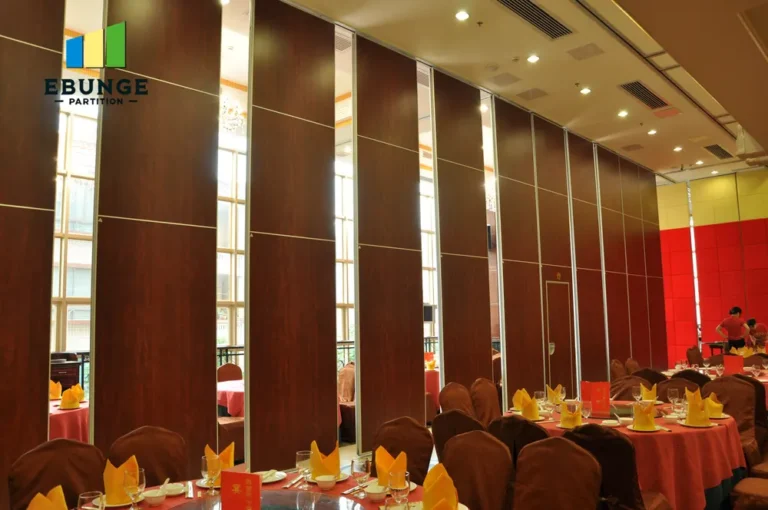
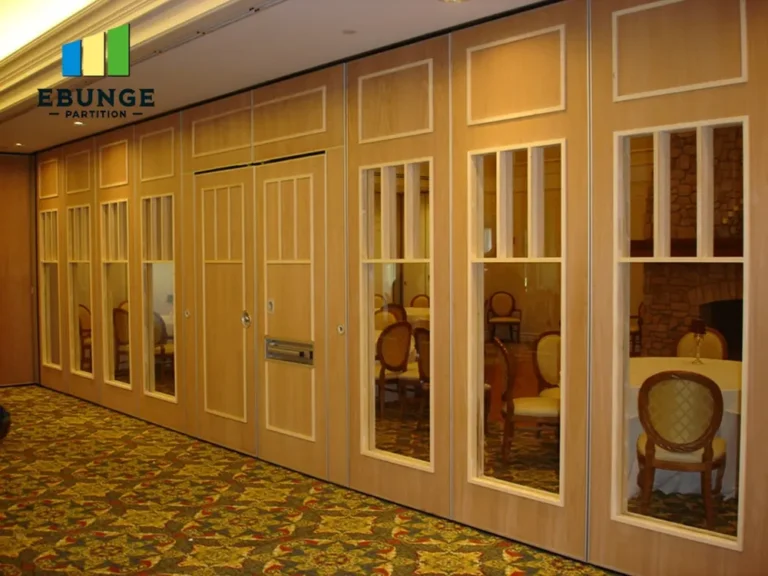
A top-hung operable partition, also known as a movable partition wall or operable wall system, is suspended from an overhead track, eliminating the need for a floor rail. This design offers several advantages for training centers: it creates a clean, unobstructed floor surface, which is safer and easier to maintain, and it allows for flexible room configurations. Whether you need to divide a large hall into smaller seminar rooms or open up a space for a plenary session, a top-hung system provides the versatility you need.
For hotel owners, this means you can maximize the utility of your training facilities, hosting multiple events simultaneously or converting spaces to suit different group sizes. The absence of floor tracks also reduces trip hazards and simplifies cleaning, which is especially important in high-traffic areas.
Need help turning the top-hung operable partition requirements into a practical project layout?
Key technical specifications to request
Before contacting suppliers, gather the following information to ensure you receive accurate quotes and feasible solutions:
- Opening dimensions: Measure the width and height of each opening you need to divide. Include door openings and any obstructions.
- Acoustic target: Determine the required sound insulation class (e.g., STC 40, 45, 50) based on the types of activities in your training center. For example, if you’ll have simultaneous training sessions, a higher STC may be necessary.
- Finish preferences: Choose from a range of finishes, such as laminate, veneer, or paint, that match your interior design.
- Project location: Provide the site address and any site-specific constraints (e.g., ceiling height, structural support, accessibility).
- Drawings: If available, share architectural or layout drawings to help suppliers understand the context.
Acoustic performance: what you need to know
Acoustic performance is often the primary concern for training centers. The Sound Transmission Class (STC) rating indicates how well a partition reduces sound transmission. However, the actual performance depends on the entire system, including the top-hung track, perimeter seals, and panel construction. When evaluating suppliers, ask for acoustic test data from independent labs, but remember that field performance may differ from laboratory tests due to installation quality and flanking paths.
For training centers, an STC rating of 40-45 is typically sufficient for normal speech privacy, while 50+ is recommended for high-noise environments or if you need to prevent distractions. Be cautious of suppliers who promise specific STC ratings without providing supporting documentation; always verify the data.
Ease of operation and maintenance
Top-hung operable partitions are designed for easy operation, but the level of effort depends on the system’s quality and the panel weight. Look for systems with smooth-gliding trolleys and ergonomic handles. Some systems offer motorized operation, which can be beneficial for large, heavy panels. Consider who will be operating the partition—will it be hotel staff or trainers? Ensure the operation is intuitive and requires minimal physical effort.
Maintenance is another factor: top-hung systems have fewer floor components, but the track and trolleys need periodic inspection and lubrication. Ask suppliers about the recommended maintenance schedule and the availability of spare parts.
Durability and building code compliance
Training centers experience frequent use, so durability is crucial. Panels should withstand impacts, and the track system should be robust enough to handle daily operations. When discussing with suppliers, inquire about the materials used, such as steel or aluminum for the frame, and the quality of the seals.
Building codes may require fire ratings, accessibility features, or specific egress paths. Ensure your partition system complies with local regulations. For example, if you need a fire-rated partition, the supplier must provide certified materials and installation methods. Always confirm that the system meets the applicable codes and standards.
Installation: minimizing disruption
Installation of a top-hung operable partition can be disruptive, but proper planning can minimize downtime. Discuss the installation timeline with the supplier and coordinate with your construction schedule. Some suppliers offer installation services or can recommend qualified installers. Ask about the expected duration and any preparation needed, such as reinforcing the ceiling structure to support the weight of the partition.
In a training center, you may need to schedule installation during off-peak hours or in phases. Choose a supplier who can work with your schedule and provide clear instructions for your team.
Share the opening, drawings, finish direction, and privacy target for a project-specific review.
Customization options for your training center
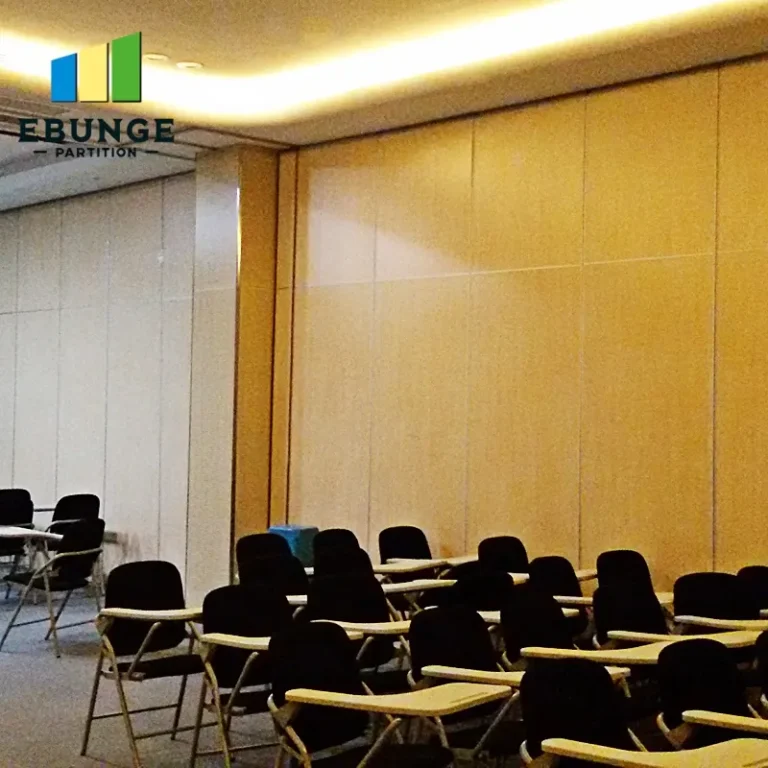
Every training center is unique, and your movable partition wall should reflect that. Top-hung operable partitions can be customized in terms of panel width, height, finish, and even configuration (e.g., curved or angled partitions). If you have specific design requirements, such as integrating whiteboards or screens, discuss these with the supplier. Customization may affect cost and lead time, so balance your needs with your budget.
Cost considerations and quotation readiness
The cost of a top-hung operable partition varies based on size, acoustic rating, finish, and customization. To get accurate quotes, provide suppliers with detailed information about your project. A vague inquiry will result in vague estimates. When you receive quotations, compare them on a like-for-like basis, ensuring that each includes the same scope of work, materials, and services.
Be wary of unusually low bids, which may indicate inferior materials or hidden costs. Ask for a breakdown of costs, including panels, track, seals, installation, and any additional charges. Also, inquire about the warranty and after-sales support. A reputable supplier should offer a reasonable warranty and be responsive to your needs.
Checklist for evaluating suppliers and quotations
| Criteria | Questions to Ask | What to Look For |
|---|---|---|
| Acoustic data | Can you provide independent STC test reports? | Reports from accredited labs, not just marketing claims. |
| Customization | Can you accommodate our specific dimensions and finishes? | Flexibility in panel sizes, finishes, and configurations. |
| Installation | Do you offer installation services? What is the timeline? | Detailed installation plan, qualified installers, minimal disruption. |
| Compliance | Does your system meet local building codes? | Certifications or documentation of compliance. |
| After-sales support | What warranty do you provide? How do you handle maintenance? | Clear warranty terms, responsive support, spare parts availability. |
Case study: training center in a hotel
Imagine a hotel with a large ballroom that occasionally needs to be divided into two smaller training rooms. A top-hung operable partition with a high STC rating would allow simultaneous sessions without sound interference. The absence of a floor track ensures the space can be used for banquets or exhibitions when the partition is retracted. By providing the supplier with the room dimensions, ceiling height, and acoustic requirements, the hotel owner can receive a tailored solution that maximizes flexibility.
Conclusion
Selecting the right top-hung operable partition for your training center requires careful consideration of technical specifications, acoustic performance, installation logistics, and cost. By preparing detailed information and asking the right questions, you can ensure that your chosen system meets your needs and provides lasting value. Remember to verify all claims with documentation and consult with a reputable supplier who can guide you through the process.
Frequently asked questions
What is the maximum height for a top-hung operable partition?
The maximum height depends on the system design and structural support. Typically, heights up to 6 meters are feasible, but for higher walls, additional reinforcement may be needed. Consult with a structural engineer and the supplier to determine what is possible for your project.
Can a top-hung operable partition be installed without a floor track?
Yes, that is the defining feature of a top-hung system. The wall is suspended from an overhead track, and the bottom is guided by a floor guide or simply hangs freely, depending on the design. This eliminates the need for a floor rail, providing a clean and accessible floor surface.
What is the typical lead time for a custom top-hung operable partition?
Lead times vary by manufacturer and customization level. It’s best to ask your supplier for an estimated lead time based on your specifications. Typically, it can range from a few weeks to several months, depending on the complexity and order size.
How do I maintain a top-hung operable partition?
Regular maintenance includes cleaning the track and trolleys, lubricating moving parts, and inspecting seals for wear. It’s advisable to schedule a professional inspection annually. The supplier or manufacturer can provide specific maintenance guidelines.
Can top-hung operable partitions be used for fire-rated walls?
Yes, there are fire-rated operable partitions available. They are tested and certified to meet specific fire resistance ratings. If you require a fire-rated wall, ensure the supplier provides the necessary certifications and that installation complies with local codes.
For more guidance on selecting the right movable partition wall for your project, explore our movable partition wall options, or read our blog for insights. If you’re ready to discuss your training center needs, contact our team for personalized assistance.
Send the opening size and drawings to discuss a differentiated top-hung operable partition solution.