
Quick project answer
Review focus: track fixing sequence claim.
When a tender includes top-hung movable partitions, bidders often describe how they will fix the overhead track and in what order. The tender scoring model track fixing sequence claim weighting you choose determines whether those statements are scored as evidence or as marketing. This article offers an evidence-bounded framework for procurement teams, contractors, architects and owners who must compare bids without inventing performance or engineering conclusions.
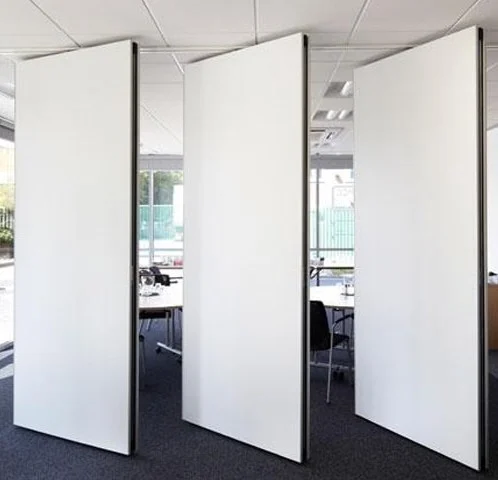
Movable wall panels are individually movable, suspended from a top track, cross the opening without a floor track, and park at a planned stacking position. Straight, turning and stacking routes are reviewed from the layout. That maintained product context is the starting point for any scoring model.
Why Track Fixing Sequence Claims Need Their Own Scoring Weight
Project review term: track fixing sequence claim.
A bidder may claim a specific sequence for setting out, fixing and aligning the overhead track. The suitability of each route and parking arrangement depends on the approved layout, circulation, ceiling interfaces and operating sequence. However, the claim itself is not proof of feasibility. The exact route, junction arrangement, continuous overhead path and parking position must be confirmed from the coordinated project drawings.
Weighting this item too heavily can reward confident wording. Weighting it too lightly can leave a coordination gap. The right balance depends on how much of the track route is already defined in the tender documents and how much remains open for bidder interpretation.
What the scoring model can reasonably evaluate
- Whether the bidder describes a sequence that matches the published layout and route.
- Whether the bidder identifies interfaces with structure, ceiling or other trades.
- Whether the bidder states what must be confirmed before fixing begins.
- Whether the bidder provides a method statement rather than a performance promise.
Define the Evidence Boundary Before You Score
Coordination scope: track fixing sequence claim.
Every scoring criterion should state what evidence is acceptable. A written sequence description, a marked-up drawing, a method statement or a response to a technical query can all be valid.
Evidence note: a bidder’s sequence claim is a proposal, not a verified outcome. Confirm project-specific support, acoustic and dimensional requirements before awarding weight to any claim.
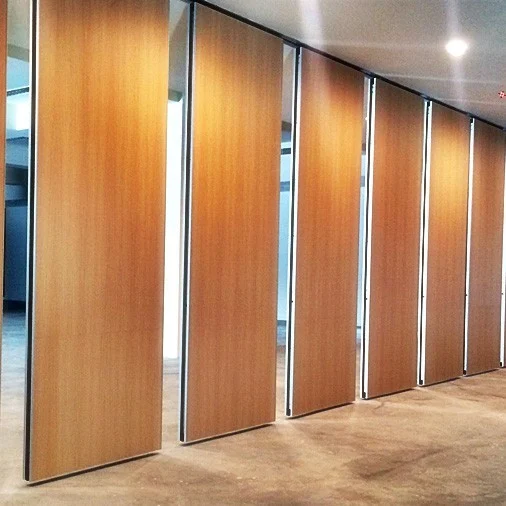
Visible references can support layout discussion but do not verify hidden construction or performance.
Build a Weighted Scoring Structure for Sequence Claims
Checklist focus: track fixing sequence claim.
A simple structure helps evaluators stay consistent. The weights below are illustrative categories, not fixed percentages. Adjust them to the project’s risk profile and the completeness of the tender drawings.
| Scoring dimension | What to look for | Evidence limit |
|---|---|---|
| Route alignment | Sequence matches the straight, turning and stacking routes shown in the layout | Requires drawing review; no inference of support capacity |
| Interface coordination | Identifies ceiling, structure and adjacent trade interfaces | Requires project-specific confirmation |
| Pre-fixing checks | States what must be verified before track fixing starts | No claim of speed, load or outcome |
| Documentation quality | Method statement, marked drawings or query responses | Documentation is not performance evidence |
Each dimension should have a clear anchor for full, partial and zero credit. Partial credit might apply where the sequence is described but the route is not clearly addressed.
Separate Sequence Claims from Performance Claims
Review focus: track fixing sequence claim.
Track fixing sequence is a coordination topic. If a bidder links the two, the scoring model should treat the acoustic statement as unverified unless the tender includes matching project-specific evidence.
Where acoustic requirements matter, the tender should ask for project-specific confirmation rather than relying on a sequence claim.
Questions to ask before awarding points
- Does the bidder’s sequence follow the routes shown in the layout?
- Does the bidder state which project-specific support requirements must be confirmed?
- Does the bidder avoid implying performance that the tender documents do not support?
- Does the bidder provide documentation that evaluators can review against the drawings?
Coordinate the Scoring Model with Drawing Review
The scoring model should not operate in isolation. Evaluators need access to the current layout, route drawings and any project-specific support information. Where the drawings are incomplete, the model should award points for identifying the missing information rather than for filling the gap with assumptions.
Procurement and tender review coordination improves when the same evidence boundary is applied to every bidder. A consistent boundary reduces the risk of rewarding one bidder for a claim that another bidder left open for legitimate reasons.
Common Weighting Mistakes to Avoid
One mistake is treating a detailed sequence as proof of feasibility. Another is scoring the number of steps in a sequence rather than the quality of coordination. A third is allowing a bidder’s finish or application example to influence the sequence score.
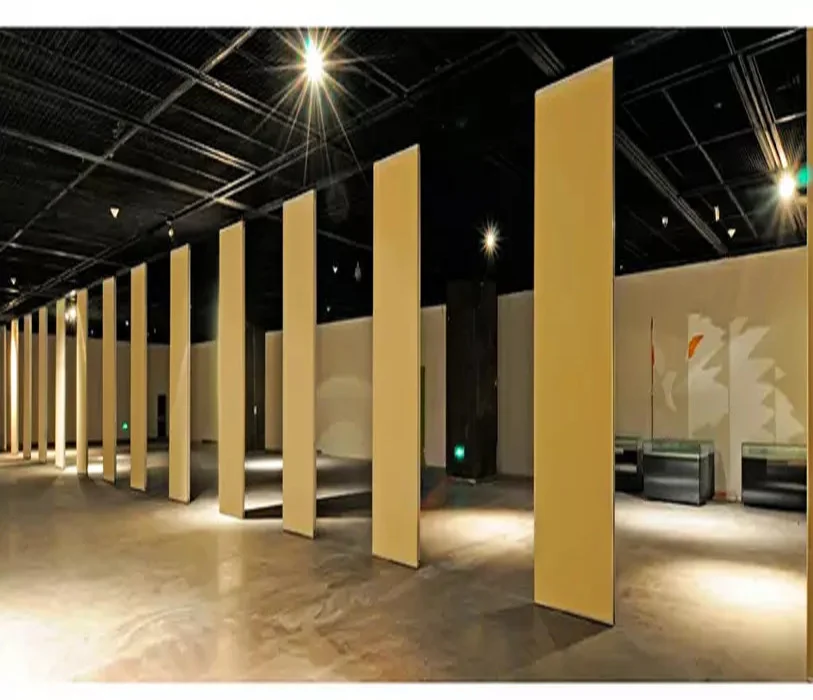
Confirmed finish options include laminate, melamine, fabric, leather, glass and other approved surfaces. These options describe appearance and surface choice.
FAQ: Tender Scoring and Track Fixing Sequence Claims
What is track fixing sequence claim weighting in a tender scoring model?
It is the share of evaluation points assigned to how a bidder describes the order and method for fixing the overhead track, including route alignment, interfaces and pre-fixing checks.
Should a bidder’s sequence claim be treated as proof of support capacity?
No. A sequence claim is a proposal.
How does the absence of a floor track affect sequence scoring?
Panels are top-hung and cross the opening without a floor track. The scoring model should focus on the overhead route and the planned stacking position rather than on floor-level fixing.
Can acoustic performance be scored through the track fixing sequence?
No.
What documentation should evaluators request?
Request a method statement, marked-up route drawings and responses to technical queries. Pass-door requirements and project documentation can be discussed with the supplier as part of the tender process.
How should finish options affect the sequence score?
They should not.
Conclusion and Next Steps
A defensible tender scoring model separates sequence claims from performance claims, defines acceptable evidence and applies the same boundary to every bidder. Review the layout, confirm project-specific support, acoustic and dimensional requirements, and score what the bidder can actually demonstrate.
To discuss pass-door requirements, project documentation or movable wall configuration for your next tender, contact EBUNGE. You can also review the movable walls product page and the resources section for further planning context.