
Tender Return Checklist for Partition Track Interface Scope Gaps
Quick project answer
Review focus: tender return.
For project teams, tender return checklist partition track scope gaps should be reviewed against the opening, ceiling interface, operating sequence and approved finish requirements. The suitability of each route and parking arrangement depends on the approved layout, circulation, ceiling interfaces and operating sequence. Movable wall packages often sit between several trades, so unclear boundaries can survive into construction. This guide sets out what to ask for, what to verify against drawings, and where project-specific confirmation is essential.
Why Track Interface Gaps Appear in Tender Returns
Project review term: tender return.
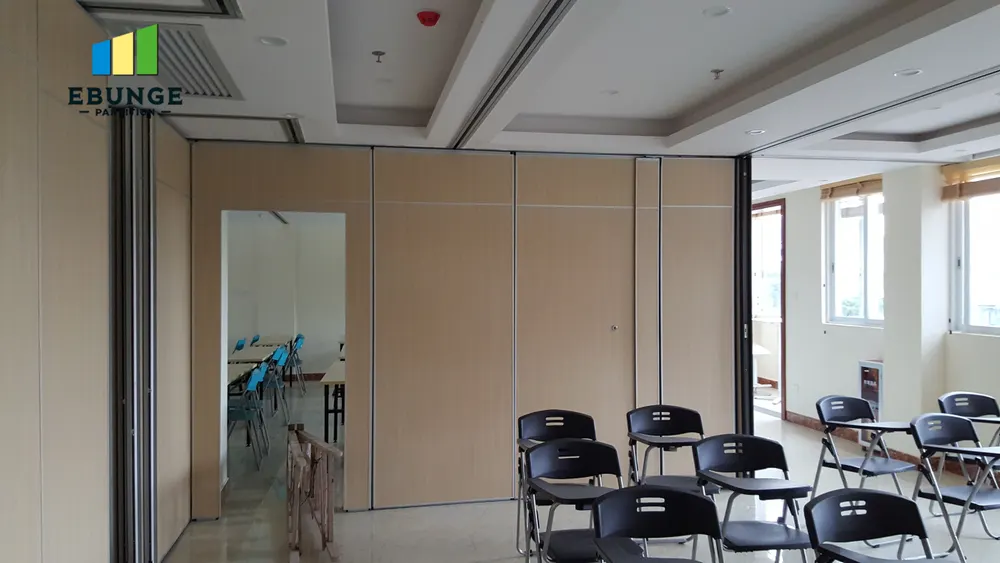
Movable wall panels are individually movable and suspended from a top track. They cross the opening without a floor track and park at a planned stacking position. The exact overhead route and support arrangement must be confirmed by the responsible project team from coordinated drawings.
Gaps usually appear because each party assumes another has covered the interface. The result is a return that looks complete but leaves a question mark over the ceiling zone.
Start With the Movement Route, Not the Panel
Coordination scope: tender return.
Straight, turning and stacking routes are reviewed from the layout. Before reading finish schedules, ask each bidder to describe the route their proposal assumes.
Route questions for the return
- Does the submitted route match the architectural layout, including turns and the parking position?
- Is the overhead route continuous and connected along the whole travel path?
- Which drawings show the route, and which revision are they based on?
- Who is responsible for any deviation between the tender layout and later coordinated drawings?
The exact route, junction arrangement, continuous overhead path and parking position must be confirmed from the coordinated project drawings. Every proposed movement path requires a continuous connected overhead route and project-specific support review.
Build a Scope Responsibility Matrix
A short matrix in the tender documents is more useful than a long narrative. It forces each bidder to state inclusions and exclusions against the same headings, which makes comparison honest and exposes missing items early.
| Interface item | Question to answer in the return | Evidence to request |
|---|---|---|
| Overhead route | Who supplies and coordinates the track route shown on the layout? | Marked-up layout with route and parking position |
| Support structure | Who reviews the structure above the track, and to what drawings? | Referenced structural drawings and review responsibility |
| Parking zone | Where do panels park, and who clears that space? | Plan showing stacking position and adjacent trades |
| Finishes | Which finish options are priced, and against which samples? | Finish schedule and approved sample references |
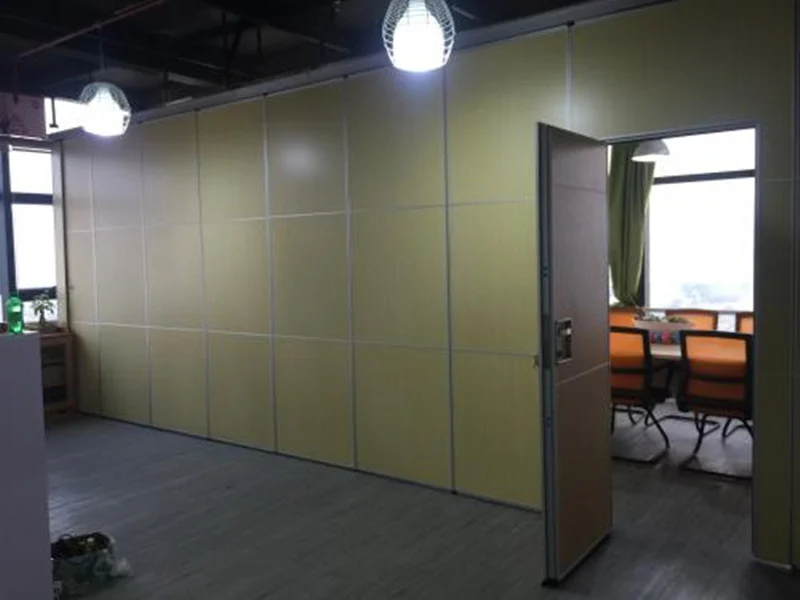
| Pass doors | Are pass-door requirements included or excluded? | Written statement of pass-door requirements |
Keep the matrix in the return documents so every bidder answers the same questions. Where an item is excluded, ask for the exclusion to be stated explicitly rather than left silent.
Checklist for Reviewing Each Tender Return
Use the following checklist consistently across bidders. It is a review aid, not a substitute for drawing review by the responsible design team.
- Confirm the return references the current layout revision and shows the full movement route.
- Confirm the parking position is identified and that the space is coordinated with other trades.
- Confirm responsibility for the structure above the track is stated, with the drawings relied upon.
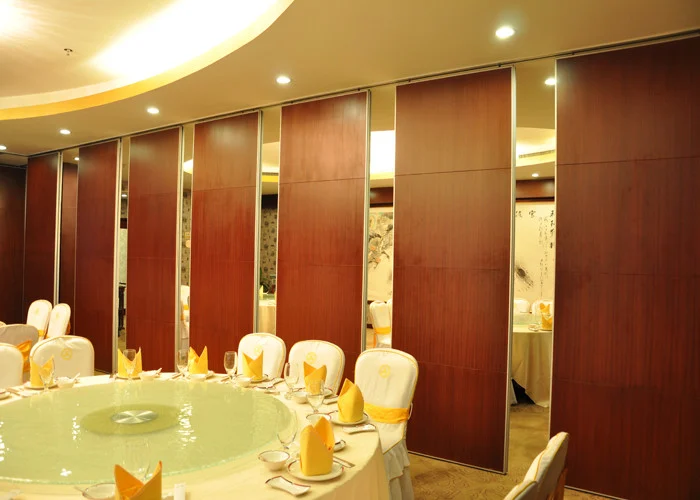
- Confirm finish options are listed against the project finish schedule, using only approved surfaces such as laminate, melamine, fabric, leather, glass or other approved surfaces.
- Confirm pass-door requirements are either priced or explicitly excluded.
- Confirm acoustic expectations are described as project requirements to be verified, not as guaranteed outcomes.
- Confirm any assumptions are written down, dated and attributed to a named party.
Where a return is silent on an item, treat it as an open query. Silence is not confirmation.
Acoustic and Sealing Language: Keep It Conceptual
Visible references can support layout discussion but do not verify hidden construction or performance. Confirm project-specific acoustic requirements with the responsible acoustic or design team.
Evidence note: a finish sample, photograph or drawing does not by itself demonstrate acoustic, structural or fire performance. Request the matching project documentation and confirm it applies to the proposed configuration.
Parking, Finishes and Pass Doors in the Return
Parking style is customized to the customer layout and project requirements and may support compact stacking when the coordinated design permits it. The return should show where panels park and what else occupies that zone, because a stacking position that conflicts with services or circulation becomes a site problem.
Finish and door coordination
Confirmed finish options include laminate, melamine, fabric, leather, glass and other approved surfaces. Ask each bidder to map finishes to room function and to state which samples were used for pricing. Pass-door requirements and project documentation can be discussed with the supplier, so include any known requirements in the tender pack rather than adding them after award.
For product context, see the movable walls range and the planning resources. These support early coordination but do not replace project-specific drawing review.
Common Scope Gaps to Query Before Award
- Route drawn on one revision, parking position on another.
- Structure above the track reviewed by nobody, or reviewed without a stated drawing reference.
- Finish schedule issued after tender, leaving pricing based on assumptions.
- Pass doors mentioned in the specification but absent from the return.
- Acoustic requirement stated as a target without a verification route.
- Exclusions buried in a covering letter rather than shown in the matrix.
Raise these as formal tender queries so answers are recorded and comparable across bidders.
FAQ: Partition Track Scope in Tender Returns
What is a partition track scope gap?
It is an interface item that no bidder has clearly priced or accepted, typically around the overhead route, the structure above the track, or the parking zone. The tender return should name the responsible party for each.
Do movable partitions need a floor track?
EBUNGE movable partition panels are top-hung and move without a continuous floor running track or floor hardware along the partition line.
Can panels move across any opening?
No. Every proposed movement path requires a continuous connected overhead route and project-specific support review. Straight, turning and stacking routes are reviewed from the layout.
How should acoustic requirements appear in the return?
As a project requirement with a stated verification route, not as a guaranteed outcome. Confirm project-specific acoustic requirements and documentation with the responsible design team.
Are pass doors part of the tender scope?
They may be. Pass-door requirements and project documentation can be discussed, so state known requirements in the tender pack and ask bidders to confirm inclusion or exclusion in writing.
What should we do if a return is silent on an item?
Treat silence as an open query. Ask for a written position, reference it to the relevant drawing, and update the responsibility matrix before comparing bids.
Conclusion and Next Step
A disciplined tender return checklist for partition track scope gaps keeps the conversation on evidence: current drawings, named responsibilities, stated exclusions and project-specific confirmation. It does not replace engineering or acoustic review, but it prevents assumptions from being priced as certainties.
Before award, confirm project-specific support, acoustic and dimensional requirements with the responsible design team, and keep every assumption documented. To discuss pass-door requirements, finishes or project documentation for your tender, contact the EBUNGE team.