
When you specify an STC rating movable partition for a hotel banquet hall, you are not just choosing a wall—you are committing to a level of acoustic privacy that directly affects guest satisfaction and event quality. As an interior designer, you need to balance aesthetics, functionality, and budget while ensuring the partition truly performs. This guide walks you through the critical factors to evaluate, from understanding STC ratings to asking the right questions of your supplier, so you can make a confident, informed decision for your next project.
Direct answer: Evaluating an STC rating movable partition for a hotel banquet hall involves verifying the STC rating against your acoustic target, understanding the partition’s construction and sealing, confirming installation impact on ceiling and floor, assessing durability and ease of operation, and clarifying maintenance requirements—all while aligning with your project’s drawings and budget. Always request detailed specifications and test data from the supplier, and ensure the system is custom-coordinated for your space.
Why STC Rating Matters for Hotel Banquet Halls
In a hotel banquet hall, the movable partition wall must control sound between concurrent events. The STC (Sound Transmission Class) rating indicates how well a partition reduces airborne sound. A higher STC means better sound insulation. However, the published STC rating is only a starting point. The real-world performance depends on installation quality, flanking paths, and the partition’s seals. As a designer, you need to understand what STC rating is realistic for your application and how to verify it.
For example, a banquet hall hosting a wedding and a corporate meeting simultaneously may require an STC of 50 or higher to ensure privacy. But the actual performance can be compromised if the partition doesn’t seal properly at the top, bottom, or vertical joints. Therefore, you must evaluate the entire system, not just the number.
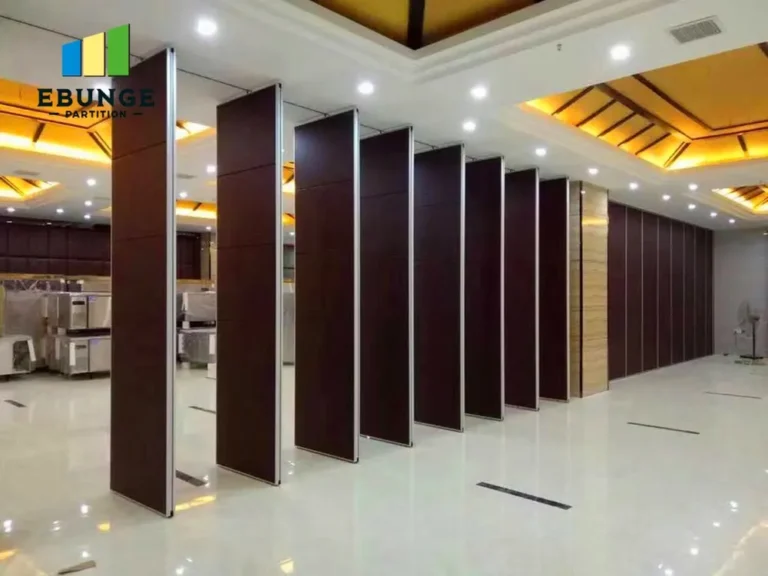
Need help turning the stc rating movable partition requirements into a practical project layout?
How to Read and Verify STC Ratings
STC ratings are determined through laboratory testing per ASTM E90. When a supplier provides an STC rating, ask for the test report. Verify that the tested configuration matches your intended use—same panel thickness, same seals, and same track system. Some suppliers may offer ratings based on similar products, which may not reflect your exact assembly.
Also, consider the sound leakage paths. A partition with a high STC rating but poor edge seals will perform worse in reality. Look for systems with continuous gaskets and automatic drops that seal against the floor. Ask about the sealing mechanism and whether it is adjustable to accommodate floor unevenness.
Key Factors in Evaluating a Movable Partition Wall System
Beyond the STC rating, evaluate the following aspects to ensure the partition meets your project’s needs:
1. Construction and Materials
Panels are typically steel or aluminum frames with gypsum or wood-based infills. The mass and damping of the panels contribute to sound insulation. Ask about panel weight, thickness, and core materials. Heavier panels generally perform better acoustically but may require stronger overhead support.
2. Sealing System
Effective perimeter seals are crucial. Top and bottom seals should compress to create an airtight barrier. Vertical seals between panels must be robust. Inquire about the seal material and its longevity.
3. Track and Operation
Most movable partitions use a top-hung track system, which eliminates floor rails and allows for easy cleaning and accessibility. Ensure the track is rated for the panel weight and is designed for smooth operation. Ask about the turning radius and stacking space.
4. Durability and Maintenance
In a busy hotel, the partition will be used frequently. Look for durable finishes that resist scratches and dents. Ask about the expected lifespan of seals and moving parts, and what maintenance is required. A system with accessible components simplifies servicing.
Installation Impact on Ceiling and Floor
The installation of a movable partition can affect your building’s structure. Top-hung systems require adequate overhead support to carry the weight of the panels. This may involve reinforcing the ceiling structure. The floor remains clear, but you must ensure the bottom seal does not damage the flooring. Discuss these considerations with the supplier and your structural engineer early in the design process.
Also, think about the stacking area. Where will the partition be stored when not in use? This space must be planned in the floor plan. The supplier can provide dimensions, but you need to integrate them into your design.
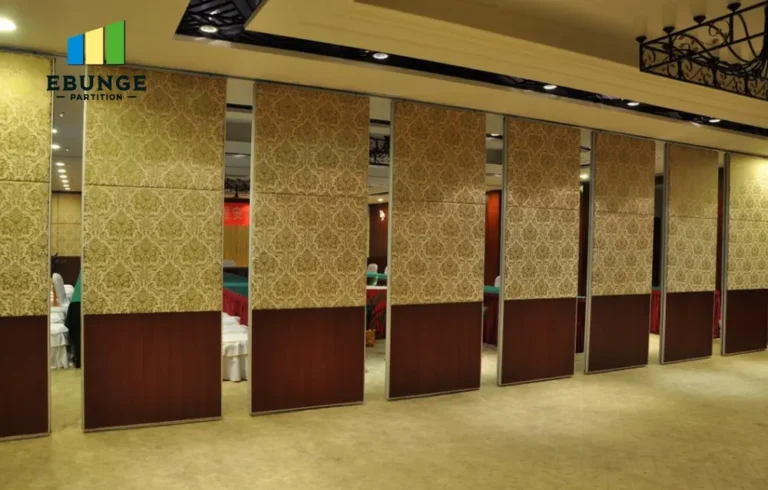
Cost Considerations and Budgeting
Cost is a major factor. The price of an STC rating movable partition depends on the size, configuration, finish, and acoustic performance. While you cannot get exact numbers without a quote, you can budget by understanding the variables. Typically, higher STC ratings and custom finishes increase cost. Also, installation costs, including any structural modifications, should be considered.
To get an accurate estimate, provide the supplier with your opening size, drawings, acoustic target, finish preference, and project location. This allows them to prepare a detailed quotation. Remember, the cheapest option may not meet your acoustic needs, so focus on value.
Durability and Ease of Operation
Hotel staff will operate the partition regularly. It should be easy to move, with smooth operation and minimal effort. Ask for a demonstration or reference projects. The partition should also be robust enough to withstand frequent use without compromising performance. Check the quality of the track, trolleys, and handles.
Maintenance is another aspect. Seals may wear out and need replacement. Ensure the supplier offers spare parts and clear maintenance instructions. A well-maintained partition will continue to perform acoustically over time.
Share the opening, drawings, finish direction, and privacy target for a project-specific review.
Questions to Ask Your STC Rating Movable Partition Supplier
Before requesting a quote, prepare a list of questions to ensure you have all the information needed for an informed decision:
- What is the tested STC rating for the exact configuration you propose?
- Can you provide the test report and explain how it applies to my project?
- What are the sealing mechanisms, and how do they ensure acoustic integrity?
- What is the required ceiling support for the top-hung track?
- What are the stacking dimensions and weight of the partition?
- What finishes are available, and can they be customized to match my design?
- What is the expected lifespan of the seals and moving parts, and what maintenance is required?
- Can you provide references for similar hotel banquet hall projects?
These questions will help you compare suppliers and ensure you receive a system that meets your expectations.
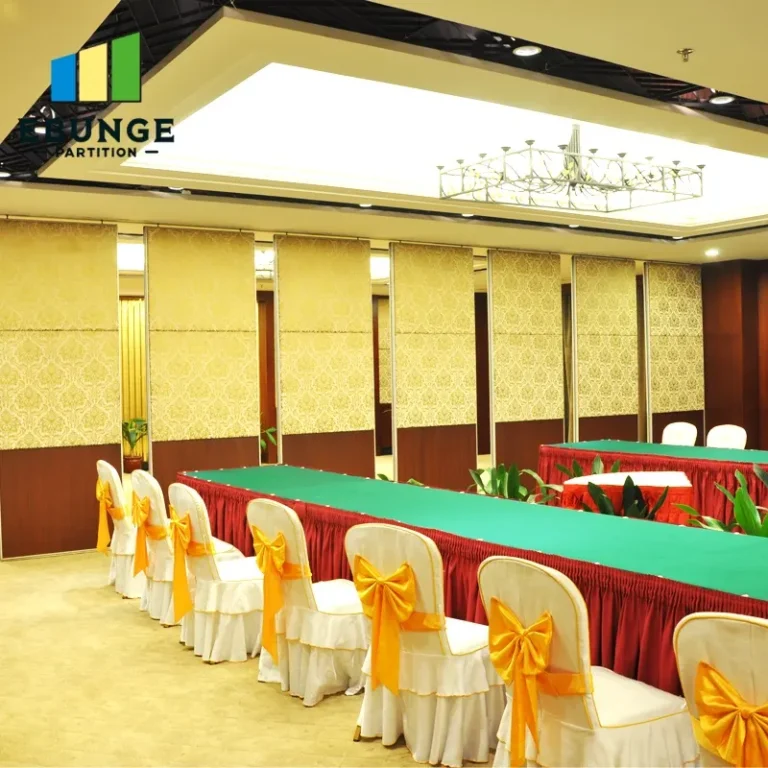
Practical Checklist for Evaluating a Movable Partition
Use this checklist when reviewing proposals from suppliers:
| Criterion | What to Verify |
|---|---|
| STC rating | Tested value for the exact configuration, with report |
| Sealing | Type of seals, adjustability, and quality |
| Track system | Top-hung, no floor rail, load capacity |
| Installation | Ceiling reinforcement needs, stacking space |
| Operation | Ease of movement, handle quality |
| Durability | Finish resistance, component lifespan |
| Maintenance | Required tasks, spare parts availability |
| Cost | Total cost including installation and structural work |
Ensuring Your Project Meets Building Code
Building codes often specify minimum sound transmission requirements for walls between rooms. Your partition must meet these codes. Check with your local authority for the required STC rating. The supplier should be able to provide documentation that the partition meets or exceeds these requirements. Remember, the STC rating is just one part; the installation must also comply with fire safety and accessibility codes.
Work with the supplier to ensure the partition integrates seamlessly with your building’s systems, such as fire alarms and sprinklers. This is especially important in a hotel setting where safety is paramount.
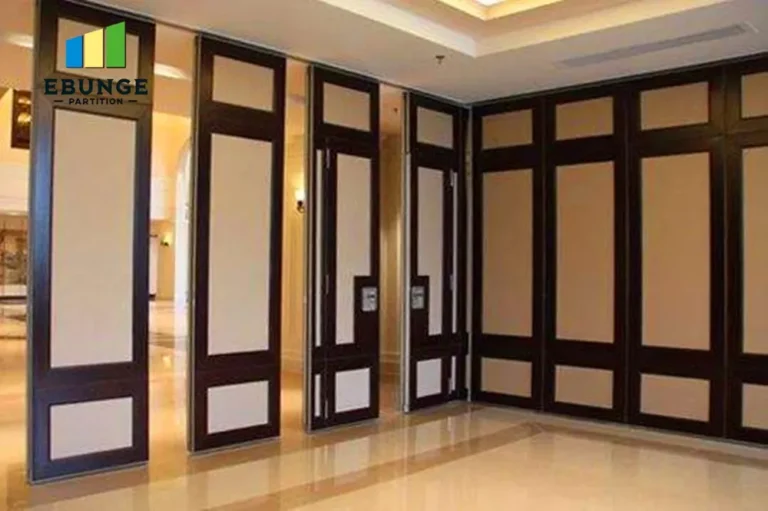
How Room Acoustics Are Affected by a Movable Partition
The partition not only blocks sound but also affects the acoustics of the room. The reflective or absorptive properties of the partition surface can change the reverberation time. In a banquet hall, you may want a balance between speech intelligibility and music. Discuss with your acoustician how the partition’s surface material (e.g., fabric, wood, or glass) influences the room’s acoustics.
Some partitions offer acoustic panels that absorb sound, improving overall room acoustics. Consider this if the hall is used for multiple purposes. The supplier can provide information on the sound absorption coefficient of the finishes.
Conclusion: Making an Informed Decision on STC Rating Movable Partition
Choosing the right STC rating movable partition for your hotel banquet hall is a complex decision. By understanding the STC rating, evaluating the system’s construction and sealing, considering installation impact, and asking the right questions, you can ensure the partition meets your acoustic and functional needs. Always work with a reputable supplier who offers custom coordination and provides detailed specifications. For more insights, explore our movable partition wall resources or read our blog for expert advice. If you have specific questions, contact us to discuss your project.
Frequently Asked Questions
What is a good STC rating for a hotel banquet hall partition?
A good STC rating depends on the expected noise levels and the need for privacy. For banquet halls, an STC of 50 or higher is often recommended to reduce loud speech and music transmission. However, the actual requirement may vary based on your local building code and the specific events hosted.
How can I verify the STC rating of a movable partition?
Request the official test report from the supplier, conducted by an accredited laboratory per ASTM E90. Verify that the tested configuration matches your intended assembly, including panel thickness, seals, and track system. If the supplier cannot provide a test report, consider that a red flag.
Does the STC rating guarantee real-world soundproofing?
No. The STC rating is a laboratory measurement. Real-world performance can be affected by installation quality, flanking paths, and the surrounding structure. Ensure proper installation and sealing to achieve as close to the rated performance as possible.
What are the maintenance requirements for a movable partition?
Maintenance typically includes checking and replacing seals, lubricating moving parts, and cleaning the panels. The frequency depends on usage. Ask the supplier for a maintenance schedule and ensure spare parts are available.
Can a movable partition be customized to match my hotel’s interior?
Yes, most manufacturers offer a variety of finishes, including wood veneers, laminates, fabrics, and glass. You can specify the finish to match your design. Discuss your preferences with the supplier during the quotation phase.
Send the opening size and drawings to discuss a differentiated stc rating movable partition solution.