
Quick answer: tactile paving line circulation review
Review focus: tactile paving line circulation review.
A stacking pocket tactile paving line circulation review belongs early in project planning, not after the ceiling grid is fixed. When movable wall panels park in a pocket, that parked position can sit close to an accessible route, a door approach or a tactile paving line. The review asks one practical question: can the accessible route remain clear, legible and coordinated while the panels are open, closed and parked? This article sets out an evidence-bounded framework for that review. The suitability of each route and parking arrangement depends on the approved layout, circulation, ceiling interfaces and operating sequence.
Why the Stacking Pocket and Tactile Line Need One Review
Project review term: tactile paving line circulation review.
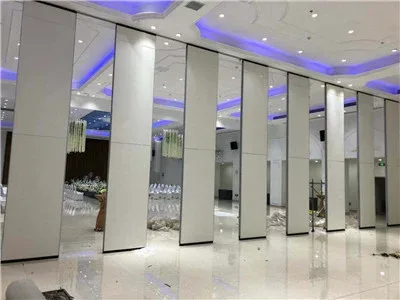
Movable wall panels are individually movable, suspended from a top track, cross the opening without a floor track, and park at a planned stacking position. Because the panels do not run on a continuous floor track along the partition line, the floor surface at the opening can stay visually continuous. That is useful for accessible routes, but it does not remove the need to coordinate the parking position.
A tactile paving line is a wayfinding and warning element. If a stacking pocket is placed where the line runs, the line may need to turn, stop or be relocated. Each of those changes affects how a person who relies on touch reads the route. The circulation review should therefore treat the pocket, the tactile line and the door approach as one connected layout problem.
What the Review Can and Cannot Confirm
Coordination scope: tactile paving line circulation review.
This review can confirm that a proposed layout has been checked against the project drawings and that open questions have been assigned to the right discipline. Visible references can support layout discussion but do not verify hidden construction or performance.
Evidence note
Confirm project-specific support, acoustic and dimensional requirements with the responsible engineer, accessibility consultant and supplier before treating any layout as final. A visible finish, photograph or generic example is not evidence of performance.
A Drawing Review Sequence for Project Teams
Checklist focus: tactile paving line circulation review.
Use a fixed sequence so that the pocket is not reviewed in isolation. The steps below are a coordination method, not a compliance checklist.

- Mark the tactile paving line, the accessible route and the door approach on the current floor plan.
- Mark the proposed stacking pocket and the full parking envelope, including the space needed to move panels into it.
- Trace the straight, turning and stacking routes from the opening to the parking position.
- Check whether any route crosses the tactile line, narrows the accessible route or conflicts with a door swing.
- Record every conflict as an open item with an owner, a drawing reference and a required confirmation.
Coordination Questions for Accessibility and Circulation Review
The table below separates what the project team can check internally from what needs external confirmation.
| Item | Internal check | Needs project-specific confirmation |
|---|---|---|
| Tactile line continuity | Does the line remain readable at the pocket? | Accessibility consultant or local authority |
| Parking envelope | Is the parked position clear of the route? | Partition supplier and structural reviewer |
| Overhead route | Is the movement path continuous and connected? | Structural and partition disciplines |
| Finish selection | Is the finish noted on the drawing? | Supplier and project specification |
Confirmed finish options include laminate, melamine, fabric, leather, glass and other approved surfaces. Those remain separate project questions.
Common Planning Conflicts to Resolve Early
Pocket placed on the tactile line
If the pocket sits directly on the line, the design team should decide whether the line is rerouted, the pocket is moved, or the approach is redesigned. This decision affects the accessible route and should be recorded before the ceiling and floor works are fixed.
Parked panels narrowing the route
Parked panels occupy space. The review should show the parked condition, not only the open condition, so that the accessible route remains clear when the room is in use.
Turning route crossing the door approach
The exact route, junction arrangement, continuous overhead path and parking position must be confirmed from the coordinated project drawings. The review should trace that movement and confirm that the door approach and the tactile line remain legible together.
Documentation to Prepare Before Contacting Suppliers
Project documentation can be discussed with the supplier once the internal review has produced a clear set of drawings. Useful items include the current floor plan, the reflected ceiling plan, the proposed parking position, the tactile paving layout, the door approach details and any accessibility notes already issued.
Pass-door requirements can also be discussed. A pass-door is a separate project decision and should be shown on the drawing so that it does not conflict with the stacking pocket or the tactile line.
How to Keep the Review Evidence-Bounded
Keep every statement tied to a drawing, a confirmed product fact or a named confirmation owner. Avoid deriving acoustic, fire, durability or load performance from a finish sample or a photograph. If a claim cannot be supported, replace it with a confirmation boundary.
They describe how a system is rated in a defined test configuration.

FAQ
What is a stacking pocket tactile paving line circulation review?
It is a drawing-based review that checks how a movable wall parking position interacts with a tactile paving line and the accessible route around it.
Do movable wall panels need a floor track along the partition line?
No. EBUNGE movable wall panels are top-hung and cross the opening without a continuous floor running track or floor hardware along the partition line.
Can the tactile paving line simply be moved?
That is a project-specific accessibility decision. The review should record the proposed change and route it to the responsible accessibility consultant or local authority.
Does the finish affect the circulation review?
Finish is a separate specification item.
What should be confirmed before fabrication?
Confirm project-specific support, acoustic and dimensional requirements, the parking position, the overhead route and the final tactile paving layout with the responsible disciplines.
Can pass-door requirements be included?
Yes. Pass-door requirements and project documentation can be discussed with the supplier and should be shown on the coordinated drawing.
Conclusion and Next Step
A stacking pocket tactile paving line circulation review is a coordination habit, not a single document. It keeps the parked panels, the accessible route and the tactile line visible in the same drawing set, and it separates confirmed facts from items that still need project-specific confirmation. Start the review before the ceiling and floor works are fixed, and keep every open item assigned to a named discipline.
To discuss movable wall layout, parking positions or project documentation, contact the EBUNGE team. You can also review the movable walls product page and the project resources before the next drawing review.