
Quick answer: stacking pocket step-free route narrowing circulation review
Review focus: stacking pocket step-free route narrowing circulation review.
A stacking pocket step-free route narrowing circulation review belongs early in layout coordination, not after finishes are chosen. When movable wall panels park at a planned stacking position, that parked group occupies plan area. If the pocket sits beside a step-free route, the route may narrow even though the panels are top-hung and cross the opening without a floor track. The review question is not whether movable partitions are suitable; it is whether the coordinated layout keeps the route usable while the panels are parked.
This guide is for contractors, architects, interior designers, owners, renovation teams and distributors comparing options. It sets out what to check on drawings, what evidence is still missing, and which statements must be confirmed for the specific project rather than assumed from a product page or a photograph.
Why a Stacking Pocket Changes the Route Geometry
Project review term: stacking pocket step-free route narrowing circulation review.
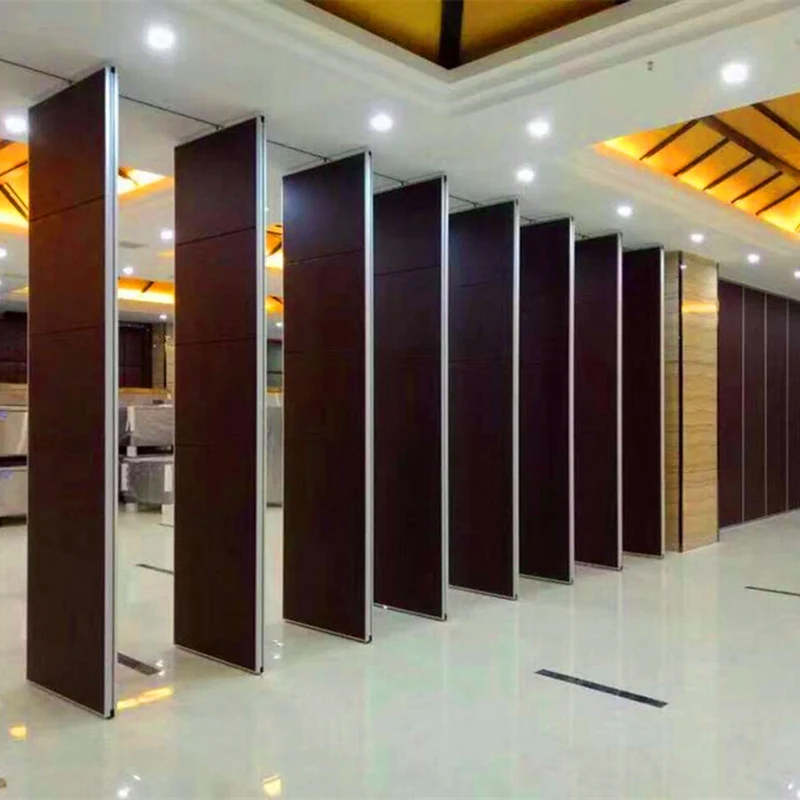
EBUNGE movable partition panels are individually movable, suspended from a top track, cross the opening without a floor track, and park at a planned stacking position. The clear floor along the partition line is a maintained product fact. The pocket, however, is a planning condition: it is the place where panels gather when the opening is open.
That gathering point can sit in a corridor, lobby edge, classroom wall zone or meeting-room threshold. Wherever it sits, the parked panels plus any adjacent wall, column, door swing or fixed furniture define the remaining route width. A circulation review therefore treats the pocket as occupied floor area in the open state, not as empty space.
Open state versus closed state
Drawings should show both states. In the closed state, panels span the opening. In the open state, panels are parked and the route passes the pocket. Reviewers who only check the closed state can miss the narrowing entirely.
What the Review Can and Cannot Confirm
Coordination scope: stacking pocket step-free route narrowing circulation review.
A circulation review can confirm that a proposed layout has been examined against the project’s own route requirements. The exact overhead route and support arrangement must be confirmed by the responsible project team from coordinated drawings. Those items require separate confirmation.
Evidence note: a visible pocket shape, finish sample or drawing does not prove acoustic, fire, durability, load or compliance performance. Treat each as a coordination input until the project-specific evidence is supplied.
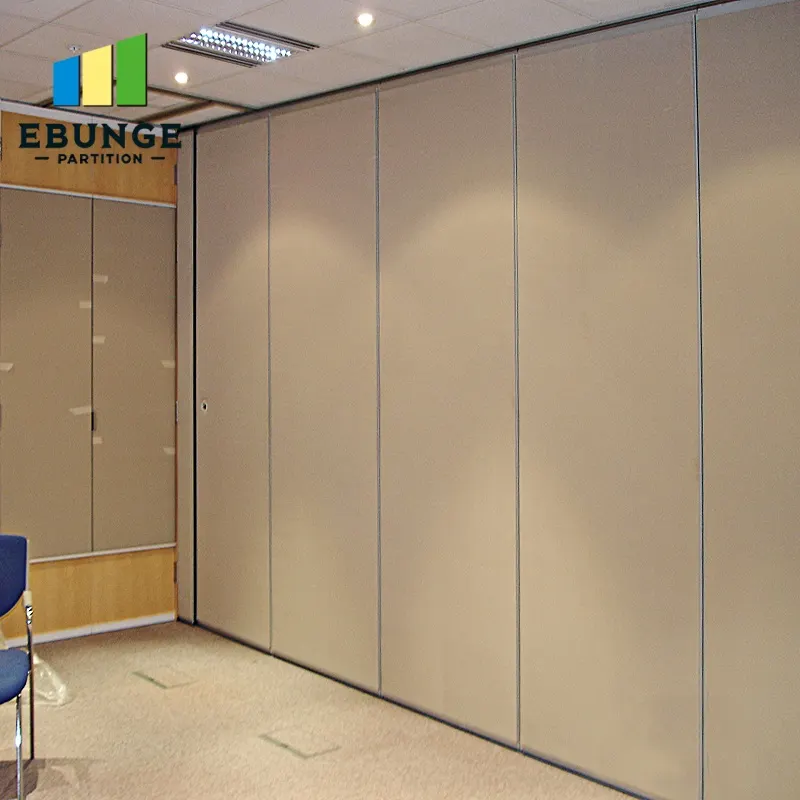
The suitability of each route and parking arrangement depends on the approved layout, circulation, ceiling interfaces and operating sequence. Where acoustic separation matters, confirm the requirement with the project team and the relevant documentation.
A Drawing Review Checklist for Narrowed Routes
Checklist focus: stacking pocket step-free route narrowing circulation review.
Use the following checklist as a coordination aid. It is not a substitute for project-specific review by the responsible professionals.
- Mark the planned stacking position on the floor plan and show the parked panel group as occupied area.
- Draw the step-free route in the open state, including the narrowest point beside the pocket.
- Check adjacent elements: columns, door swings, fixed joinery, service risers and wall returns.
- Confirm the overhead route is continuous and connected for every proposed movement path.
- Review straight, turning and stacking routes from the layout, not from assumption.
- Note where pass-door requirements affect the route or the parked position.
Coordinating the Pocket with Other Trades
Review focus: stacking pocket step-free route narrowing circulation review.
The pocket is rarely a partition-only decision. Ceiling services, lighting, sprinklers, signage, floor finishes and door hardware all compete for the same zone. Early coordination reduces the chance that a later trade consumes the route width the review assumed.
Questions for the design team
Ask who owns the pocket zone, what must remain accessible beside it, and whether the route must stay step-free in both open and closed states. Ask whether the pocket can be recessed into a wall zone or must project into the room. Ask how the parked panels will be protected from adjacent activity.
Questions for the contractor
Ask whether the overhead route can be installed continuously through the pocket and opening, and what support review is required. Ask how the pocket will be sequenced with ceiling and floor works. Confirm that no continuous floor track is assumed along the partition line.
Common Assumptions That Need Correction
Several assumptions recur in early layouts. Each should be replaced with a project-specific confirmation.
| Assumption | Review position |
|---|---|
| The pocket takes no usable floor area. | Show parked panels as occupied area in the open state. |
| Any route can reach any parking position. | Every movement path needs a continuous connected overhead route and support review. |
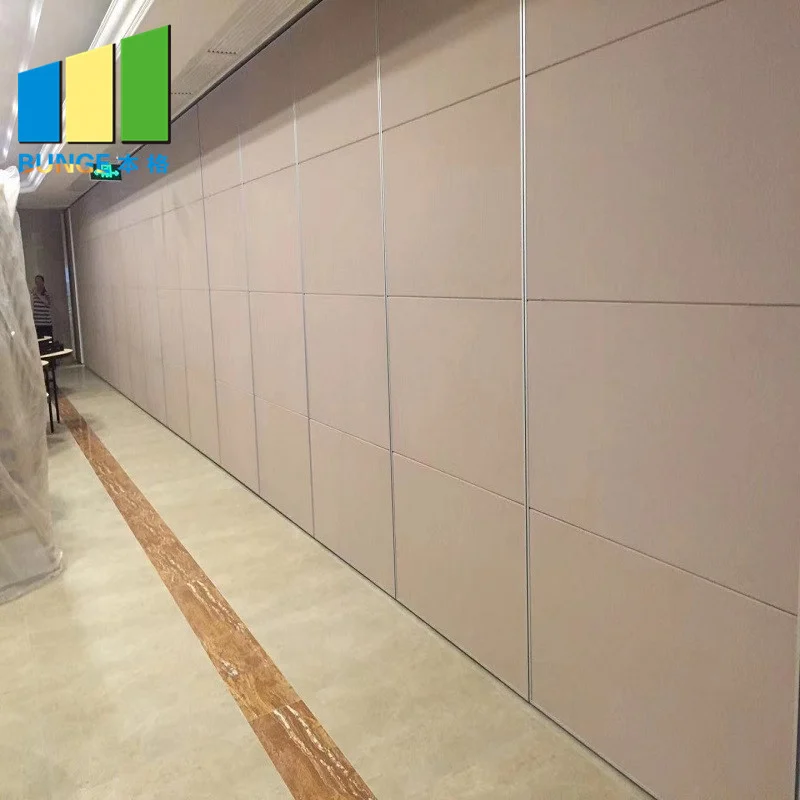
| A finish sample proves performance. | Finish options include laminate, melamine, fabric, leather, glass and other approved surfaces; performance still needs matching evidence. |
| The route is fine because the opening is wide. | Check the narrowest point beside the pocket, not only the opening. |
Documentation to Prepare Before Sign-Off
Good documentation makes the review repeatable. Prepare open-state and closed-state plans, a marked stacking position, route widths at the narrowest point, and a schedule of items still requiring confirmation.
Project documentation can be discussed with the supplier so that drawings, finish selections and coordination notes align. Keep the evidence boundary visible: a coordinated drawing shows intent, not verified performance.
Frequently Asked Questions
Does a stacking pocket always narrow a step-free route?
Not always. It narrows the route when the parked panel group occupies part of the route zone. The review checks the open state at the narrowest point beside the pocket.
Do movable partitions need a floor track along the route?
EBUNGE movable partition panels are top-hung and cross the opening without a continuous floor running track or floor hardware along the partition line. The exact route, junction arrangement, continuous overhead path and parking position must be confirmed from the coordinated project drawings.
Can the pocket be placed outside the main route?
Parking style is customized to the customer layout and project requirements.
Which finish options can be considered?
Confirmed finish options include laminate, melamine, fabric, leather, glass and other approved surfaces. Finish choice does not by itself confirm acoustic, durability or compliance performance.
What should be confirmed before drawings are fixed?
Confirm project-specific support, acoustic and dimensional requirements, the continuous overhead route, the parked panel footprint, pass-door needs and the narrowest route point in the open state.
Can this review guarantee compliance?
No. It is a coordination framework.
Conclusion and Next Step
A stacking pocket step-free route narrowing circulation review is most useful when it happens while layouts can still change. Show the parked panels, draw the open-state route, check the narrowest point, and record every item that still needs project confirmation.
To discuss layout drawings, finish options, pass-door requirements or project documentation, contact the EBUNGE team. You can also review movable wall options and the project resources before the next coordination meeting.