
Quick answer: stacking pocket shared accessible route
Review focus: stacking pocket shared accessible route.
A stacking pocket shared accessible route circulation review is a drawing-based check that asks one practical question: when movable panels park, does the shared route still work for everyone who uses it? EBUNGE movable wall panels are individually movable, suspended from a top track, cross the opening without a floor track, and park at a planned stacking position. Because the panels are top-hung, the floor along the partition line stays clear, but the parking zone can still narrow a corridor, doorway approach or turning area. This article sets out a coordination framework for contractors, architects, designers, owners and renovation teams. It does not replace project-specific support, acoustic or dimensional confirmation.
Why the Stacking Pocket Deserves Its Own Review
Project review term: stacking pocket shared accessible route.
Most circulation reviews focus on the open route. A stacking pocket review focuses on the route in its parked condition. That is a different geometry, and it often involves the same shared accessible route used by staff, visitors, deliveries and emergency egress planning.
Movable partitions are flexible by design. The same flexibility means the parking position is a design decision, not an afterthought. If the pocket is treated only as a storage detail, the route can be compromised after the partition layout is fixed.
What the review is not
The suitability of each route and parking arrangement depends on the approved layout, circulation, ceiling interfaces and operating sequence. It is a coordination exercise that identifies what must be confirmed by the responsible project professionals.
Start With the Route, Not the Panel
Coordination scope: stacking pocket shared accessible route.
Begin by drawing the shared accessible route as a continuous path through the space. Mark the narrowest point, the turning areas, the door approaches and any point where two routes merge. Then overlay the parked panel position.
This order matters. If the panel is drawn first, the route tends to be adjusted around it. If the route is drawn first, the parking position can be tested against a known constraint.
Drawings to bring to the review
- Architectural floor plan showing the full route, not only the partition line.
- The exact overhead route and support arrangement must be confirmed by the responsible project team from coordinated drawings.
- Elevation or section through the stacking pocket and adjacent opening.
- Door and pass-door schedule, if a pass-door is required.
- Finishes plan showing the approved surface for each panel face.
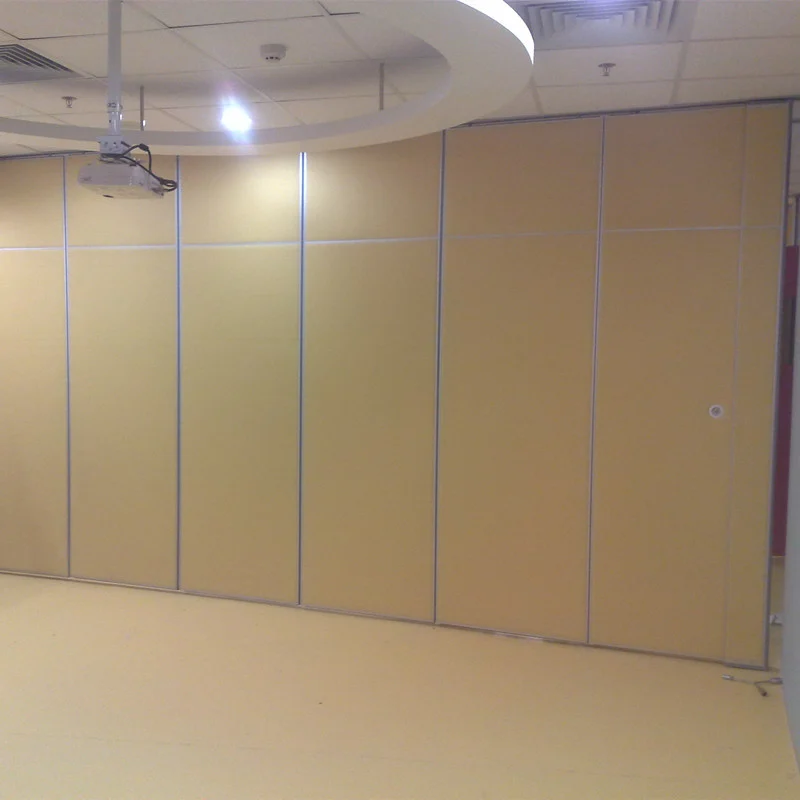
These documents let the team discuss straight, turning and stacking routes from the layout rather than from assumption.
A Step-by-Step Circulation Review Process
Checklist focus: stacking pocket shared accessible route.
- Confirm the route users and the periods when the route is busiest.
- Mark the minimum clear route width required by the project’s own accessibility strategy.
- Draw the parked panel footprint at the planned stacking position.
- Check the route at the pocket, at the opening and at any turn between them.
- Review the overhead route for continuity and support coordination.
- Record every assumption that still needs project-specific confirmation.
Step five is often where coordination gaps appear. The exact route, junction arrangement, continuous overhead path and parking position must be confirmed from the coordinated project drawings. The support arrangement for that route is a project-specific engineering matter.
Evidence Boundaries for Pocket and Route Claims
Project teams often receive statements that sound precise but lack a source. A useful discipline is to separate maintained product facts from project-specific evidence.
| Statement type | What can be said from maintained facts | What needs project evidence |
|---|---|---|
| Movement | Panels are individually movable, top-hung and cross the opening without a floor track. | The exact route, turning geometry and parking sequence for the project. |
| Parking | Parking style is customized to the layout and project requirements. | The pocket dimensions, clearances and route impact at the parked position. |
| Acoustics | Acoustic concepts such as STC or Rw describe rating systems. | Any project acoustic target and the assembly needed to pursue it. |
| Finishes | Laminate, melamine, fabric, leather, glass and other approved surfaces can be discussed. | Cleaning compatibility, appearance and durability expectations for the actual setting. |

Coordinating the Pocket With Other Trades
The pocket touches several disciplines. Ceiling services may run above the track. Floor finishes may change at the route. Door hardware and pass-door requirements may affect the opening. Each interface deserves a named owner in the coordination process.
Questions for the coordination meeting
- Who owns the final route width decision?
- Which drawings show the parked condition?
- How will the route be protected during installation and later reconfiguration?
- What information is still missing before specification?
Where a pass-door is required, it should be discussed early because it changes the opening geometry and the panel sequence. Project documentation can be discussed with the supplier so that the review is based on the same assumptions.
Specification Notes and Common Pitfalls
A specification for this topic should describe the route condition, the parking condition and the confirmation boundary. It should avoid implying performance that has not been established for the project.
Pitfalls to avoid
- Reviewing only the open position and ignoring the parked position.
- Assuming a pocket will fit without checking the adjacent route.
- Leaving support and overhead route coordination to the installation stage.
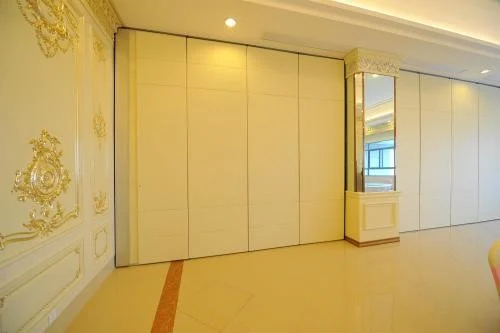
For broader planning context, the movable walls product page and the resources library can support early discussions. They do not replace project-specific confirmation.
Frequently Asked Questions
What is a stacking pocket shared accessible route circulation review?
It is a drawing-based review of how the parked panel position affects a shared accessible route, including width, turning and door approaches.
Do movable partitions need a floor track along the route?
EBUNGE movable wall panels are top-hung and cross the opening without a floor track.
Can the stacking pocket be adjusted to suit the layout?
Parking style is customized to the customer layout and project requirements. The final pocket position should be confirmed against the route drawings.
Does the review confirm acoustic performance?
No.
Which finishes can be discussed?
Laminate, melamine, fabric, leather, glass and other approved surfaces can be discussed. Suitability for a specific setting should be confirmed for the project.
When should the review happen?
Before the partition layout is fixed, so that the route and the parking position can be coordinated together.
Conclusion and Next Step
A stacking pocket shared accessible route circulation review is most useful when it is treated as a coordination tool rather than a performance claim. Draw the route first, overlay the parked position, check the overhead route and record every assumption that needs project-specific confirmation.
If your team is reviewing a layout, contact EBUNGE to discuss pass-door requirements, project documentation and the drawing information needed for a project-specific review.