
Quick answer: stacking pocket corridor pinch point
Review focus: stacking pocket corridor pinch point.
A stacking pocket corridor pinch point circulation review is a drawing-stage check that asks one practical question: when movable wall panels leave the opening and park, does the remaining corridor still work for the people, equipment and daily routes that share it? The review is not a product selection exercise. It is a coordination exercise that connects the panel route, the parking position and the corridor clear width before construction sets them in place.
EBUNGE movable wall panels are individually movable, suspended from a top track, cross the opening without a floor track, and park at a planned stacking position. Those maintained facts give the review a clear starting point, but they do not answer project-specific questions about support, acoustics or dimensions. Those items require separate confirmation against the actual layout.
Why a Corridor Pinch Point Changes the Review
Project review term: stacking pocket corridor pinch point.
A corridor pinch point is any location where the usable route narrows because of a wall return, a column, a door swing, a service riser or a change in ceiling zone. When a stacking pocket sits near that point, the review must consider two conditions: the corridor in normal use and the corridor while panels are moving or parked.
The pinch point matters because it is often the place where several routes overlap. Staff circulation, visitor movement, deliveries and emergency egress may all pass the same location. A pocket that looks acceptable on a small plan excerpt can become difficult when the full corridor section is drawn with adjacent doors and services.
Separate the opening condition from the parking condition
The opening condition describes the corridor when the movable wall is closed and the room is divided. The parking condition describes the corridor when panels are stacked at the planned position. A circulation review should test both, because the pinch point may behave differently in each state.
Check the route, not only the pocket
The pocket is one part of a longer movement path. Panels travel from the opening to the parking position along a continuous connected overhead route. The review should follow that route from end to end and note where it passes close to corridor edges, corners or other building elements.
Drawing Information That Supports a Circulation Review
Coordination scope: stacking pocket corridor pinch point.
A useful review depends on drawings that show more than the partition line. The project team should be able to read the corridor width, the pocket location, the adjacent door positions and the intended stacking arrangement on the same coordinated set.
- Floor plan showing the corridor, the opening and the proposed stacking pocket in relation to each other.
- Reflected ceiling plan or ceiling zone information where the overhead route passes.
- Door and swing details for rooms that open onto the same corridor section.
- Fixed obstructions such as columns, risers, casework or wall returns.
- Intended parking arrangement and the direction from which panels approach the pocket.
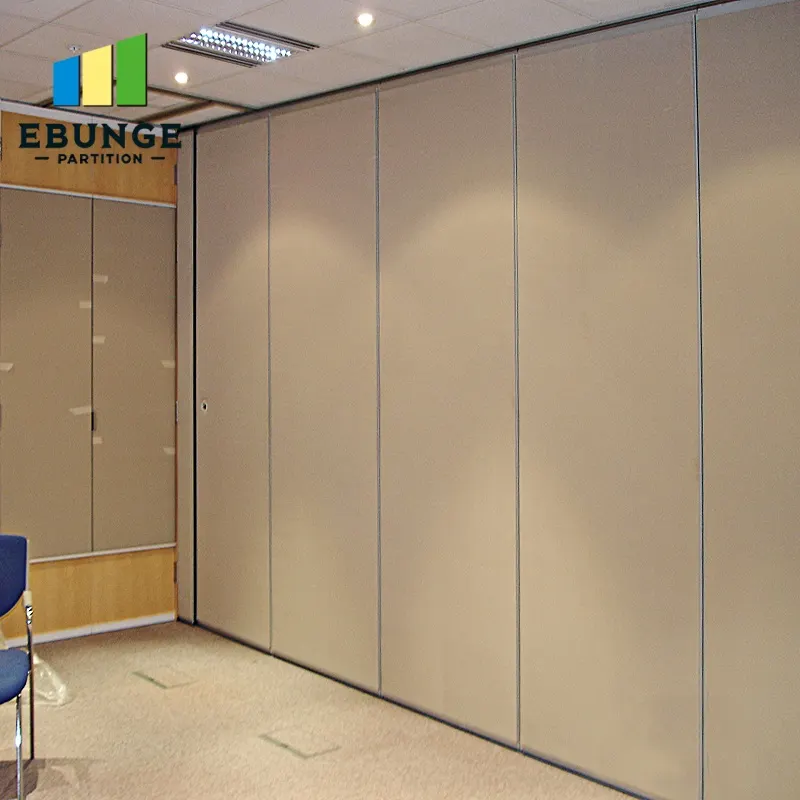
These items are coordination inputs, not performance evidence. The suitability of each route and parking arrangement depends on the approved layout, circulation, ceiling interfaces and operating sequence.
A Step-by-Step Review Sequence
Checklist focus: stacking pocket corridor pinch point.
The following sequence keeps the discussion organised without implying that every project follows the same path. It is a framework for drawing review, not a substitute for project-specific engineering or code advice.
- Mark the corridor pinch point on the plan and note what causes the narrowing.
- Draw the closed condition and the parked condition separately.
- Trace the panel route from the opening to the planned stacking position.
- Identify where the route passes close to doors, corners or fixed elements.
- Check whether the parking position conflicts with any adjacent room entrance.
- Record questions that require confirmation from the project team or supplier.
- Update the drawing set and repeat the review after any layout change.
What the review can and cannot conclude
The review can identify coordination conflicts, unclear routes and missing information. Those conclusions need their own evidence and the appropriate professional input.
Evidence Boundaries for the Stacking Pocket Discussion
Review focus: stacking pocket corridor pinch point.
Project teams often want simple answers about clear widths, support and acoustic separation. The honest position is that these are project-specific. A corridor pinch point review should state clearly which items are confirmed and which still need confirmation.
| Review item | What can be discussed now | What needs project confirmation |
|---|---|---|
| Panel movement | Top-hung panels move individually and cross the opening without a floor track. | Continuous overhead route and support conditions for the actual layout. |
| Parking position | Parking style is customised to the layout and project requirements. | Whether the proposed pocket location suits the coordinated design. |
| Acoustic separation | STC and Rw are rating concepts used to describe sound reduction. | Required rating, seal strategy and project-specific acoustic design. |
| Corridor clearance | The review can compare closed and parked conditions on the drawing. | Applicable clear-width rules and local accessibility requirements. |
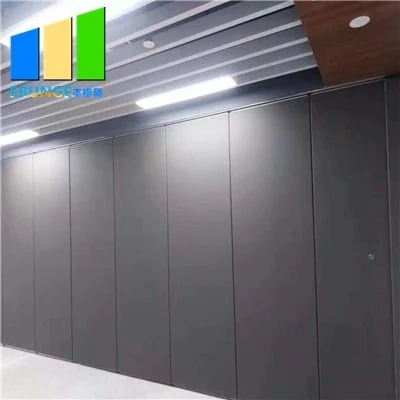
This table is a discussion aid. Where a project needs a defined rating or clearance, that requirement should be confirmed with the responsible professionals and documented in the project file.
Coordination With Adjacent Trades and Finishes
Project review term: stacking pocket corridor pinch point.
A stacking pocket at a corridor pinch point rarely belongs to one trade alone. The ceiling zone, the corridor finishes, the door frames and the partition route all meet in the same area. Early coordination reduces the chance that a later change forces a redesign of the pocket position.
Confirmed finish options for movable wall panels include laminate, melamine, fabric, leather, glass and other approved surfaces. Those questions remain project-specific.
Questions to raise with the design team
Ask whether the corridor is expected to serve as an accessible route, whether equipment regularly passes the pinch point, and whether the pocket position has been reviewed against the full corridor section. Also ask who is responsible for confirming support and acoustic requirements, and where that confirmation will be recorded.
Documentation and Pass-Door Considerations
Pass-door requirements and project documentation can be discussed as part of the layout review. A pass door may affect how people move through the opening, and its position should be considered alongside the corridor pinch point rather than after the pocket is fixed.
Documentation should record the reviewed layout, the assumptions used and the items still awaiting confirmation. This record helps contractors, architects, interior designers and owners keep the same understanding as the project develops.
Frequently Asked Questions
What is a stacking pocket corridor pinch point circulation review?
It is a drawing-stage review that checks how movable wall panels move and park when the stacking pocket is close to a narrow corridor section. It compares the closed and parked conditions and records coordination questions.
Does a top-hung movable wall need a floor track at the pinch point?
EBUNGE movable wall panels are suspended from a top track and cross the opening without a floor track. The exact route, junction arrangement, continuous overhead path and parking position must be confirmed from the coordinated project drawings.
Can the review confirm acoustic performance?
No. Acoustic requirements, seal strategy and project-specific performance need separate confirmation with the responsible professionals.
What should be shown on the drawings?
The corridor, the opening, the proposed stacking pocket, adjacent doors, fixed obstructions and the intended parking arrangement should be coordinated on the same set. The route from opening to parking position should be traceable.
When should the review happen?
It should happen early, before the pocket position and corridor layout are fixed. It should be repeated if the layout, door positions or ceiling zone change during design development.
Who should be involved?
Contractors, architects, interior designers, owners and the partition supplier all have relevant information. Local code and accessibility requirements should be confirmed by the appropriate professionals for the project location.
Conclusion and Next Step
A stacking pocket corridor pinch point circulation review is most useful when it stays within confirmed facts and clearly marks what still needs project-specific confirmation. The maintained product facts describe top-hung, individually movable panels, a route without a floor track, and parking at a planned stacking position. Everything else depends on the actual layout, support conditions, acoustic requirements and local rules.
If your project has a corridor pinch point near a proposed stacking pocket, review the drawings with the full route in view. Confirm support, acoustic and dimensional requirements with the responsible professionals, and document the assumptions that remain open.
To discuss pass-door requirements, project documentation or a specific layout, contact EBUNGE. You can also review the movable walls product page and the resources section before the next coordination meeting.