
Quick answer: corridor junction circulation review
Review focus: corridor junction circulation review.
A stacking pocket corridor junction circulation review is a drawing-stage exercise: it tests whether people, panels and everyday building movement can share the same junction without conflict. It is not a performance calculation. EBUNGE movable wall panels are individually movable, suspended from a top track, cross the opening without a floor track, and park at a planned stacking position. Those maintained facts give the review a clear starting point, but every route, support condition and dimensional requirement still needs project-specific confirmation.
Why a Corridor Junction Changes the Review
Project review term: corridor junction circulation review.
A corridor junction is where several circulation demands meet: through traffic, access to adjacent rooms, emergency egress routes, service movement and the operation of the partition itself. When a stacking pocket is placed at or near that junction, the parked panels become part of the local geometry rather than a detail at the end of a wall.
The review therefore asks a different question from a simple wall-opening check. It asks what happens before, during and after each reconfiguration, and whether the proposed parking position keeps the junction legible for everyone using it.
Start With the Straight, Turning and Stacking Routes
Coordination scope: corridor junction circulation review.
EBUNGE reviews straight, turning and stacking routes from the layout. That means the drawing set should show how panels travel from the closed position to the parked position, including any change of direction. A route that looks simple on a plan can become congested if it crosses a doorway, a lift lobby or a main corridor flow.
Route questions for the drawing review
- Does the movement path remain on a continuous connected overhead route?
- Where does the route cross or run beside primary corridor traffic?
- Is the stacking position reachable without passing through another occupied room?
- Does the parked panel group obstruct any sightline, sign or doorway?
These are coordination questions, not performance claims. They help the project team identify where further project-specific support, acoustic and dimensional confirmation is required.
Parking Position and Junction Geometry
Checklist focus: corridor junction circulation review.
Parking style is customized to the customer layout and project requirements, and may support compact stacking when the coordinated design permits it. At a corridor junction, the pocket position should be tested against the junction’s clear width, turning movements and the location of adjacent doors.
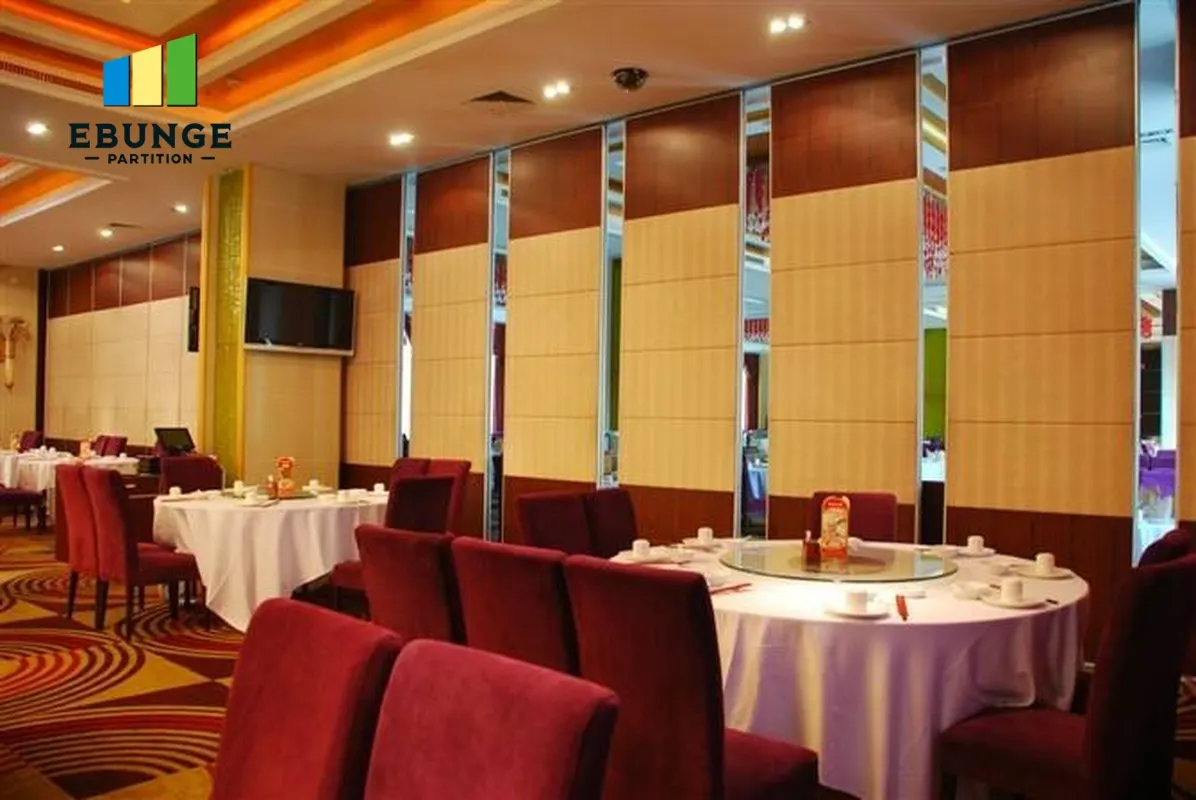
A pocket that reads well on a room plan may sit awkwardly when the corridor is busy. The review should therefore consider the junction as a whole, not only the wall line where the partition closes.
Decision Checklist for the Project Team
| Review item | What to confirm | Evidence needed |
|---|---|---|
| Route continuity | Straight, turning and stacking paths shown on layout | Coordinated drawings |
| Parking position | Pocket location relative to junction traffic | Layout and project requirements |
| Clear-floor movement | No continuous floor track along the partition line | Maintained product facts |
| Support and structure | Overhead support conditions | Project-specific engineering review |
| Acoustic intent | Conceptual STC or Rw target only | Project-specific acoustic confirmation |
| Documentation | Pass-door and project documentation requirements | Project-specific discussion |
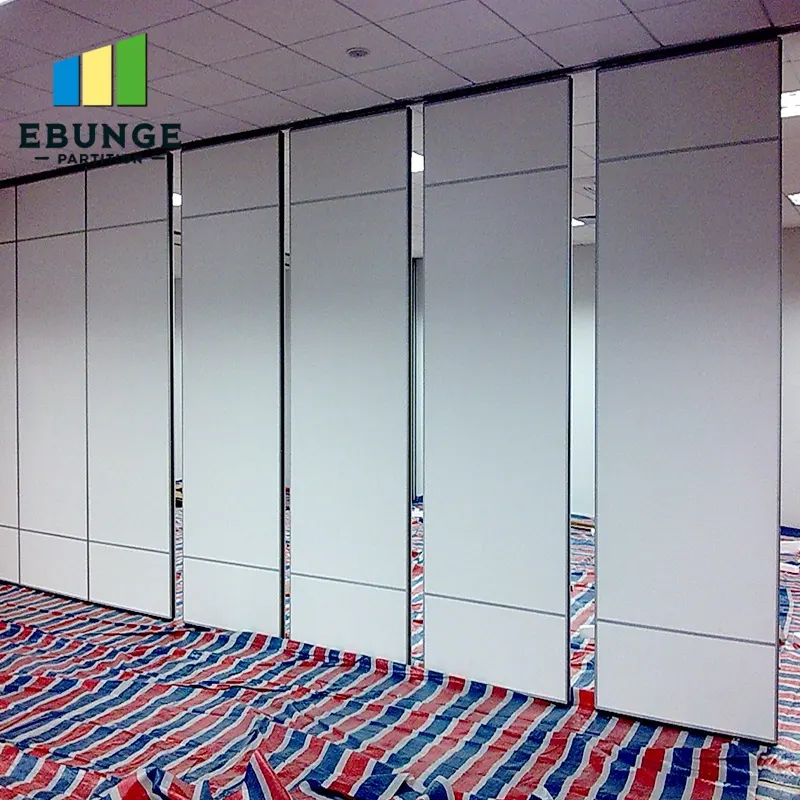
The suitability of each route and parking arrangement depends on the approved layout, circulation, ceiling interfaces and operating sequence. Visible references can support layout discussion but do not verify hidden construction or performance.
Coordination With Adjacent Trades
Circulation at a junction is rarely owned by one trade. Door frames, signage, lighting, ceiling services and floor finishes all influence how the junction works. The partition review should be coordinated with these elements early, because moving a pocket later can affect several disciplines at once.
Useful coordination sequence
- Confirm the room-combination strategy and the openings involved.
- Mark the proposed stacking pocket and the full movement route on the layout.
- Review the junction with the wider circulation plan, not in isolation.
- The exact route, junction arrangement, continuous overhead path and parking position must be confirmed from the coordinated project drawings.
- Record agreed assumptions and open items in the project documentation.
This sequence keeps the discussion evidence-bounded. It does not assume hidden performance from a visible shape or finish.
Finish Choices and Visible Evidence Limits
Confirmed finish options include laminate, melamine, fabric, leather, glass and other approved surfaces.
Photographs and drawings show visible conditions only. They cannot confirm support capacity, acoustic results or installation outcomes. Those items belong to the project-specific confirmation process.
What the Review Should Not Claim
Do not infer performance, structure, installation, maintenance, cost or engineering outcomes from a visible shape, finish, photograph or drawing. Comparative and absolute statements require matching evidence.
Its value is in exposing coordination questions early, while the layout can still be adjusted.
Frequently Asked Questions
What is a stacking pocket corridor junction circulation review?
It is a drawing-stage review of how movable panels travel and park when the stacking pocket sits at or near a corridor junction. It checks route logic, parking position and coordination with surrounding circulation.
Does the review require a floor track?
No. EBUNGE movable wall panels are top-hung and cross the opening without a continuous floor running track or floor hardware along the partition line.
Can the panels turn corners on the way to the pocket?
Straight, turning and stacking routes are reviewed from the layout.
How is acoustic performance addressed?
Project-specific acoustic requirements need their own confirmation and evidence.
What information should be prepared for review?
Prepare the layout, the proposed opening, the intended parking position, the movement route and any pass-door requirements. Project documentation requirements can be discussed with the EBUNGE team.
Are named venues a limitation?
No. Named venues are examples only. Movable partitions can be considered wherever flexible spatial division, combination or reconfiguration is required, subject to project-specific confirmation.
Conclusion and Next Step
A stacking pocket at a corridor junction deserves early attention because it sits where several circulation needs overlap. By reviewing straight, turning and stacking routes from the layout, testing the parking position against junction geometry, and separating visible evidence from project-specific requirements, the project team can reduce late-stage coordination risk.
Keep every recommendation tied to maintained product facts and coordinated drawings. Confirm project-specific support, acoustic and dimensional requirements before finalising the design. To discuss your layout, pass-door requirements or project documentation, contact EBUNGE. You can also review the movable walls range and the project resources for further planning context.