
Turning Circle Check Where a Stacking Pocket Meets a Corridor Corner
Quick project answer
A stacking pocket corridor corner turning circle check is a drawing-stage review of how people, carts and door swings share the space where a movable wall parks and a corridor turns. It matters because the pocket is both a storage location and part of the circulation route. This guide sets out what to review, what the drawings can show, and which points need project-specific confirmation before specification.
Why the pocket and the corner interact
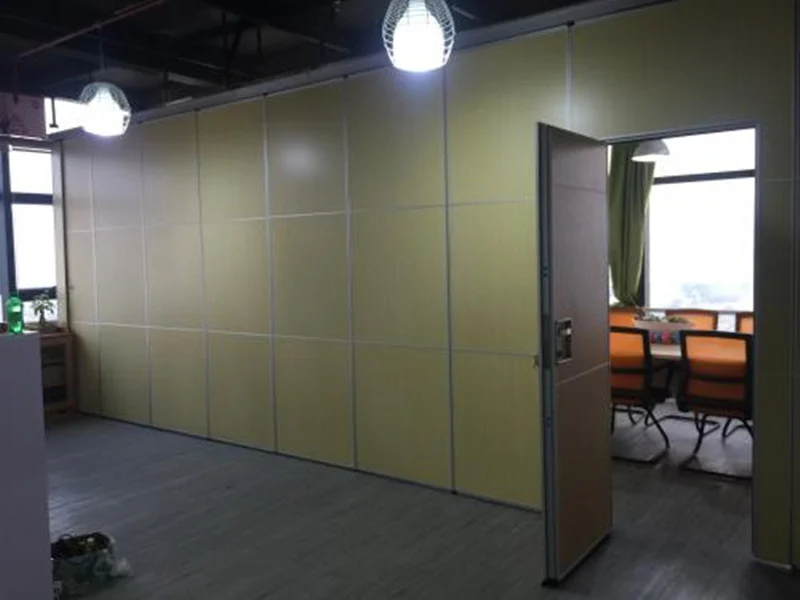
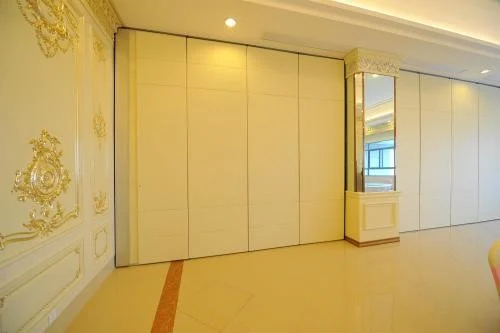
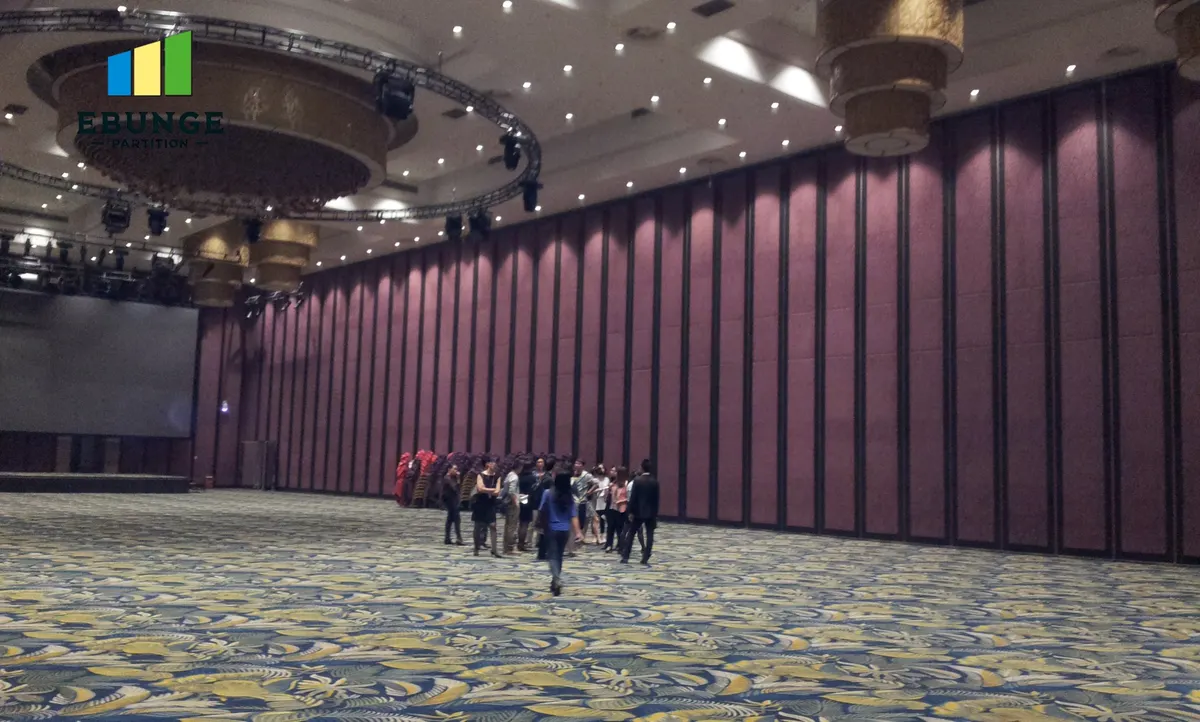
EBUNGE movable wall panels are individually movable and suspended from a top track. They cross the opening without a floor track and park at a planned stacking position. That clear floor is an operational advantage, but it also means the pocket area is not automatically closed off from foot traffic.
Where a corridor corner sits close to the parking position, the turning path and the parked panels compete for the same floor zone. The review is therefore a layout question first and a product question second.
What the turning circle check should establish
A turning circle is the swept area a person or wheeled item needs to change direction. The check asks whether that area remains usable when panels are parked, when they are being moved, and when the opening is fully clear.
- Three states: open, part-parked and fully stacked.
- Route continuity: the overhead route from opening to parking position, including any turn.
- Corner geometry: wall returns, columns, door leaves and fixed joinery near the turn.
- Adjacent uses: queuing, waiting, trolley storage or fire-equipment zones that reduce effective width.
- Visibility: sightlines around the corner while panels are in motion.
Record each item as a drawing reference rather than a verbal assumption. The suitability of each route and parking arrangement depends on the approved layout, circulation, ceiling interfaces and operating sequence.
Reading the movement route from the layout
Straight, turning and stacking routes
Straight, turning and stacking routes are reviewed from the layout. The exact route, junction arrangement, continuous overhead path and parking position must be confirmed from the coordinated project drawings. The corner check should confirm that the drawn route and the drawn pocket position agree.
Where the pocket sits relative to the turn
A pocket placed after the corner behaves differently from one placed before it. Teams should mark the approach direction, the turn, and the final parking position on the same drawing so reviewers can see the sequence rather than isolated fragments.
Evidence note: what a drawing can and cannot prove
Drawings can show proposed geometry, route direction and parking position. They do not, by themselves, prove structural support, acoustic performance, accessibility compliance or approval by an authority. Those points require separate project-specific confirmation with the responsible specialists.
This boundary matters for the corner review. Treat the turning circle check as a coordination tool, not a certificate.
Coordination steps for the project team
- Issue the current layout. Confirm the revision date and the pocket position shown.
- Overlay circulation. Mark the corridor route, the turn and the swept area in each of the three states.
- Mark fixed obstructions. Note columns, door swings, joinery and equipment zones near the corner.
- Review the route with the wall supplier. Confirm that the drawn straight, turning and stacking routes match the intended configuration.
- Confirm pass-door needs. If a pass door is required, raise it early so it is coordinated with the corner and pocket.
- Record open items.
Keep the record with the project documentation so later changes can be checked against the same baseline.
Decision checklist before specification
| Check | What to confirm | Evidence holder |
|---|---|---|
| Pocket position | Drawn location relative to the corner | Architect or designer |
| Route continuity | Connected overhead path for straight, turning and stacking movement | Supplier and project team |
| Clear floor states | Open, part-parked and fully stacked conditions | Design team |
| Finish selection | Laminate, melamine, fabric, leather, glass or another approved surface | Design team and supplier |
| Pass door | Whether one is required and how it affects the corner | Project team |
| Support and performance | Project-specific structural and acoustic requirements | Responsible specialists |
Finish options are confirmed selections, not evidence of acoustic or durability performance.
Common planning gaps at corridor corners
Circulation drawn only in the open state
Teams often check the corridor when the opening is clear and forget the parked condition.
Pocket treated as dead storage
Because there is no floor track, the pocket floor may look like free space. It is not free space while panels are parked there, and it may not be free during movement either.
Late pass-door requests
A pass door added after the corner is fixed can change the usable route. Raise pass-door requirements and project documentation early so they can be discussed alongside the layout.
Frequently asked questions
Does a movable wall need a floor track at the corridor corner?
No. EBUNGE movable wall panels are suspended from a top track and cross the opening without a floor track. The route still needs a continuous connected overhead path, confirmed against the project layout.
Can the turning circle check confirm accessibility compliance?
No. The check is a coordination exercise. Compliance depends on local requirements and project-specific review by the responsible professionals.
Which finish should be shown on the corner drawing?
Show the intended selection from the confirmed options: laminate, melamine, fabric, leather, glass or another approved surface. The finish choice does not by itself confirm performance.
How is the parking position decided?
Parking is customized to the customer layout and project requirements.
What should be included in the review record?
Include the drawing revision, the three operating states, the marked route, fixed obstructions, pass-door requirements and a list of items awaiting project-specific confirmation.
Can acoustic performance be judged from the corner layout?
No. Layout drawings do not establish acoustic results. Acoustic requirements should be defined and verified as part of project-specific documentation.
Conclusion and next step
A stacking pocket corridor corner turning circle check is most useful when it is treated as a shared drawing review. Confirm the route, the parking position and the three operating states, then separate what the drawing shows from what still needs specialist confirmation. Review the movable wall product range and the planning resources before circulating your layout.
Send your current plan, corner detail and pass-door requirements to our team through the contact page so the route and parking position can be discussed against your project documentation.