
Quick answer: corridor choke accessibility review
Review focus: corridor choke accessibility review.
A stacking pocket corridor choke accessibility review belongs early in project planning, before wall positions, door swings or corridor widths are frozen. A stacking pocket is the planned parking position where movable panels gather when the opening is clear. When that pocket sits at a corridor choke, the review must connect the panel route, the parked panel zone and the remaining circulation path. EBUNGE movable wall panels are individually movable, suspended from a top track, cross the opening without a floor track, and park at a planned stacking position. This article offers an evidence-bounded framework for coordinating that review without inventing performance, dimensions or approvals.
Why the Corridor Choke Changes the Review
Project review term: corridor choke accessibility review.
A corridor choke is any point where the usable route narrows because of structure, services, doorways or fixed furniture. A stacking pocket placed there can affect how people move past the parked panels, how doors operate and how the route reads on plan. The review is not only about the wall opening; it is about the whole journey from approach to exit.
Because panels are top-hung and cross the opening without a floor track, the floor along the partition line stays clear. That does not remove the need to check the parking zone, the overhead route and the support conditions above. Those items require project-specific confirmation.
What the Review Should Cover
Treat the review as a coordination exercise, not a product selection shortcut. The suitability of each route and parking arrangement depends on the approved layout, circulation, ceiling interfaces and operating sequence.
Route and parking logic
Confirm where panels travel, where they turn and where they stack. Straight, turning and stacking routes are reviewed from the layout. If the route passes a corridor choke, the review should show the parked panel zone and the remaining clear route on the same drawing.
Clear floor and approach

Check the approach to the opening, the space in front of the pocket and the path past it. The absence of a floor track helps, but it does not by itself prove that the corridor remains usable. Dimensional requirements must be confirmed for the project.
Doors and pass-doors
Pass-door requirements can be discussed with the project team. A pass-door may change how people move when the wall is closed, so its position relative to the corridor choke should be reviewed together with the stacking pocket.
Evidence Boundaries for the Review
Accessibility and circulation conclusions depend on project drawings, local requirements and confirmed product configuration.
Evidence note: visible shape, finish or drawing does not establish hidden acoustic, fire, durability, load or commercial performance. Confirm project-specific support, acoustic and dimensional requirements before relying on any conclusion.
Decision Checklist Before Fixing the Pocket
- Mark the corridor choke and the proposed stacking pocket on the same plan.
- Show the full panel route, including turns and the parking position.
- Confirm the overhead route is continuous and supported for the project.
- Review the remaining circulation path past the parked panels.
- Check door and pass-door positions against the route.
- Record who confirms dimensions, support and acoustic requirements.
- Keep finish choices separate from performance assumptions.
Coordination Sequence for Project Teams
- Architect or designer issues the current layout with the corridor choke identified.
- Owner or operator confirms how the adjacent spaces will be used.
- Project team agrees the parking position and the route to it.
- Accessibility and circulation requirements are checked against the agreed layout.
- Documentation is updated and any open items are listed for confirmation.
This sequence keeps the stacking pocket corridor choke accessibility review tied to drawings and decisions rather than to assumptions. It also helps distributors and construction teams avoid ordering or fixing positions before the route is agreed.
Finish Choices and the Accessibility Review
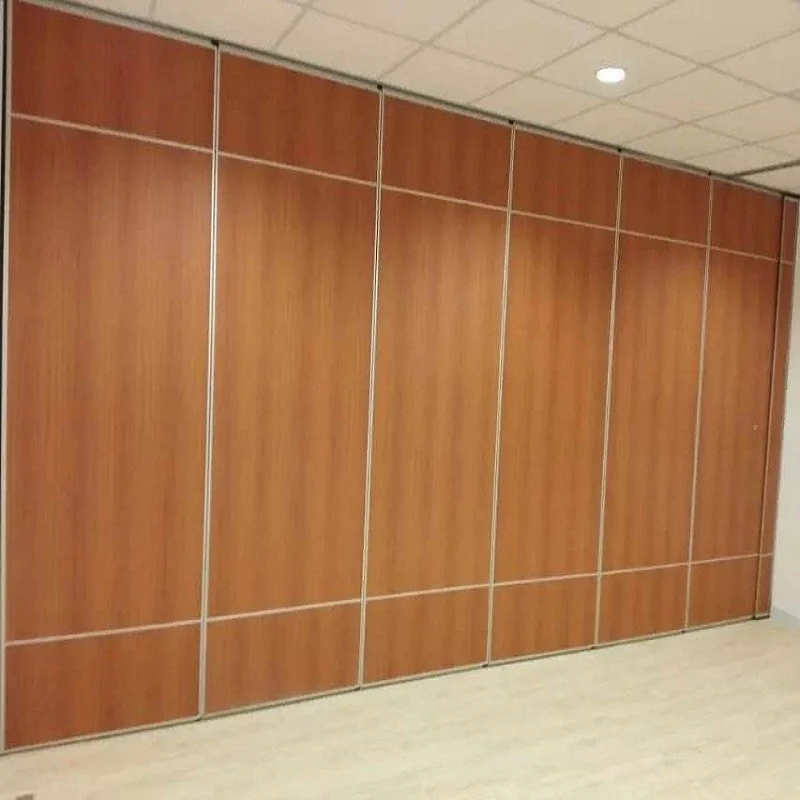
Confirmed finish options include laminate, melamine, fabric, leather, glass and other approved surfaces. Finish selection affects appearance and may affect how the wall reads in a corridor, but it does not replace the dimensional, support or acoustic review.
When a corridor choke is involved, consider how the parked panels will look and how they will be protected during normal circulation. These are project decisions, not product claims. Any cleaning, durability or maintenance expectation should be confirmed separately.
Documentation to Request
Project documentation can be discussed with EBUNGE. Useful documents typically include layout drawings, route and parking plans, opening schedules and any project-specific requirements already agreed by the design team.
Clear documentation helps reviewers see where the stacking pocket sits, how panels move and what remains to be confirmed. It also reduces the risk of treating a generic example as a project-specific conclusion.
Frequently Asked Questions
What is a stacking pocket corridor choke accessibility review?
It is a project review that checks how a movable wall parking position affects circulation where a corridor narrows. It connects the panel route, the parked panel zone and the remaining path.
Do movable walls need a floor track at a corridor choke?
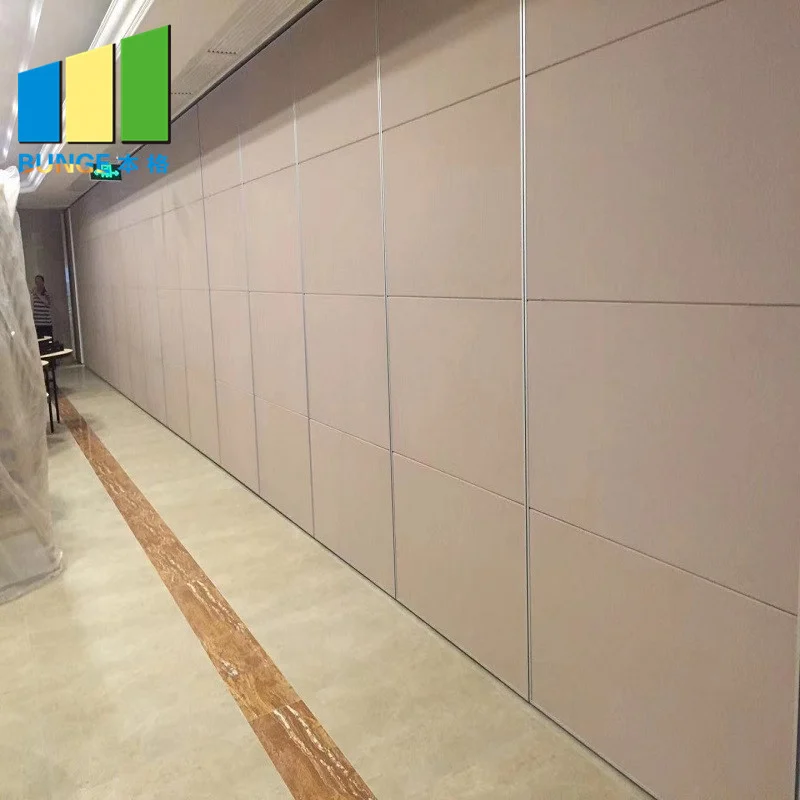
EBUNGE movable wall panels are top-hung and cross the opening without a floor track. The floor along the partition line stays clear, but the parking zone and overhead route still require project-specific review.
Can a pass-door be included near the stacking pocket?
Pass-door requirements can be discussed with the project team. Their position should be reviewed together with the stacking pocket and the corridor route.
Does the review prove acoustic performance?
No.
Which finishes can be considered?
Confirmed options include laminate, melamine, fabric, leather, glass and other approved surfaces. Finish choice does not replace dimensional, support or acoustic confirmation.
What should be confirmed before fixing the pocket position?
Confirm the route, parking position, overhead support, remaining circulation path and any local accessibility requirements. These items require project-specific confirmation.
Conclusion and Next Step
A stacking pocket corridor choke accessibility review is strongest when it stays close to the drawings and honest about evidence limits. Review the route, the parking position and the remaining path together, and confirm support, acoustic and dimensional requirements for the project.
To discuss your layout, route or documentation, contact EBUNGE. You can also review movable walls and browse the resources for further planning context.