
Quick answer: movable partition stacking pocket approach zone encroachment audit
Review focus: movable partition stacking pocket approach zone encroachment audit.
A movable partition stacking pocket approach zone encroachment audit is a drawing-based review that checks whether parked panels reduce the clear ambulant route below its planned width. It uses only planned geometry and site-verified dimensions. The suitability of each route and parking arrangement depends on the approved layout, circulation, ceiling interfaces and operating sequence. It answers a narrower question: when panels are parked, does the route still work for the people who use it?
Why the Approach Zone Matters More Than the Pocket Itself
Project review term: movable partition stacking pocket approach zone encroachment audit.
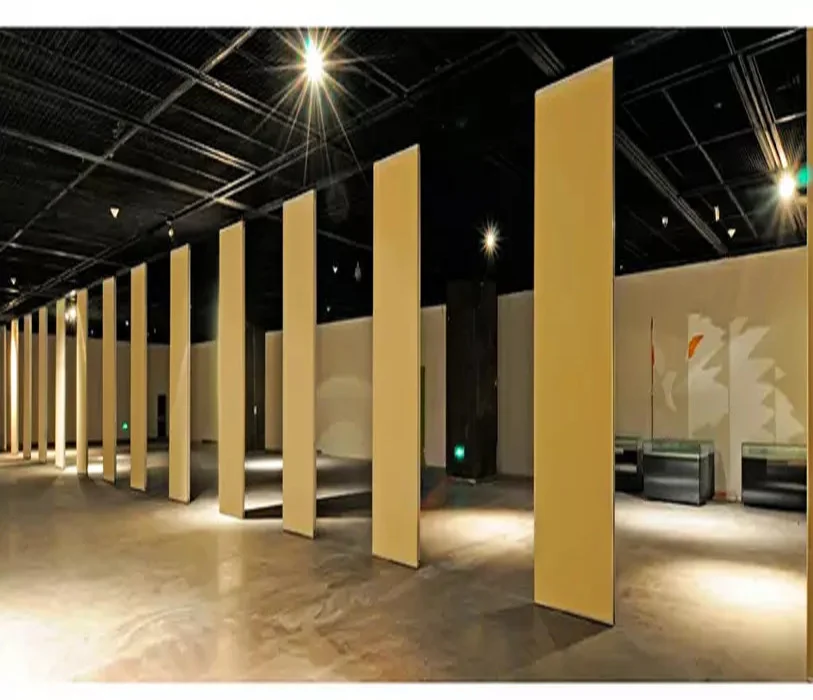
The stacking pocket is where panels rest when the room is open. The approach zone is the path people take to reach that pocket, pass it, or move around it. Encroachment usually appears in the approach zone, not inside the pocket, because panels and their supporting route occupy space near the opening.
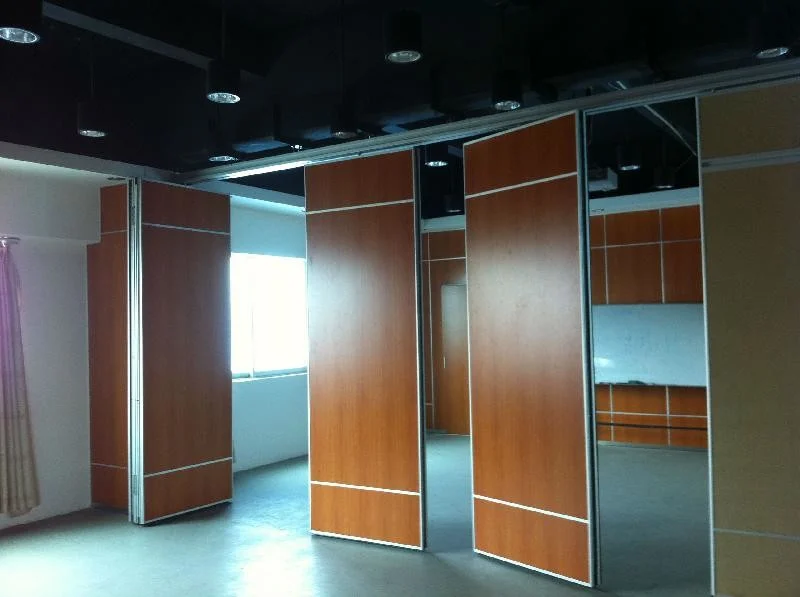
EBUNGE movable wall panels are individually movable, suspended from a top track, cross the opening without a floor track, and park at a planned stacking position. That clear-floor design removes a continuous floor track along the partition line, but it does not remove the need to check the parked position against the route.
What the Audit Reviews at Each Subdivision State
Coordination scope: movable partition stacking pocket approach zone encroachment audit.
A room may have several subdivision states: fully open, partially divided, and fully closed. Each state creates a different parked-panel condition. The audit should review every planned state, not only the fully open one.
Planned geometry inputs
- Architectural floor plan showing the clear ambulant route and its planned width.
- Partition layout showing straight, turning and stacking routes.
- Stacking pocket location and the planned parked panel footprint.
- Door and pass-door positions, if required.
- Fixed obstructions near the route, such as columns or casework.
Site-verified dimensions
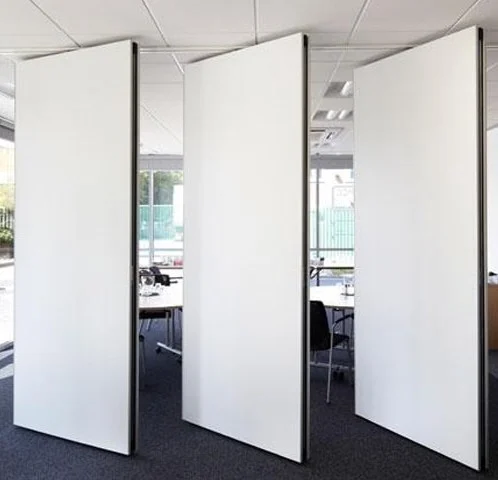
Planned dimensions and built dimensions can differ. Before concluding that a route is clear, verify the actual pocket depth, the actual route width, and the actual position of nearby fixed elements. Record the measurement date and who took it.
A Step-by-Step Encroachment Review Method
Checklist focus: movable partition stacking pocket approach zone encroachment audit.
- List every subdivision state the room is expected to use.
- For each state, mark where panels are parked and how they are reached.
- Overlay the parked-panel footprint on the clear ambulant route drawing.
- Compare the remaining clear width with the planned width for that route.
- Check turning and stacking routes for conflicts with the approach zone.
- Flag any state where parked panels reduce the route below its planned width.
- Confirm project-specific support, acoustic and dimensional requirements with the responsible parties.
This sequence keeps the review evidence-bounded. It does not require assumptions about panel structure, seal materials or operating tools.
Evidence Boundaries for the Audit
An encroachment audit reviews planned geometry and site-verified dimensions. It does not certify accessibility compliance, acoustic performance, structural capacity or fire performance. Those require separate project-specific evidence.
Do not infer hidden performance from a drawing, finish sample or photograph. The exact route, junction arrangement, continuous overhead path and parking position must be confirmed from the coordinated project drawings.
Where pass-door requirements exist, include them in the circulation review. A pass-door changes how people move through the partition line and may affect the approach zone.
Coordination With the Wider Design Team
Encroachment findings often sit between disciplines. The partition layout, the route width, the pocket location and the fixed furniture plan may be owned by different parties. A short coordination note that lists each flagged state, the measured condition and the required decision helps avoid late changes.
Questions to resolve early
- Which subdivision states are actually required by the owner?
- Who confirms the planned clear route width?
- Who verifies the built pocket and route dimensions?
- Are pass-door requirements part of the layout?
- What documentation is needed for the project record?
For product context, see the movable walls range. For planning references, the resources section collects general guidance. Project-specific questions can be raised through contact.
Common Review Mistakes
One common mistake is reviewing only the fully open state. Another is treating the pocket as the only space that matters, while ignoring the approach path. A third is accepting a planned dimension without site verification.
Another mistake is mixing acoustic expectations into a circulation review. Keeping them separate makes both reviews clearer.
Documentation to Keep With the Audit
Keep the reviewed drawings, the measurement record, the list of flagged states and the coordination decisions together. This makes the audit repeatable if the layout changes. It also helps the project team confirm that parked panels do not narrow the ambulant route below its planned width in any required state.
Frequently Asked Questions
What is a movable partition stacking pocket approach zone encroachment audit?
It is a drawing-based review that checks whether parked panels intrude into the clear ambulant route at each subdivision state, using planned geometry and site-verified dimensions.
Does a floor track affect the audit?
EBUNGE movable wall panels are top-hung and cross the opening without a floor track. The audit still reviews the parked panel footprint and the approach path, because those occupy space near the route.
Can the audit confirm acoustic performance?
No.
Which subdivision states should be reviewed?
Review every state the room is expected to use, including fully open, partially divided and fully closed conditions. Each state can create a different parked-panel condition.
What should be verified on site?
Verify the actual pocket depth, the actual route width and the position of nearby fixed elements. Record the measurement date and the person who took it.
How are pass-door requirements handled?
Pass-door requirements can be discussed with the project team and included in the circulation review, because a pass-door changes movement through the partition line.
Conclusion and Next Step
A stacking pocket approach zone encroachment audit is a focused check: it verifies that parked panels do not narrow the ambulant route below its planned width in each required subdivision state. It relies on planned geometry and site-verified dimensions, and it stays within clear evidence boundaries.
Confirm project-specific support, acoustic and dimensional requirements with the responsible parties before finalizing the layout. To discuss your project, contact EBUNGE.