
Quick answer: corridor accessibility review
Review focus: corridor accessibility review.
A stacking pocket ambulant route corridor accessibility review examines one of the most easily overlooked junctions in a flexible-space project: the point where parked panels, a corridor and an ambulant route share the same floor area. The review is not a product test. It is a drawing-based coordination exercise that asks whether the maintained route remains understandable, continuous and free of avoidable conflict once the partition is open, closed or parked. This article sets out an evidence-bounded framework for that review.
Why the Pocket-to-Corridor Junction Deserves Its Own Review
Project review term: corridor accessibility review.
Movable wall panels are individually movable, suspended from a top track, cross the opening without a floor track and park at a planned stacking position. That combination is efficient in plan, but it concentrates several circulation questions at the pocket mouth. The route past the pocket may be used by people walking, by wheelchair users, by trolleys and by staff moving furniture.
A general accessibility review of the room may pass while the pocket junction still creates ambiguity. The review therefore treats the junction as its own zone with its own drawing set, rather than as a detail inside the partition specification.
What the Review Can and Cannot Establish
Coordination scope: corridor accessibility review.
The review can establish whether the proposed layout shows a continuous connected overhead route, a defined parking position and a clear relationship between the parked panels and the adjacent corridor. It can also record where the design intent depends on project-specific confirmation.
The suitability of each route and parking arrangement depends on the approved layout, circulation, ceiling interfaces and operating sequence. Those matters require matching project evidence and local review. Where a drawing shows a finish or a shape, that visible information is not evidence of hidden performance.
Evidence note: a plan view can show a route and a parking zone. It cannot prove support capacity, acoustic separation or code compliance. Record those as open items until project-specific documentation is supplied.
A Step-by-Step Review Sequence for Project Teams
- Define the route. Mark the ambulant route through the corridor and past the pocket on the current architectural plan.
- Mark the parking position. Show where panels are intended to rest when the opening is clear.
- Trace the movement path. Confirm that the straight, turning and stacking routes are reviewed from the layout, and that every proposed path has a continuous connected overhead route.
- Check the pocket mouth. Review how the parked panels relate to the corridor edge, door swings, signage and any fixed furniture.
- List open items. Separate what the drawing shows from what still requires project-specific support, acoustic and dimensional confirmation.
- Coordinate disciplines.
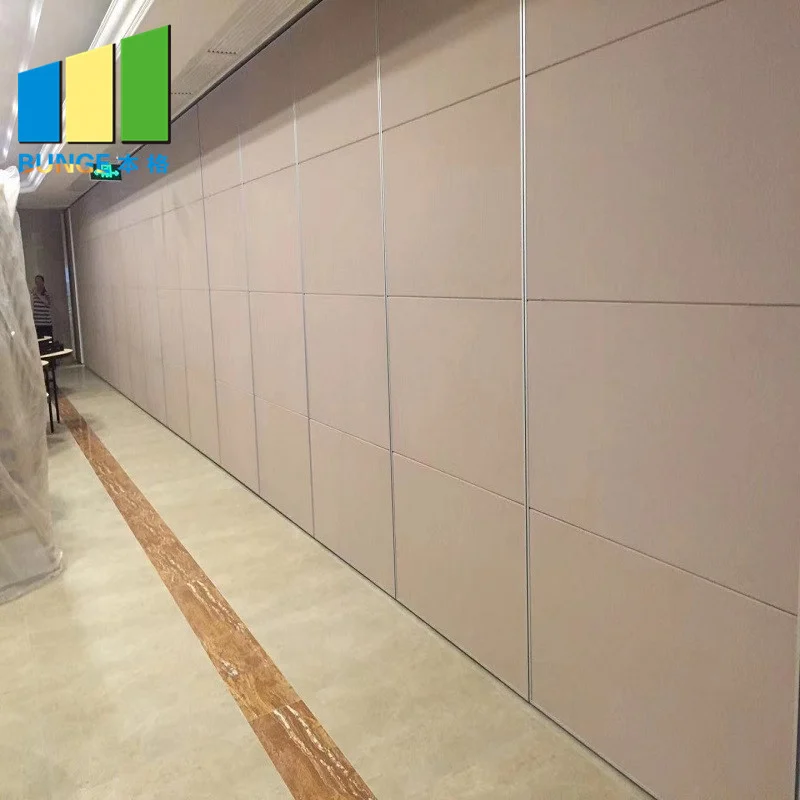
Drawing Checks That Support an Accessibility and Circulation Review
Route continuity
The exact route, junction arrangement, continuous overhead path and parking position must be confirmed from the coordinated project drawings. Panels travel on the overhead system, so the review should verify that the intended movement path is connected and supported along its full length.
Pocket geometry in plan
Review the pocket depth, the approach angle and the relationship to the corridor wall. A pocket that reads clearly on a small-scale plan may become congested when door frames, services or signage are added.
Turning and approach space
Turning space is project-specific. The review should identify where a turning movement is expected and flag it for dimensional confirmation rather than assuming a value.
Coordination Checklist Before the Layout Is Frozen
| Check | What to confirm | Evidence status |
|---|---|---|
| Route marked | Ambulant route shown past the pocket | Drawing-based |
| Parking position | Stacking location agreed with the layout | Drawing-based |
| Overhead route | Continuous connected route for panel movement | Project-specific confirmation |
| Support | Support conditions reviewed by the responsible engineer | Project-specific confirmation |
| Acoustic intent | STC or Rw target defined conceptually and confirmed for the project | Project-specific confirmation |
| Dimensions | Opening, pocket and corridor dimensions verified | Project-specific confirmation |
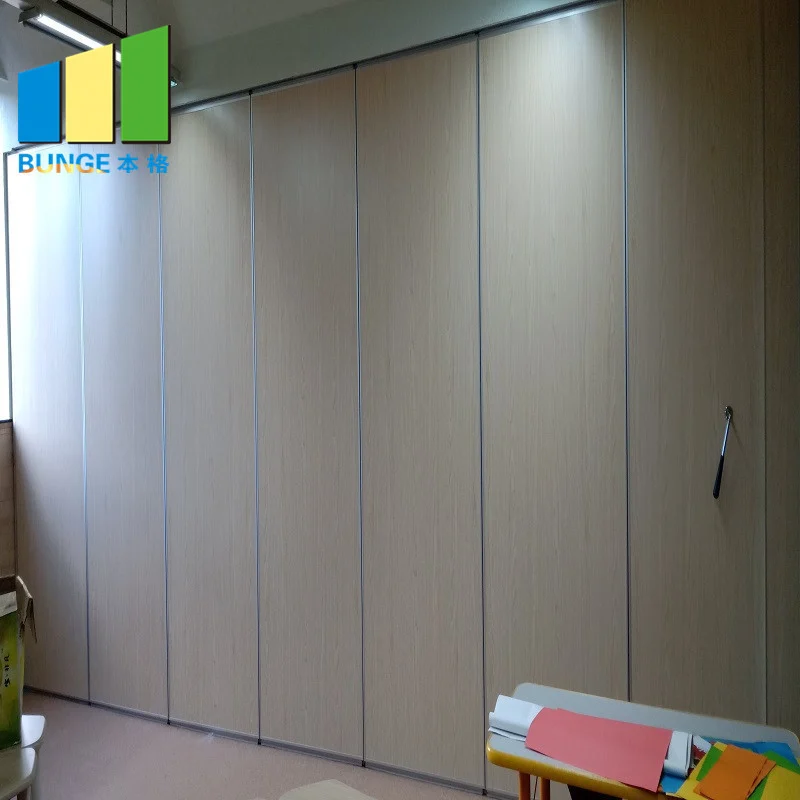
Any acoustic target should be confirmed against project-specific documentation.
Finish, Pass-Door and Documentation Questions
Confirmed finish options include laminate, melamine, fabric, leather, glass and other approved surfaces. Visible references can support layout discussion but do not verify hidden construction or performance.
Pass-door requirements and project documentation can be discussed with the supplier. Where a pass door is proposed near the pocket, the review should show its swing and its relationship to the ambulant route.
For product context, see the movable walls range and the project resources. Teams preparing a specification can also contact EBUNGE to discuss documentation needs.

Common Review Gaps and How to Close Them
- Treating the pocket as a product detail only. It is also a circulation condition.
- Assuming a route from a photograph. Photographs do not show support, dimensions or compliance.
- Leaving turning space unmarked. Mark it and flag it for confirmation.
- Mixing evidence types. Keep drawing-based observations separate from project-specific confirmations.
- Freezing the layout too early.
Frequently Asked Questions
What is a stacking pocket ambulant route corridor accessibility review?
It is a drawing-based review of how the ambulant route, the corridor and the parked partition panels relate at the pocket junction. It identifies conflicts and open items for project-specific confirmation.
Does the review prove compliance with accessibility regulations?
No. It supports coordination. Compliance depends on the applicable local requirements and project-specific documentation, which should be reviewed by the responsible professionals.
Can panels move across a gap in the overhead route?
No. Every proposed movement path requires a continuous connected overhead route and project-specific support review.
How should acoustic performance be handled in this review?
Define the acoustic intent conceptually and confirm it against project-specific documentation.
Which finishes can be considered?
Confirmed options include laminate, melamine, fabric, leather, glass and other approved surfaces.
When should the supplier be involved?
Early, before the layout is frozen. Pass-door requirements, project documentation and dimensional coordination can be discussed while changes are still inexpensive to make.
Conclusion and Next Step
A stacking pocket ambulant route corridor accessibility review is most useful when it stays within its evidence boundary. Mark the route, show the parking position, trace the movement path, and separate drawing-based observations from items that need project-specific support, acoustic and dimensional confirmation.
To discuss your layout, documentation and pass-door requirements, contact the EBUNGE team.