
When planning a community center, achieving acoustic privacy without compromising flexible space is a common challenge. Architects often face uncertainty about how a soundproof partition wall will perform in real-world conditions. This article explains why a soundproof partition wall is a critical investment for community centers, what factors influence its effectiveness, and how to prepare for a successful project. Whether you are designing a multipurpose hall, meeting rooms, or activity spaces, understanding the ‘why’ behind acoustic partitions helps you make informed decisions and communicate clearly with suppliers.
Direct answer: A soundproof partition wall is essential for community centers because it enables simultaneous activities without sound interference, ensures privacy for meetings and events, and helps comply with acoustic building codes. Its performance depends on the partition’s construction, installation method, and integration with surrounding structures. To get the right solution, you must define your acoustic target, provide accurate drawings, and choose a supplier who can customize the system to your project’s specific needs.
Why Acoustic Performance Matters in Community Centers
Community centers host diverse activities—from yoga classes and music rehearsals to conferences and private gatherings. Without adequate sound insulation, these activities disturb each other, reducing usability and user satisfaction. A soundproof partition wall allows you to divide large spaces into smaller, acoustically isolated areas, increasing the center’s functionality and rental potential. Moreover, many local building codes require specific sound transmission class (STC) ratings for assembly spaces, making acoustic partitions not just a preference but a compliance necessity.
However, achieving the desired acoustic performance is not automatic. It requires careful planning, precise installation, and attention to details like perimeter sealing and structural flanking paths. As an architect, you need to specify the right system and verify that the supplier can deliver on your acoustic goals.
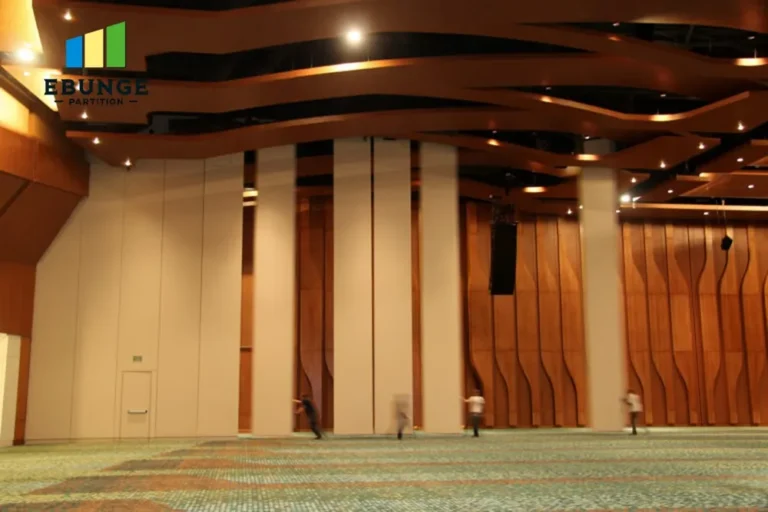
Need help turning the soundproof partition wall requirements into a practical project layout?
Understanding Sound Insulation and Acoustic Targets
Sound insulation is measured in terms of STC (Sound Transmission Class) or Rw (Weighted Sound Reduction Index). For community centers, typical targets range from STC 40 to STC 55, depending on the adjacent activities. For example, a partition separating a music room from a quiet study area may need a higher rating than one dividing two meeting rooms.
To set realistic targets, consider the background noise level, the loudest expected source, and the acceptable noise level in the receiving space. It is also crucial to understand that the partition’s rating is only one part of the equation; sound can flank through ceilings, floors, and adjacent walls. Therefore, you must specify a complete system, including perimeter seals and acoustic gaskets, and coordinate with the overall building construction.
How to Define Your Acoustic Target
Start by consulting the project’s acoustic consultant or using guidelines from organizations like ASHRAE or the National Research Council. Then, communicate your target clearly to the partition supplier, including the required STC/Rw value and any specific frequency requirements (e.g., low-frequency noise from music). A reputable supplier will use this information to recommend the appropriate panel construction, glazing, and seals.
The Role of Top-Hung Track Systems in Acoustic Performance
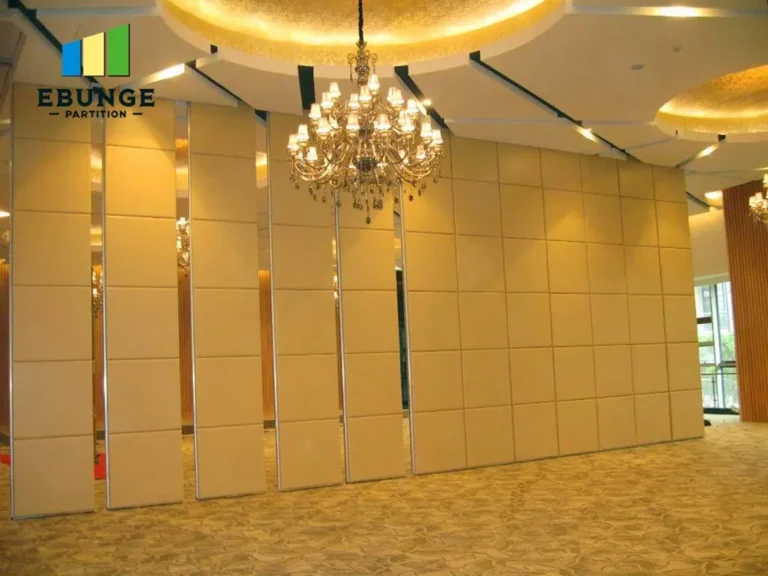
One of the most critical decisions is the track system. Traditional floor-mounted tracks can compromise acoustic sealing and create trip hazards. A top-hung track system, like those offered by EBUNGE, eliminates the floor rail, allowing for a clean, uninterrupted floor surface and better acoustic isolation. Because the partition is suspended from an overhead track, the bottom seal can drop tightly to the floor, reducing sound leakage.
When evaluating top-hung systems, pay attention to the track’s load capacity, the smoothness of operation, and the quality of the bottom seal. A well-designed top-hung system also facilitates easier cleaning and maintenance, which is important in high-traffic community centers.
For more details on how movable partition walls work, you can explore our movable partition wall guide.
Key Technical Requirements for Soundproof Partition Walls
To ensure your soundproof partition wall meets expectations, you need to specify several technical parameters:
- Panel construction: Typically, steel or aluminum frames with multiple layers of gypsum board and acoustic insulation. The thickness and mass directly affect sound insulation.
- Sealing system: Perimeter seals (top, bottom, and sides) must be continuous and adjustable to close gaps effectively. Look for systems with double or triple seals for better performance.
- Acoustic glazing: If the partition includes windows, use laminated glass with acoustic interlayers to match the partition’s STC rating.
- Operation mechanism: Manual or motorized? For large panels, motorized operation can be easier, but manual systems may be more cost-effective for smaller partitions.
- Fire resistance: Depending on local codes, the partition may need to meet fire-resistance ratings. This can affect the materials used.
Always request a detailed specification sheet from the supplier and verify that the proposed system meets your project’s requirements.
Compliance with Building Codes
Building codes often dictate minimum acoustic requirements for walls separating different occupancy types or assembly areas. Familiarize yourself with the applicable codes in your jurisdiction, such as the International Building Code (IBC) or local amendments. Your partition supplier should be able to provide documentation showing compliance with relevant standards, but you must verify that the specific configuration you choose meets the code.
Durability and Ease of Operation: Long-Term Considerations
Community centers experience heavy usage, so the partition must withstand frequent opening and closing. Look for systems with durable hardware, such as heavy-duty rollers and robust seals that can be easily replaced. Also, consider the ease of operation: if staff will move the partitions regularly, a smooth-running system with minimal effort is essential. Some systems offer motorized operation, which can be a worthwhile investment for large or heavy panels.
Maintenance is another factor. Ask about the expected lifespan of seals and rollers, and whether replacement parts are readily available. A supplier that offers after-sales support and spare parts is crucial for long-term reliability.
Customization and Aesthetics: Matching Your Design Vision
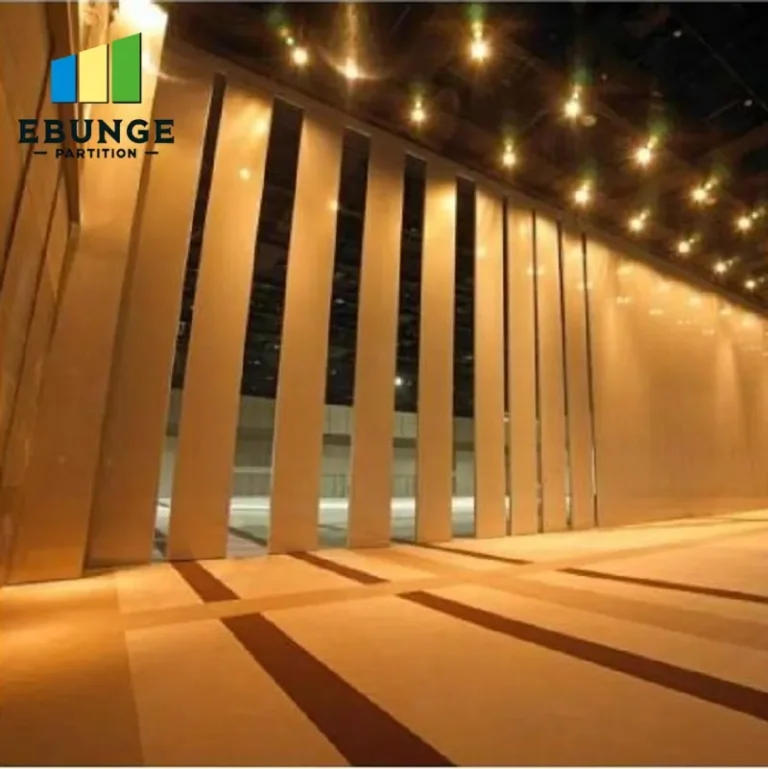
A soundproof partition wall does not have to look utilitarian. Many suppliers offer a variety of finishes, including wood veneer, laminates, fabric, or painted surfaces, to match the interior design of your community center. You can also choose the number of panels, whether they stack to one side or both, and the type of glazing.
When discussing customization, be prepared to share your design intent, including color samples, material preferences, and any branding requirements. The supplier can then provide options that balance aesthetics with acoustic performance.
Share the opening, drawings, finish direction, and privacy target for a project-specific review.
Budget, Timeline, and Installation: Planning for Success
Cost is always a concern, but it is important to view the partition as an investment in the building’s functionality. Get detailed quotes from multiple suppliers, comparing not just the price but also the scope of supply, installation, and warranty. Be wary of extremely low bids, as they may indicate inferior materials or workmanship.
Installation timeline is also critical. Ask about lead times for manufacturing and installation, and factor in any site preparation work, such as reinforcing the ceiling structure to support the track. A professional supplier will provide a clear schedule and coordinate with your construction timeline.
Manufacturer Reliability and After-Sales Support
Choosing a reliable manufacturer is as important as choosing the right product. Research the supplier’s track record, ask for references from similar projects, and evaluate their responsiveness during the quotation phase. A good supplier will offer after-sales support, including maintenance guidance and replacement parts. To get started, you can contact us for a consultation.
Preparing Your Inquiry: What to Share with the Supplier
To receive accurate quotations and technical recommendations, prepare the following information before contacting suppliers:
- Opening size: Width, height, and thickness of the partition wall.
- Drawings: Architectural plans and sections showing the partition location, ceiling details, and adjacent structures.
- Acoustic target: Required STC/Rw rating, and any specific noise sources.
- Finish preference: Material, color, and texture of the partition surface.
- Project location: Site address, which may affect logistics and local regulations.
Providing this information upfront enables the supplier to offer a tailored solution, reducing back-and-forth and speeding up the quotation process.

Conclusion: Make an Informed Decision
In summary, a soundproof partition wall is a strategic investment for any community center, offering acoustic privacy, flexibility, and code compliance. By understanding the technical requirements, setting clear acoustic targets, and preparing a detailed inquiry, you can ensure that the selected system meets your needs and budget. Remember to prioritize durability, ease of operation, and after-sales support when choosing a supplier. For more insights, explore our blog and acoustic partition solutions.
Frequently Asked Questions
What is a typical STC rating for a soundproof partition wall in a community center?
Typical STC ratings range from 40 to 55, depending on the application. For example, a partition between a meeting room and a lobby might need only STC 40, while a music room may require STC 50 or higher. Your acoustic consultant can help determine the appropriate rating based on your specific needs.
Can a top-hung track system achieve the same acoustic performance as a floor-track system?
Yes, a top-hung track system can achieve equal or better acoustic performance because it eliminates the floor track gap, allowing a continuous bottom seal. This reduces sound leakage and also improves safety and aesthetics.
How long does it take to install a soundproof partition wall?
Installation time varies depending on the size, complexity, and site conditions. A simple partition might take a few days, while a large, motorized system could take several weeks. Your supplier should provide a detailed timeline based on your project.
What maintenance is required for a movable partition wall?
Regular maintenance includes checking and adjusting seals, lubricating rollers and tracks, and cleaning the surface. It’s recommended to have a maintenance schedule, especially for high-use areas. Your supplier can provide a maintenance guide.
Do you provide installation drawings and guidance?
Yes, we provide detailed installation drawings and guidance to ensure proper installation. Our team can also coordinate with your contractors to avoid issues. For more information, visit our contact page.
Quick Comparison: Top-Hung vs. Floor-Track Systems
| Feature | Top-Hung Track | Floor-Track |
|---|---|---|
| Acoustic sealing | Better (continuous bottom seal) | Potential gap at floor track |
| Floor clearance | Unobstructed | Track on floor |
| Safety | No trip hazard | Possible trip hazard |
| Maintenance | Easier to clean floor | Harder to clean around track |
| Aesthetics | Cleaner look | Visible floor track |
Pre-Purchase Checklist for Architects
- Define acoustic target (STC/Rw) and frequency requirements.
- Measure opening size and verify ceiling load capacity.
- Prepare architectural drawings and share with supplier.
- Specify finish preferences and glazing options.
- Confirm compliance with local building codes.
- Ask about installation timeline and site preparation.
- Request references and after-sales support details.
Send the opening size and drawings to discuss a differentiated soundproof partition wall solution.