
When outfitting a recording studio with a movable wall, overseas contractors and commercial project owners face a unique set of challenges: acoustic integrity, spatial flexibility, and procurement reliability. This purchase guide focuses on the practical selection of a movable wall system for recording studios, emphasizing evidence-based decisions and supplier coordination. Unlike generic advice, we address the specifics of studio environments—where sound isolation is critical—and guide you through specification, procurement, and installation planning without overpromising performance.
Direct answer: For a recording studio, choose a movable wall system that is top-hung (no floor rail), has a high Sound Transmission Class (STC) rating verified by independent lab tests, and is supplied by a manufacturer who provides detailed drawings and installation guidance. Prioritize systems with compression seals and double-glazed panels if visibility is needed. Always confirm performance data with the supplier and reference project drawings before purchase.
Why a Movable Wall for a Recording Studio?
Recording studios require flexible spaces that can adapt to changing needs—whether it’s separating live rooms, control rooms, or isolation booths. A movable wall offers that flexibility without permanent construction. For overseas contractors, this means easier shipping, faster installation, and the ability to reconfigure spaces as projects evolve. However, not all movable walls are suitable for acoustic applications; you must evaluate systems based on sound insulation properties, not just visual appeal.
Need help turning the movable wall requirements into a practical project layout?
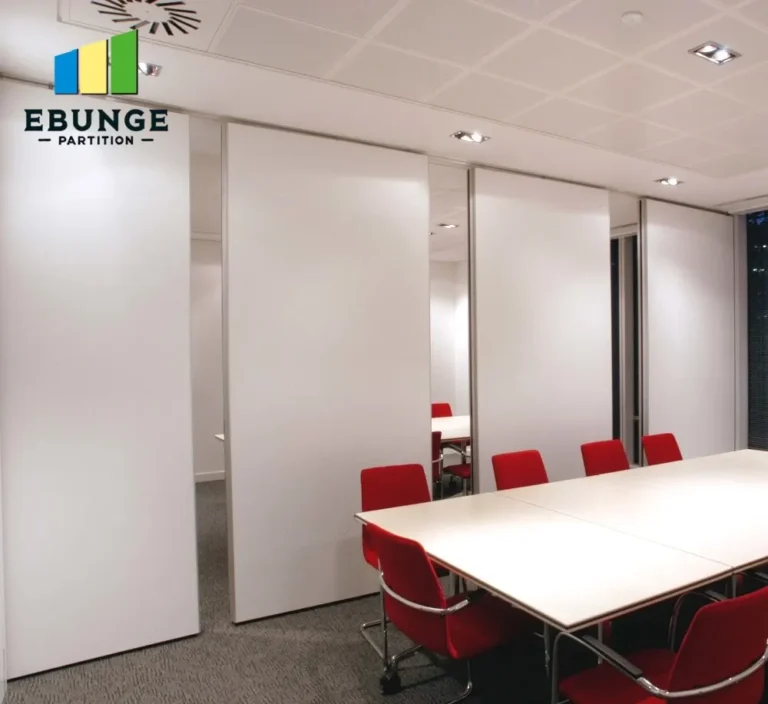
Key Specifications to Evaluate
When comparing movable walls for a studio, focus on these technical parameters:
- STC Rating: Aim for STC 50 or higher for studio partitions. Verify the rating is from a recognized laboratory and applies to the exact wall configuration you plan to use.
- Sealing System: Perimeter seals (top, bottom, and vertical joints) are crucial. Look for automatic drop seals or compression gaskets that ensure an airtight fit when the wall is closed.
- Panel Construction: Steel or aluminum frames with multiple layers of gypsum board and acoustic insulation (mineral wool) provide better mass and damping.
- Track System: Top-hung systems (no floor rail) are preferred in studios to avoid trip hazards and to maintain a clean floor surface. Ensure the track can support the panel weight and is designed for smooth operation.
- Fire Rating: Depending on local codes, you may need a fire-rated assembly. Check with your supplier for available fire ratings.
Understanding Acoustic Performance Claims
Be cautious with acoustic performance claims. STC ratings are derived from laboratory tests, but real-world performance can vary due to installation quality, flanking paths, and structural connections. Always request the test report and compare it with the actual wall configuration (e.g., panel thickness, glazing, seals). If a supplier cannot provide a test report, consider that a red flag. For studios, you may also need to consider sound absorption (NRC) if the wall includes acoustic panels, but the primary concern is sound isolation (STC).
Project Planning and Supplier Coordination
For overseas projects, early coordination with the supplier is essential. Provide them with your architectural drawings and specifications so they can confirm the system’s compatibility. Discuss the following:
- Lead Times: Confirm manufacturing and shipping schedules to align with your construction timeline.
- Installation Requirements: Some systems require specialized installers; if your team is not trained, budget for supplier-provided installation supervision or training.
- Drawings and Documentation: Request detailed shop drawings, installation manuals, and maintenance guides. These are critical for on-site assembly and future adjustments.
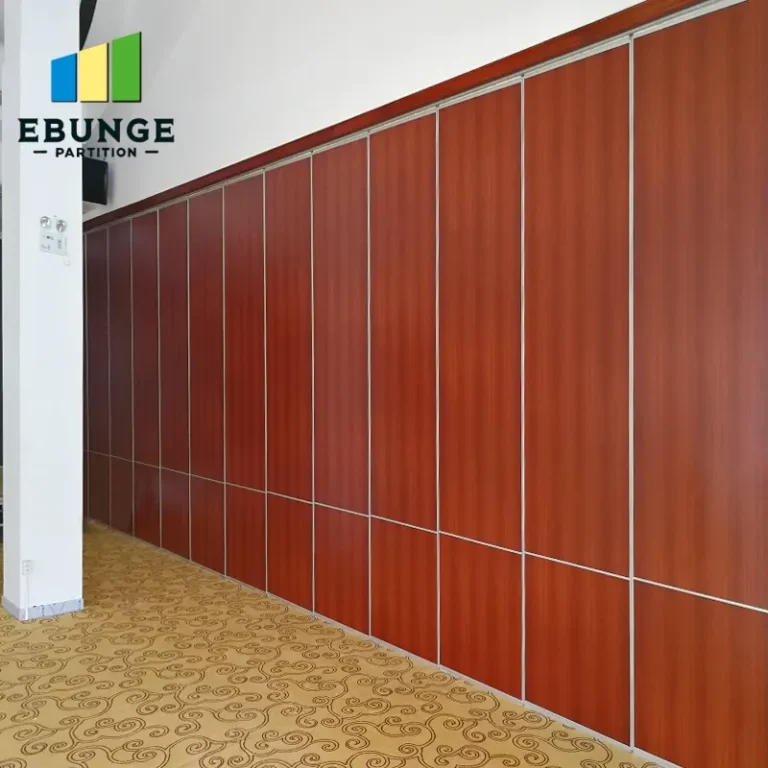
- Finishes and Customization: Discuss available finishes (wood veneer, laminate, paint) and any custom dimensions to match your studio’s interior design.
For more insights on installation, see our movable partition installation guide.
Comparison: Movable Wall vs. Fixed Partition
| Criteria | Movable Wall | Fixed Partition |
|---|---|---|
| Flexibility | High – reconfigurable as needed | Low – permanent layout |
| Acoustic Performance | Can achieve high STC if specified correctly | Generally easier to achieve high STC |
| Installation Time | Moderate – requires track and panel assembly | Longer – involves framing, drywall, finishing |
| Cost | Higher upfront, but can save on future renovations | Lower upfront, but less adaptable |
| Space Requirements | Needs track storage pocket or parking area | None |
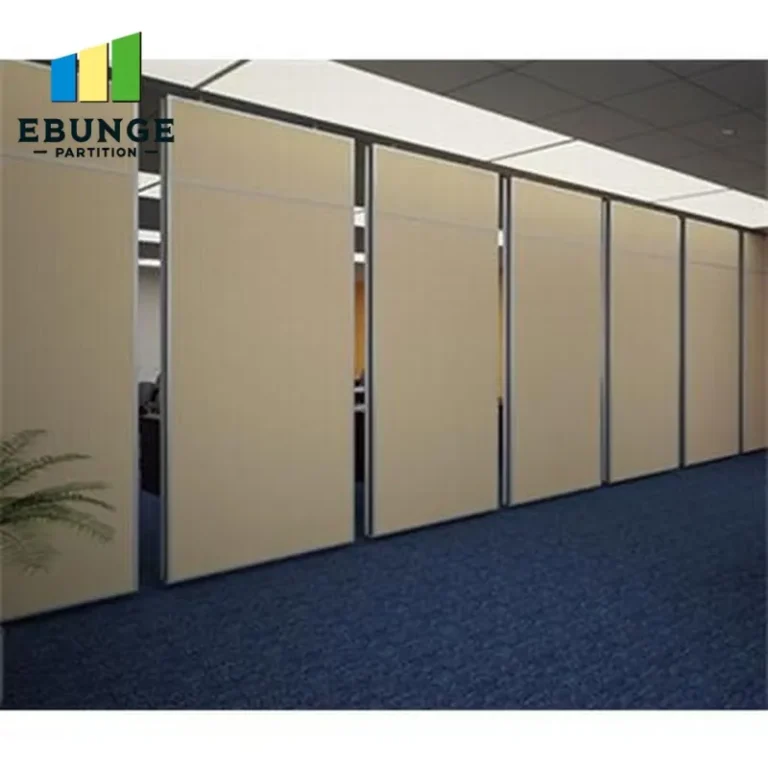
Installation Considerations for Studios
Proper installation is paramount for acoustic performance. Ensure the following:
- Structural Support: The overhead track must be securely anchored to the building structure to handle the wall’s weight and daily operation.
- Perimeter Seals: Verify that all seals are correctly adjusted to close gaps when the wall is extended. Test the seals after installation.
- Acoustic Caulking: At the junction between the movable wall and fixed structures, apply acoustic caulk to eliminate air leaks.
- Alignment: Ensure panels are perfectly aligned to avoid uneven gaps. Misalignment can significantly reduce STC.
For detailed steps, refer to our movable partition wall resources.
Share the opening, drawings, finish direction, and privacy target for a project-specific review.
Procurement Checklist for Overseas Buyers
Before placing an order, use this checklist to minimize risk:
- [ ] Confirm the system meets your STC requirement with documented test data.
- [ ] Verify that the track system is top-hung and does not require a floor rail.
- [ ] Request and review shop drawings for your specific dimensions.
- [ ] Ask about the supplier’s experience with studio projects and request references (but do not rely solely on testimonials).
- [ ] Clarify delivery terms, lead time, and payment milestones.
- [ ] Discuss installation support: does the supplier provide remote guidance, or is on-site supervision available?
- [ ] Inquire about spare parts and after-sales service for seals and hardware.
- [ ] Ensure all finishes and dimensions are explicitly stated in the contract.
Budgeting and Cost Considerations
Movable walls are a significant investment. Costs vary widely based on materials, size, acoustic performance, and customization. For budgeting, obtain quotes from multiple suppliers and compare not just the unit price but also shipping, customs, installation, and any additional engineering fees. Remember that a cheaper system may compromise acoustic quality or durability, leading to higher long-term costs. Always request a detailed breakdown of costs, including hardware, seals, and track.
Common Pitfalls to Avoid
- Under-specifying: Choosing a wall with insufficient STC for your studio needs. Always over-specify slightly to account for installation variables.
- Ignoring Flanking Paths: Sound can travel around the wall through ceilings, floors, or adjacent walls. Ensure those are also treated.
- Poor Planning for Storage: Decide where the movable wall will park when not in use. This requires additional wall space or a pocket.
- Assuming Installation is Simple: Movable walls are precision systems; improper installation can ruin performance. Budget for professional installation.
Conclusion: Making an Informed Decision
Selecting a movable wall for a recording studio is a complex process that demands careful evaluation of acoustic data, supplier reliability, and installation logistics. By focusing on verified specifications, top-hung systems, and clear supplier communication, you can mitigate risks and achieve the flexibility your studio needs. For further reading, explore our blogs on acoustic solutions or contact us for project-specific guidance.
Frequently Asked Questions
What STC rating is recommended for a recording studio movable wall?
For a recording studio, an STC rating of at least 50 is generally recommended for isolating loud sounds. However, the exact requirement depends on the sound levels involved and the adjacent spaces. Always consult with an acoustic engineer to determine the appropriate STC for your specific application.
Can a movable wall achieve the same soundproofing as a fixed wall?
Yes, a well-designed and properly installed movable wall can achieve comparable soundproofing to a fixed wall, especially if it has a high STC rating and effective perimeter seals. However, the installation quality and the surrounding structure significantly affect real-world performance.
How do I ensure the movable wall is airtight?
Airtightness is achieved through perimeter seals, including top, bottom, and vertical compression seals. When the wall is closed, these seals must compress against the floor, ceiling, and adjacent panels. Automatic drop seals are often used at the bottom. Regular maintenance is needed to keep seals effective.
Is a floor rail necessary for a movable wall?
No, top-hung systems do not require a floor rail. They are supported entirely from an overhead track, which is beneficial for studios to maintain a smooth, unobstructed floor surface. Ensure the building structure can support the weight of the wall and track.
What information should I provide to a supplier for a quote?
Provide your architectural drawings, ceiling height, opening dimensions, desired STC rating, panel finish preferences, and any special requirements like fire rating or sound absorption. The more detailed your specifications, the more accurate the quote and the lower the risk of misunderstandings.
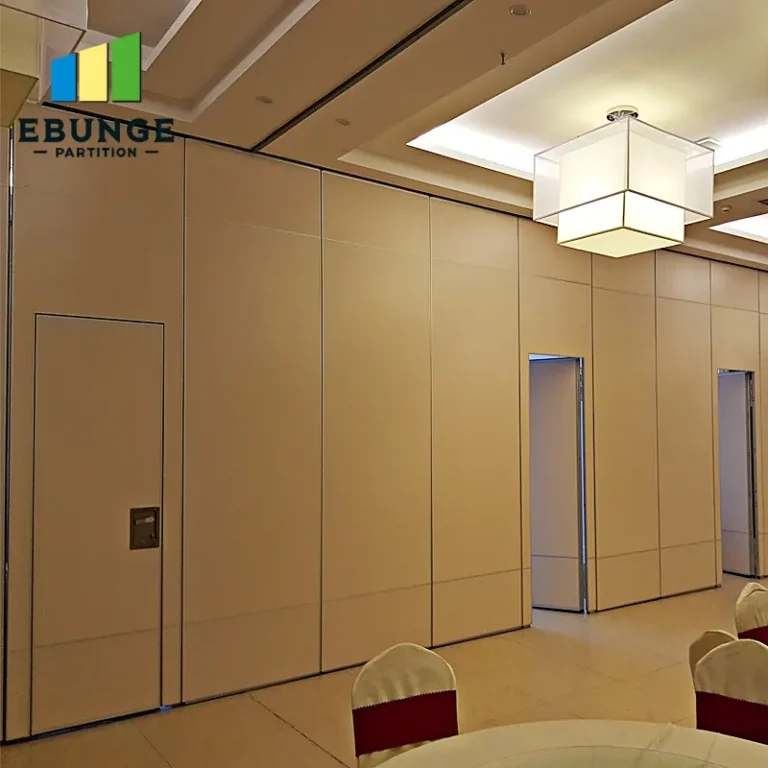
Send the opening size and drawings to discuss a differentiated movable wall solution.