
When outfitting a training center, the choice of a sliding partition supplier evaluation process can determine whether your project meets acoustic targets, safety codes, and budget constraints. For an office renovation company, evaluating suppliers is not just about comparing catalogs; it involves verifying technical capabilities, customization support, and overseas delivery reliability. This guide helps you structure your supplier evaluation, ask the right questions, and prepare documentation that converts inquiries into actionable quotations. We focus on practical steps, avoiding generic advice, and emphasize what to confirm before signing contracts.
Direct answer: For a training center, evaluate sliding partition suppliers by first defining your technical requirements: opening sizes, acoustic performance targets, fire ratings, and finish preferences. Then, request a detailed quotation that includes engineering drawings, installation timeline, and total cost of ownership. Verify supplier reliability through references, production capacity, and after-sales support. For overseas suppliers, clarify Incoterms, lead times, and customs compliance. Finally, ensure the supplier offers customization for your specific layout and provides installation guidance or on-site supervision if needed.
Why Training Centers Demand a Different Supplier Evaluation
Training centers often have flexible room layouts, requiring movable partition walls that can be reconfigured quickly. Unlike offices or hotels, training spaces may need higher acoustic insulation to prevent sound leakage between simultaneous sessions. They also face frequent use, so durability and ease of operation are critical. Therefore, your supplier evaluation must prioritize acoustic partition solutions that meet specific Noise Reduction Coefficient (NRC) or Sound Transmission Class (STC) ratings, but only as documented in project specs. Additionally, training centers often have irregular ceiling heights or structural constraints, making custom movable wall options essential. Thus, you need a supplier who can adapt to your building’s conditions without compromising performance.
Need help turning the sliding partition supplier evaluation requirements into a practical project layout?
Key Technical Requirements to Define Before Contacting Suppliers
To get accurate quotations, you must provide clear parameters. At minimum, include:
- Opening sizes (width, height, and number of panels)
- Acoustic target (e.g., required STC or Rw rating, but confirm with an acoustic consultant)
- Fire rating and building code compliance (e.g., local fire safety regulations)
- Finish preferences (e.g., laminate, veneer, paint, or tackable surface)
- Operation method (manual or motorized, top-hung track system preferred for no floor rail)
- Stacking space and storage requirements
- Installation timeline and site constraints
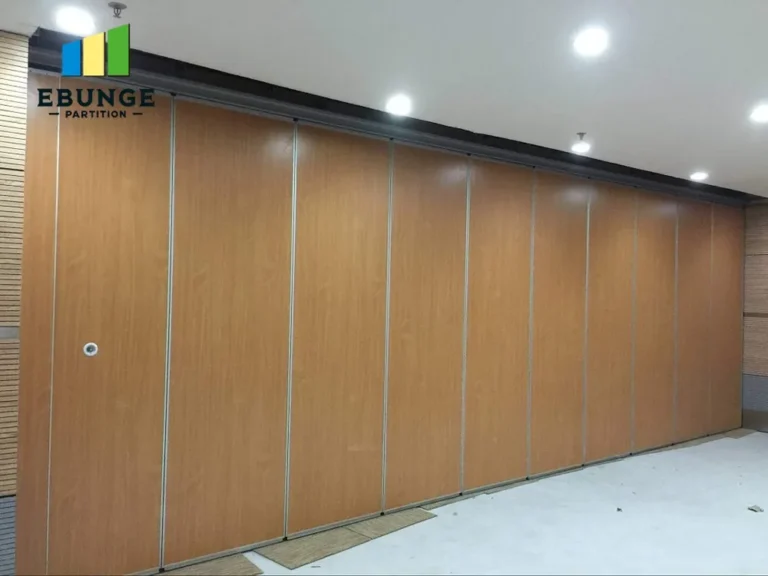
Having this data ready ensures that suppliers can provide a precise quote, reducing back-and-forth and hidden costs. For example, if you need a training center partition wall that is 6 meters high, the supplier must confirm if their top-hung track system can support the weight and deflection.
How to Structure a Sliding Partition Supplier Evaluation Checklist
Use a standardized checklist to compare suppliers objectively. Here is a practical template:
| Criteria | Questions to Ask | Weight |
|---|---|---|
| Technical compliance | Can you provide test reports for acoustic performance? Do you meet local building codes? | High |
| Customization capability | Can you accommodate irregular openings or special finishes? What is your engineering lead time? | High |
| Delivery reliability | What is your production lead time? How do you handle shipping damages or delays? | Medium |
| Installation support | Do you provide installation drawings? Is on-site supervision available? | Medium |
| After-sales service | What warranty do you offer? How are spare parts supplied? | Medium |
| Cost transparency | Does your quotation include all components, shipping, taxes, and installation? | High |
Assign weights based on your project priorities. For training centers, acoustic insulation and durability often outweigh cost, but you must balance with budget.
Preparing a Supplier Inquiry That Gets Accurate Quotes
A vague inquiry leads to vague quotations. To convert inquiries efficiently, provide a complete package:
- Architectural drawings (floor plans, sections, elevations)
- Specifications for acoustic performance, fire rating, and finish
- Project location (for logistics and compliance)
- Expected installation date
- Questions about customization, such as operable wall system for curved tracks or integrating doors
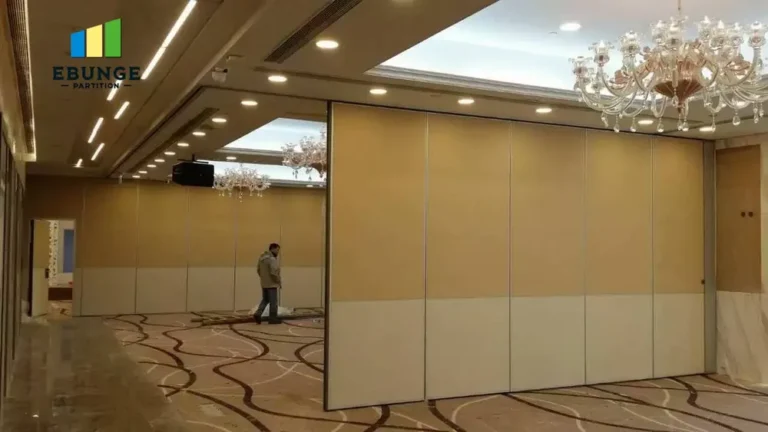
When you send this to suppliers, they can respond with a detailed proposal. For example, if you specify that the partition must have a top-hung track system without floor rail, the supplier can immediately confirm if that’s feasible for your ceiling structure.
Share the opening, drawings, finish direction, and privacy target for a project-specific review.
Evaluating Supplier Reliability and Overseas Delivery
Many training center projects import movable partitions. To assess reliability, ask for:
- References from similar projects (training centers or educational facilities)
- Production capacity and current order load
- Export experience: Incoterms, shipping documentation, and customs clearance
- Insurance and risk mitigation for transit damages
Also, verify if the supplier has local representatives or partners for installation support. If not, you may need to hire a local installer familiar with the product. For overseas delivery, clarify who handles customs duties and import permits, as these can add significant cost and time.
Common Pitfalls in Sliding Partition Supplier Evaluation
Avoid these mistakes:
- Focusing only on price, ignoring total cost of ownership (maintenance, energy, repair)
- Not verifying acoustic ratings with independent tests or site measurements
- Assuming all suppliers offer the same customization level
- Overlooking installation complexities, such as ceiling reinforcement for top-hung tracks
- Failing to check warranty terms and after-sales response times
By being aware of these, you can ask targeted questions and avoid surprises later.
Using Your Evaluation to Negotiate a Better Contract
Once you have shortlisted suppliers, use your evaluation to negotiate:
- Request a detailed breakdown of costs, including engineering, materials, logistics, and installation
- Clarify payment terms and milestones (e.g., deposit, upon delivery, after installation)
- Specify penalties for delays and remedies for defects
- Include a clause for change orders and how they affect pricing and timeline
Remember, the cheapest quote may not be the best value if it lacks support. Use your checklist to justify decisions to stakeholders.
Conclusion: From Evaluation to Informed Decision
Sliding partition supplier evaluation is a systematic process that, when done correctly, ensures your training center gets a functional, durable, and code-compliant partition. By defining requirements, asking the right questions, and comparing suppliers objectively, you can mitigate risks associated with reliability, customization, and overseas delivery. Always confirm every claim with documentation, and never assume a supplier’s promise is a guarantee. With this approach, you’ll select a partner who supports your project from quotation to after-sales service.
Frequently Asked Questions
What is the most important factor in sliding partition supplier evaluation for a training center?
The most important factor is the supplier’s ability to meet your specific acoustic and functional requirements while providing reliable installation support. Without documented acoustic performance and a track record of similar projects, you risk costly failures.
How do I verify a supplier’s acoustic insulation claims?
Ask for certified test reports from recognized laboratories, and check if the ratings are for the exact configuration you plan to install. Also, request references from projects where acoustic performance was measured on-site.
What should I include in a quotation request to get comparable bids?
Include complete drawings, specifications, project location, and a clear scope of supply. Ask suppliers to break down costs into product, shipping, installation, and taxes. This allows you to compare apples to apples.
How can I assess the reliability of an overseas sliding partition supplier?
Check their export history, ask for shipping references, and verify their Incoterms. Also, consider requesting a sample or a factory audit if the investment is significant. Communication responsiveness and clarity are also indicators of reliability.
What are the benefits of a top-hung track system for training centers?
A top-hung track system eliminates the floor rail, making it easier to clean and maintain, and reduces trip hazards. It also allows for better acoustic sealing at the bottom, as the partition can be lowered to the floor with a gasket.
For more insights on movable partition walls, explore our movable partition wall guide and blog articles. If you are ready to discuss your project, contact our team via the contact page. Also, check our manufacturer category for related resources.
Send the opening size and drawings to discuss a differentiated sliding partition supplier evaluation solution.