
When a school hall project reaches the sliding partition supplier evaluation stage, the conversation often shifts quickly from design intent to technical specifications, budget lines, and delivery schedules. For interior designers, this is where the real work begins: translating a vision of flexible, acoustically sound spaces into a procurement process that does not stall. The challenge is not just finding a product but selecting a partner who can manage customization, overseas shipping, and on-site coordination without surprises. This article walks through the critical steps of evaluating a sliding partition supplier for a school hall, focusing on what to prepare, what to ask, and how to compare responses effectively.
Direct answer: A reliable sliding partition supplier for a school hall should provide clear technical documentation, support customization, and offer transparent logistics for overseas delivery. To evaluate suppliers effectively, prepare your opening size, drawings, acoustic target, finish preference, and project location before requesting quotes. Then compare suppliers on their ability to meet those specifics, not just on price.
Sliding Partition Supplier Evaluation: Why the Evaluation Process Often Goes Off Track
Many school hall projects stumble during supplier evaluation because the buying team focuses on generic product features rather than project-specific requirements. A movable partition wall that works well in a corporate office may not suit a school hall where children’s safety, frequent operation, and acoustic separation are paramount. The evaluation should be driven by the school’s operational needs, the hall’s dimensions, and the building’s structural constraints. Without a clear brief, suppliers will provide proposals that miss the mark, leading to costly revisions later.
Need help turning the sliding partition supplier evaluation requirements into a practical project layout?
Start with a Detailed Project Brief
Before contacting any supplier, assemble a comprehensive brief that includes:
- Exact opening size (width, height, and depth of the recess or pocket).
- Architectural drawings (DWGs or PDFs) showing the hall layout and partition location.
- Acoustic target (e.g., Rw value or STC rating) based on the hall’s usage.
- Finish preference (e.g., laminate, veneer, paint, or tackable surface).
- Project location and expected timeline.
This information allows suppliers to provide accurate quotes and technical proposals. It also signals that you are a serious buyer, which can improve the quality of responses.
Technical Requirements: More Than Just a Wall
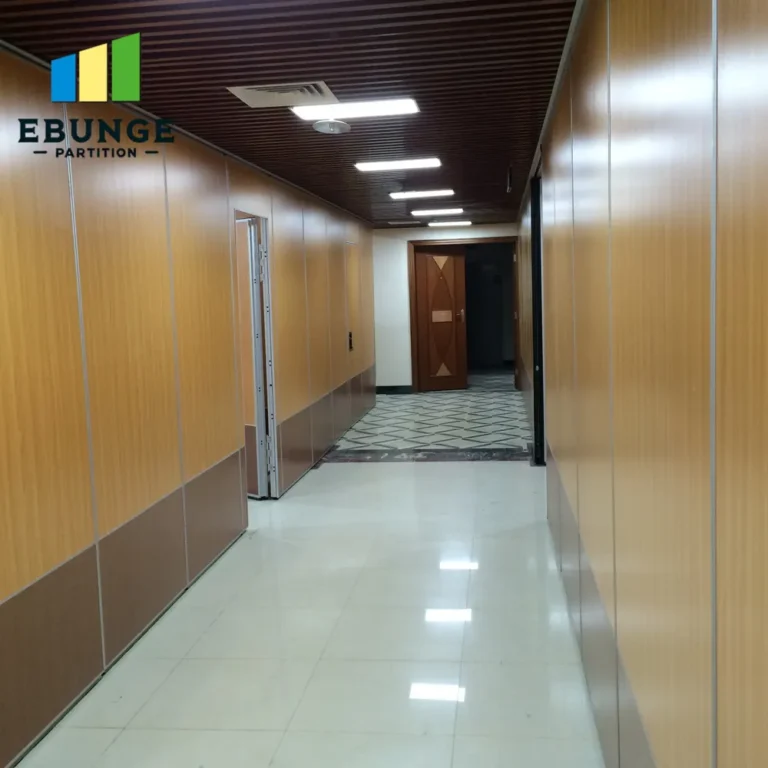
A school hall partition is an operable wall system that must perform on multiple fronts. Key technical aspects to evaluate include:
- Acoustic insulation: Does the supplier provide test data for the specific configuration? Look for Rw values that meet your target.
- Safety compliance: Are materials fire-rated? Do they meet local building codes for schools?
- Durability: What is the panel construction? Are they resistant to impact and frequent use?
- Ease of operation: How smooth is the mechanism? Is it suitable for staff or students to use?
- Maintenance: What are the ongoing maintenance requirements?
Ask suppliers to specify these details in writing, and request samples or technical datasheets for verification.
Customization Support: The Key to a Seamless Fit
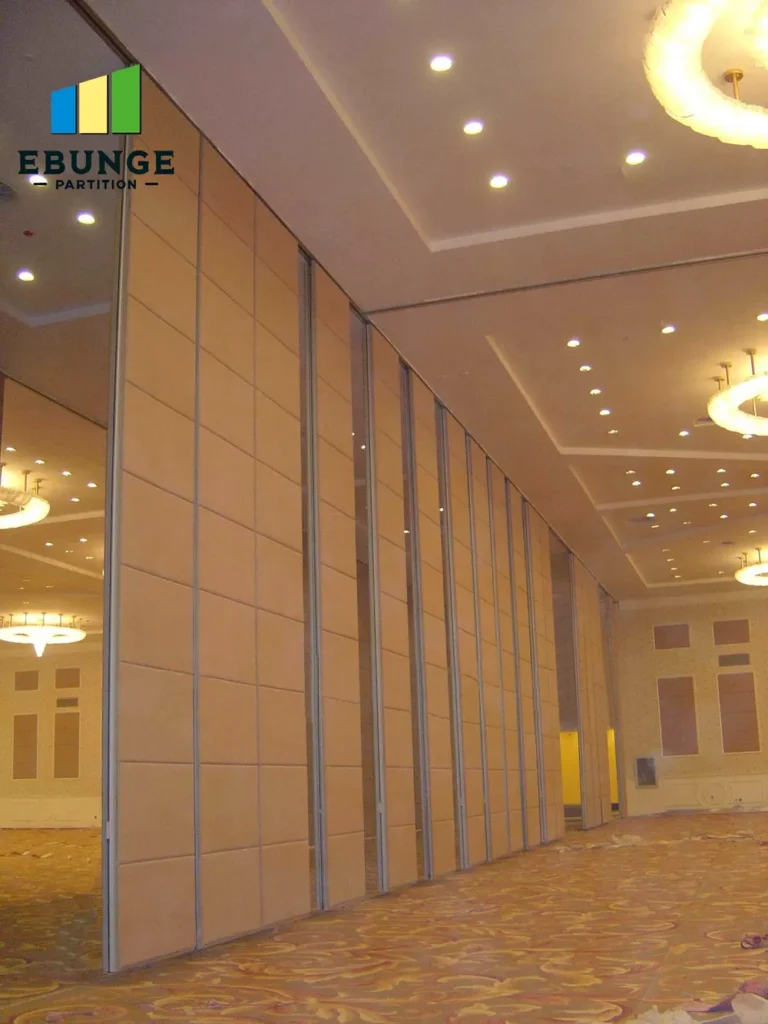
School halls often have unique dimensions, uneven ceilings, or specific aesthetic requirements. A supplier that offers customization—such as adjustable panel widths, custom finishes, or integrated whiteboards—can be a valuable partner. During evaluation, ask how they handle custom requests: Do they have in-house engineering? What is the lead time for custom orders? Can they provide references for similar school projects?
Overseas Delivery: Planning for Logistics
If you are sourcing from overseas, delivery logistics can make or break the project. Consider the following:
- Shipping method: Is it sea, air, or land? What are the transit times?
- Packaging: How are panels protected during transit?
- Customs and duties: Who handles import clearance? Are there additional costs?
- Installation support: Does the supplier provide installation drawings or remote guidance?
Ask for a detailed delivery plan, including milestones and contingency measures. A supplier with experience in international projects will be able to provide this.
Quotation Readiness: What to Look For in a Quote
A professional quote should be itemized and transparent. It should include:
- Product specifications and dimensions.
- Material and finish details.
- Acoustic performance data.
- Delivery terms (Incoterms) and lead time.
- Payment terms and warranty.
- Exclusions (e.g., installation, site preparation).
Be wary of quotes that are vague or lack technical details. They may indicate a lack of expertise or hidden costs.
Share the opening, drawings, finish direction, and privacy target for a project-specific review.
Comparing Suppliers: A Structured Approach
To make an objective decision, create a comparison matrix that scores each supplier against your priorities. Here is a sample checklist:
| Criteria | Supplier A | Supplier B | Supplier C |
|---|---|---|---|
| Acoustic performance (Rw) | Specified | Specified | Not specified |
| Customization capability | Yes | Limited | Yes |
| Delivery time | 8 weeks | 6 weeks | 10 weeks |
| After-sales support | Yes | Yes | No |
| Price | High | Medium | Low |
Use this table to weigh what matters most for your project. Remember, the cheapest option is not always the most cost-effective in the long run.
Inquiry Conversion: Turning Questions into Clarity
When you contact suppliers, be prepared to ask specific questions that will help you gauge their expertise. Here are some examples:
- Can you provide a reference list of school hall projects?
- What is your standard warranty, and what does it cover?
- How do you handle site measurement if there are discrepancies?
- Do you offer installation supervision or training?
The way a supplier responds—promptly, thoroughly, and professionally—is a strong indicator of their reliability.
Supplier Reliability: Red Flags and Green Flags
During evaluation, watch for these warning signs:
- Vague answers to technical questions.
- Reluctance to provide test reports or certifications.
- Unrealistic pricing or promises.
- Poor communication or slow response times.
Green flags include:
- Detailed proposals with clear specifications.
- Proactive suggestions for your project.
- Willingness to share client references.
After-Sales Support: A Long-Term Consideration
Partition walls are long-term investments. After installation, you may need replacement parts, maintenance services, or technical support. Ask suppliers about their after-sales service: Do they have a local representative? What is the response time for service calls? Is there a spare parts inventory? A supplier that stands behind their product is worth more than a slightly lower price.
Conclusion: Making the Right Choice for Your School Hall
Sliding partition supplier evaluation for a school hall is a multi-faceted process that requires careful preparation and clear communication. By providing detailed project information, asking the right questions, and comparing suppliers systematically, you can select a partner who will deliver a functional, durable, and acoustically effective partition system. Remember to prioritize reliability, customization support, and transparent logistics over price alone. With the right supplier, your school hall can become a flexible space that serves students and staff for years to come.
Frequently Asked Questions
What information should I prepare before contacting a sliding partition supplier?
Prepare your opening size, architectural drawings, acoustic target, finish preference, and project location. This helps suppliers provide accurate quotes and technical proposals.
How do I verify a supplier’s acoustic performance claims?
Ask for test reports from accredited laboratories that specify the exact configuration. Ensure the Rw value meets your project’s acoustic target.
What should be included in a professional quotation?
A detailed quote should include product specifications, materials, finishes, acoustic data, delivery terms, lead time, payment terms, warranty, and exclusions.
How can I assess a supplier’s reliability for overseas projects?
Check their experience with international shipping, ask for references, and review their communication and documentation processes. A reliable supplier will provide a clear delivery plan and support.
What are the key safety considerations for school hall partitions?
Ensure the partition meets fire safety standards, has no sharp edges, and is durable enough for frequent use. Also, check that the operating mechanism is safe for staff and students.
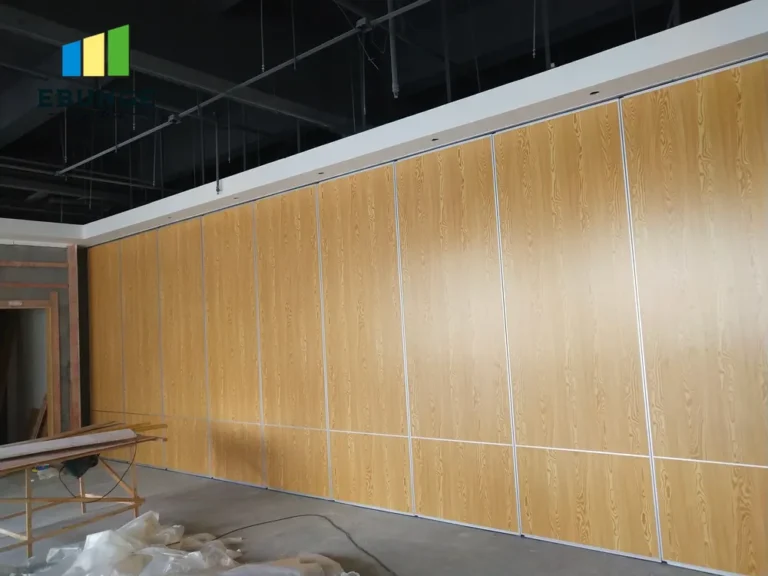
For more insights on movable partition walls and operable wall systems, explore our blog or view our resources for specifiers. If you have a project in mind, contact us to discuss your requirements. Learn more about our movable partition solutions.
For this buyer review, sliding partition supplier evaluation should be checked against the confirmed opening, drawings, operating plan, and project specification.
Send the opening size and drawings to discuss a differentiated sliding partition supplier evaluation solution.