
When you specify a sliding partition supplier evaluation for a school hall, the process can feel like assembling a puzzle where every piece must fit precisely: acoustic performance, safety, durability, and budget. As an interior designer, you’re not just choosing a product; you’re selecting a long-term partner for a project that will serve hundreds of students and staff daily. The right supplier will guide you through technical complexities, offer customization that aligns with your design vision, and ensure a smooth delivery process—even across borders. This article addresses the critical questions you need to ask during your evaluation, helping you make an informed decision that balances functionality, aesthetics, and reliability.
Direct answer: For a school hall, the ideal sliding partition supplier is one that offers a top-hung track system without floor rails, provides detailed acoustic data and customization support, and demonstrates a proven track record in overseas delivery and after-sales service. Prioritize suppliers who are transparent about technical specifications and willing to collaborate closely from quotation to installation.
Sliding Partition Supplier Evaluation: 1. Why Acoustic Performance Is Non-Negotiable for School Halls
School halls serve multiple purposes: assemblies, examinations, performances, and sometimes simultaneous classes. Acoustic insulation ratings are paramount to prevent sound leakage and ensure concentration. During your sliding partition supplier evaluation, request specific acoustic performance data, such as Rw (weighted sound reduction index) values, and clarify test conditions. A reliable supplier will provide third-party test reports and explain how their acoustic partition solutions achieve those ratings—whether through specialized seals, panel construction, or track design.
Remember, acoustic performance is not just about the partition itself but also about how it integrates with the surrounding structure. A knowledgeable supplier will ask about your wall and ceiling construction to ensure the entire system performs as expected. They should also advise on perimeter sealing and any potential flanking paths. This level of technical caution is a hallmark of a trustworthy partner.

Need help turning the sliding partition supplier evaluation requirements into a practical project layout?
2. Durability and Safety: Built for Daily Rigor
School environments are demanding. Partitions must withstand frequent operation, impact from trolleys, and the occasional rough handling. During evaluation, inquire about the materials used—steel frames, panel facings, and hardware—and their resistance to wear and tear. Look for features like impact-resistant surfaces and tamper-proof mechanisms. Safety is equally critical: ensure the system complies with relevant standards, including fire safety and emergency egress. A reputable supplier will openly discuss these aspects and provide documentation.
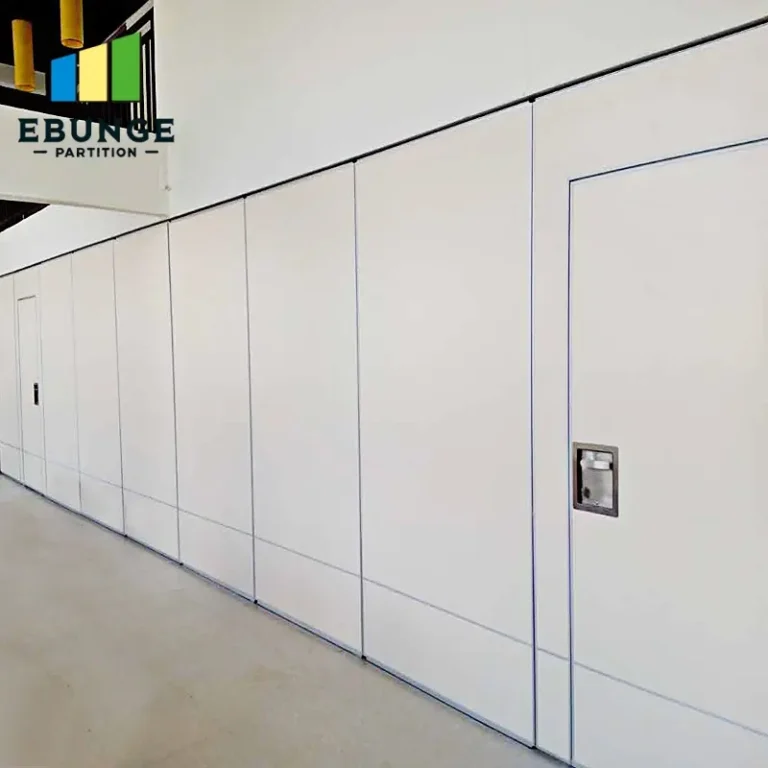
Also, consider the track system. A top-hung track system without floor rails not only enhances safety (no trip hazards) but also simplifies cleaning and maintenance. This design is particularly advantageous in school settings where hygiene and unobstructed flooring are priorities. Ask about the load-bearing capacity of the track and the quality of the trolley wheels—these are indicators of long-term durability.
3. Ease of Operation: From Manual to Automated
Who will operate the partition? In a school, it might be a janitor, a teacher, or even a student. Therefore, the operation should be smooth and intuitive. Evaluate the effort required to move the panels—whether manual, spring-assisted, or motorized—and the reliability of the mechanism. For large halls, a movable partition wall with a top-hung track can be designed for easy stacking, often with a simple turn of a handle to seal the panels.
Ask about the frequency of use and any periodic adjustments needed. A supplier that offers clear operation manuals and training for staff demonstrates a commitment to user satisfaction. In your sliding partition supplier evaluation, consider the lifecycle cost: a slightly higher upfront investment in quality hardware can reduce maintenance headaches later.
4. Maintenance Requirements: What to Expect Over Time
Every mechanical system requires upkeep. The level of maintenance can vary significantly between suppliers. Inquire about the recommended maintenance schedule—typically, checking track alignment, lubricating moving parts, and inspecting seals. A transparent supplier will provide a maintenance guide and be clear about which parts are wear items. They might also offer service packages. During your evaluation, ask for references from previous school projects to learn about real-world maintenance experiences.
Additionally, consider the availability of spare parts. If the supplier is overseas, ensure that critical components can be shipped promptly. This is where a supplier’s after-sales service becomes crucial. A reliable partner will have a responsive support team and possibly local distributors or agents.
5. Aesthetic Integration: Aligning with Your Design Vision
As an interior designer, you want the partition to complement the hall’s architecture, not detract from it. The best suppliers offer a range of finishes—from wood veneers to laminates, acoustic fabric, or even whiteboard surfaces—and can customize to match your color scheme. Discuss the possibility of incorporating glazing for natural light or branding elements. A supplier with in-house customization support can advise on what’s feasible while maintaining acoustic integrity.
During your sliding partition supplier evaluation, request samples and mock-ups if possible. This not only helps you visualize the aesthetic but also allows you to test the finish’s durability. Remember that the partition is a prominent feature; its design should be timeless yet adaptable to future refurbishments.
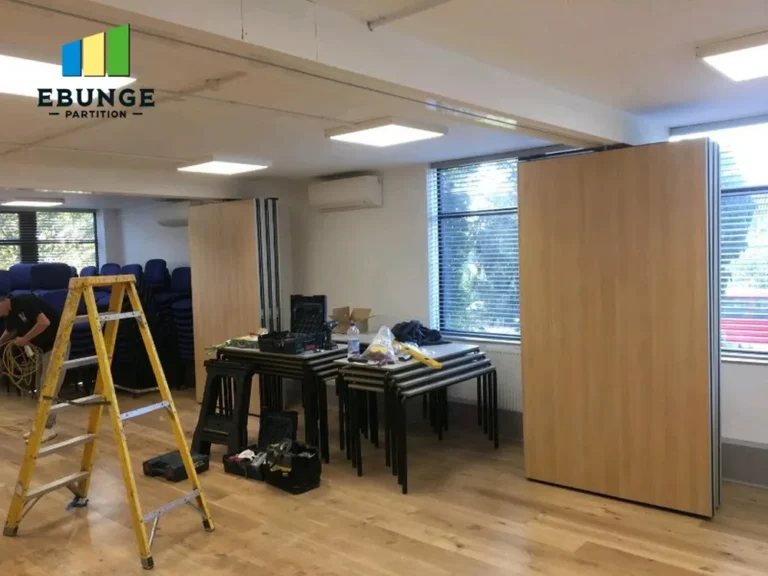
6. Budget Adherence: Transparent Quotation and Value Engineering
Budget overruns are a common pain point. To avoid surprises, ensure that the supplier’s quotation is comprehensive, itemizing all components: panels, tracks, seals, installation materials, and any customization. Ask about potential additional costs, such as delivery, customs, or installation supervision. A trustworthy supplier will provide a clear breakdown and be upfront about what’s included.
Value engineering is another aspect: can the supplier suggest cost-effective alternatives without compromising performance? For example, opting for a standard finish instead of a premium veneer might reduce costs. However, be cautious of quotes that seem too low—they might indicate inferior materials or hidden fees. Your evaluation should weigh the total cost of ownership, including maintenance and energy efficiency, against the initial price.
Share the opening, drawings, finish direction, and privacy target for a project-specific review.
7. Supplier Reliability and After-Sales Service
Reliability is the cornerstone of any partnership. Investigate the supplier’s track record: how long have they been in business? Do they have experience with school projects? Can they provide case studies or references? In your sliding partition supplier evaluation, consider their communication responsiveness during the quotation phase—this often reflects their post-sale support.
After-sales service is particularly critical for overseas projects. Ask about warranty terms, response times for technical inquiries, and the availability of on-site installation support. A supplier that offers remote guidance or has local partners can be a lifesaver. Also, clarify the process for ordering spare parts and the typical lead times. Your goal is to establish a long-term relationship, so choose a supplier who treats you as a partner, not just a transaction.
8. A Practical Checklist for Your Supplier Evaluation
To streamline your decision-making, use this checklist when comparing quotes from different suppliers:
| Criteria | Supplier A | Supplier B |
|---|---|---|
| Acoustic rating (Rw) and test report | ||
| Top-hung track (no floor rail) | ||
| Customization options (finish, size) | ||
| Safety certifications | ||
| Maintenance requirements | ||
| Quotation transparency | ||
| After-sales support | ||
| Overseas delivery experience |
9. Preparing for a Productive Inquiry
To get accurate quotations and demonstrate your professionalism, share these details with the supplier:
- Opening size (width, height, and number of panels)
- Architectural drawings (floor plan, sections)
- Acoustic target (e.g., Rw 45 dB)
- Finish preferences (color, material, texture)
- Project location (for delivery and installation planning)
This information enables the supplier to provide a tailored solution and reduces the back-and-forth. A supplier that asks for these details proactively is likely experienced and thorough. Your sliding partition supplier evaluation will be more efficient when both parties have clear expectations.
10. Conclusion: Making a Confident Choice
Choosing a sliding partition supplier evaluation for a school hall is a significant responsibility. By focusing on acoustic performance, durability, ease of operation, maintenance, aesthetics, budget, and supplier reliability, you can navigate the selection process with confidence. Remember to prioritize suppliers who offer a top-hung track system without floor rails, who are transparent about technical data, and who demonstrate a commitment to after-sales support. Your final decision should be based on a comprehensive assessment that goes beyond the initial quote.
For further guidance on movable partition wall solutions and to explore technical insights, visit our resources. If you’re ready to discuss your project, our team is here to assist with expert consultation. We also invite you to review our manufacturer category for more details.
Frequently Asked Questions
What is the typical lead time for a custom movable wall for a school hall?
How do I know if the acoustic partition meets the required sound insulation?
Can the partition be customized to match the school’s branding?
What are the maintenance requirements for a top-hung track system?
How can I ensure a smooth overseas delivery and installation?
Send the opening size and drawings to discuss a differentiated sliding partition supplier evaluation solution.