
When planning an office meeting room renovation, the sliding folding partition price is often the first number that comes to mind, but it is rarely the only one that matters. For an office renovation company, the real challenge is not just finding a supplier with a competitive quote, but understanding what drives the cost and how to compare options without hidden surprises. This article breaks down the factors that influence the sliding folding partition price for office meeting rooms, from technical specifications to project management, so you can prepare accurate budgets and ask the right questions during supplier inquiries.
Direct answer: The sliding folding partition price for an office meeting room is determined by the opening size, acoustic performance target, finish selection, hardware quality, installation complexity, and supplier services. A typical quote from a reputable supplier includes the partition system, track, hardware, installation, and warranty, but exact figures require project-specific details. To get a reliable estimate, prepare your opening dimensions, ceiling height, acoustic requirement (e.g., STC rating), finish preference, and project location before contacting suppliers.
1. Why Sliding Folding Partition Price Varies Across Projects
The sliding folding partition price is not a fixed number; it varies because each office meeting room has unique requirements. The size of the opening, the number of panels, the track length, and the type of operation (manual or motorized) all contribute to the final cost. Additionally, the acoustic performance needed for confidential meetings or open-plan offices influences the materials and sealing systems used. For example, a partition with a higher sound insulation rating typically uses denser panels and specialized edge seals, which increase material and manufacturing costs. Understanding these variables helps you anticipate why quotes from different suppliers may differ significantly.
Need help turning the sliding folding partition price requirements into a practical project layout?
2. Key Cost Drivers for Office Meeting Room Partitions
Several factors have a direct impact on the sliding folding partition price:
- Opening size and panel configuration: Larger openings require more panels and longer tracks, increasing material and labor costs.
- Acoustic performance: Higher STC ratings (e.g., STC 45 vs. STC 50) demand thicker panels, double glazing, and more robust seals.
- Finish and materials: Custom finishes like wood veneer, laminate, or acoustic fabric affect cost; standard finishes are more economical.
- Hardware quality: Top-hung track systems, rollers, and seals from reputable manufacturers cost more but offer better durability and smoother operation.
- Installation complexity: Site conditions, such as uneven ceilings or existing structures, can require custom brackets or adjustments.
- Customization: Non-standard sizes, curved tracks, or integrated pass doors add to the price.
These factors are interdependent; for instance, a high acoustic target may necessitate a heavier panel, which in turn requires a more robust track system.
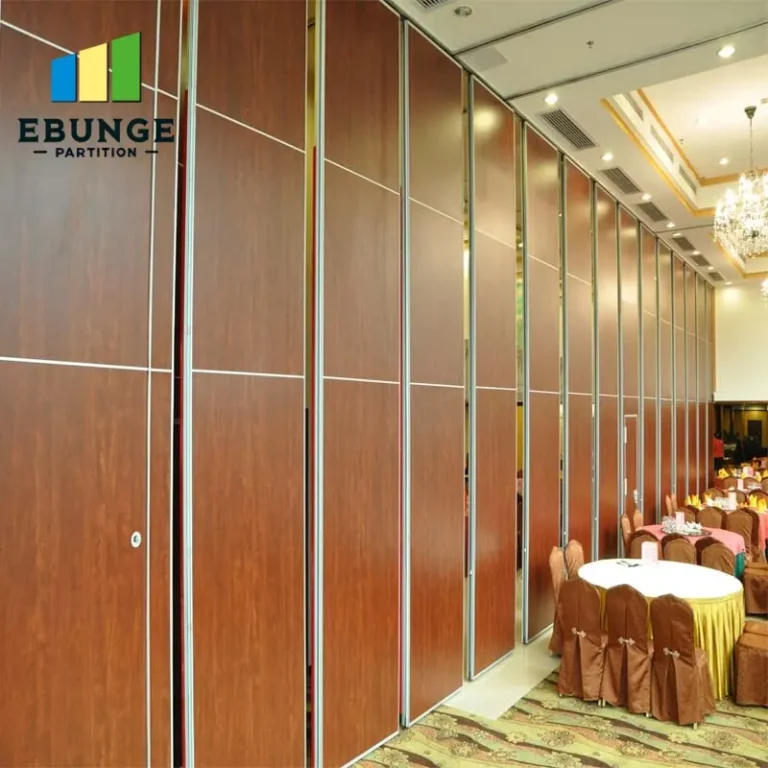
3. Technical Requirements That Affect Quotations
To receive accurate quotes, you must specify technical details clearly. The following are essential:
- Opening dimensions: Width, height, and depth of the opening, including ceiling clearance.
- Acoustic target: Desired sound transmission class (STC) or Rw rating, based on your privacy needs.
- Finish preference: Color, material, and texture; for example, writeable surfaces or magnetic panels.
- Operation method: Manual or motorized; motorized options add cost but improve convenience.
- Stacking space: Where the partition will rest when open; this affects panel width and track design.
Providing these details upfront ensures that suppliers can calculate the sliding folding partition price accurately and reduces the risk of change orders later.
4. Installation and Project Coordination
Installation is a significant part of the total cost. A top-hung track system, which is a hallmark of EBUNGE partitions, requires no floor rail, simplifying installation and maintenance. However, the complexity of your site can still affect labor costs. For example, if the ceiling is not level, shimming or custom brackets may be needed. Also, consider the impact on your project timeline: installation typically takes a few days, but coordination with other trades (electrical, HVAC, etc.) is crucial. A professional supplier will provide installation guidance and recommend a qualified installer, but you should confirm whether installation is included in the quote or offered as an optional service.
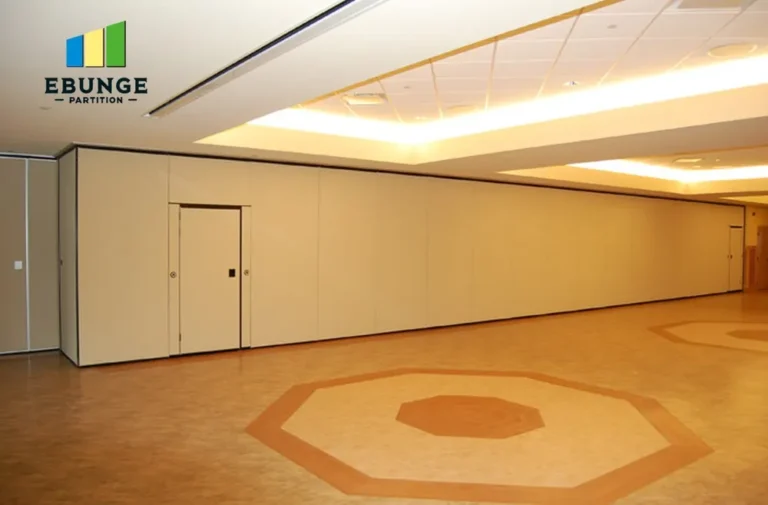
5. Material Quality and Acoustic Performance
The materials used in a movable partition wall directly influence both performance and price. High-density panels with sound-absorbing cores, perimeter seals, and double-glazed vision panels are common in office settings. Acoustic performance is measured in STC or Rw ratings; for meeting rooms, an STC of 45-50 is typical to ensure speech privacy. However, achieving these ratings requires meticulous manufacturing and installation. When comparing quotes, ask suppliers for test data or specifications that support their acoustic claims. Remember that the actual performance depends on the entire system, including seals and track, not just the panel.
Share the opening, drawings, finish direction, and privacy target for a project-specific review.
6. Customization Options and Their Cost Impact
Custom movable wall solutions can meet specific design or functional needs, but they come at a premium. For example, a partition with a curved track, integrated door, or special finish like wood veneer will cost more than a standard straight-line system. Similarly, if you need a partition that stacks into a small pocket, the design may require more complex hardware. When requesting quotes, be explicit about your customization requirements so that suppliers can price them accurately. It is also wise to ask about lead times, as custom orders often take longer to manufacture.
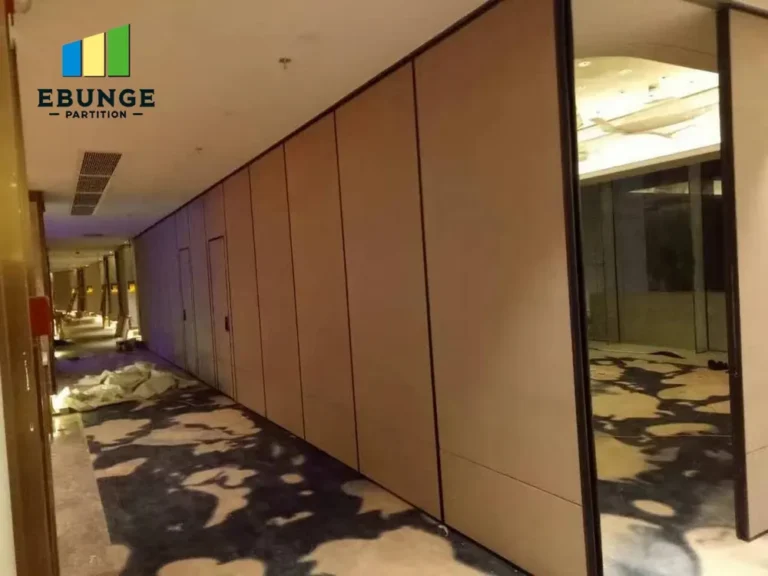
7. Total Cost of Ownership and After-Sales Support
The initial sliding folding partition price is not the only financial consideration. Think about long-term costs: maintenance, replacement parts, and warranty coverage. A high-quality top-hung track system reduces wear and tear, but regular maintenance is still required. Ask about the warranty period and what it covers, such as parts and labor. Also, inquire about after-sales support: does the supplier offer technical assistance or spare parts? A slightly higher upfront cost may be justified by lower maintenance and longer lifespan.
8. Practical Checklist for Budgeting and Inquiry
To ensure you get accurate quotes and avoid surprises, use this checklist:
| Item | Details to Prepare |
|---|---|
| Opening size | Width, height, and depth (in mm or inches) |
| Acoustic requirement | Target STC or Rw rating |
| Finish preference | Material, color, and texture samples |
| Operation type | Manual or motorized |
| Stacking space | Location and dimensions for open panels |
| Drawings | Floor plans, elevations, and ceiling details |
| Project location | Site address and access conditions |
| Timeline | Expected installation date and project schedule |
Having this information ready will help suppliers provide more precise quotations and reduce back-and-forth communication.
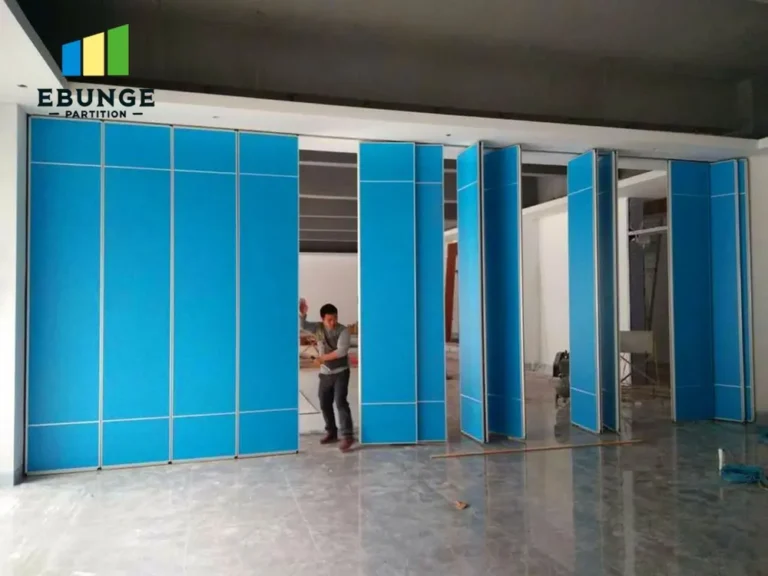
9. Frequently Asked Questions
What is the average sliding folding partition price per square meter?
There is no standard average because costs vary widely based on specifications. A basic manual partition might be lower, while a motorized, high-acoustic system with custom finishes will be higher. To get a realistic figure, you must provide your project details to suppliers.
How can I reduce the cost of a sliding folding partition?
Consider standard sizes, simpler finishes, and manual operation. Also, ensure your opening is prepared correctly to avoid installation complications. However, do not compromise on acoustic performance if it is essential for your meeting room.
Does the sliding folding partition price include installation?
Some suppliers include installation in the quote, while others offer it as a separate service. Always clarify what is included: delivery, installation, and any necessary site preparation.
What is the difference between a movable partition wall and an operable wall system?
These terms are often used interchangeably. Both refer to walls that can be moved to divide or open a space. The specific name may vary by manufacturer, but the function is similar.
Can I get a custom movable wall for an irregularly shaped meeting room?
Yes, custom solutions are possible, but they will increase the cost and lead time. Provide detailed drawings to the supplier to get an accurate quotation.
10. Conclusion: Making Informed Decisions
Understanding the sliding folding partition price for your office meeting room is not just about comparing numbers; it is about evaluating value. By focusing on technical requirements, total cost of ownership, and supplier support, you can make a decision that balances budget and performance. When contacting suppliers, be prepared with your opening size, drawings, acoustic target, finish preference, and project location. This will not only speed up the quotation process but also help you receive accurate, comparable offers. For more insights, explore our movable partition wall resources or check cost guides for further reading. If you have specific questions, feel free to contact us for tailored advice.
Send the opening size and drawings to discuss a differentiated sliding folding partition price solution.