
When planning an office meeting room renovation, understanding the sliding folding partition price is a critical step. As a buyer for an office renovation company, you need to navigate cost factors, technical requirements, and supplier communication to ensure a successful project. This guide provides a structured approach to evaluating quotations, avoiding hidden costs, and making informed decisions. We’ll answer common questions about pricing, installation, and customization, and help you prepare the details needed for accurate quotes.
Direct Answer: The sliding folding partition price for an office meeting room is determined by the opening size, acoustic requirements, finish choices, and customization needs. To get an accurate quote, you must provide the exact opening dimensions, desired acoustic performance, preferred finishes, and project location. A typical quotation includes the cost of the partition system, installation, and delivery, but you should also consider long-term maintenance and operational costs.
Sliding Folding Partition Price: Why a Detailed Brief is Essential for Accurate Pricing
Without a comprehensive project brief, you risk receiving vague or inflated quotations. A clear brief helps suppliers understand your needs and provide a precise sliding folding partition price. Key elements include the opening size (width, height, and stacking space), the number of panels, the track type (top-hung vs. floor-mounted), and the acoustic target (e.g., STC rating). Also, specify the finish (laminate, veneer, paint, or fabric) and any special features like integrated doors or glazing. Sharing a floor plan or drawings with the supplier ensures they can visualize the installation and identify potential challenges.
Moreover, a detailed brief allows you to compare quotes on an apples-to-apples basis. When you receive proposals, check that each includes the same scope: materials, hardware, installation, and delivery. This transparency helps you avoid unexpected costs later.
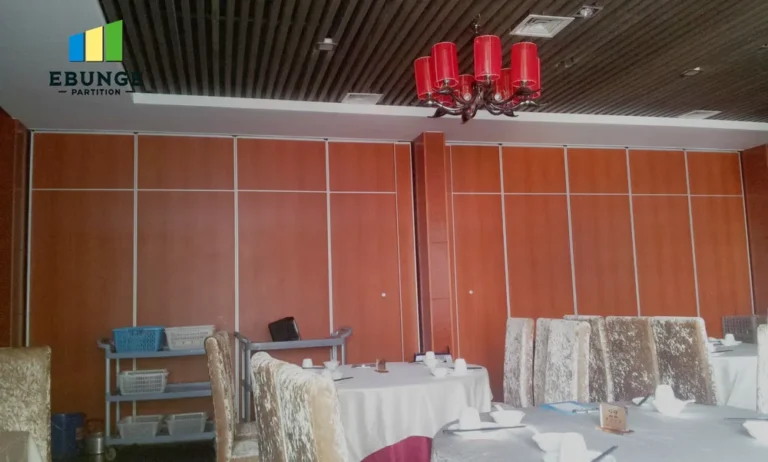
Need help turning the sliding folding partition price requirements into a practical project layout?
Understanding the Components of a Quotation
Most suppliers break down the sliding folding partition price into several components: the partition system itself (panels, track, hangers, seals), installation labor, and ancillary items like acoustic seals, floor guides (if any), and finish materials. Some quotes may include the cost of removing an existing partition or preparing the site. Always ask for a detailed breakdown so you know what you’re paying for.
Additionally, clarify whether the quote includes delivery and installation, or if these are separate. For office meeting rooms, installation often requires specialized labor, especially for top-hung track systems that must be securely anchored to the building structure. Ask about the installation timeline and whether it impacts your project schedule.
Key Cost Drivers for Office Meeting Room Partitions
Acoustic Performance and Panel Construction
Acoustic ceiling and wall partitions are not all equal. Higher acoustic ratings (e.g., STC 50+) require thicker panels, additional insulation, and tighter seals, which increase material costs. If your meeting room needs confidentiality, invest in better acoustics, but be prepared for a higher sliding folding partition price. Discuss your acoustic target with the supplier and ask for test data to support the rating.
Customization and Finishes
Custom sizes, non-standard finishes, or integrated features (like whiteboard surfaces or magnetic panels) will raise the price. Standard sizes and popular finishes are more economical. If you have a specific interior design, consider a mix of standard and custom elements to balance cost and aesthetics.
Track System and Operation
The track system is a major cost component. Top-hung track systems, which are common for movable partitions, require a robust header to support the weight. The complexity of the track (straight vs. curved, manual vs. motorized) also affects price. Motorized systems cost more upfront but may offer convenience for frequently used rooms.
Including a comparison table can help you evaluate options:
| Feature | Basic | Mid-Range | High-End |
|---|---|---|---|
| Acoustic Rating (STC) | 30-35 | 40-45 | 50+ |
| Panel Finish | Laminate | Veneer | Custom fabric |
| Track Type | Floor-mounted | Top-hung | Motorized top-hung |
| Installation Complexity | Low | Medium | High |
| Relative Cost | $ | $$ | $$$ |
Use this table as a reference when discussing your needs with suppliers.
Installation and Site Preparation Costs
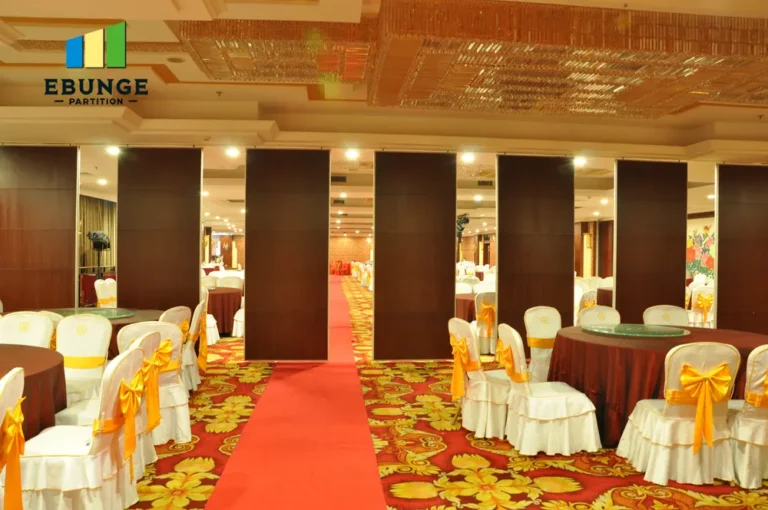
Installation is often overlooked but can significantly impact the total cost. Factors such as ceiling height, structural reinforcement, and access to the site affect labor time and complexity. For top-hung track systems, the header must be engineered to support the partition weight. If your ceiling is not suitable, additional structural work may be needed, increasing the sliding folding partition price.
Site preparation also includes ensuring the floor is level and free of obstructions. Some partitions require a floor guide or track, while top-hung systems eliminate the need for a floor rail, which can save on material and maintenance. Discuss these options with your supplier to understand the cost implications.
Long-Term Costs: Maintenance, Warranty, and ROI
When evaluating quotations, consider the total cost of ownership. A cheaper partition may have higher maintenance costs or a shorter lifespan. Ask about the warranty coverage and what it includes (parts, labor, or both). Also, inquire about the availability of replacement parts and the supplier’s service response time.
Return on investment (ROI) is another factor. A well-designed movable partition can increase the flexibility of your office space, potentially avoiding the need for additional meeting rooms. This can be a significant cost saving in the long run. Weigh the initial investment against the operational benefits.
Share the opening, drawings, finish direction, and privacy target for a project-specific review.
How to Compare Quotes Effectively
To compare quotes fairly, create a checklist that includes: system specifications (acoustic rating, panel dimensions), track type, finish options, installation scope, delivery time, warranty, and after-sales support. Ensure each supplier provides the same level of detail. If one quote is significantly lower, investigate why—maybe it excludes necessary items or uses lower-quality materials.
Also, consider the supplier’s experience with office meeting room projects. Look for case studies or references that demonstrate their capability. While you cannot rely solely on promises, a track record is a good indicator.

Preparing Your Project Information for a Supplier
When you contact a supplier, be ready to share the following:
- Opening size (width, height, and depth of the area)
- Architectural drawings or a floor plan
- Acoustic target (e.g., STC rating)
- Finish preferences (laminate, veneer, paint, fabric)
- Number of panels and stacking direction
- Project location and site access details
- Timeline for installation
Providing this information upfront will streamline the quotation process and ensure you receive accurate pricing. It also shows the supplier that you are a serious buyer, which may lead to more favorable terms.
Common Pitfalls to Avoid When Budgeting
One common mistake is focusing solely on the initial quote and ignoring long-term costs. Another is not clarifying what is included in the installation—for example, does the quote include the removal of old partitions or the disposal of waste? Also, be cautious of quotes that seem too good to be true; they often cut corners on materials or workmanship.
To avoid these pitfalls, always ask for a written contract that specifies all costs, timelines, and warranties. Keep a record of all communications and ensure any verbal agreements are documented.
Conclusion
Understanding the sliding folding partition price for your office meeting room is about more than just the initial quote. By preparing a detailed brief, comparing components, and considering long-term costs, you can make a well-informed decision that balances budget and quality. For more insights on movable partition costs, explore our Movable Partition Cost category. Also, check our movable partition wall solutions and blog for expert tips. When you are ready to move forward, contact us to discuss your project.
Frequently Asked Questions
What is the typical cost range for a sliding folding partition?
The cost varies widely based on size, acoustic rating, finishes, and customization. Without specific project details, it is impossible to give a range. Request a quote with your exact dimensions and requirements.
Does the sliding folding partition price include installation?
Some suppliers include installation in the quote, while others charge separately. Always confirm what is included, such as delivery, installation, and any structural modifications.
How can I reduce the cost of a movable partition?
Opt for standard sizes and finishes, choose a lower acoustic rating if not critical, and consider a simpler track system. However, do not compromise on essential quality or safety.
What is the maintenance cost for these partitions?
Maintenance costs are generally low, but they depend on the frequency of use and the quality of components. Top-hung systems with good seals require minimal upkeep. Ask the supplier for maintenance recommendations.
How long does delivery and installation take?
Delivery times vary based on the manufacturer and customization level. Installation can take a few days, depending on the complexity. Always confirm timelines with the supplier.
Send the opening size and drawings to discuss a differentiated sliding folding partition price solution.