
Quick answer: score bidder track interface assumptions
Review focus: score bidder track interface assumptions.
To score bidder track interface assumptions tender review fairly, separate what each bidder has actually shown from what the tender only implies. Movable partition panels are individually movable, suspended from a top track, cross the opening without a floor track, and park at a planned stacking position. Those maintained facts give reviewers a clear baseline, but they do not prove that a bidder has coordinated the overhead route, support condition or parking zone for your building. This article offers an evidence-bounded scoring method for overseas project teams.
Why Track Interface Assumptions Deserve Their Own Score
Project review term: score bidder track interface assumptions.
The suitability of each route and parking arrangement depends on the approved layout, circulation, ceiling interfaces and operating sequence. When reviewers score only the panel finish or the headline acoustic label, the track interface can remain an assumption.
Scoring the interface separately does not require a performance judgment. The exact route, junction arrangement, continuous overhead path and parking position must be confirmed from the coordinated project drawings. The goal is to compare the quality of coordination evidence, not to infer hidden engineering outcomes.
Build a Scoring Matrix Around Visible Evidence
Coordination scope: score bidder track interface assumptions.
Use a matrix that rewards clarity and penalizes silence. The categories below are deliberately qualitative. They help a tender panel compare submissions without inventing loads, dimensions or acoustic results that no document supports.
| Scoring area | What to look for | Evidence boundary |
|---|---|---|
| Route continuity | Straight, turning and stacking routes shown from the layout | Every movement path needs a continuous connected overhead route; do not accept an untracked gap |
| Parking logic | Planned stacking position marked in plan or reflected in the layout narrative | Parking style is customized to the customer layout and project requirements |
| Support coordination | Named interface with the structural or ceiling zone | Project-specific support requires separate confirmation |
| Finish and pass-door scope | Finish options and pass-door requirements stated | Confirm approved surfaces and project documentation |
| Documentation completeness | Drawings, schedules and clarification log | Missing evidence is a clarification item, not a performance conclusion |

Weight the matrix to match your procurement priorities. The exact overhead route and support arrangement must be confirmed by the responsible project team from coordinated drawings. A new-build fit-out may weight parking logic and finish coordination. The weights are a project decision; the evidence standard should stay consistent across bidders.
Check the Route Before You Check the Finish
Checklist focus: score bidder track interface assumptions.
Finish options such as laminate, melamine, fabric, leather, glass and other approved surfaces are visible and easy to compare. Route logic is less visible, so it deserves an early check. Ask each bidder to trace the panel path from the closed position to the planned stacking position on the layout.
Straight, turning and stacking routes
Stacking routes end at a parking zone that should be planned rather than discovered on site. If a bidder shows panels crossing an opening but leaves the route between zones undefined, mark that as an evidence gap.
What a route drawing should show
- The closed partition line and the opening it serves.
- The overhead route from the opening to the parking position.
- Any turning point and how the route remains connected through it.
- The planned stacking position relative to adjacent walls, columns or services.
This list is a review aid, not a design approval. It helps the panel see whether the bidder has thought through the interface or merely repeated a product description.
Score Parking and Stacking Assumptions Carefully
Review focus: score bidder track interface assumptions.
Parking is where tender assumptions often hide. A bidder may show a neat stack without explaining how the layout accommodates it. Because parking style is customized to the customer layout and project requirements, the tender should show the intended position and any coordination constraint that affects it.
Do not reward a compact stacking claim unless the coordinated design permits it and the drawings show the relevant zone. Do not penalize a bidder for declining to promise a stacking arrangement before layout review. The fair score reflects whether the assumption is visible, bounded and ready for clarification.
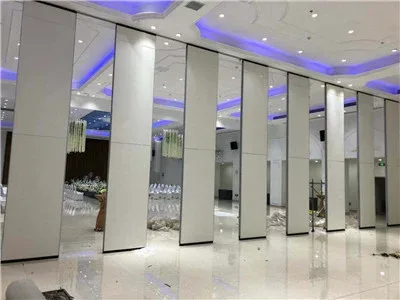
Evidence note: a visible stacking symbol is not proof of structural capacity, acoustic performance or installation feasibility. It is a coordination statement that still needs project-specific review.
Use a Numbered Clarification Process
Project review term: score bidder track interface assumptions.
A repeatable process keeps scoring consistent across bidders and review rounds.
- Register every track interface statement in the submission and note where it appears.
- Mark each statement as shown, implied or absent.
- Compare the route drawing against the architectural layout and ceiling zone.
- Issue clarification questions with a response deadline and a required drawing reference.
- Re-score only the categories affected by the response, and record the reason for any change.
This process protects the panel from rewarding confident wording over usable evidence. It also gives unsuccessful bidders a clear, defensible explanation.
Keep Acoustic Language Conceptual
Coordination scope: score bidder track interface assumptions.
Reviewers should treat acoustic claims as items requiring project-specific confirmation rather than as settled outcomes.
Visible references can support layout discussion but do not verify hidden construction or performance. Score the completeness of that commitment, not an unsupported result.
Document the Interface for the Whole Team
Architects, contractors, interior designers, owners and renovation teams all read tender documents differently. A short interface schedule helps everyone see the same assumptions. It can list the route, parking position, finish scope, pass-door requirements and the open items that remain subject to confirmation.
Project documentation can be discussed with the supplier during clarification. That discussion should produce written references, not verbal assurances. When a bidder provides a drawing revision, record the revision number and the date so the score reflects the current submission.

For maintained product context, see the movable walls product page. For broader planning material, use the resources library. When your team is ready to review a specific layout, contact EBUNGE to discuss project documentation and pass-door requirements.
Frequently Asked Questions
What does track interface mean in a movable partition tender?
It refers to how the overhead track route connects the opening, any turning point and the planned stacking position, and how that route interfaces with the building structure and ceiling zone. The tender should show this coordination rather than leave it implied.
Should I score a bidder lower for not promising acoustic performance?
No. Score whether the bidder identifies the acoustic items requiring confirmation and commits to providing the relevant project documentation.
How do I compare parking assumptions between bidders?
Compare whether each bidder shows a planned stacking position that fits the layout and whether the coordinated design permits the proposed arrangement. Treat unsupported stacking claims as clarification items.
Can a bidder show panels crossing a gap without a track?
No. Every proposed movement path requires a continuous connected overhead route.
Which finish details belong in the scoring matrix?
Record the stated finish option, such as laminate, melamine, fabric, leather, glass or another approved surface, and confirm that the selection is coordinated with the project documentation. Finish choice does not by itself establish other performance characteristics.
When should support and dimensional items be confirmed?
They should be confirmed during project-specific review, before fabrication or installation planning is treated as final. The tender score should reflect whether the bidder has identified these items clearly.
Conclusion and Next Step
Scoring bidder track interface assumptions is a discipline of evidence, not guesswork. Reward submissions that show a continuous connected overhead route, a planned stacking position and a clear list of items requiring project-specific confirmation.
If your team is preparing a tender review for a flexible-space project, contact EBUNGE to discuss your layout, pass-door requirements and project documentation.