
When planning a school hall that must serve assemblies, examinations, performances, and community events, the school sliding partition design becomes a pivotal decision. As an interior designer, you need a system that balances acoustics, safety, and aesthetics while meeting strict budgets and timelines. This guide walks you through the critical design considerations, from acoustic targets to operational ease, ensuring you specify the right movable partition wall for your project.
For a school hall, the ideal school sliding partition design integrates a top-hung track system (no floor rail) for safety and easy cleaning, with acoustic panels achieving an STC rating of 45–50 (verify with the supplier for your specific needs), and includes child-safe features like soft-close mechanisms and rounded edges. Prioritize durability, fire compliance, and simple operation for staff, while confirming all specifications with the supplier before quotation.
Why the Right School Sliding Partition Design Matters
School halls are high-traffic environments where the partition must withstand daily use, frequent reconfiguration, and occasional impacts from trolleys or equipment. A well-designed movable partition wall not only divides space but also enhances the hall’s versatility. Poor design can lead to acoustic leakage, safety hazards, and high maintenance costs. By focusing on design-ideas, you ensure the partition complements the hall’s architecture and meets educational needs.
Need help turning the school sliding partition design requirements into a practical project layout?
Acoustic Performance: Setting the STC Target
Acoustic control is often the top priority for school halls. The Sound Transmission Class (STC) rating indicates how well the partition blocks sound. For a hall used for music practice, exams, or simultaneous classes, an STC of 45–50 is typical. However, the exact target depends on the ambient noise level and the hall’s usage. For instance, if the hall is adjacent to a gymnasium, a higher STC may be necessary. Always verify the STC rating with the supplier, as it is influenced by perimeter sealing, glazing, and installation quality. For detailed acoustic solutions, explore our movable partition wall systems.
Safety for Children: Design Features to Prioritize
Child safety is non-negotiable. Key features include:
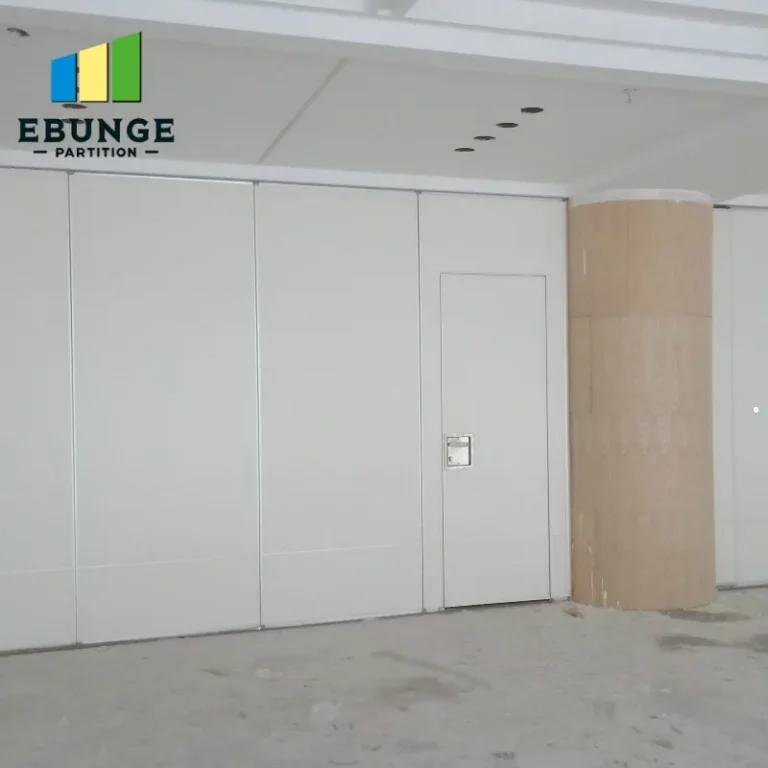
- No floor rail: Eliminates trip hazards and simplifies cleaning.
- Soft-close mechanisms: Prevent fingers from being caught and reduce noise.
- Rounded edges and flush surfaces: Minimize injury risk during play.
- Secure locking: Ensure panels cannot be dislodged by children.
When specifying, ask the supplier for details on child-safe hardware and compliance with relevant safety standards. Do not assume; confirm in writing.
Operational Ease: Designing for Staff
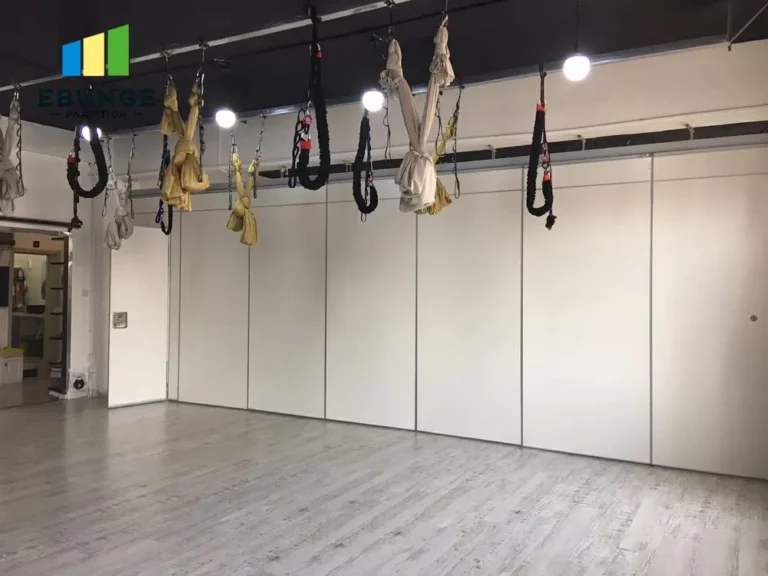
School staff, often not trained in complex machinery, will operate the partition daily. The design should be intuitive and low-effort. A top-hung track system allows smooth gliding, but the weight of panels can make manual operation tiring. Consider motorized options for larger panels, but balance cost with practicality. Ensure handles are ergonomic and at a reachable height for average staff. Also, include clear signage or instructions for safe operation.
Durability and Maintenance in High-Traffic Areas
School halls are subject to constant use, so the partition must resist dents, scratches, and wear. Look for panels with impact-resistant surfaces, such as laminate or steel-faced finishes. The track system should be robust, with sealed bearings to prevent dust accumulation. For maintenance, choose materials that are easy to wipe down and do not harbor allergens. Request a maintenance schedule from the supplier and factor lifecycle costs into your budget.
Fire Safety Compliance: What You Must Know
Partitions in school halls must comply with local fire regulations. This includes fire ratings for the panels, seals, and the overall assembly. Ensure the supplier provides fire test certificates and that the design includes intumescent seals that expand in heat to block smoke and flames. The partition’s operation must not obstruct emergency exits. Verify compliance with your local authority and include these requirements in your specification.
Aesthetic Appeal: Designing for Educational Environments
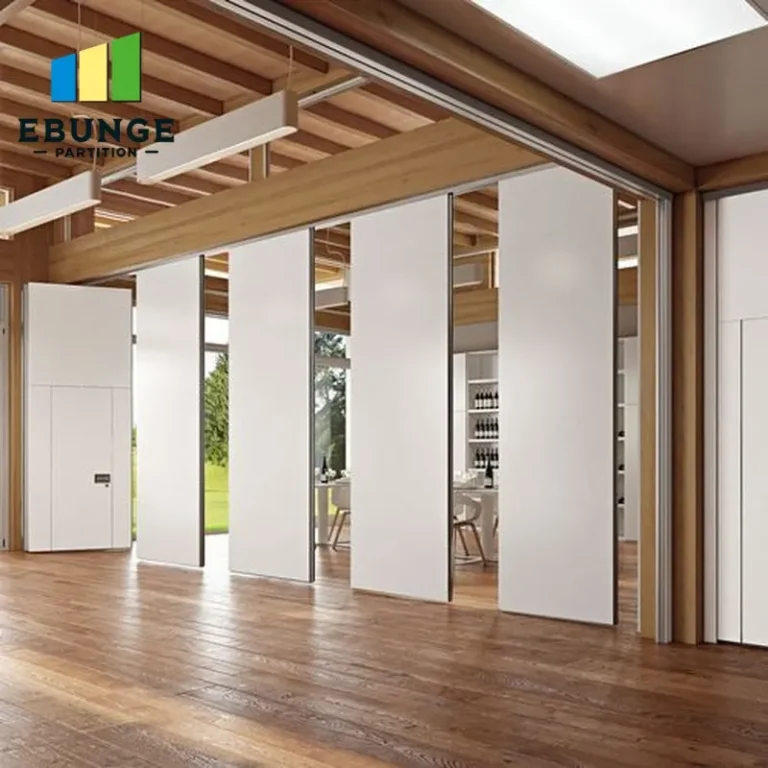
The partition should enhance the hall’s visual appeal and contribute to a positive learning atmosphere. Choose from a range of finishes, such as chalkboard surfaces, magnetic boards, or vibrant colors that can be used for teaching. The design should also allow for integration with lighting and acoustics. For inspiration, browse our movable partition design ideas to see how finishes and patterns can transform a space.
Share the opening, drawings, finish direction, and privacy target for a project-specific review.
Budget and Lifecycle Costs: Planning Beyond Initial Quote
While the initial quotation is important, consider the total cost of ownership. Durable materials may have a higher upfront cost but lower maintenance and replacement costs. Energy efficiency (e.g., insulation properties) can also impact heating and cooling bills. Ask for a breakdown of costs, including installation, hardware, and any optional features. A transparent supplier will help you balance quality and budget. For a detailed comparison, see the table below.
Comparison Table: Top-Hung Track vs. Floor-Rail Systems
| Feature | Top-Hung Track (Recommended) | Floor-Rail System |
|---|---|---|
| Safety | No trip hazard | Potential trip hazard |
| Cleaning | Easy floor access | Rail can trap dirt |
| Acoustic Seal | Bottom seal drops to floor | Rail may compromise seal |
| Durability | Less wear on floor | Rail can be damaged |
Lead Time and Installation: Planning Your Schedule
Production and installation lead times can vary significantly based on customization and order size. For a school project, you may need to align with the academic calendar. Confirm lead times early and build buffer for unexpected delays. Also, ensure the installation team is experienced with school environments, as they must work around students and staff. Ask for a project plan and regular updates.
Design Support: Leveraging Supplier Expertise
A good supplier offers design support, from initial concept to installation. They should provide detailed drawings, technical specifications, and guidance on integrating the partition with other building systems. This support is invaluable for avoiding costly mistakes. When contacting suppliers, be prepared to share your opening size, drawings, acoustic target, finish preference, and project location. This information enables them to give accurate quotations and tailored advice. For a seamless process, reach out via our contact page.
Practical Checklist for Specifying a School Sliding Partition
- Measure the opening width and height accurately.
- Determine the required STC rating based on usage.
- Specify top-hung track with no floor rail.
- Choose child-safe hardware (soft-close, rounded edges).
- Select durable, easy-to-clean finishes.
- Verify fire safety compliance with local codes.
- Consider motorized operation for heavy panels.
- Request a maintenance schedule and lifecycle cost estimate.
- Confirm lead time and installation plan.
Conclusion: Making an Informed Decision
Choosing the right school sliding partition design involves balancing multiple factors: acoustics, safety, durability, aesthetics, and budget. By focusing on design-ideas and asking the right questions, you can specify a system that serves the school for decades. Always verify technical details with the supplier and rely on project-specific data. For further reading, our blogs offer additional insights into partition design and installation.
Frequently Asked Questions
What is the typical STC rating for a school sliding partition?
Typical STC ratings range from 45 to 50, but the exact rating depends on the hall’s acoustic requirements and the partition’s construction. Always confirm with the supplier based on your project’s specific needs.
Can a school sliding partition be motorized?
Yes, motorized systems are available and can be beneficial for heavy panels or frequent use. They add to the cost but improve ease of operation for staff.
How do I ensure the partition is safe for children?
Look for features like no floor rail, soft-close mechanisms, rounded edges, and secure locking. Confirm with the supplier that these are included in the design.
What maintenance is required for a top-hung track system?
Regular cleaning of the track and checking the seals is recommended. The supplier should provide a detailed maintenance schedule. Durable materials can reduce maintenance frequency.
How long does it take to produce and install a school partition?
Lead times vary based on customization and order size. Typically, it can take several weeks to months. Confirm with the supplier and plan accordingly, especially if you need to align with the school calendar.
Send the opening size and drawings to discuss a differentiated school sliding partition design solution.