
Planning a school hall renovation or new build involves many budget lines, and the school movable partition cost is often one of the most misunderstood. Unlike standard doors or fixed walls, an operable wall system is a tailored product, and its price depends on a chain of technical and project-specific factors. As a school project buyer, you need to move beyond a simple sticker price and understand what drives quotes, how to compare proposals, and what questions to ask suppliers to avoid budget overruns. This guide breaks down the cost components, evaluation criteria, and the information you must prepare to get accurate quotations.
Direct answer: The school movable partition cost for a school hall typically ranges from $50 to $150 per square foot installed, but this is only a starting point. The final figure depends on the opening size, acoustic performance requirements, finish choices, track system, and site conditions. To get a reliable quote, you must provide detailed drawings, specify your acoustic target, and clarify your project timeline.
Why School Movable Partition Cost Varies So Much
Unlike off-the-shelf products, a movable partition wall is engineered for a specific opening. The cost per square foot can vary by 200% or more based on the following:
- Acoustic rating: A partition with an STC (Sound Transmission Class) of 40 is cheaper than one rated at 50 or higher. For a school hall that needs to host music rehearsals and exams simultaneously, a higher STC is non-negotiable.
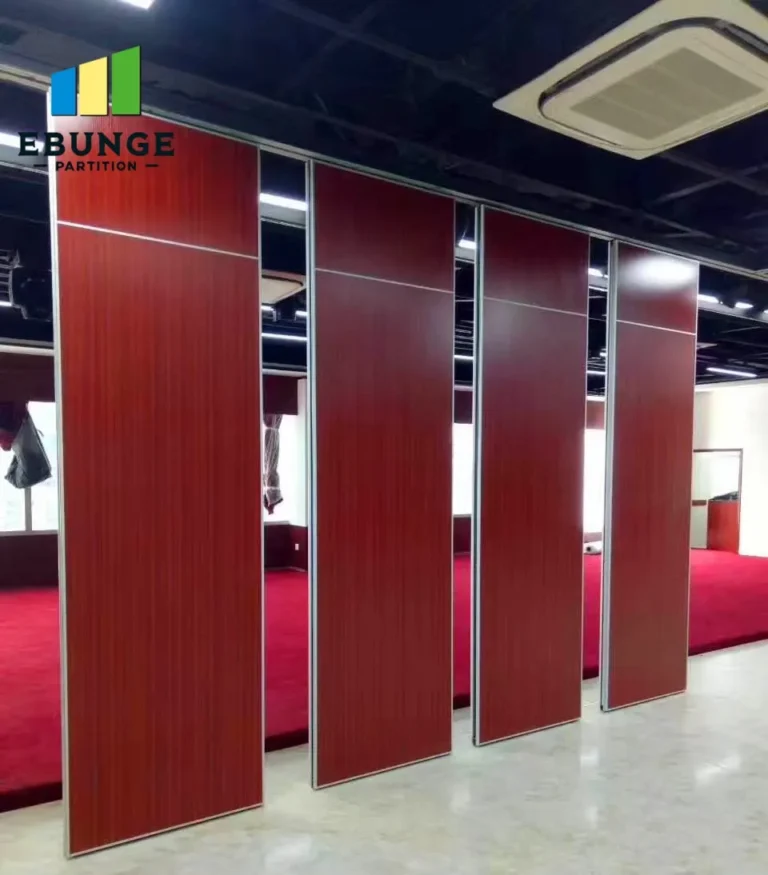
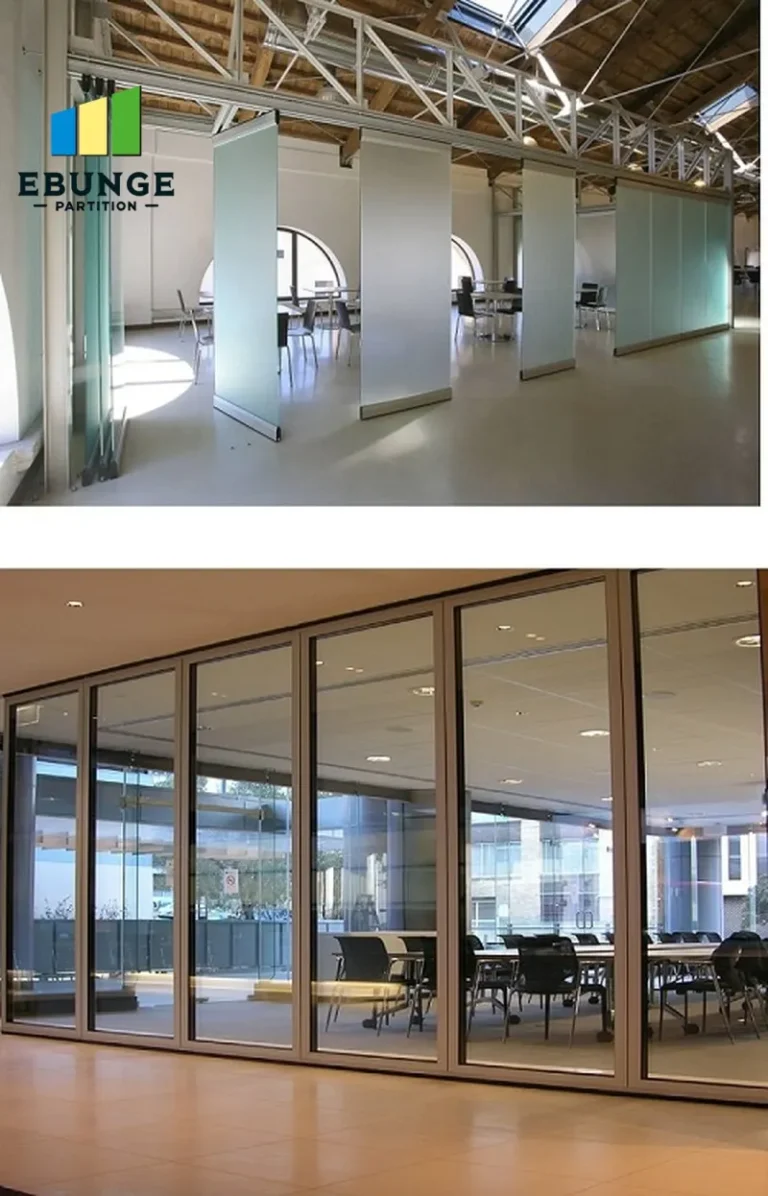
- Material and finish: The choice of facing—vinyl, fabric, wood veneer, or tackable surfaces—affects both durability and cost. Some finishes require more maintenance, which impacts total cost of ownership.
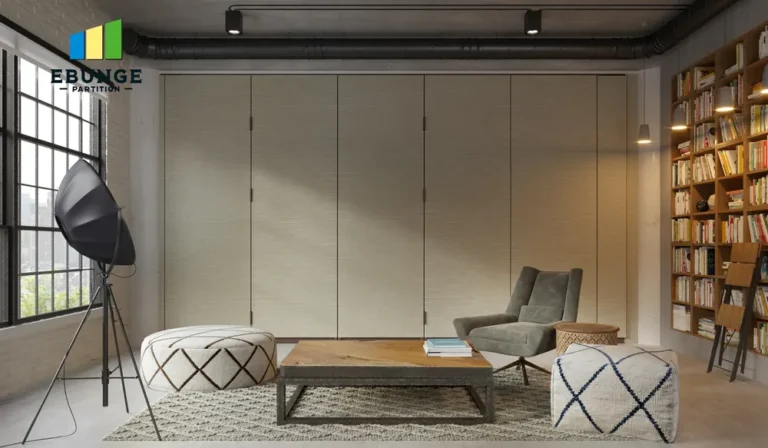
- Operation and track system: A top-hung track system without a floor rail is often preferred in schools to avoid trip hazards and floor damage, but it adds structural requirements and cost compared to a simpler system.
- Customization: Curved tracks, unusual heights, or integration with existing architecture will increase engineering and manufacturing costs.
- Installation complexity: Site access, ceiling height, and whether the installation happens during school holidays affect labor costs.
As a buyer, you should request a detailed breakdown of these elements in every quotation.
Need help turning the school movable partition cost requirements into a practical project layout?
What Your Quotation Must Include
When comparing quotes, ensure each supplier provides a line-item breakdown. At a minimum, the quotation should cover:
- Supply of panels, track, hardware, and seals
- Engineering and drawing approval
- Delivery and installation (or a separate installation quote)
- Finishes and custom options
- Warranty terms and after-sales support
- Project management and timeline
If any of these are missing, ask for clarification. A vague quote is a risk. The school movable partition cost should be transparent, and you should be able to see where your money goes.
Key Cost Drivers: Acoustic Performance and Safety Standards
Acoustic performance is often the biggest cost driver. For a school hall, you may need an STC rating of 45-50 to ensure speech privacy and noise control. Higher STC ratings require thicker panels, more seals, and more precise installation, which increases both material and labor costs.
Safety compliance is non-negotiable. Your partition must meet local building codes, fire regulations, and accessibility standards. Ensure your supplier can provide documentation of compliance. This is not an area to cut costs, as failure to comply can lead to project delays and liability.
Ask suppliers for the acoustic test data for their system, but remember that the actual performance depends on the installation and surrounding structure.
Installation, Maintenance, and Total Cost of Ownership
The initial purchase price is only part of the equation. Consider the following:
- Installation time: A typical school hall partition can be installed in 2-5 days, but this depends on the system and site conditions. Faster installation may reduce disruption but could come at a premium.
- Maintenance: Look for systems that are easy to clean and have replaceable parts. For example, fabric panels may need periodic cleaning, while vinyl is more durable. Ask about maintenance costs over a 10-year period.
- Warranty and after-sales support: A longer warranty often indicates higher quality. However, read the fine print to understand what is covered and for how long. Also, check if the supplier offers local support or if you have to ship parts internationally.
When comparing quotes, calculate the total cost of ownership over the expected lifespan of the partition (typically 20-30 years). A cheaper product may require more frequent repairs or replacement, ultimately costing more.
How to Prepare for Supplier Discussions
To get accurate quotes, you need to provide suppliers with specific information. The more detailed your brief, the fewer surprises later. Before contacting suppliers, prepare:
- Opening size and drawings: Include width, height, and any structural constraints.
- Acoustic target: Specify the STC rating you need, based on how the hall will be used.
- Finish preferences: Choose from standard options or request samples.
- Project location: This affects delivery costs and installation logistics.
- Timeline: When do you need the partition installed? Do you have a deadline that requires out-of-hours work?
Providing this information upfront will help suppliers give you a more precise quotation and reduce the risk of change orders later.
Share the opening, drawings, finish direction, and privacy target for a project-specific review.
Comparing Quotes: What to Look For
When you receive multiple quotes, don’t just compare the bottom line. Create a comparison table to evaluate each proposal:
| Criteria | Supplier A | Supplier B | Supplier C |
|---|---|---|---|
| Price per sq ft | |||
| STC rating | |||
| Track system | |||
| Finish options | |||
| Installation time | |||
| Warranty | |||
| Maintenance plan | |||
| After-sales support |
Use this table to weigh the pros and cons, and don’t be afraid to ask suppliers to justify any significant differences in price.
Budgeting for Customization and Contingencies
Customization can add 10-30% to the base cost. For example, if you need a partition that integrates with a curved wall or has a unique finish, expect a premium. Always set aside a contingency fund (typically 5-10% of the partition budget) for unexpected site conditions or change requests.
Also, consider the cost of any structural modifications required for the top-hung track system. Your building may need additional steel support, which is not always included in the partition quote. Get a structural engineer’s assessment early to avoid surprises.
Working with a Supplier: Project Management and Delivery
The supplier you choose should act as a project partner, not just a vendor. During the selection process, ask about their project management approach:
- Who will be your single point of contact?
- How do they handle drawing approvals and revisions?
- What is their delivery lead time and installation schedule?
- How do they coordinate with other trades on site?
Effective communication is key to keeping the project on time and within budget. A supplier who is responsive during the quotation phase is likely to be responsive during installation.
Frequently Asked Questions
What is the average cost of a school movable partition wall?
The average installed cost ranges from $50 to $150 per square foot, but this can vary widely. The exact price depends on the factors discussed above. Always get a detailed quote based on your specific requirements.
How long does installation take?
Installation typically takes 2-5 days for a standard school hall partition. However, this depends on the size, complexity, and site conditions. Your supplier should provide a timeline in their proposal.
What is the difference between a movable partition and a folding door?
A movable partition is a wall system that provides acoustic separation and can be configured to create separate rooms. A folding door is primarily an opening closure. Partitions are heavier, more soundproof, and more expensive.
Can I get a partition with a tackable surface for classrooms?
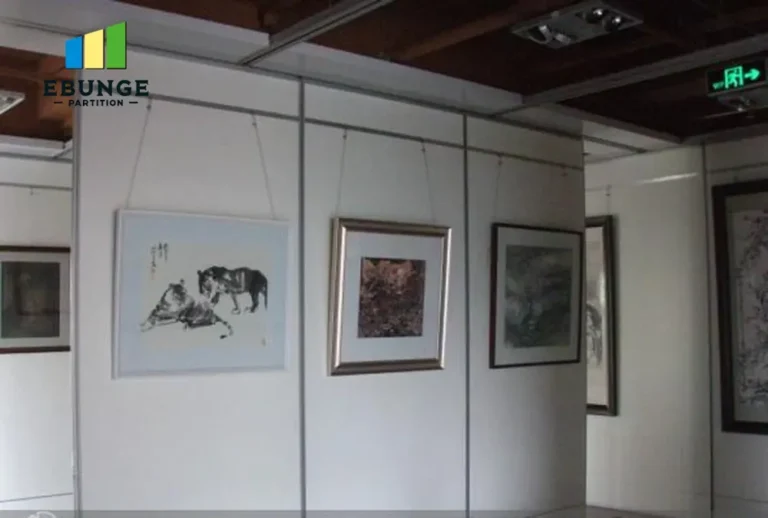
Yes, many suppliers offer tackable surfaces as an option. This can be useful for classrooms or multi-purpose areas. Be sure to specify this in your request to get an accurate quote.
How do I maintain the partition?
Maintenance is minimal but includes regular cleaning of the panels and checking the track and seals. Ask your supplier for a maintenance guide. Some finishes require more care than others, so consider this when choosing.
Your Next Steps: From Inquiry to Installation
Now that you understand the cost drivers, you can approach suppliers with confidence. Start by preparing a detailed brief with your drawings, acoustic target, and finish preferences. Then, contact multiple suppliers and request itemized quotes. Use the comparison table to evaluate them, and don’t hesitate to ask for references or case studies.
For more information on movable partition walls and to see how they can be tailored for your school hall, explore our movable partition wall options. You can also read our blog for insights on acoustics and design. If you have specific questions, contact our team—we’re here to help you make an informed decision.
Remember, the school movable partition cost is an investment in flexibility and functionality. With the right supplier and a clear understanding of your needs, you can achieve a solution that fits your budget and serves your school for decades.
Send the opening size and drawings to discuss a differentiated school movable partition cost solution.