
When planning a school hall, the choice of a school acoustic partition supplier can determine whether the space performs for assemblies, exams, performances, and daily teaching. For building material distributors, the challenge is not just finding a product but a partner who can deliver verified acoustic performance, code compliance, and long-term reliability. This guide focuses on the technical and commercial checks that matter when evaluating suppliers, helping you prepare for quotations, compare proposals, and make informed decisions.
Direct answer: To evaluate a school acoustic partition supplier, focus on verified acoustic data, compliance with building codes, durability in high-traffic areas, ease of operation, installation efficiency, after-sales support, warranty terms, cost transparency, lead time, and customization options. Request detailed documentation, site references, and product samples before committing.
School Acoustic Partition Supplier: Understanding Your School Hall Requirements
Before contacting suppliers, define your project’s acoustic and spatial needs. Consider the hall’s dimensions, ceiling height, and how the partition will be used. Will it divide the space for simultaneous classes or create a quiet exam area? The acoustic target, often expressed as Sound Transmission Class (STC) or Rw, should be based on the intended activities. For instance, a partition separating a music room from a library may need a higher rating than one dividing a gymnasium. Also, consider the opening size, finish preferences (e.g., tackable surface, whiteboard), and the project location, as these affect the supplier’s ability to meet your requirements.
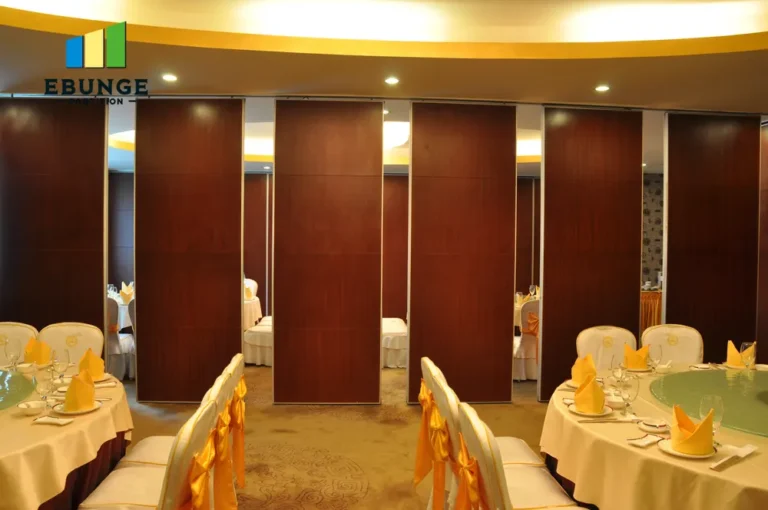
Need help turning the school acoustic partition supplier requirements into a practical project layout?
Verifying Acoustic Performance Claims
Acoustic performance is a common pain point, as uncertainty about sound privacy can undermine the partition’s purpose. Ask suppliers for test reports from accredited laboratories, not just marketing brochures. Look for the STC or Rw value, and ensure the test conditions match your application. A partition rated STC 50 in a laboratory may perform differently on-site due to flanking paths. Request details on sealing systems, perimeter gaskets, and installation quality. A reputable supplier should provide data and explain how to achieve the rated performance in your specific hall.
Compliance with Building Codes and Standards
School projects must meet local building codes, fire safety regulations, and accessibility standards. Verify that the partition system complies with relevant codes, such as fire ratings, smoke seals, and emergency egress. Ask for certifications and documentation, but note that compliance is project-specific. The supplier should be able to guide you on code requirements and provide necessary approvals. For example, a partition may need a fire-resistance rating of 30 or 60 minutes, depending on the building’s occupancy classification.
Durability in High-Traffic School Environments
School halls experience heavy use, so the partition must withstand impacts, frequent operation, and cleaning. Evaluate the materials used: panel construction, surface finish, and hardware. Look for panels with impact-resistant cores, such as particleboard or honeycomb, and durable skins like laminate or steel. The track system should be robust, with sealed ball bearings and corrosion-resistant components. Ask about warranty coverage and expected lifespan. A supplier with a track record in school projects can provide references, but always verify independently.
Ease of Operation and Safety Features
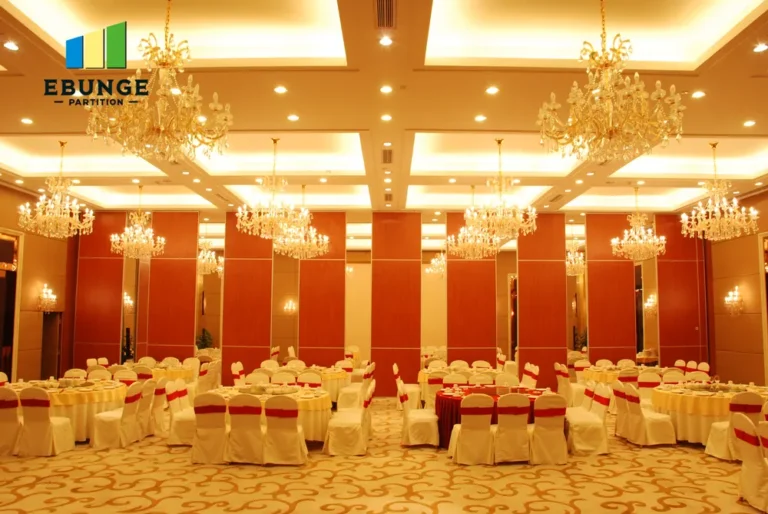
Teachers and staff will operate the partition daily, so it must be easy to use and safe. Consider the operation type: manual or motorized. Manual systems should have smooth gliding with minimal effort, while motorized systems offer convenience but require power and maintenance. Safety features include pinch guards, pressure-sensitive edges, and emergency stops. The top-hung track system, which eliminates floor rails, reduces trip hazards and simplifies cleaning. Ask for a demonstration or trial installation to assess usability.
Installation Time and Project Coordination
Installation downtime can disrupt school operations. Inquire about the supplier’s installation process, typical timeline, and coordination with other trades. A pre-installation survey is essential to ensure accurate measurements and to identify any site challenges. The supplier should provide detailed drawings and an installation schedule. For distributors, understanding the lead time from order to delivery is crucial for project planning. Ask about contingency plans for delays.
After-Sales Support and Warranty Terms
After installation, you need reliable support. Evaluate the supplier’s service network, response times, and spare parts availability. A warranty that covers parts and labor for a reasonable period (e.g., 5-10 years) indicates confidence in the product. However, warranty terms vary, so read the fine print. Clarify what is covered, such as hardware, panels, and seals, and what is excluded, such as misuse or wear. A supplier that offers maintenance contracts or training for staff is a plus.
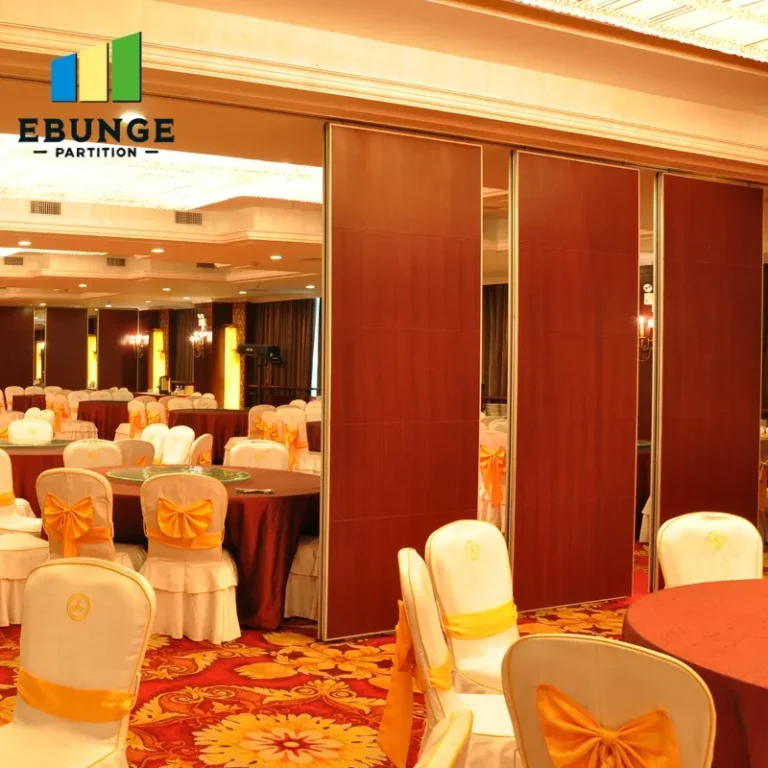
Share the opening, drawings, finish direction, and privacy target for a project-specific review.
Cost Transparency and Total Cost of Ownership
Price is a major factor, but focus on total cost of ownership, not just initial quote. Request a detailed breakdown of costs: product, hardware, installation, delivery, and taxes. Be wary of hidden fees. Compare quotes from multiple suppliers, but also consider energy efficiency, maintenance costs, and lifespan. A higher upfront cost may be justified by better durability and lower maintenance. Ensure the quotation clearly states what is included and any assumptions made.
Lead Time and Customization Options
School projects often have tight schedules, so lead time is critical. Ask for the supplier’s standard lead time and whether it can be expedited. Customization, such as non-standard sizes, finishes, or integrated whiteboards, may affect lead time and cost. The supplier should offer flexible options to meet your design and functional needs. For example, a top-hung track system can be customized to accommodate curved walls or unusual ceiling configurations.
Checklist for Evaluating Suppliers
| Criteria | Questions to Ask | Documents to Request |
|---|---|---|
| Acoustic performance | What is the STC/Rw rating? How is it achieved? | Test reports from accredited labs |
| Compliance | Does it meet local fire and egress codes? | Certificates, code compliance letters |
| Durability | What materials are used? Impact resistance? | Material specifications, warranty details |
| Ease of use | Manual or motorized? Safety features? | User manuals, safety certifications |
| Installation | How long does installation take? | Installation guide, project timeline |
| After-sales support | What is the warranty period? Service network? | Warranty terms, support contacts |
| Cost | What is included in the quote? | Itemized quotation |
| Lead time | What is the lead time? Can it be expedited? | Lead time confirmation |
Preparing for Quotations and Inquiries
To get accurate quotations, provide suppliers with detailed information: opening size, ceiling height, wall construction, acoustic target, finish preference, and project location. Include drawings if available. This reduces back-and-forth and ensures the quote reflects your needs. Ask suppliers to confirm their ability to meet your specifications and to provide references from similar school projects.
Conclusion
Selecting a school acoustic partition supplier requires a thorough evaluation of technical capabilities, commercial terms, and after-sales support. By focusing on verified acoustic data, compliance, durability, and clear communication, you can make an informed choice that meets your school hall’s needs. Remember to request documentation and clarify all aspects before signing a contract. A reliable supplier will be transparent and willing to answer your questions.
Frequently Asked Questions
What is the typical acoustic rating for a school partition?
Typical ratings range from STC 35 to 50 depending on the application. For speech privacy, an STC of 45 or higher is often recommended. However, the exact requirement depends on the activities and building codes. Always verify with the supplier’s test data.
How long does installation take for a movable partition?
Installation time varies based on the size and complexity. A simple partition might be installed in a few days, while larger or motorized systems could take longer. The supplier should provide a detailed schedule after a site survey.
Can the partition be customized to match the hall’s interior?
Yes, most suppliers offer a range of finishes including laminate, veneer, and tackable surfaces. You can also specify colors and patterns. Custom sizes and integrated features like whiteboards are often possible.
What warranty should I expect?
Warranties vary, but a typical warranty covers parts for 5-10 years, with some suppliers offering longer terms. Ensure the warranty is in writing and understand what is covered and excluded.
How do I ensure the partition meets building codes?
Ask the supplier for compliance documentation and check with your local building authority. The supplier should be knowledgeable about relevant codes and provide necessary certifications.
For more insights on movable partition wall solutions, visit our blog or explore our manufacturer category. If you have specific project questions, contact us for personalized guidance.
For this buyer review, school acoustic partition supplier should be checked against the confirmed opening, drawings, operating plan, and project specification.
Send the opening size and drawings to discuss a differentiated school acoustic partition supplier solution.