
Quick answer: room scheduling rules override changeover
Review focus: room scheduling rules override changeover.
Your changeover policy may say one thing, but the booking system often says another. A room scheduling rules override changeover policy audit reveals where booking logic, room setup and movable partition planning quietly conflict. For overseas contractors, architects, interior designers and facility teams, the goal is not to blame software. It is to align what the schedule promises with what the room can physically support. This guide uses confirmed EBUNGE product facts and clear evidence boundaries. Every project still needs its own drawing review, support check and dimensional confirmation.
Why Scheduling Rules Beat Written Policy
Project review term: room scheduling rules override changeover.
The suitability of each route and parking arrangement depends on the approved layout, circulation, ceiling interfaces and operating sequence. Scheduling rules, however, operate in seconds. They allow back-to-back bookings, recurring events and last-minute holds. When a booking system treats a room as continuously available, the changeover window shrinks to zero. Staff then improvise, and the written policy becomes decorative.
This is not a software failure. It is a planning gap. The schedule does not know whether a partition is parked, whether a pass door is required, or whether the route from storage to opening is clear. Those are physical facts that belong in the project documentation, not in an assumption.
Where the Override Happens in Real Facilities
Coordination scope: room scheduling rules override changeover.
Overrides rarely announce themselves. Facility Operations Planning coordination should catch these patterns before they harden into custom.
Booking templates that ignore setup type
A template may offer “meeting” and “event” without defining what each requires. If both map to the same room state, the schedule cannot distinguish a quick discussion from a full reconfiguration.
Recurring events with no reset buffer
Recurring bookings feel efficient, but they can lock a room into one configuration. When a one-off event needs a different layout, the recurring rule wins by default.
Room attributes that are not maintained
If a room is listed as flexible but its partition route is blocked by stored furniture, the attribute is misleading. The schedule will keep sending bookings that the room cannot serve.

What the Audit Should Actually Check
Checklist focus: room scheduling rules override changeover.
An audit is a structured comparison, not a performance test. It checks whether scheduling assumptions match maintained product facts and project-specific drawings.
- List every booking rule that can create a zero-minute changeover.
- Map each rule to a physical room state, including open, closed and parked positions.
- Review the movement route from the stacking position to the opening, including any turning or stacking path shown on the layout.
- Confirm the overhead route is continuous and supported for every proposed panel movement.
- Check pass-door requirements against the way people actually enter and leave during changeover.
- Record unresolved items as project-specific confirmations, not as assumptions.
This sequence keeps the audit tied to visible evidence. If a route, support point or dimension is not shown, it is not confirmed.
Evidence Boundaries for Scheduling and Partition Claims
Review focus: room scheduling rules override changeover.
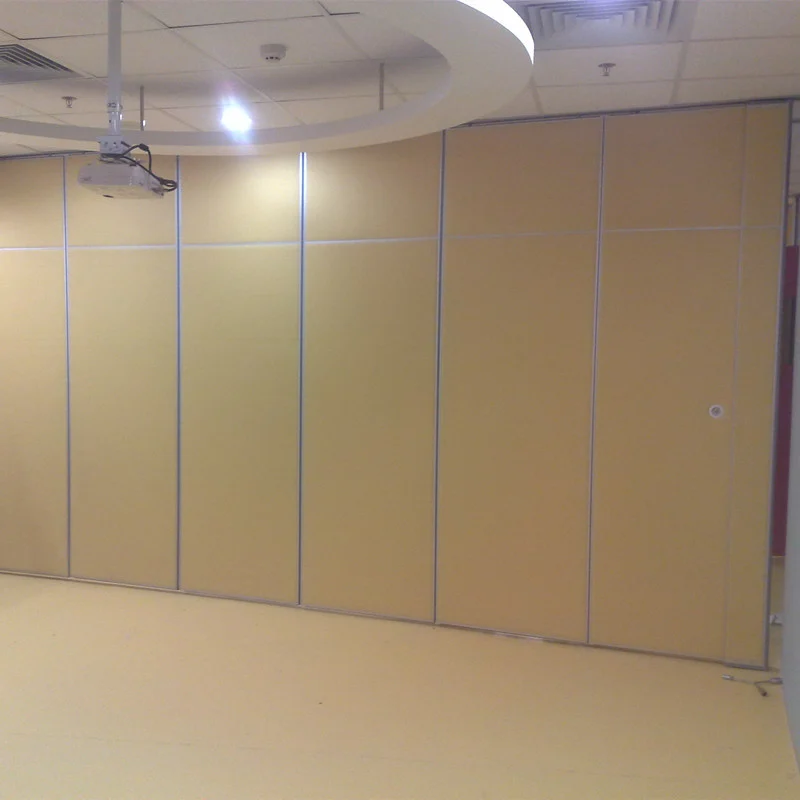
Movable wall panels are individually movable, suspended from a top track, cross the opening without a floor track, and park at a planned stacking position. Those are maintained product facts. Panel handling and the operating sequence must be confirmed for the selected layout and project conditions.
Evidence note: If a scheduling rule depends on a partition behavior, support condition or dimension that is not documented for the project, treat it as an open item. Do not fill the gap with a generic assumption.
Coordinating the Audit Across Project Teams
Contractors, architects, interior designers and owners each hold part of the picture. The architect may know the intended room sequence. The contractor may know the as-built route. The owner may know how the room is actually booked. The audit only works when those views are compared on the same drawings.
Who owns which decision
Booking logic usually sits with facility operations. Partition configuration sits with the project design and supply team. Changeover expectations sit with the owner or operator. When these three are not aligned, the schedule silently overrides the policy.
What to bring to a drawing review
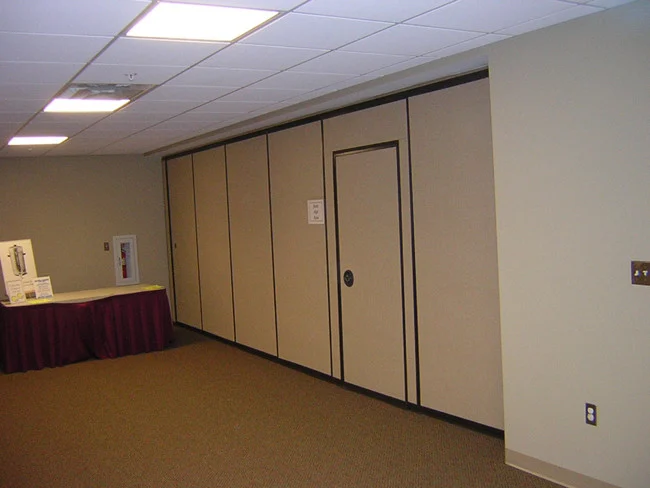
Bring the current layout, the booking rule list, the intended stacking position and any pass-door requirements. Mark every route as straight, turning or stacking. The exact route, junction arrangement, continuous overhead path and parking position must be confirmed from the coordinated project drawings.
Decision Checklist Before You Change the Policy
Use this checklist to separate confirmed facts from open questions. It is not a substitute for project-specific support, acoustic and dimensional confirmation.
- Does every booking rule have a defined room state?
- Is the changeover window realistic for the movement route shown?
- Is the parking position reachable without moving unrelated furniture?
- Are pass-door needs documented for normal and emergency circulation?
- Are finish choices recorded without implying performance?
- Are unresolved support and acoustic items assigned to a responsible party?
If any item is unclear, the safe action is to confirm it before the schedule depends on it. You can review maintained product context on the movable walls page and general planning notes in the resources section.
How to Document the Audit Outcome
The output should be a short, traceable record. It should state which scheduling rules were reviewed, which physical conditions were confirmed, and which items remain open.
Where a rule cannot be supported by the current layout, revise the rule or revise the room. Do not leave the conflict for staff to solve during a live event. A documented open item is more useful than a silent override.
FAQ: Scheduling Rules and Changeover Policy
What is a room scheduling rules override changeover policy audit?
It is a structured review that compares booking rules with the physical room states and partition routes they depend on. The goal is to find where the schedule quietly makes the written changeover policy impossible to follow.
Does a movable partition remove the need for changeover time?
No. Panels are individually movable and park at a planned stacking position, but the schedule still needs a realistic window for movement, setup and circulation. The required time depends on the project layout and should be confirmed, not assumed.
Can the audit confirm acoustic performance?
No. The audit should record acoustic requirements as items to confirm with matching evidence.
What if the layout shows a turning or stacking route?
Straight, turning and stacking routes should be reviewed from the layout. Every proposed movement path requires a continuous connected overhead route and project-specific support review.
Which finish should be specified for a flexible room?
Confirmed finish options include laminate, melamine, fabric, leather, glass and other approved surfaces.
When should we involve the partition supplier?
Involve them during drawing review, before booking rules are finalized. Pass-door requirements and project documentation can be discussed at that stage so the schedule reflects the actual room configuration.
Conclusion: Make the Schedule Tell the Truth
A changeover policy only works when the scheduling rules respect the room. Audit the rules, map them to confirmed product facts and project drawings, and record every open item. Confirm project-specific support, acoustic and dimensional requirements before the schedule depends on them.
Ready to align your booking logic with a movable partition layout? Contact EBUNGE to discuss pass-door requirements, project documentation and drawing review for your next flexible-space project.