
Quick answer: room scheduling rules
Review focus: room scheduling rules.
Room scheduling rules changeover policy operable walls are three linked decisions that determine how a flexible space actually performs day to day. Scheduling rules define who books the room and when. Changeover policy defines what must happen between bookings. Operable walls provide the physical division. When these three are misaligned, even a well-built partition system can become a bottleneck. This article offers an evidence-bounded framework for overseas contractors, architects, interior designers, owners, and facility teams who need to coordinate scheduling logic with movable wall operation. It does not promise acoustic outcomes, service life, or financial returns. The exact route, junction arrangement, continuous overhead path and parking position must be confirmed from the coordinated project drawings.
Why Scheduling Rules Drive Changeover Policy
Project review term: room scheduling rules.
Scheduling rules are not just calendar entries. Panel handling and the operating sequence must be confirmed for the selected layout and project conditions. A changeover policy translates those expectations into practical steps. For operable walls, the key constraint is that panels are individually movable, suspended from a top track, cross the opening without a floor track, and park at a planned stacking position. If the schedule assumes a five-minute turnaround but the parking route crosses an active circulation path, the policy is already under pressure.
Operations and facility management teams should treat the changeover policy as a coordination document. It should reference the approved layout, the straight, turning, and stacking routes, and the agreed parking position. It should also state who confirms that the route is clear before movement begins. None of these steps require inventing performance data. They simply connect the schedule to the physical system.
Mapping Booking Patterns to Panel Movement Routes
Coordination scope: room scheduling rules.
Different booking patterns create different movement demands. A room that switches between one large hall and two smaller rooms may use a simple straight route. The layout review should identify every intended configuration and trace the path each panel group takes.
Straight, Turning, and Stacking Routes

The suitability of each route and parking arrangement depends on the approved layout, circulation, ceiling interfaces and operating sequence. Stacking routes determine where panels rest when not in use. If the stacking position blocks a doorway, service corridor, or emergency exit, the changeover policy must account for that conflict. These are layout and coordination issues, not product performance claims.
Parking Position and Room Readiness
The parking position is customized to the customer layout and project requirements. It may support compact stacking when the coordinated design permits it. The changeover policy should specify the exact parking position and confirm that it remains accessible between bookings. If furniture, AV equipment, or catering setups occupy that area, the schedule may need buffer time or a relocation step.
Building a Changeover Policy That Matches the Schedule
Checklist focus: room scheduling rules.
A practical changeover policy is a short, repeatable sequence. It should be written for the people who actually use the room, not just for the project file. The following numbered process can be adapted to most flexible-space applications.
- Confirm the next configuration. Check the booking system for the required room size and layout.
- Verify the route is clear. Ensure the straight, turning, and stacking routes are free of obstructions.
- Move panels to the planned parking position. Follow the approved sequence for the specific configuration.
- Check the opening. Confirm that panels are positioned as intended and that no gaps remain along the partition line.
- Record completion. Note any issues that could affect the next changeover.
This process does not require operating method, special tools, or a fixed number of operators. Those details depend on project-specific design and should be confirmed with the supplier and the operations team.
Finish Choices and Their Effect on Changeover Logistics
Review focus: room scheduling rules.
Confirmed finish options include laminate, melamine, fabric, leather, glass, and other approved surfaces. Finish selection can influence changeover logistics in subtle ways.
It should also identify who is responsible for inspecting the panels after each changeover. If the finish is part of a broader interior design scheme, the project team should confirm that the selected surface is compatible with the intended use and maintenance regime.
Acoustic Concepts and Scheduling Expectations
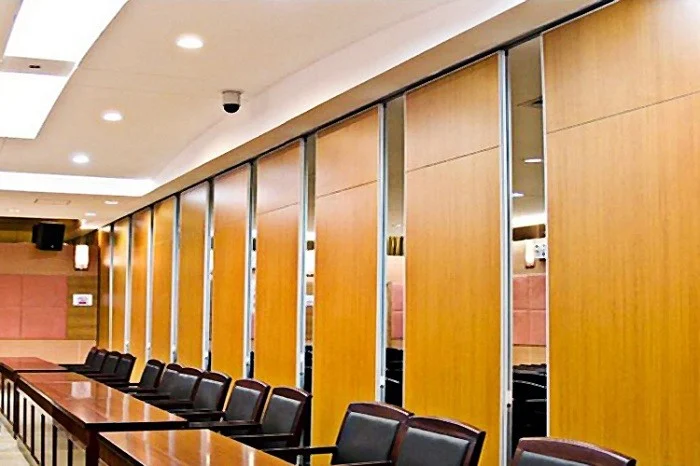
Seals are generic components that help close the perimeter of a movable wall. Their exact type and configuration depend on the project. The changeover policy should include a visual check that the partition line is complete before the room is used. Visible references can support layout discussion but do not verify hidden construction or performance.
Documentation and Project-Specific Confirmation
Pass-door requirements and project documentation can be discussed with the supplier. The changeover policy should reference the approved drawings, the layout review, and any project-specific instructions.
Evidence Note
This article is an informational framework. It does not provide measured acoustic values, structural load data, installation times, or commercial terms. All project-specific support, acoustic, and dimensional requirements must be confirmed against the approved drawings and maintained product facts.
For contractors and distributors, the changeover policy is also a handover document. It helps the owner understand what the system can do and what it cannot do without further confirmation. For architects and interior designers, it connects the design intent to daily operation. For renovation teams, it highlights where existing scheduling rules may need to change.
FAQ: Room Scheduling and Operable Wall Changeover
What is a changeover policy for operable walls?
A changeover policy is a documented sequence for reconfiguring a flexible space between bookings. It covers route checks, panel movement, parking position, and completion checks.
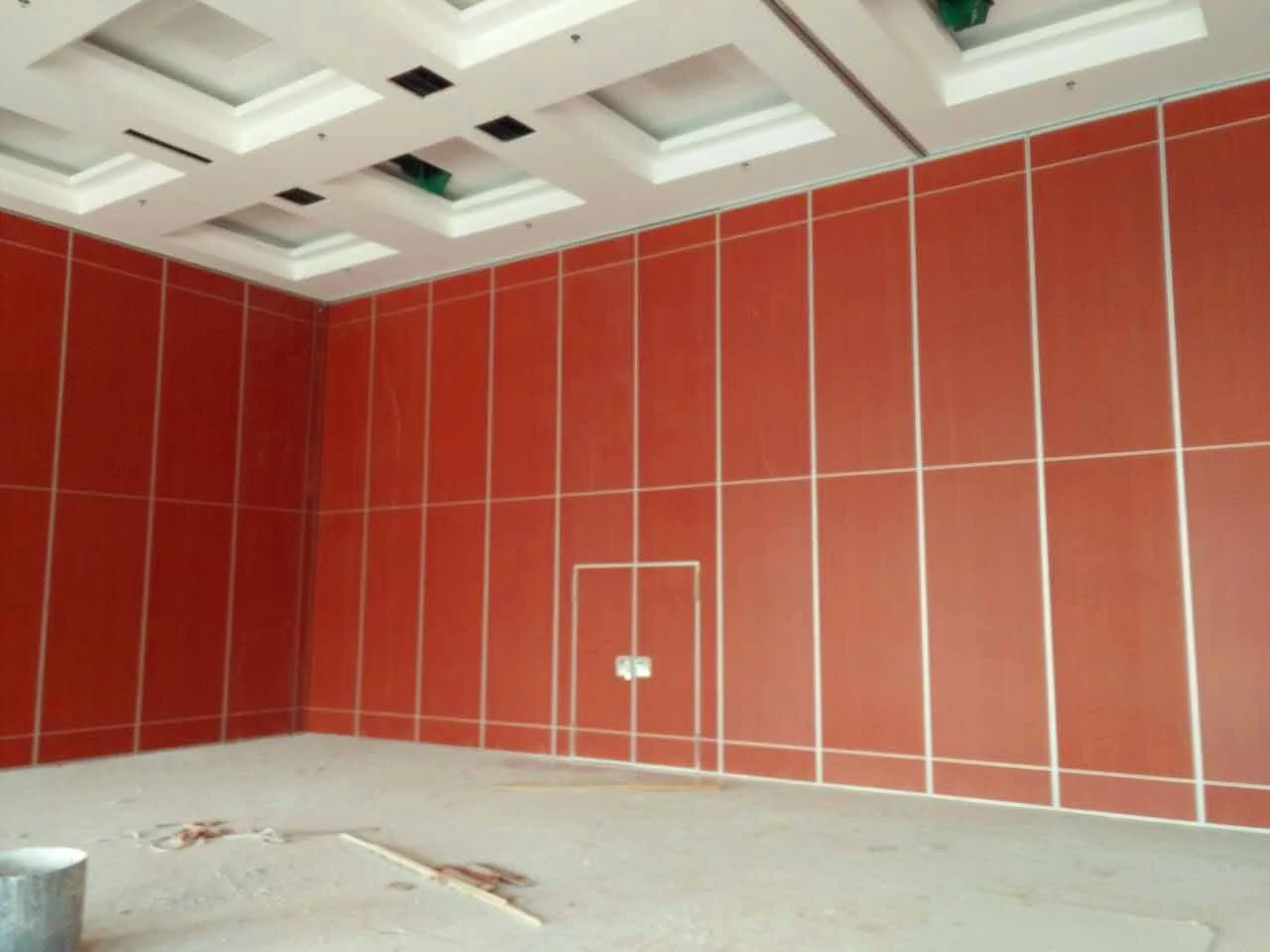
How do room scheduling rules affect operable wall use?
Scheduling rules set the available time between bookings. If the changeover policy does not match that time, the room may not be ready for the next user.
Do operable walls need a floor track?
EBUNGE movable partition panels are top-hung and move without a continuous floor running track or floor hardware along the partition line. The overhead route must be continuous and supported as confirmed by the project design.
Can the parking position be customized?
Parking style is customized to the customer layout and project requirements. It may support compact stacking when the coordinated design permits it.
What finish options are available?
Confirmed finish options include laminate, melamine, fabric, leather, glass, and other approved surfaces. Project-specific compatibility should be confirmed.
How should acoustic requirements be handled?
Acoustic requirements should be confirmed as project-specific requirements.
Conclusion: Align the Schedule with the System
The schedule defines the demand. The changeover policy defines the response. The operable wall system provides the physical capability. By mapping booking patterns to straight, turning, and stacking routes, confirming the parking position, and documenting the changeover sequence, project teams can reduce friction without inventing performance claims.
Every project is different. The exact overhead route and support arrangement must be confirmed by the responsible project team from coordinated drawings. For project-specific guidance, contact EBUNGE to discuss your layout, pass-door requirements, and documentation needs. You can also review the operable partition product page and the resources section for further planning context.