
Quick answer: changeover policy room scheduling rule
Review focus: changeover policy room scheduling rule.
A changeover policy room scheduling rule conflict rarely announces itself in a planning meeting. It surfaces later, when a room is booked back-to-back, a movable wall is expected to move, and the route or stacking position was never coordinated with the layout. For overseas contractors, architects, interior designers and facility teams, the practical question is not whether a conflict exists, but which project-specific information must be confirmed before scheduling rules are written into an operating policy.
This article uses an evidence-bounded approach. The suitability of each route and parking arrangement depends on the approved layout, circulation, ceiling interfaces and operating sequence. It explains where scheduling rules and changeover policies commonly diverge, and what to verify from drawings, product documentation and project coordination.
Why Scheduling Rules and Changeover Policies Drift Apart
Project review term: changeover policy room scheduling rule.
Scheduling rules are usually written to maximize room use. Changeover policies are written to protect the condition and readiness of a space. When the two are developed by different teams, assumptions diverge. A rule may allow a fifteen-minute gap between events, while the changeover policy assumes a longer sequence that includes moving panels, confirming the opening is clear and returning panels to a planned stacking position.
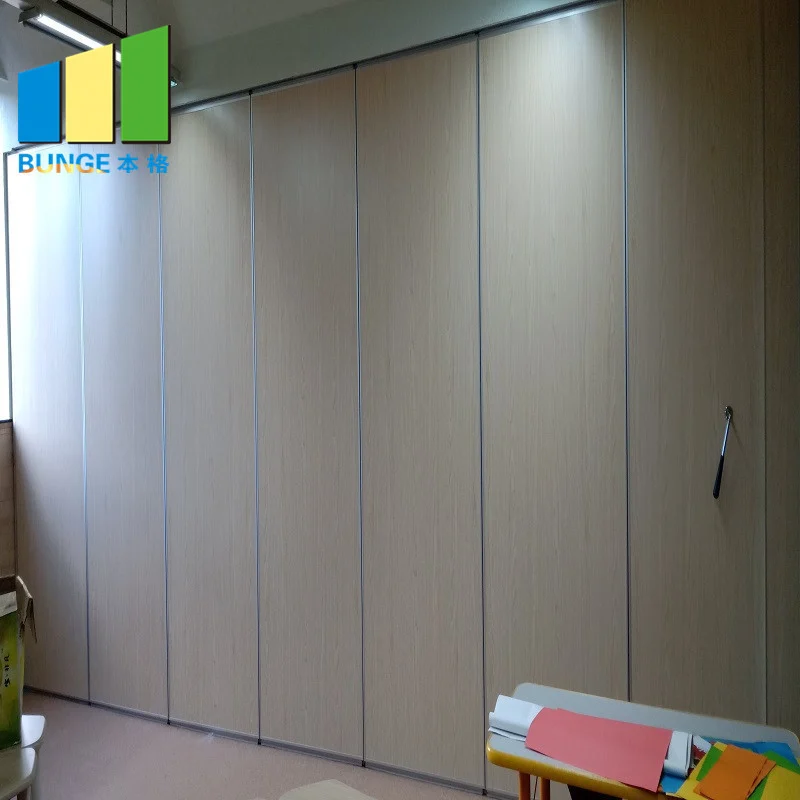
Movable wall panels are individually movable, suspended from a top track, cross the opening without a floor track, and park at a planned stacking position. Those maintained facts matter because they define what a changeover involves. They do not define how long it takes, how many people are needed, or what acoustic result is achieved. Those items require project-specific confirmation.
Where the conflict usually hides
Conflicts often hide in three places: the booking template, the room turnover checklist, and the drawing set. If the booking template does not distinguish between rooms with movable partitions and rooms with fixed walls, the scheduling rule may treat them as equivalent. If the turnover checklist does not reference the planned stacking position, staff may improvise. If the drawing set does not show the straight, turning and stacking routes, the changeover policy may describe a movement that the layout cannot support.
Review the Movement Route Before Writing the Rule
Coordination scope: changeover policy room scheduling rule.
Straight, turning and stacking routes are reviewed from the layout. That review is not a formality. The exact route, junction arrangement, continuous overhead path and parking position must be confirmed from the coordinated project drawings. The changeover policy should reflect the route that the drawings actually show.

Do not infer performance from a visible shape, finish or photograph. Those claims require matching evidence and project-specific confirmation.
Questions for the drawing review
- Does the layout show a continuous connected overhead route for every proposed movement path?
- Is the planned stacking position clearly identified and reachable from the opening?
- Does the changeover policy describe the same route that the drawings show?
- Are pass-door requirements and project documentation discussed with the relevant parties?
- Have support and dimensional requirements been confirmed for the specific project?
Separate Maintained Facts from Project Assumptions
Checklist focus: changeover policy room scheduling rule.
Maintained product facts are stable statements about how the system works. Project assumptions are statements about how a specific installation will behave. Mixing them creates risk. For example, it is maintained that panels are top-hung and move without a continuous floor running track or floor hardware along the partition line.
When a scheduling rule depends on a project assumption, that assumption should be documented and confirmed. If it cannot be confirmed, the rule should be written with an explicit boundary rather than an implied guarantee.
Evidence note
Confirm project-specific support, acoustic and dimensional requirements before finalizing scheduling rules or changeover policies. Generic finish or application examples are not evidence of cleaning compatibility, structural capacity, acoustic performance or a application reference.
Build a Changeover Policy That Matches the Room
Review focus: changeover policy room scheduling rule.
A changeover policy should describe the sequence of actions that returns a room to its ready state. For a space with movable partitions, that sequence includes confirming the opening is clear, moving panels along the reviewed route, and parking them at the planned stacking position. The policy should also state who confirms readiness and what happens when a booking runs late.
Finish options include laminate, melamine, fabric, leather, glass and other approved surfaces.
Compact comparison: scheduling rule versus changeover reality

| Scheduling rule assumption | Changeover policy question |
|---|---|
| The room is available at the booked time. | Has the previous changeover been completed and confirmed? |
| The partition can be moved as needed. | Does the layout show a continuous connected overhead route and a planned stacking position? |
| Any staff member can reset the room. | Has the project-specific procedure been documented and coordinated? |
| The room meets acoustic expectations. | Have acoustic requirements been confirmed for this project? |
Coordinate Across Disciplines Before Commitments
Facility Operations Planning coordination brings together the booking system, the changeover policy and the physical layout. Contractors, architects, interior designers and owners each hold part of the picture. A scheduling rule written without that coordination may be internally consistent but operationally wrong.
Project documentation can be discussed with the supplier or manufacturer to clarify what is maintained and what requires confirmation.
Numbered process for resolving a conflict
- Identify the scheduling rule that depends on a changeover assumption.
- Locate the drawing or document that supports or contradicts that assumption.
- Separate maintained product facts from project-specific requirements.
- Confirm support, acoustic and dimensional requirements with the responsible parties.
- Revise the rule or the policy so both describe the same operational sequence.
- Record the confirmed boundary in the project documentation.
FAQ: Scheduling Rules and Changeover Policies
What is a changeover policy room scheduling rule conflict?
It is a mismatch between the assumptions in a room booking rule and the actual sequence required to reset a space. The conflict may involve timing, route, stacking position or readiness confirmation.
Do movable partitions require a floor track?
EBUNGE movable wall panels are top-hung and move without a continuous floor running track or floor hardware along the partition line. The exact overhead route and support arrangement must be confirmed by the responsible project team from coordinated drawings.
Can scheduling rules specify a fixed changeover time?
A fixed time should only be used when the project-specific changeover sequence has been confirmed. Without that confirmation, the rule may conflict with the layout or the operating procedure.
How should acoustic expectations be handled in a changeover policy?
Acoustic requirements should be confirmed for the specific project.
What documentation helps prevent these conflicts?
Layout drawings showing straight, turning and stacking routes, a clear changeover sequence, and confirmed support, acoustic and dimensional requirements all help. Pass-door requirements and project documentation can be discussed with the supplier.
Where can project teams find more guidance?
Review the movable walls product page and the resources section for maintained product context, then contact the team to discuss project-specific documentation.
Conclusion: Align the Rule with the Room
Confirm the movement route from the layout, separate maintained facts from project assumptions, and document the boundaries that remain. Scheduling rules can then describe a changeover that the room can actually support.
For project-specific support, acoustic and dimensional requirements, contact EBUNGE to discuss your drawings and documentation.