
Quick answer: changeover policy room scheduling rule
Review focus: changeover policy room scheduling rule.
A changeover policy room scheduling rule conflict audit is the missing step between a well-written booking policy and a movable wall that actually works on event day. Most teams write scheduling rules in a calendar tool and partition requirements in a drawing set, then assume the two will agree. They rarely do. This article sets out an evidence-bounded way to compare them before procurement, installation or handover.
Why Scheduling Rules and Partition Routes Drift Apart
Project review term: changeover policy room scheduling rule.
Scheduling rules are written for people: minimum booking blocks, buffer times, room combinations, setup windows and priority tiers. Partition routes are written for geometry: where panels travel, where they park and how the opening is cleared.
When these two documents are produced by different teams, the conflict is invisible. A rule that allows two rooms to be booked back-to-back may leave no realistic window for the panels to be moved and parked. A rule that treats a combined hall as one bookable unit may ignore the stacking position that the combined layout depends on.
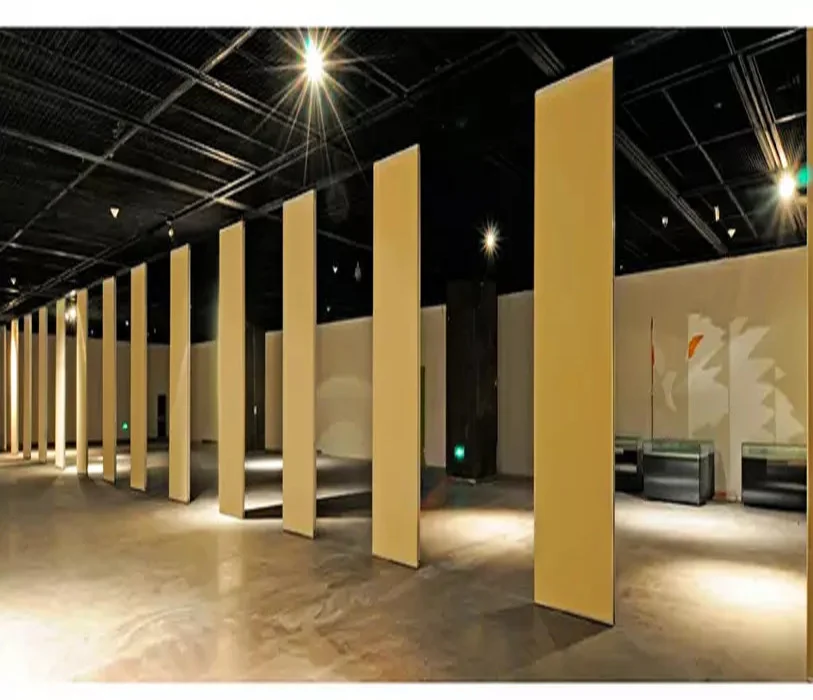
EBUNGE movable wall panels are individually movable, suspended from a top track, cross the opening without a floor track, and park at a planned stacking position. Those maintained facts are the starting point for the audit, not a performance claim.
What the Audit Actually Compares
Coordination scope: changeover policy room scheduling rule.
The audit is a structured comparison, not a software report. It places the scheduling rule set beside the partition layout and asks whether each rule can be satisfied by the movement and parking logic shown on the drawings.
Rule categories worth listing
- Minimum booking duration and changeover buffer between events.
- Permitted room combinations and the order in which they may be combined.
- Setup and strike windows assigned to operations or AV teams.
- Priority rules for recurring bookings, external hires and internal use.
- Rules that assume a room is ‘clear’ without defining what clear means.
Each category should be matched against the straight, turning and stacking routes reviewed from the layout. If a rule depends on a route that has not been reviewed, the rule is unverified.
A Practical Conflict Audit Sequence
Checklist focus: changeover policy room scheduling rule.

Use a numbered sequence so the audit produces decisions rather than opinions. The steps below are a coordination framework; they do not replace project-specific support, acoustic and dimensional review.
- Collect the current booking rules, room list and combination logic in one place.
- Overlay the partition layout, including straight, turning and stacking routes.
- Mark every rule that depends on panel movement, parking or an open opening.
- Flag rules that assume a clear floor where a stacking position is planned.
- The suitability of each route and parking arrangement depends on the approved layout, circulation, ceiling interfaces and operating sequence.
- Return flagged rules to the scheduling owner with the specific drawing reference.
- Re-issue the rule set only after each flag has a documented resolution or an accepted limitation.
Evidence Boundaries You Should State in the Audit
Review focus: changeover policy room scheduling rule.
An audit loses credibility when it drifts into claims the drawings cannot support. Keep a short evidence note in the document so reviewers know what has been confirmed and what remains open.
Confirmed for this audit: panels are top-hung, individually movable, cross the opening without a floor track and park at a planned stacking position. Finish options include laminate, melamine, fabric, leather, glass and other approved surfaces. Pass-door requirements and project documentation can be discussed. Not confirmed here: acoustic performance, structural capacity, support points, dimensions, loads, cleaning compatibility or any project-specific outcome.
Where acoustic separation matters, confirm it against the project specification and the relevant test evidence for the exact configuration.
Where Scheduling Rules Quietly Break the Changeover Policy
Most conflicts fall into a few recurring patterns. Naming them helps a scheduling owner see the problem without needing to read a full drawing set.
Common conflict patterns
| Pattern | What it looks like | What to confirm |
|---|---|---|
| Buffer too short | Back-to-back bookings leave no window for movement and parking | Whether the route and stacking position support the intended changeover |
| Combination assumed | A combined hall is bookable but the stacking position is occupied | Where panels park when the room is in combined mode |
| Clear floor assumed | A rule requires an empty floor where parking is planned | Whether the layout reserves that zone permanently |
| Route not reviewed | A turning or crossing route appears on no reviewed drawing | Whether the overhead route is continuous and supported |
Each pattern should be resolved on the drawing, not in the calendar. A scheduling rule cannot create space that the layout does not provide.
Documentation That Makes the Audit Repeatable
Panel handling and the operating sequence must be confirmed for the selected layout and project conditions. Make it repeatable by keeping a small, maintained record set: the current rule list, the partition layout revision, the flagged-rule log and the evidence note above.
When a room is reconfigured or a booking rule changes, the log shows which items need re-checking. This is also where pass-door requirements and project documentation can be discussed with the supplier so that the scheduling owner is working from the same revision as the design team.

For product context, see the movable wall product page. For broader planning material, use the resources library. When the audit raises questions that need project-specific answers, contact the team with the layout and rule set.
FAQ: Changeover Policy and Scheduling Conflicts
What is a changeover policy room scheduling rule conflict audit?
It is a structured comparison between the rules that govern how rooms are booked and the partition layout that governs how panels move and park. The output is a flagged list of rules that cannot be verified from the current drawings.
Does this audit require acoustic test data?
No. The audit focuses on scheduling logic and movement routes. Acoustic requirements belong to the project specification and should be confirmed separately against the relevant evidence for the exact configuration.
Can a scheduling rule fix a route that has not been reviewed?
No. A rule can only describe intended use. If a straight, turning or stacking route has not been reviewed from the layout, the rule remains unverified until that review happens.
How often should the audit be repeated?
Repeat it whenever the booking rules change, the room list changes or the partition layout is revised.
What should be sent to the supplier?
Send the current rule set, the partition layout revision and the flagged-rule log. Pass-door requirements and project documentation can then be discussed against the same revision the design team is using.
Does the audit guarantee a quieter room?
No. It identifies coordination conflicts so that project-specific support, acoustic and dimensional requirements can be confirmed properly.
Conclusion: Audit the Rules Before the Drawings Are Fixed
A changeover policy is only as strong as the scheduling rules behind it. When those rules are compared against the partition layout early, conflicts surface while they are still cheap to resolve. When they are not, the conflict appears on event day as a room that cannot be cleared in time.
Keep the audit evidence-bounded, keep the flagged-rule log current, and confirm every project-specific support, acoustic and dimensional requirement with the responsible parties. Contact EBUNGE to discuss your layout, rule set and project documentation.