
Quick project answer
Review focus: room scheduling data.
A room scheduling data changeover policy review starts with a simple question: does the way rooms are booked still match the way they are reset? Booking records show demand, duration and sequence. They do not show the physical work of changing a room from one layout to another. When the gap between booked use and actual reset becomes visible, the policy may need to change. This article offers an evidence-bounded framework for that review, using maintained product facts and project-specific drawing checks.
What Room Scheduling Data Can and Cannot Tell You
Project review term: room scheduling data.
Scheduling data is a record of intent. It shows when a room was reserved, for how long, and sometimes for what purpose. It can reveal patterns such as back-to-back bookings, frequent short sessions, or repeated switching between layouts. Those patterns are useful signals.
What scheduling data cannot show is whether a proposed change is physically supportable. It cannot confirm overhead support, route continuity, parking space, or acoustic separation. Those items require drawing review and project-specific confirmation. Treat scheduling data as a trigger for review, not as proof that a change will work.
Signals worth extracting
- Bookings that end and begin within a short interval in the same room.
- Rooms that switch between open, divided and combined configurations.
- Repeated requests for the same room type at the same time.
- Underused rooms that still require reset effort.
- Complaints or notes linked to room readiness.
When the Data Suggests the Policy Is Out of Step
Coordination scope: room scheduling data.
A changeover policy is out of step when the scheduled reset no longer matches the pattern of use. For example, if a room is booked for a divided session and then a full-room session with little time between, the policy may assume a reset that the schedule does not allow. The data does not prove a failure, but it justifies a closer look.
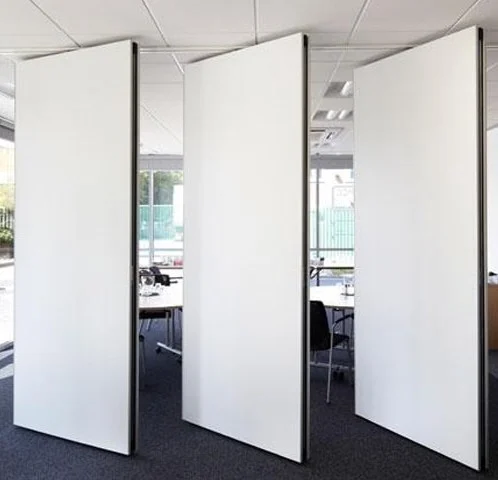
Movable wall panels are individually movable, suspended from a top track, cross the opening without a floor track, and park at a planned stacking position. That description is a maintained product fact. It does not tell you how long a changeover takes, who performs it, or whether a specific room can support the route. Those are project-specific questions.
Questions to bring to the review
- Which rooms show the most frequent layout changes?
- Where do bookings overlap with reset windows?
- Which routes are used to move panels to and from parking?
- Are straight, turning and stacking routes shown on the layout?
- Does the schedule assume a changeover that the current layout does not describe?
Reading Routes and Parking Against the Layout
Checklist focus: room scheduling data.
Straight, turning and stacking routes are reviewed from the layout. This means the drawing must show how panels travel from the closed position to the parking position. A route that looks simple on a schedule may involve turns, obstructions or a parking area that conflicts with other uses.
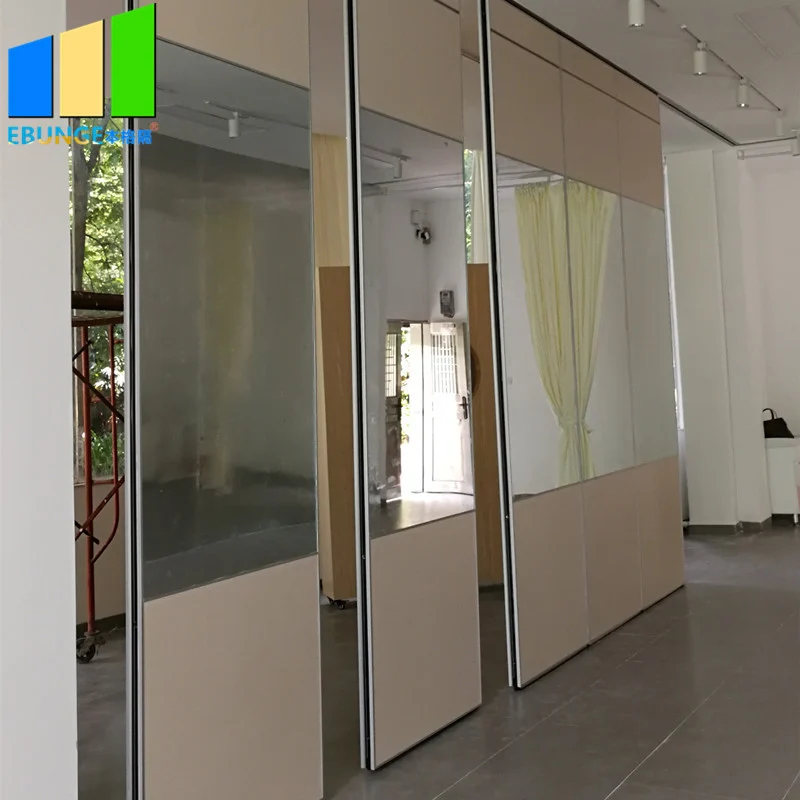
Parking style is customized to the customer layout and project requirements and may support compact stacking when the coordinated design permits it. Do not assume a parking arrangement from a generic image or a previous project. The layout review is the evidence.
Evidence note
Do not infer support, acoustic, dimensional or operational performance from a visible finish, a photograph or a scheduling pattern. Confirm each item against project drawings and the relevant project-specific documentation.
Finish and Pass-Door Decisions in a Changeover Review
Finish choices can affect how a room is perceived and how it is used, but they do not by themselves determine changeover policy. Confirmed finish options include laminate, melamine, fabric, leather, glass and other approved surfaces. The selection should follow the room’s function and the project’s approved schedule.
Pass-door requirements and project documentation can be discussed with the supplier. If a room needs a pass door, that requirement belongs in the early review, because it may affect panel layout and route planning. It is not a detail to leave until after the schedule is set.
Compact comparison: what data shows vs. what drawings confirm
| Item | Scheduling data | Project drawings and confirmation |
|---|---|---|
| Frequency of layout change | Shows booking pattern | Confirms whether the route supports it |
| Reset window | Shows time between bookings | Confirms the physical sequence and parking |
| Room combination | Shows requested use | Confirms panel movement and stacking |
| Acoustic expectation | May show room type | Requires project-specific acoustic review |
| Finish and pass door | Rarely recorded | Confirmed through approved documentation |

How to Run the Review Without Overclaiming
Start with the data, then move to the drawings. The review should produce a list of confirmed items and a list of items that still need project-specific confirmation. Avoid turning a pattern into a performance claim. The suitability of each route and parking arrangement depends on the approved layout, circulation, ceiling interfaces and operating sequence.
Confirm the required rating and the supporting evidence for the specific assembly and installation.
Decision checklist
- Has the scheduling data been reviewed for back-to-back layout changes?
- Are straight, turning and stacking routes shown on the layout?
- Is the parking position coordinated with other room uses?
- Are finish and pass-door requirements documented?
- Have acoustic and dimensional requirements been confirmed for the project?
- Is there a clear list of items still requiring project-specific evidence?
Coordinating the Review Across Project Teams
A change in booking policy can affect the layout. A change in layout can affect the route and parking. A change in finish or pass-door requirements can affect the panel schedule.
Keep the review bounded. Use the maintained product facts as the starting point, and mark every other statement as requiring confirmation. This prevents a scheduling insight from becoming an unsupported engineering or commercial conclusion. For product context, see the movable walls product page. For general planning resources, see the resources page.
FAQ
What is a room scheduling data changeover policy review?
It is a structured review that compares booking patterns with the physical work of changing a room from one layout to another. The goal is to identify where the policy may no longer match actual use.
Can scheduling data alone confirm that a movable wall will work?
No. Scheduling data shows demand and timing. Those require project-specific drawing review and confirmation.
Which routes need to be reviewed?
Straight, turning and stacking routes are reviewed from the layout. The drawing should show how panels move from the closed position to the planned parking position.
Do movable partitions need a floor track?
EBUNGE movable partition panels are top-hung and move without a continuous floor running track or floor hardware along the partition line. The exact route, junction arrangement, continuous overhead path and parking position must be confirmed from the coordinated project drawings.
How should acoustic requirements be handled?
Acoustic requirements should be confirmed for the specific project.
What should be included in the review output?
A useful output lists confirmed items, open items, and the drawings or documents needed to close them. It should also record finish and pass-door requirements where relevant.
Conclusion and Next Step
Room scheduling data is a useful trigger for reviewing changeover policy, but it is not a substitute for project-specific confirmation. Use the data to find patterns, then use the layout to test routes, parking and dimensional fit. Keep acoustic, support and finish decisions tied to approved documentation. If your project needs a closer review, contact EBUNGE to discuss pass-door requirements, project documentation and layout coordination.